Japan Exchange Group is exploring measures to limit listed digital-asset treasury companies, citing investor protection concerns as crypto-hoarding stocks suffer steep losses. Tokyo Stock Exchange operator JPX is considering stricter backdoor listing rules and fresh audit requirements for firms pivoting to cryptocurrency accumulation, according to people familiar with the matter who spoke to Bloomberg. Three listed Japanese companies have shelved plans to buy cryptocurrencies since September, after the JPX warned that their fundraising abilities would be restricted if they pursued crypto strategies. The bourse does not currently have blanket regulations against corporate crypto accumulation but is “monitoring companies that raise concerns from a risk and governance perspective, with a view to protecting shareholders and investors,” a JPX representative wrote in an email to Bloomberg. Market Tumble Draws Regulatory Scrutiny Crypto treasury stocks modeled after Michael Saylor’s Strategy Inc. have collapsed from earlier highs, leaving retail investors with heavy losses. Strategy’s shares have roughly halved since mid-July despite the company holding a Bitcoin pile worth over $60 billion. The potential crackdown was sparked by concerns that the recent decline in local digital-asset treasury shares has harmed domestic investors. While Hong Kong and other Asia-Pacific exchanges have resisted new digital-asset treasury listings, Japan has 15 public Bitcoin buyers, the most in Asia.Source: BitcoinTreasuries Tokyo-listed Metaplanet, Japan’s largest operator, has plunged over 75% from its mid-June peak after surging 420% earlier in the year. Nail salon operator Convano, which targets 21,000 Bitcoin, is down approximately 60% since late August. Market analysis flagged widespread distress across the sector, with K33 Research reporting that a quarter of all public companies holding Bitcoin now trade at market values below their token holdings. JPX is exploring whether to extend its existing backdoor listing prohibition to companies shifting core operations to crypto accumulation. A backdoor listing typically involves a private company going public through a merger or acquisition, thereby bypassing the normal initial public offering (IPO) process. Metaplanet Defends Governance Approach Metaplanet CEO Simon Gerovich pushed back against being grouped with firms lacking proper governance. “Metaplanet has held five general meetings of shareholders over the past approximately two years (including four extraordinary general meetings of shareholders and one ordinary general meeting of shareholders), and has proceeded with all important matters with the approval of shareholders,” Gerovich said. He emphasized that these processes “have been consistently carried out in accordance with proper procedures under the management team that has continued since before the business transition.” Gerovich added. Dylan LeClair, Metaplanet’s Head of Bitcoin Strategy, noted parallels with the recent shareholder approval requirements for crypto acquisitions by NASDAQ. He pointed out that Strategy quickly clarified that “the new NASDAQ policy on forming digital asset treasuries will not impact Strategy, our ATM program, or other capital market activities.“ LeClair explained that companies with established governance frameworks that consult shareholders through proper procedures can continue operations without disruption. “This regulation targets cases of rapid pivots without shareholder consent, and bitcoin treasury companies with properly functioning governance were exempt,” he said. Financial Transformation Continues Despite Volatility Metaplanet pivoted from hotels in early 2024 and accumulated over 30,000 Bitcoin, making it the world’s fourth-largest public Bitcoin holder. The company reported a dramatic financial transformation in Q3 2025, posting sales revenue of 4,517 million yen ($29 million), up 1,702% year-over-year, and an ordinary profit of 23,229 million yen ($150M), after incurring a loss of 311 million yen ($2M) the previous year. Total assets reached 550,744 million yen ($3.56B) by September 30, driven by Bitcoin holdings valued at 516,360 million yen ($3.33B) across current and non-current accounts. The equity ratio also improved to 96.7% from 55.9% at year-end 2024 following warrant exercises and overseas offerings that raised capital stock by 247,462 million yen ($1.60B). The company’s Bitcoin per fully diluted share reached 0.0214885 BTC, representing approximately a six-fold increase from the 2024 year-end figureJapan Exchange Group is exploring measures to limit listed digital-asset treasury companies, citing investor protection concerns as crypto-hoarding stocks suffer steep losses. Tokyo Stock Exchange operator JPX is considering stricter backdoor listing rules and fresh audit requirements for firms pivoting to cryptocurrency accumulation, according to people familiar with the matter who spoke to Bloomberg. Three listed Japanese companies have shelved plans to buy cryptocurrencies since September, after the JPX warned that their fundraising abilities would be restricted if they pursued crypto strategies. The bourse does not currently have blanket regulations against corporate crypto accumulation but is “monitoring companies that raise concerns from a risk and governance perspective, with a view to protecting shareholders and investors,” a JPX representative wrote in an email to Bloomberg. Market Tumble Draws Regulatory Scrutiny Crypto treasury stocks modeled after Michael Saylor’s Strategy Inc. have collapsed from earlier highs, leaving retail investors with heavy losses. Strategy’s shares have roughly halved since mid-July despite the company holding a Bitcoin pile worth over $60 billion. The potential crackdown was sparked by concerns that the recent decline in local digital-asset treasury shares has harmed domestic investors. While Hong Kong and other Asia-Pacific exchanges have resisted new digital-asset treasury listings, Japan has 15 public Bitcoin buyers, the most in Asia.Source: BitcoinTreasuries Tokyo-listed Metaplanet, Japan’s largest operator, has plunged over 75% from its mid-June peak after surging 420% earlier in the year. Nail salon operator Convano, which targets 21,000 Bitcoin, is down approximately 60% since late August. Market analysis flagged widespread distress across the sector, with K33 Research reporting that a quarter of all public companies holding Bitcoin now trade at market values below their token holdings. JPX is exploring whether to extend its existing backdoor listing prohibition to companies shifting core operations to crypto accumulation. A backdoor listing typically involves a private company going public through a merger or acquisition, thereby bypassing the normal initial public offering (IPO) process. Metaplanet Defends Governance Approach Metaplanet CEO Simon Gerovich pushed back against being grouped with firms lacking proper governance. “Metaplanet has held five general meetings of shareholders over the past approximately two years (including four extraordinary general meetings of shareholders and one ordinary general meeting of shareholders), and has proceeded with all important matters with the approval of shareholders,” Gerovich said. He emphasized that these processes “have been consistently carried out in accordance with proper procedures under the management team that has continued since before the business transition.” Gerovich added. Dylan LeClair, Metaplanet’s Head of Bitcoin Strategy, noted parallels with the recent shareholder approval requirements for crypto acquisitions by NASDAQ. He pointed out that Strategy quickly clarified that “the new NASDAQ policy on forming digital asset treasuries will not impact Strategy, our ATM program, or other capital market activities.“ LeClair explained that companies with established governance frameworks that consult shareholders through proper procedures can continue operations without disruption. “This regulation targets cases of rapid pivots without shareholder consent, and bitcoin treasury companies with properly functioning governance were exempt,” he said. Financial Transformation Continues Despite Volatility Metaplanet pivoted from hotels in early 2024 and accumulated over 30,000 Bitcoin, making it the world’s fourth-largest public Bitcoin holder. The company reported a dramatic financial transformation in Q3 2025, posting sales revenue of 4,517 million yen ($29 million), up 1,702% year-over-year, and an ordinary profit of 23,229 million yen ($150M), after incurring a loss of 311 million yen ($2M) the previous year. Total assets reached 550,744 million yen ($3.56B) by September 30, driven by Bitcoin holdings valued at 516,360 million yen ($3.33B) across current and non-current accounts. The equity ratio also improved to 96.7% from 55.9% at year-end 2024 following warrant exercises and overseas offerings that raised capital stock by 247,462 million yen ($1.60B). The company’s Bitcoin per fully diluted share reached 0.0214885 BTC, representing approximately a six-fold increase from the 2024 year-end figure

Japan’s Bitcoin Crackdown: Metaplanet Says It’s Different From the “Backdoor” Crowd

Japan Exchange Group is exploring measures to limit listed digital-asset treasury companies, citing investor protection concerns as crypto-hoarding stocks suffer steep losses.

Tokyo Stock Exchange operator JPX is considering stricter backdoor listing rules and fresh audit requirements for firms pivoting to cryptocurrency accumulation, according to people familiar with the matter who spoke to Bloomberg.

Three listed Japanese companies have shelved plans to buy cryptocurrencies since September, after the JPX warned that their fundraising abilities would be restricted if they pursued crypto strategies.

The bourse does not currently have blanket regulations against corporate crypto accumulation but is “monitoring companies that raise concerns from a risk and governance perspective, with a view to protecting shareholders and investors,” a JPX representative wrote in an email to Bloomberg.

Market Tumble Draws Regulatory Scrutiny

Crypto treasury stocks modeled after Michael Saylor’s Strategy Inc. have collapsed from earlier highs, leaving retail investors with heavy losses.

Strategy’s shares have roughly halved since mid-July despite the company holding a Bitcoin pile worth over $60 billion.

The potential crackdown was sparked by concerns that the recent decline in local digital-asset treasury shares has harmed domestic investors.

While Hong Kong and other Asia-Pacific exchanges have resisted new digital-asset treasury listings, Japan has 15 public Bitcoin buyers, the most in Asia.
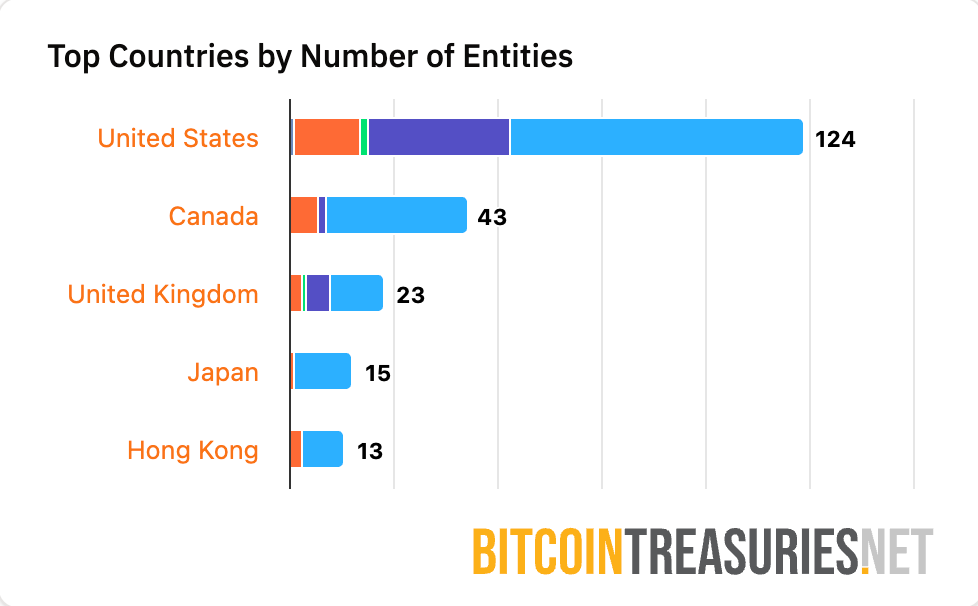
Source: BitcoinTreasuries

Tokyo-listed Metaplanet, Japan’s largest operator, has plunged over 75% from its mid-June peak after surging 420% earlier in the year. Nail salon operator Convano, which targets 21,000 Bitcoin, is down approximately 60% since late August.

Market analysis flagged widespread distress across the sector, with K33 Research reporting that a quarter of all public companies holding Bitcoin now trade at market values below their token holdings.

JPX is exploring whether to extend its existing backdoor listing prohibition to companies shifting core operations to crypto accumulation.

A backdoor listing typically involves a private company going public through a merger or acquisition, thereby bypassing the normal initial public offering (IPO) process.

Metaplanet Defends Governance Approach

Metaplanet CEO Simon Gerovich pushed back against being grouped with firms lacking proper governance.

Metaplanet has held five general meetings of shareholders over the past approximately two years (including four extraordinary general meetings of shareholders and one ordinary general meeting of shareholders), and has proceeded with all important matters with the approval of shareholders,” Gerovich said.

He emphasized that these processes “have been consistently carried out in accordance with proper procedures under the management team that has continued since before the business transition.” Gerovich added.

Dylan LeClair, Metaplanet’s Head of Bitcoin Strategy, noted parallels with the recent shareholder approval requirements for crypto acquisitions by NASDAQ.

He pointed out that Strategy quickly clarified that “the new NASDAQ policy on forming digital asset treasuries will not impact Strategy, our ATM program, or other capital market activities.

LeClair explained that companies with established governance frameworks that consult shareholders through proper procedures can continue operations without disruption.

This regulation targets cases of rapid pivots without shareholder consent, and bitcoin treasury companies with properly functioning governance were exempt,” he said.

Financial Transformation Continues Despite Volatility

Metaplanet pivoted from hotels in early 2024 and accumulated over 30,000 Bitcoin, making it the world’s fourth-largest public Bitcoin holder.

The company reported a dramatic financial transformation in Q3 2025, posting sales revenue of 4,517 million yen ($29 million), up 1,702% year-over-year, and an ordinary profit of 23,229 million yen ($150M), after incurring a loss of 311 million yen ($2M) the previous year.

Total assets reached 550,744 million yen ($3.56B) by September 30, driven by Bitcoin holdings valued at 516,360 million yen ($3.33B) across current and non-current accounts.

The equity ratio also improved to 96.7% from 55.9% at year-end 2024 following warrant exercises and overseas offerings that raised capital stock by 247,462 million yen ($1.60B).

The company’s Bitcoin per fully diluted share reached 0.0214885 BTC, representing approximately a six-fold increase from the 2024 year-end figure.

Disclaimer: The articles reposted on this site are sourced from public platforms and are provided for informational purposes only. They do not necessarily reflect the views of MEXC. All rights remain with the original authors. If you believe any content infringes on third-party rights, please contact [email protected] for removal. MEXC makes no guarantees regarding the accuracy, completeness, or timeliness of the content and is not responsible for any actions taken based on the information provided. The content does not constitute financial, legal, or other professional advice, nor should it be considered a recommendation or endorsement by MEXC.

You May Also Like

Quid Miner cloud mining leads the passive income model

Quid Miner cloud mining leads the passive income model

The post Quid Miner cloud mining leads the passive income model appeared on BitcoinEthereumNews.com. Disclosure: This article does not represent investment advice. The content and materials featured on this page are for educational purposes only. As ETFs bring institutions into crypto, Quid Miner drives mainstream adoption with green, compliant cloud mining. Summary Quid Miner offers AI-optimized cloud mining with massive payouts, no hardware costs, and global coverage in 180+ countries. Quid Miner uses audits, renewable energy, and third-party pools for secure, transparent mining. Supporting BTC, ETH, XRP, SOL, DOGE & more, Quid Miner delivers efficient, ESG-aligned mining for millions of users. With the approval of Bitcoin (BTC) and Ethereum (ETH) ETFs and the impending launch of an XRP ETF, the crypto market has once again entered the spotlight.  ETFs have opened the door to regulatory compliance for institutional investors, but they primarily focus on price exposure and fail to meet investors’ needs for stable cash flow in highly volatile markets. Against the backdrop of tightening regulations and the energy transition, cloud mining is moving from a niche endeavor to a mainstream one. Quid Miner, headquartered in the UK, is being considered by more and more European and American investors due to its compliance, green energy and automation advantages. Why cloud mining is gaining attention Traditional mining requires expensive hardware and significant electricity consumption, making it unsuitable for average investors.  Cloud mining simplifies the process through a contract-based model, allowing users to access a global computing network without hardware or electricity costs. Daily income is automatically settled and distributed to the account, which is closer to the interest or coupon in traditional finance and is therefore regarded as a new cash flow model. Quid Miner’s positioning Founded in 2010, Quid Miner officially entered the cloud mining market in 2018 and currently operates in over 180 countries worldwide. The platform utilizes a transparent contract mechanism, combined…
Share
BitcoinEthereumNews2025/09/21 00:05
Vitalik: The crypto industry needs to address three major issues to develop better decentralized stablecoins.

Vitalik: The crypto industry needs to address three major issues to develop better decentralized stablecoins.

PANews reported on January 11 that Vitalik Buterin stated that the crypto industry currently needs better decentralized stablecoins, and three issues remain to
Share
PANews2026/01/11 15:47
Yingda Securities: The RMB exchange rate is likely to appreciate steadily in 2026.

Yingda Securities: The RMB exchange rate is likely to appreciate steadily in 2026.

PANews reported on January 11 that, according to Zhitong Finance, the 2026 China Chief Economist Forum Annual Meeting was held in Shanghai from January 10-11, with
Share
PANews2026/01/11 15:51