Bitcoin plunged to $93,000 today, matching extreme fear levels unseen since the depths of the 2022 bear market. The Crypto Fear & Greed Index dropped to 10, its lowest reading since July 2022, while traders erased $617.45 million in liquidations within 24 hours as rate cut expectations collapsed.Source: X/@JA_Maartun The sell-off accelerated through Asian trading hours after Wall Street’s Friday slump left major indices down over 1.6%. Bitcoin accounted for $242.19 million in liquidations and Ethereum for $169.06 million, with the largest single wipeout reaching $30.60 million on a Hyperliquid BTC position. Market pricing for a December Federal Reserve rate cut plummeted to around 40% from more than 60% the previous week, pushing investors toward cash and away from risk assets. Short-Term Holders Drive Capitulation CryptoQuant analyst concluded that short-term holder capitulation dominated Bitcoin’s decline from the $126,000 peak, rather than long-term holder distribution. STH SOPR repeatedly fell below 1, confirming active loss-taking, while spent output age bands showed coins younger than three months represented most volume during the dump.Source: CryptoQuant Long-term holders increased selling since September, but the pattern remained consistent with normal mid-cycle profit-taking rather than aggressive blow-off distribution seen at cycle tops. Despite declining prices, Bitcoin’s Realized Cap increased, indicating that fresh capital continued to enter through new short-term holders. These inflows proved insufficient to absorb capitulation from older STH cohorts combined with ongoing LTH distribution. The Bitcoin ETF Realized Price stood at $86,680, leaving BTC trading roughly 9% above the average cost basis of ETF buyers.Source: CryptoQuant CryptoQuant analysts emphasized that marginal price pressure came from STH deleveraging and forced selling during stress periods. “Even if LTHs sold more in total over months, markets react to marginal flows during stress,” the analysis stated. “On dump days, leveraged STHs triggered rapid sell-offs and liquidations, creating the steepest downward momentum.” Based on the on-chain structure, we are seeing a bull market correction rather than a cycle top reversal, despite the severity of recent losses. ETF Outflows Intensify As Institutional Demand Cools US spot Bitcoin ETFs recorded weekly outflows of $1.11 billion from November 10 to 14, marking the third consecutive week of institutional retreat. BlackRock’s IBIT bled $532.41 million, representing the largest net outflow, while Grayscale Bitcoin Mini Trust logged nearly $290 million in weekly losses. Total net asset value of spot Bitcoin ETFs stood at $125.34 billion, representing 6.67% of Bitcoin’s market capitalization. Simon Gerovich, CEO of Japanese Bitcoin treasury company Metaplanet, argued that ETF outflows don’t undermine Bitcoin treasury companies. “A BTC ETF provides fixed exposure to Bitcoin,” he wrote, adding that ETF holdings won’t increase without fund inflows to support them. The crypto market capitalization fell to $3.31 trillion, down 0.9% from previous levels, erasing $1.1 trillion over 41 days.Source: X/@Cointelegraph Technical Retest Meets Historical Fear Parallels Bitcoin tested its 2025 yearly opening around $94,000-$95,000 after closing the weekly candle above that level, creating potential support following a 27% correction from $128,000 peaks. Trader Plan C noted Bitcoin remained within a wide consolidation range from $75,000 to $126,000, with the bottom of this range marking the top of the previous range. Meanwhile, Max Crypto observed BTC posted its first weekly close below the 50-EMA since Q3 2023, prompting some analysts to assign an 80% bear market probability if the pattern persisted through November 24. The Fear Index reading of 10 matched sentiment extremes from July 2022, when Bitcoin traded between $19,000 and $20,000 during the aftermath of the Terra/Luna collapse. Current fear levels occurring at $94,930, 4.7x higher than those 2022 lows, suggested sentiment had decoupled from price, historically marking conditions near major bottoms. However, historical precedent from July 2022 showed Bitcoin remained depressed for several months before beginning recovery. Michael van de Poppe outlined conditional recovery potential, stating he wanted to see Bitcoin hold $94,000 and test $100,000 within the week following the weekend low sweep.Source: X/@CryptoMichNL “If that happens, then there’s trillions and trillions of short liquidity ready to be taken out,” he saidBitcoin plunged to $93,000 today, matching extreme fear levels unseen since the depths of the 2022 bear market. The Crypto Fear & Greed Index dropped to 10, its lowest reading since July 2022, while traders erased $617.45 million in liquidations within 24 hours as rate cut expectations collapsed.Source: X/@JA_Maartun The sell-off accelerated through Asian trading hours after Wall Street’s Friday slump left major indices down over 1.6%. Bitcoin accounted for $242.19 million in liquidations and Ethereum for $169.06 million, with the largest single wipeout reaching $30.60 million on a Hyperliquid BTC position. Market pricing for a December Federal Reserve rate cut plummeted to around 40% from more than 60% the previous week, pushing investors toward cash and away from risk assets. Short-Term Holders Drive Capitulation CryptoQuant analyst concluded that short-term holder capitulation dominated Bitcoin’s decline from the $126,000 peak, rather than long-term holder distribution. STH SOPR repeatedly fell below 1, confirming active loss-taking, while spent output age bands showed coins younger than three months represented most volume during the dump.Source: CryptoQuant Long-term holders increased selling since September, but the pattern remained consistent with normal mid-cycle profit-taking rather than aggressive blow-off distribution seen at cycle tops. Despite declining prices, Bitcoin’s Realized Cap increased, indicating that fresh capital continued to enter through new short-term holders. These inflows proved insufficient to absorb capitulation from older STH cohorts combined with ongoing LTH distribution. The Bitcoin ETF Realized Price stood at $86,680, leaving BTC trading roughly 9% above the average cost basis of ETF buyers.Source: CryptoQuant CryptoQuant analysts emphasized that marginal price pressure came from STH deleveraging and forced selling during stress periods. “Even if LTHs sold more in total over months, markets react to marginal flows during stress,” the analysis stated. “On dump days, leveraged STHs triggered rapid sell-offs and liquidations, creating the steepest downward momentum.” Based on the on-chain structure, we are seeing a bull market correction rather than a cycle top reversal, despite the severity of recent losses. ETF Outflows Intensify As Institutional Demand Cools US spot Bitcoin ETFs recorded weekly outflows of $1.11 billion from November 10 to 14, marking the third consecutive week of institutional retreat. BlackRock’s IBIT bled $532.41 million, representing the largest net outflow, while Grayscale Bitcoin Mini Trust logged nearly $290 million in weekly losses. Total net asset value of spot Bitcoin ETFs stood at $125.34 billion, representing 6.67% of Bitcoin’s market capitalization. Simon Gerovich, CEO of Japanese Bitcoin treasury company Metaplanet, argued that ETF outflows don’t undermine Bitcoin treasury companies. “A BTC ETF provides fixed exposure to Bitcoin,” he wrote, adding that ETF holdings won’t increase without fund inflows to support them. The crypto market capitalization fell to $3.31 trillion, down 0.9% from previous levels, erasing $1.1 trillion over 41 days.Source: X/@Cointelegraph Technical Retest Meets Historical Fear Parallels Bitcoin tested its 2025 yearly opening around $94,000-$95,000 after closing the weekly candle above that level, creating potential support following a 27% correction from $128,000 peaks. Trader Plan C noted Bitcoin remained within a wide consolidation range from $75,000 to $126,000, with the bottom of this range marking the top of the previous range. Meanwhile, Max Crypto observed BTC posted its first weekly close below the 50-EMA since Q3 2023, prompting some analysts to assign an 80% bear market probability if the pattern persisted through November 24. The Fear Index reading of 10 matched sentiment extremes from July 2022, when Bitcoin traded between $19,000 and $20,000 during the aftermath of the Terra/Luna collapse. Current fear levels occurring at $94,930, 4.7x higher than those 2022 lows, suggested sentiment had decoupled from price, historically marking conditions near major bottoms. However, historical precedent from July 2022 showed Bitcoin remained depressed for several months before beginning recovery. Michael van de Poppe outlined conditional recovery potential, stating he wanted to see Bitcoin hold $94,000 and test $100,000 within the week following the weekend low sweep.Source: X/@CryptoMichNL “If that happens, then there’s trillions and trillions of short liquidity ready to be taken out,” he said

Crypto Fear Index Hits 10, Lowest Since July 2022 — What Happens Next?

2025/11/17 17:25
4 min read
For feedback or concerns regarding this content, please contact us at [email protected]

Bitcoin plunged to $93,000 today, matching extreme fear levels unseen since the depths of the 2022 bear market.

The Crypto Fear & Greed Index dropped to 10, its lowest reading since July 2022, while traders erased $617.45 million in liquidations within 24 hours as rate cut expectations collapsed.
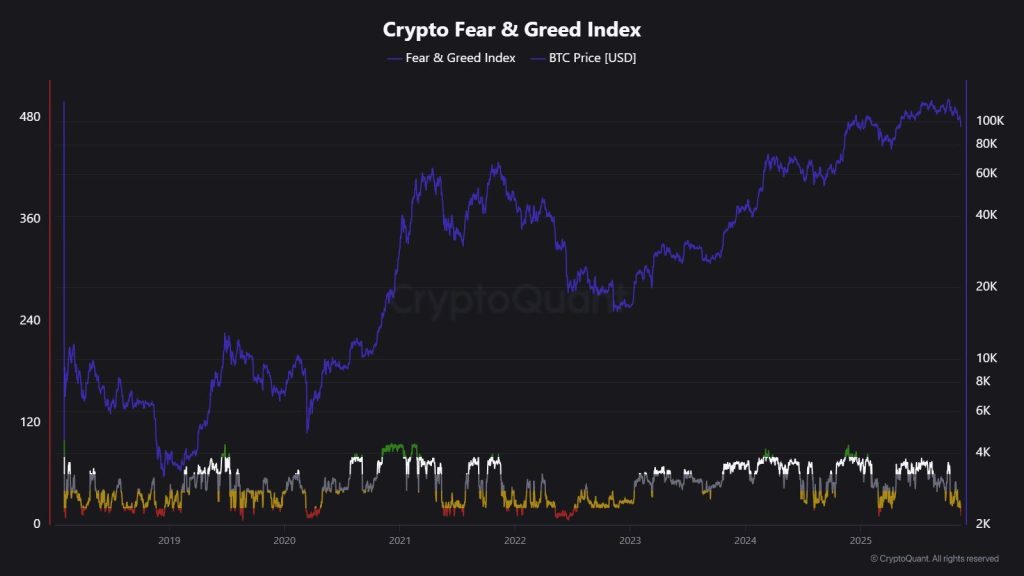
Crypto Fear Index Hits 10, Lowest Since July 2022 — What Happens Next?Source: X/@JA_Maartun

The sell-off accelerated through Asian trading hours after Wall Street’s Friday slump left major indices down over 1.6%.

Bitcoin accounted for $242.19 million in liquidations and Ethereum for $169.06 million, with the largest single wipeout reaching $30.60 million on a Hyperliquid BTC position.

Market pricing for a December Federal Reserve rate cut plummeted to around 40% from more than 60% the previous week, pushing investors toward cash and away from risk assets.

Short-Term Holders Drive Capitulation

CryptoQuant analyst concluded that short-term holder capitulation dominated Bitcoin’s decline from the $126,000 peak, rather than long-term holder distribution.

STH SOPR repeatedly fell below 1, confirming active loss-taking, while spent output age bands showed coins younger than three months represented most volume during the dump.

Crypto Fear Index Hits 10, Lowest Since July 2022 — What Happens Next?Source: CryptoQuant

Long-term holders increased selling since September, but the pattern remained consistent with normal mid-cycle profit-taking rather than aggressive blow-off distribution seen at cycle tops.

Despite declining prices, Bitcoin’s Realized Cap increased, indicating that fresh capital continued to enter through new short-term holders.

These inflows proved insufficient to absorb capitulation from older STH cohorts combined with ongoing LTH distribution.

The Bitcoin ETF Realized Price stood at $86,680, leaving BTC trading roughly 9% above the average cost basis of ETF buyers.

Crypto Fear Index Hits 10, Lowest Since July 2022 — What Happens Next?Source: CryptoQuant

CryptoQuant analysts emphasized that marginal price pressure came from STH deleveraging and forced selling during stress periods.

Even if LTHs sold more in total over months, markets react to marginal flows during stress,” the analysis stated.

On dump days, leveraged STHs triggered rapid sell-offs and liquidations, creating the steepest downward momentum.

Based on the on-chain structure, we are seeing a bull market correction rather than a cycle top reversal, despite the severity of recent losses.

ETF Outflows Intensify As Institutional Demand Cools

US spot Bitcoin ETFs recorded weekly outflows of $1.11 billion from November 10 to 14, marking the third consecutive week of institutional retreat.

BlackRock’s IBIT bled $532.41 million, representing the largest net outflow, while Grayscale Bitcoin Mini Trust logged nearly $290 million in weekly losses.

Total net asset value of spot Bitcoin ETFs stood at $125.34 billion, representing 6.67% of Bitcoin’s market capitalization.

Simon Gerovich, CEO of Japanese Bitcoin treasury company Metaplanet, argued that ETF outflows don’t undermine Bitcoin treasury companies.

“A BTC ETF provides fixed exposure to Bitcoin,” he wrote, adding that ETF holdings won’t increase without fund inflows to support them.

The crypto market capitalization fell to $3.31 trillion, down 0.9% from previous levels, erasing $1.1 trillion over 41 days.

Crypto Fear Index Hits 10, Lowest Since July 2022 — What Happens Next?Source: X/@Cointelegraph

Technical Retest Meets Historical Fear Parallels

Bitcoin tested its 2025 yearly opening around $94,000-$95,000 after closing the weekly candle above that level, creating potential support following a 27% correction from $128,000 peaks.

Trader Plan C noted Bitcoin remained within a wide consolidation range from $75,000 to $126,000, with the bottom of this range marking the top of the previous range.

Meanwhile, Max Crypto observed BTC posted its first weekly close below the 50-EMA since Q3 2023, prompting some analysts to assign an 80% bear market probability if the pattern persisted through November 24.

The Fear Index reading of 10 matched sentiment extremes from July 2022, when Bitcoin traded between $19,000 and $20,000 during the aftermath of the Terra/Luna collapse.

Current fear levels occurring at $94,930, 4.7x higher than those 2022 lows, suggested sentiment had decoupled from price, historically marking conditions near major bottoms.

However, historical precedent from July 2022 showed Bitcoin remained depressed for several months before beginning recovery.

Michael van de Poppe outlined conditional recovery potential, stating he wanted to see Bitcoin hold $94,000 and test $100,000 within the week following the weekend low sweep.

Crypto Fear Index Hits 10, Lowest Since July 2022 — What Happens Next?Source: X/@CryptoMichNL

If that happens, then there’s trillions and trillions of short liquidity ready to be taken out,” he said.


Disclaimer: The articles reposted on this site are sourced from public platforms and are provided for informational purposes only. They do not necessarily reflect the views of MEXC. All rights remain with the original authors. If you believe any content infringes on third-party rights, please contact [email protected] for removal. MEXC makes no guarantees regarding the accuracy, completeness, or timeliness of the content and is not responsible for any actions taken based on the information provided. The content does not constitute financial, legal, or other professional advice, nor should it be considered a recommendation or endorsement by MEXC.

You May Also Like

XAG/USD struggles near $75.50 on firm hopes of Fed’s extended pause

XAG/USD struggles near $75.50 on firm hopes of Fed’s extended pause

The post XAG/USD struggles near $75.50 on firm hopes of Fed’s extended pause appeared on BitcoinEthereumNews.com. Silver price (XAG/USD) struggles to gain ground
Share
BitcoinEthereumNews2026/03/19 14:04
Saudi Awwal Bank Adopts Chainlink Tools, LINK Near $23

Saudi Awwal Bank Adopts Chainlink Tools, LINK Near $23

The post Saudi Awwal Bank Adopts Chainlink Tools, LINK Near $23 appeared on BitcoinEthereumNews.com. SAB adopts Chainlink’s CCIP and CRE to expand tokenization and cross-border finance tools. SAB and Wamid target $2.32T Saudi capital markets with blockchain-based tokenization plans. LINK price falls 2.43% to $22.99 despite higher trading volume and steady liquidity ratios. Saudi Awwal Bank has added Chainlink’s Cross-Chain Interoperability Protocol (CCIP) and the Chainlink Runtime Environment (CRE) to its digital strategy. CCIP links assets and data across multiple blockchains, while CRE provides banks with a controlled framework to test and deploy new financial applications. The lender, with more than $100 billion in assets, is applying the tools to tokenized assets, cross-border settlement, and automated credit platforms. The move signals that Chainlink’s infrastructure is being adopted at scale inside regulated finance. Related: Chainlink’s Deal with SBI Is a Major Win, But Chart Shows LINK’s Battle at $27 Resistance Wamid Partnership Aims at $2.32 Trillion Markets In parallel, SAB signed an agreement with Wamid, a subsidiary of the Saudi Tadawul Group, to pilot tokenization of the Saudi Exchange’s $2.32 trillion capital markets. The focus is on equities and debt products, opening the door for blockchain-based issuance and settlement. SAB has already executed the world’s first Islamic repo on distributed ledger technology, in collaboration with Oumla earlier this year. That transaction gave regulators a template for compliant on-chain contracts. The Wamid deal builds directly on that precedent, shifting from single-instrument pilots toward broader capital markets integration. Saudi Blockchain Buildout Gains Pace Saudi institutions are building multiple layers of digital infrastructure. Oumla is working with Avalanche to develop the Kingdom’s first domestically hosted Layer 1 blockchain. SAB’s Chainlink adoption adds an interoperability and execution layer on top. Together, these projects are shaping a domestic framework for tokenization, with global connectivity added only where liquidity requires it. LINK Price and Liquidity Snapshot While institutional adoption progresses, Chainlink’s…
Share
BitcoinEthereumNews2025/09/18 08:49
WLFI Price Drops 4% Despite New Governance Proposal

WLFI Price Drops 4% Despite New Governance Proposal

The post WLFI Price Drops 4% Despite New Governance Proposal appeared on BitcoinEthereumNews.com. Key Highlights World Liberty Financial (WLFI) price dropped by
Share
BitcoinEthereumNews2026/03/19 14:19