The post How Tundra’s Dual-Token System Changes Everything for Holders appeared on BitcoinEthereumNews.com. For years, XRP holders faced a structural limitation: the asset had speed, liquidity and global reach, but no native staking framework capable of delivering predictable yield. Attempts to build community-led solutions lacked transparent verification, and centralized options introduced custody risk that many avoided. XRP Tundra is emerging as the first ecosystem to meaningfully solve that gap. Its dual-token architecture and cross-chain design create a pathway for genuine XRP staking through Cryo Vaults and Frost Keys, while TUNDRA-S introduces tiered yield systems on Solana. As analysts revisit the future of XRP income strategies, the model Tundra is launching gives holders their first coherent route into structured returns. Why XRP Holders Needed a Real Staking Framework for Years XRP’s architecture was designed for fast settlement and liquidity routing, which meant holders never had access to native staking or on-chain yield. For more than a decade, XRP investors had no dependable way to generate returns directly on the ledger, even as other networks introduced structured staking models that attracted institutional attention. This gap pushed many XRP holders toward centralized platforms or improvised community tools, none of which offered the transparency or security expected in a modern DeFi environment. A recent segment from Crypto Vlog outlined how the market’s focus has shifted toward yield infrastructure that is demonstrable, documented and independent of centralized intermediaries. This shift leaves XRP in an unusual position: the asset has the liquidity and corporate backing for institutional engagement, but it lacked a way for holders to generate return without third-party platforms. The introduction of XRP staking within XRP Tundra’s Cryo Vault design addresses that structural gap. It gives XRP holders a direct route into an audited DeFi environment while maintaining wallet sovereignty and eliminating custodial exposure. Tundra’s Dual-Token Architecture Creates the First Cohesive Model for XRP and TUNDRA-S Yield… The post How Tundra’s Dual-Token System Changes Everything for Holders appeared on BitcoinEthereumNews.com. For years, XRP holders faced a structural limitation: the asset had speed, liquidity and global reach, but no native staking framework capable of delivering predictable yield. Attempts to build community-led solutions lacked transparent verification, and centralized options introduced custody risk that many avoided. XRP Tundra is emerging as the first ecosystem to meaningfully solve that gap. Its dual-token architecture and cross-chain design create a pathway for genuine XRP staking through Cryo Vaults and Frost Keys, while TUNDRA-S introduces tiered yield systems on Solana. As analysts revisit the future of XRP income strategies, the model Tundra is launching gives holders their first coherent route into structured returns. Why XRP Holders Needed a Real Staking Framework for Years XRP’s architecture was designed for fast settlement and liquidity routing, which meant holders never had access to native staking or on-chain yield. For more than a decade, XRP investors had no dependable way to generate returns directly on the ledger, even as other networks introduced structured staking models that attracted institutional attention. This gap pushed many XRP holders toward centralized platforms or improvised community tools, none of which offered the transparency or security expected in a modern DeFi environment. A recent segment from Crypto Vlog outlined how the market’s focus has shifted toward yield infrastructure that is demonstrable, documented and independent of centralized intermediaries. This shift leaves XRP in an unusual position: the asset has the liquidity and corporate backing for institutional engagement, but it lacked a way for holders to generate return without third-party platforms. The introduction of XRP staking within XRP Tundra’s Cryo Vault design addresses that structural gap. It gives XRP holders a direct route into an audited DeFi environment while maintaining wallet sovereignty and eliminating custodial exposure. Tundra’s Dual-Token Architecture Creates the First Cohesive Model for XRP and TUNDRA-S Yield…

How Tundra’s Dual-Token System Changes Everything for Holders

For years, XRP holders faced a structural limitation: the asset had speed, liquidity and global reach, but no native staking framework capable of delivering predictable yield. Attempts to build community-led solutions lacked transparent verification, and centralized options introduced custody risk that many avoided.

XRP Tundra is emerging as the first ecosystem to meaningfully solve that gap. Its dual-token architecture and cross-chain design create a pathway for genuine XRP staking through Cryo Vaults and Frost Keys, while TUNDRA-S introduces tiered yield systems on Solana. As analysts revisit the future of XRP income strategies, the model Tundra is launching gives holders their first coherent route into structured returns.

Why XRP Holders Needed a Real Staking Framework for Years

XRP’s architecture was designed for fast settlement and liquidity routing, which meant holders never had access to native staking or on-chain yield. For more than a decade, XRP investors had no dependable way to generate returns directly on the ledger, even as other networks introduced structured staking models that attracted institutional attention. This gap pushed many XRP holders toward centralized platforms or improvised community tools, none of which offered the transparency or security expected in a modern DeFi environment.

A recent segment from Crypto Vlog outlined how the market’s focus has shifted toward yield infrastructure that is demonstrable, documented and independent of centralized intermediaries. This shift leaves XRP in an unusual position: the asset has the liquidity and corporate backing for institutional engagement, but it lacked a way for holders to generate return without third-party platforms.

The introduction of XRP staking within XRP Tundra’s Cryo Vault design addresses that structural gap. It gives XRP holders a direct route into an audited DeFi environment while maintaining wallet sovereignty and eliminating custodial exposure.

Tundra’s Dual-Token Architecture Creates the First Cohesive Model for XRP and TUNDRA-S Yield

XRP Tundra operates on two chains with distinct roles. TUNDRA-S lives on Solana and serves as the ecosystem’s utility and staking token, while TUNDRA-X operates on the XRP Ledger for governance and reserve functions. This arrangement creates separate execution and settlement layers, giving staking logic a clarity it never had in the XRP ecosystem.

Presale participants gain exposure to both sides automatically. In Phase 11, TUNDRA-S is priced at $0.183 with a 9% token bonus, while TUNDRA-X is allocated at its $0.0915 reference value at no additional cost. Both tokens will list at significantly higher confirmed prices — $2.50 for TUNDRA-S and $1.25 for TUNDRA-X — shaping the initial economic conditions for staking once Cryo Vaults activate.

TUNDRA-S staking provides the yield engine, while XRP staking through Frost Keys gives legacy XRP holders their first access point into structured returns without depending on centralized exchanges or unaudited contracts.

Inside the Cryo Vault System: How Staking Tiers Define Long-Term Rewards

Cryo Vaults introduce a tiered staking environment that accounts for different strategies and time horizons. Liquid Staking provides projected APYs in the 4–6% range with no lock-up period, designed for active participants who need short-term optionality. Balanced Staking introduces 30-day commitments with projected returns from 8–12%, giving mid-range participants an efficient equilibrium between stability and mobility.

The ecosystem’s highest projected yields come through Premium Staking, which uses 90-day commitments and targets APYs between 15–20%. Minimum stake thresholds scale with each tier — starting at 100 TUNDRA-S for Liquid, 500 for Balanced and 1,000 for Premium — ensuring that participants can engage with staking at multiple levels without excessive barriers to entry.

XRP staking is positioned to operate alongside these systems through Frost Keys. Once activated, this segment of the Cryo Vault architecture will allow XRP holders to lock their assets directly into the ecosystem to earn yield, creating a unified staking framework that spans both chains.

Solana Execution, XRPL Settlement and Verified Contracts Build a Safer Staking Environment

Staking systems succeed only when the underlying mechanics are transparent. XRP Tundra’s infrastructure has been extensively documented through the Cyberscope audit, the Solidproof audit and the FreshCoins audit. The development team is fully identified through Vital Block KYC certification, giving participants a verification trail uncommon in early-stage DeFi projects.

As more analysts review the ecosystem’s structure, the question is XRP Tundra legit appears frequently in market discussions, largely because the project’s verification records provide a level of documentation rarely seen in presale environments.

The technical foundation reinforces that credibility. Solana’s throughput powers TUNDRA-S staking mechanics, while XRPL’s deterministic settlement supports governance and reserve operations. Staking outcomes depend on the reliability of both chains, and the dual-network design minimizes the single-point weaknesses that typically affect single-chain systems.

What the Launch Timeline and 2026 Burn Mean for Early Stakers

The staking model gains extra weight when placed within the ecosystem’s fixed launch structure. The presale runs until 12 January 2026, with all unsold tokens permanently burned. This creates a capped supply before staking begins, shaping the reward distribution curve and defining circulating supply with full transparency.

On launch day, TUNDRA-S and TUNDRA-X allocations are delivered through an automated dual-chain airdrop exactly one hour before trading opens. Solana addresses receive TUNDRA-S; XRPL addresses receive TUNDRA-X. Exchange addresses are rejected, and misconfigured wallets result in permanent loss. These strict distribution rules mirror the standards used in regulated financial systems and align with the expectations of participants seeking long-term yield stability.

As Cryo Vaults activate, participants who secured their tokens during the presale gain priority access to the staking system at fixed initial economics. XRP holders, meanwhile, gain a new on-chain income method that was unavailable for more than a decade. In that context, Tundra’s architecture represents a break from the fragmented approaches previously available to XRP staking believers.

Secure your staking position early and prepare for Cryo Vault activation as XRP finally gains a structured pathway to on-chain yield.

Buy Tundra Now: official XRP Tundra website
How To Buy Tundra: step-by-step guide
Security and Trust: KYC Certificate
Join the Community: Telegram

Source: https://finbold.com/xrp-staking-finally-makes-sense-how-tundras-dual-token-system-changes-everything-for-holders/
Market Opportunity
TokenFi Logo
TokenFi Price(TOKEN)
$0.003286
$0.003286$0.003286
+1.04%
USD
TokenFi (TOKEN) Live Price Chart
Disclaimer: The articles reposted on this site are sourced from public platforms and are provided for informational purposes only. They do not necessarily reflect the views of MEXC. All rights remain with the original authors. If you believe any content infringes on third-party rights, please contact [email protected] for removal. MEXC makes no guarantees regarding the accuracy, completeness, or timeliness of the content and is not responsible for any actions taken based on the information provided. The content does not constitute financial, legal, or other professional advice, nor should it be considered a recommendation or endorsement by MEXC.

You May Also Like

Kaspa Price Prediction 2030: Can KAS Reach $1 or Will Traders Chase This 100x Crypto Presale Instead?

Kaspa Price Prediction 2030: Can KAS Reach $1 or Will Traders Chase This 100x Crypto Presale Instead?

What will Kaspa (KAS) be worth in 2025, 2026, or even 2030? That’s the question every trader asks as they look for the next breakout coin. Kaspa has already positioned itself as one of the most promising altcoin undervalued 2025 projects, with analysts expecting a steady climb backed by real adoption. Forecasts suggest it could
Share
Coinstats2025/09/19 01:30
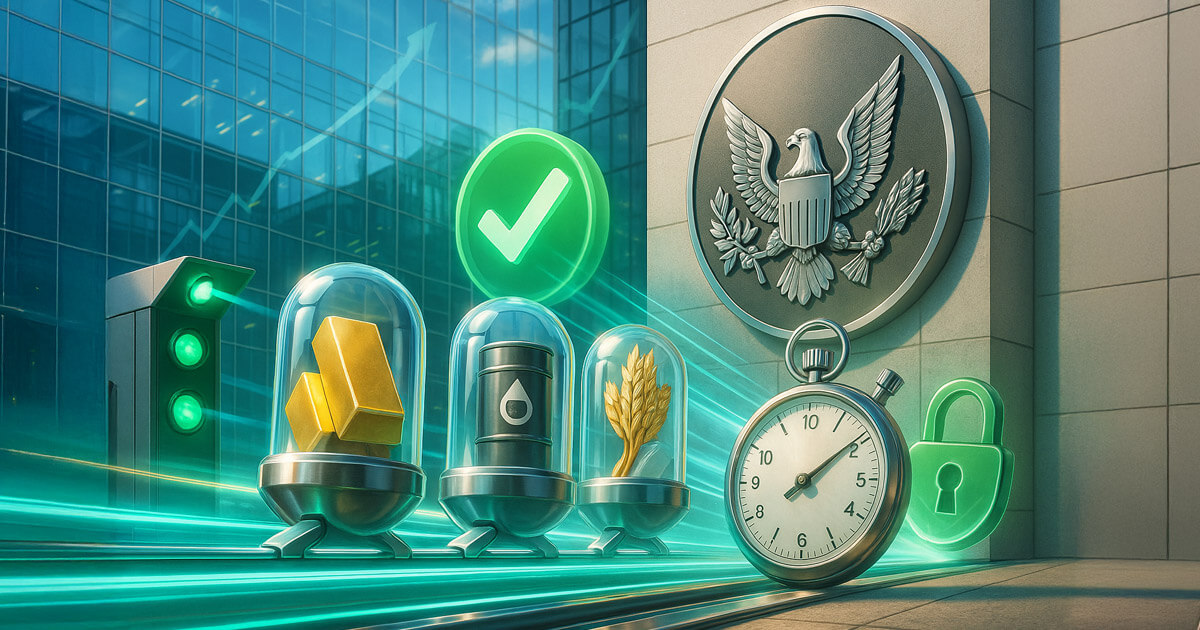
SEC greenlights new generic standards to expedite crypto ETP listings

SEC greenlights new generic standards to expedite crypto ETP listings

The post SEC greenlights new generic standards to expedite crypto ETP listings appeared on BitcoinEthereumNews.com. The U.S. Securities and Exchange Commission (SEC) has approved a new set of generic listing standards for commodity-based trust shares on Nasdaq, Cboe, and the New York Stock Exchange. The move is expected to streamline the approval process for exchange-traded products (ETPs) tied to digital assets, according to Fox Business reporter Eleanor Terret. However, she added that the Generic Listing Standards don’t open up every type of crypto ETP because threshold requirements remain in place, meaning not all products will immediately qualify. To add context, she quoted Tushar Jain of Multicoin Capital, who noted that the standards don’t apply to every type of crypto ETP and that threshold requirements remain. He expects the SEC will iterate further on these standards. The order, issued on Sept. 17, grants accelerated approval of proposed rule changes filed by the exchanges. By adopting the standards, the SEC aims to shorten the time it takes to bring new commodity-based ETPs to market, potentially clearing a path for broader crypto investment products. The regulator has been delaying the decision on several altcoin ETFs, most of which are set to reach their final deadlines in October. The move was rumored to be the SEC’s way of expediting approvals for crypto ETFs. The approval follows years of back-and-forth between the SEC and exchanges over how to handle crypto-based products, with past applications facing lengthy reviews. The new process is expected to reduce delays and provide more clarity for issuers, though the SEC signaled it may revisit and refine the standards as the market evolves. While the decision marks progress, experts emphasized that the so-called “floodgates” for crypto ETPs are not yet fully open. Future SEC actions will determine how broadly these standards can be applied across different digital asset products. Source: https://cryptoslate.com/sec-greenlights-new-generic-standards-to-expedite-crypto-etp-listings/
Share
BitcoinEthereumNews2025/09/18 08:43
A Rare Post from Michael Saylor: Will They Buy Bitcoin This Week?

A Rare Post from Michael Saylor: Will They Buy Bitcoin This Week?

The post A Rare Post from Michael Saylor: Will They Buy Bitcoin This Week? appeared on BitcoinEthereumNews.com. MicroStrategy (Strategy) founder Michael Saylor shared an update on his Bitcoin Tracker, suggesting the company hadn’t made any new Bitcoin purchases this week. “No new orange dots this week,” Saylor wrote. “Just a $9 billion reminder of why we should hold for the long term.” According to the data, MicroStrategy’s Bitcoin portfolio currently stands at 640,031 BTC. The portfolio’s total value is $78.9 billion, with an average cost of $73,983. After the company’s 81 purchases over the entire period, the portfolio’s total profit is approximately $31.5 billion, representing a 66.62% gain. Saylor’s company, MicroStrategy, typically announces an acquisition every week, but weeks without any acquisitions are not uncommon. The company typically announces an acquisition the week following a week without any acquisitions. However, Michael Saylor has never hinted at a weekly acquisition. *This is not investment advice. Follow our Telegram and Twitter account now for exclusive news, analytics and on-chain data! Source: https://en.bitcoinsistemi.com/a-rare-post-from-michael-saylor-will-they-buy-bitcoin-this-week/
Share
BitcoinEthereumNews2025/10/06 02:48