

Revolutionary AI Sorting Unlocks Billions in America’s Scrap Aluminum Goldmine
BitcoinWorld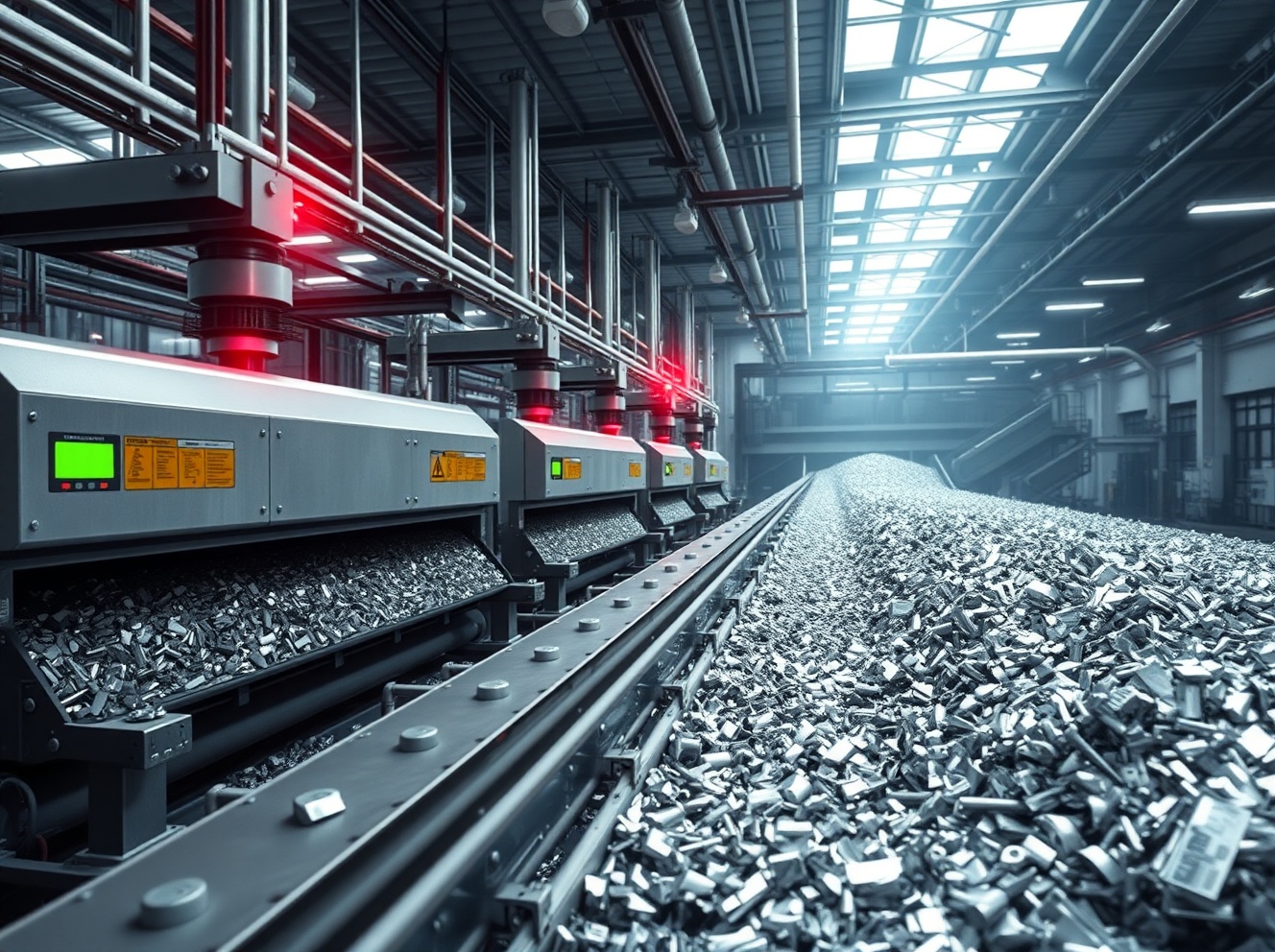
Revolutionary AI Sorting Unlocks Billions in America’s Scrap Aluminum Goldmine
Imagine turning America’s massive aluminum waste problem into a multi-billion dollar opportunity. That’s exactly what Sortera is achieving with groundbreaking AI technology that’s revolutionizing aluminum recycling. While cryptocurrency investors seek the next big technological disruption, this real-world application of artificial intelligence is generating actual cash flow by solving one of recycling’s toughest challenges.
How AI Sorting Technology is Transforming Aluminum Recycling
Sortera has developed an AI-powered system that identifies different aluminum grades with over 95% accuracy. The technology uses lasers, X-ray fluorescence, and high-speed cameras to analyze each aluminum chip in just 10 milliseconds. “Ten milliseconds is a long time,” says CEO Michael Siemer, highlighting the incredible speed required for industrial-scale aluminum recycling operations.
The Scrap Aluminum Crisis and Sortera’s Solution
Despite aluminum’s infinite recyclability, only about one-third of aluminum used in the U.S. gets recycled. The core problem has always been sorting mixed aluminum scrap efficiently. Traditional methods require melting the aluminum first to identify alloy types, making the process energy-intensive and costly. Sortera’s breakthrough eliminates this bottleneck.
Key Advantages of Sortera’s System:
- 95%+ sorting accuracy for different aluminum grades
- 10-millisecond classification per aluminum chip
- Air nozzle system for precise material separation
- No melting required for alloy identification
Automotive Industry Driving Aluminum Recycling Demand
The automotive industry represents the perfect circular economy for Sortera’s technology. Most scrap aluminum processed by the company comes from shredded automobiles, and the sorted material often returns to automotive assembly lines. “Every auto OEM on the planet has been to Indiana at least twice,” Siemer notes, emphasizing the strong interest from automotive manufacturers seeking lightweight materials for improved fuel efficiency.
From Startup to Cash Flow Positive: The Profitability Breakthrough
Sortera’s secret weapon isn’t just technology—it’s profitability. The company became cash flow positive in August 2025, operating just one plant in Indiana. The margin structure reveals why accuracy matters: “The margin is exponential above 90%, [while] 92% gets you a nice little margin, 95% gets you a big margin, [and] 98% is a really big margin.”
Recent Funding and Expansion
| Funding Type | Amount | Lead Investors |
|---|---|---|
| Equity | $20 million | VXI Capital, T. Rowe Price |
| Debt | $25 million | Overlay Capital, Yamaha Motor Ventures |
| Equipment Funding | Additional | Trinity Capital |
The funding supports construction of a second plant in Tennessee near Nashville, scheduled to launch in April or May 2026. This expansion replicates the successful Indiana facility that processes “millions of pounds a month” running “full-tilt, 24-7.”
The Science Behind AI Aluminum Classification
Sortera’s AI model leverages unique physical properties of different aluminum alloys. When shredded, each aluminum grade fractures differently, creating distinctive tears and folds that provide visual clues for classification. “The chemical differences manifest themselves in the shredding,” Siemer explains. This allows the system to confidently identify specific grades like 356 aluminum within the critical 10-millisecond window.
Future Applications Beyond Aluminum Recycling
While currently focused on aluminum, Sortera is developing capabilities for other metals including copper and titanium. The company’s technology platform could potentially transform recycling across multiple metal categories, creating new revenue streams and environmental benefits.
FAQs About Sortera and Aluminum Recycling Technology
What companies are involved with Sortera?
VXI Capital and accounts advised by T. Rowe Price led the recent funding round, with participation from Yamaha Motor Ventures and Overlay Capital. Trinity Capital provides equipment funding.
Who is Michael Siemer?
Michael Siemer is the CEO of Sortera Alloys and has been instrumental in developing the company’s AI sorting technology. Under his leadership, Sortera achieved cash flow positivity and secured significant venture funding.
What automotive manufacturers use recycled aluminum?
While specific automotive partners aren’t named, Siemer notes that “every auto OEM on the planet” has visited Sortera’s Indiana facility, indicating broad industry interest across the automotive sector.
The Billion-Dollar Opportunity in American Aluminum
Sortera’s vision extends beyond current operations. “We could instantly sort the 18 billion tons of aluminum made annually in the U.S.,” Siemer states. “Every piece of that, every pound would be sold at a profit in the U.S.” This represents a massive untapped market that could fundamentally change how America handles its aluminum waste stream.
Sortera’s success demonstrates how AI technology can solve real-world environmental and economic challenges. By turning scrap aluminum into valuable, sorted materials, the company is not only generating profits but also creating a more sustainable manufacturing ecosystem. The combination of technological innovation, market demand, and environmental benefits positions Sortera as a model for how technology can drive both business success and positive environmental impact.
To learn more about the latest AI technology trends transforming industries, explore our article on key developments shaping AI applications in industrial and environmental sectors.
This post Revolutionary AI Sorting Unlocks Billions in America’s Scrap Aluminum Goldmine first appeared on BitcoinWorld.

You May Also Like

Husky Inu (HINU) Completes Move To $0.00020688

Aave CEO Breaks Silence on Game-changing Upgrade in Q4: Details

