BitcoinWorld Futures Liquidated: Shocking $106 Million Wiped Out in One Hour Imagine waking up to find $106 million vanished from crypto markets in just sixty minutes. That’s exactly what happened as futures liquidated across major exchanges, sending shockwaves through the trading community. This massive liquidation event highlights the extreme volatility that characterizes cryptocurrency markets. What Does It Mean When Futures Get Liquidated? Futures liquidated occur when […] This post Futures Liquidated: Shocking $106 Million Wiped Out in One Hour first appeared on BitcoinWorld.BitcoinWorld Futures Liquidated: Shocking $106 Million Wiped Out in One Hour Imagine waking up to find $106 million vanished from crypto markets in just sixty minutes. That’s exactly what happened as futures liquidated across major exchanges, sending shockwaves through the trading community. This massive liquidation event highlights the extreme volatility that characterizes cryptocurrency markets. What Does It Mean When Futures Get Liquidated? Futures liquidated occur when […] This post Futures Liquidated: Shocking $106 Million Wiped Out in One Hour first appeared on BitcoinWorld.

Futures Liquidated: Shocking $106 Million Wiped Out in One Hour

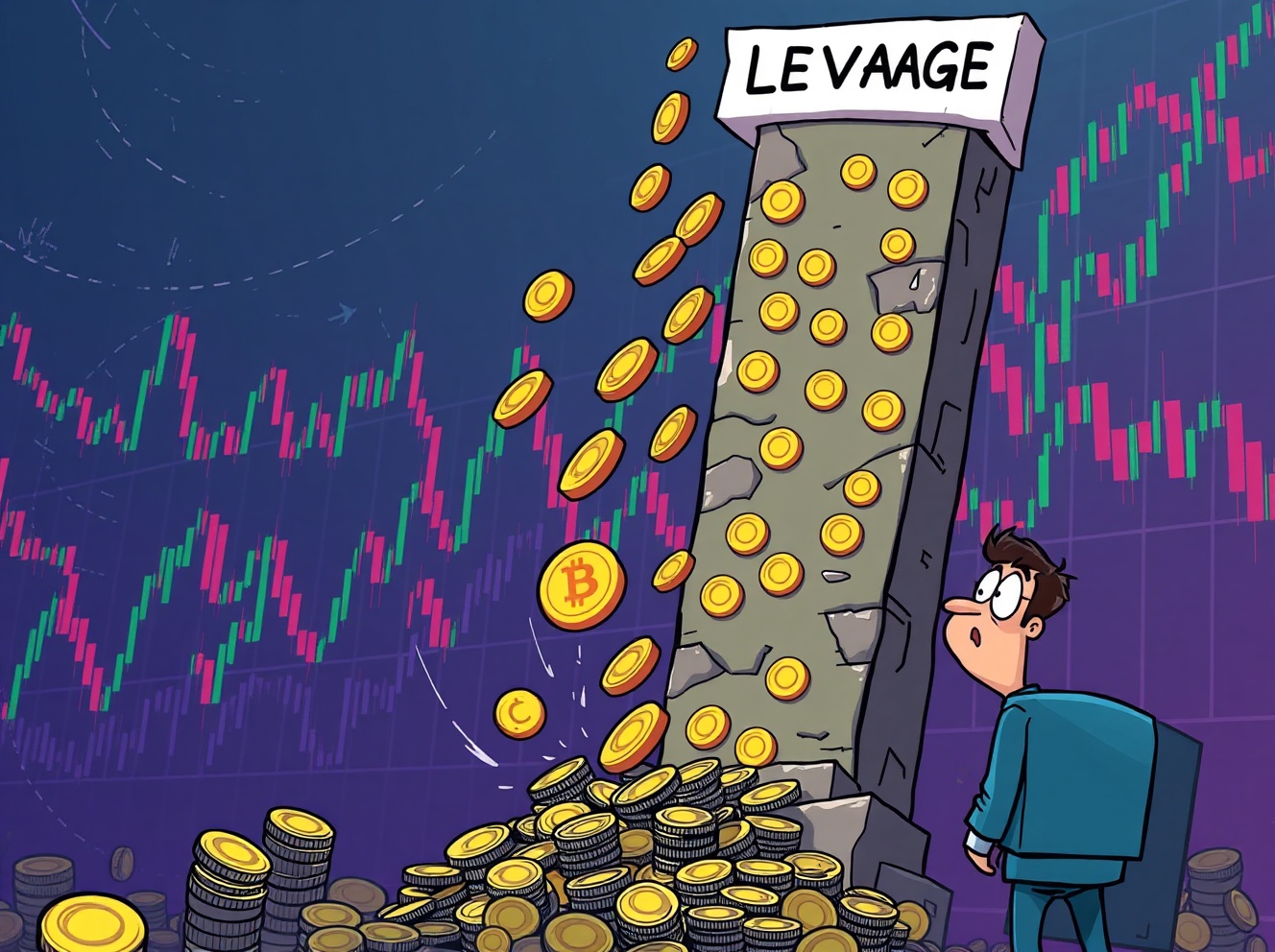
Futures liquidated in a chaotic crypto market storm with swirling digital assets

BitcoinWorld

Futures Liquidated: Shocking $106 Million Wiped Out in One Hour

Imagine waking up to find $106 million vanished from crypto markets in just sixty minutes. That’s exactly what happened as futures liquidated across major exchanges, sending shockwaves through the trading community. This massive liquidation event highlights the extreme volatility that characterizes cryptocurrency markets.

What Does It Mean When Futures Get Liquidated?

Futures liquidated occur when traders’ positions get forcibly closed because they can’t meet margin requirements. Think of it as an automatic safety mechanism that kicks in when prices move dramatically against leveraged positions. When markets swing violently, these liquidations can cascade, creating what traders call a ‘liquidation spiral.’

Why Are We Seeing Massive Futures Liquidated Now?

Several factors contribute to these dramatic events. Market sentiment shifts rapidly, often triggered by:

  • Major regulatory announcements
  • Unexpected economic data releases
  • Large whale movements
  • Technical breakdowns of key support levels

When these elements combine with high leverage, the result is often futures liquidated on an enormous scale.

How Do Futures Liquidated Affect Regular Investors?

Even if you’re not trading futures, these events impact your portfolio. Massive futures liquidated can:

  • Create increased market volatility
  • Lead to wider bid-ask spreads
  • Cause temporary liquidity crunches
  • Trigger emotional selling among retail investors

Understanding this dynamic helps you make better investment decisions during turbulent periods.

Can You Protect Yourself From Futures Liquidated Fallout?

Absolutely. Smart traders employ several strategies to navigate these situations. First, always use proper risk management by setting stop-loss orders. Second, avoid excessive leverage that could amplify losses. Third, maintain a diversified portfolio across different asset classes. Remember, when futures get liquidated, it often creates buying opportunities for prepared investors.

What’s the Bigger Picture Behind These Numbers?

The $106 million in futures liquidated represents more than just numbers on a screen. It reflects the growing maturity of crypto markets where risk management becomes crucial. As institutional participation increases, we can expect more sophisticated hedging strategies to emerge, potentially reducing the frequency of these dramatic events.

Ultimately, the story of futures liquidated teaches us valuable lessons about market dynamics and risk management. While these events create short-term turbulence, they also reinforce the importance of disciplined trading approaches in the volatile world of cryptocurrency.

Frequently Asked Questions

What triggers futures liquidations?

Futures get liquidated when traders’ margin balances fall below maintenance requirements due to adverse price movements.

How long do liquidation events typically last?

Most intense liquidation periods last from several minutes to a few hours, though market effects can persist longer.

Can liquidation events predict market direction?

While not perfect predictors, massive liquidations often signal potential reversal points as oversold conditions develop.

Should retail traders avoid futures entirely?

Not necessarily, but they should understand the risks and use appropriate position sizing and risk management.

Do all exchanges experience liquidations simultaneously?

Generally yes, as price movements across major exchanges tend to correlate closely during volatile periods.

How can I track potential liquidation events?

Use platforms that provide real-time liquidation data and set price alerts for key technical levels.

Found this analysis helpful? Share these insights about futures liquidated with fellow traders on your social media channels to help them navigate market volatility smarter.

To learn more about the latest crypto market trends, explore our article on key developments shaping Bitcoin price action and institutional adoption.

This post Futures Liquidated: Shocking $106 Million Wiped Out in One Hour first appeared on BitcoinWorld.

Market Opportunity
Major Logo
Major Price(MAJOR)
$0.12674
$0.12674$0.12674
+2.49%
USD
Major (MAJOR) Live Price Chart
Disclaimer: The articles reposted on this site are sourced from public platforms and are provided for informational purposes only. They do not necessarily reflect the views of MEXC. All rights remain with the original authors. If you believe any content infringes on third-party rights, please contact [email protected] for removal. MEXC makes no guarantees regarding the accuracy, completeness, or timeliness of the content and is not responsible for any actions taken based on the information provided. The content does not constitute financial, legal, or other professional advice, nor should it be considered a recommendation or endorsement by MEXC.

You May Also Like

Trust Wallet issues security alert: It will never ask users for their mnemonic phrase or private key.

Trust Wallet issues security alert: It will never ask users for their mnemonic phrase or private key.

PANews reported on January 17 that Trust Wallet issued a security warning on its X platform, stating that it will never ask users for their mnemonic phrases or
Share
PANews2026/01/17 21:10
Trust Wallet Alerts Users After Security Incident

Trust Wallet Alerts Users After Security Incident

The post Trust Wallet Alerts Users After Security Incident appeared on BitcoinEthereumNews.com. Key Points: Trust Wallet issues alert after $7 million theft from
Share
BitcoinEthereumNews2026/01/17 21:43
Tokenized Assets Shift From Wrappers to Building Blocks in DeFi

Tokenized Assets Shift From Wrappers to Building Blocks in DeFi

The post Tokenized Assets Shift From Wrappers to Building Blocks in DeFi appeared on BitcoinEthereumNews.com. RWAs are rapidly moving on-chain, unlocking new opportunities for investors and DeFi protocols, according to a new report from Dune and RWAxyz. Tokenized real-world assets (RWAs) are moving beyond digital versions of traditional securities to become key building blocks of decentralized finance (DeFi), according to the 2025 RWA Report from Dune and RWAxyz. The report notes that Treasuries, bonds, credit, and equities are now being used in DeFi as collateral, trading instruments, and yield products. This marks tokenization’s “real breakthrough” – composability, or the ability to combine and reuse assets across different protocols. Projects are already showing how this works in practice. Asset manager Maple Finance’s syrupUSDC, for example, has grown to $2.5 billion, with more than 30% placed in DeFi apps like Spark ($570 million). Centrifuge’s new deJAAA token, a wrapper for Janus Henderson’s AAA CLO fund, is already trading on Aerodrome, Coinbase and other exchanges, with Stellar planned next. Meanwhile, Aave’s Horizon RWA Market now lets institutional users post tokenized Treasuries and CLOs as collateral. This trend underscores a bigger shift: RWAs are no longer just copies of traditional assets; instead, they are becoming core parts of on-chain finance, powering lending, liquidity, and yield, and helping to close the gap between traditional finance (TradFi) and DeFi. “RWAs have crossed the chasm from experimentation to execution,” Sid Powell, CEO of Maple Finance, says in the report. “Our growth to $3.5B AUM reflects a broader shift: traditional financial services are adopting crypto assets while institutions seek exposure to on-chain markets.” Investor demand for higher returns and more diversified options is mainly driving this growth. Tokenized Treasuries proved there is strong demand, with $7.3 billion issued by September 2025 – up 85% year-to-date. The growth was led by BlackRock, WisdomTree, Ondo, and Centrifuge’s JTRSY (Janus Henderson Anemoy Treasury Fund). Spark’s $1…
Share
BitcoinEthereumNews2025/09/18 06:10