BitcoinWorld Bitcoin Price Plummets: BTC Falls Below $88,000 – What Investors Need to Know Bitcoin investors received an unexpected shock today as the leading cryptocurrency’s price tumbled below the critical $88,000 threshold. According to real-time market data from Bitcoin World, BTC is currently trading at $87,975.05 on the Binance USDT market, marking a significant downturn that has caught many traders by surprise. What’s Driving This Bitcoin Price Decline? The sudden drop in Bitcoin price below $88,000 represents one of the most notable market movements this week. Several factors appear to be contributing to this downward pressure. Market analysts point to increased regulatory concerns, profit-taking by early investors, and broader economic uncertainties as potential catalysts. However, experienced cryptocurrency traders understand that such fluctuations are normal in the volatile digital asset space. How Significant Is This Bitcoin Price Movement? While any drop below a major psychological level like $88,000 grabs headlines, context matters greatly. The current Bitcoin price represents: A 5.2% decline from recent highs Still maintains a strong position above key support levels Remains within expected volatility ranges for cryptocurrency Many analysts suggest this could present a buying opportunity for long-term investors who believe in Bitcoin’s fundamental value proposition. What Should Bitcoin Investors Do Now? Facing a declining Bitcoin price requires strategic thinking rather than emotional reactions. Consider these approaches: Dollar-cost averaging – Continue regular purchases regardless of price fluctuations Portfolio rebalancing – Ensure your cryptocurrency exposure matches your risk tolerance Research fundamentals – Focus on long-term adoption trends rather than short-term price movements Where Could the Bitcoin Price Go From Here? Technical analysts are watching several key levels closely. The $85,000 zone represents major support, while resistance sits around $92,000. The current Bitcoin price action suggests we might see continued volatility in the coming days. However, many long-term indicators remain positive for cryptocurrency overall. Understanding Market Cycles in Cryptocurrency Experienced investors recognize that Bitcoin price movements often follow predictable patterns. The current correction, while concerning to newcomers, fits within historical market behavior. Previous cycles have shown that such dips often precede periods of consolidation and eventual recovery. The recent Bitcoin price drop below $88,000 serves as a reminder of cryptocurrency’s inherent volatility. While short-term movements can be dramatic, the fundamental case for Bitcoin remains strong. Technological adoption continues growing, institutional interest persists, and the network effect strengthens daily. Smart investors use these moments to reassess their strategies rather than panic. Frequently Asked Questions How much has Bitcoin dropped recently? Bitcoin has fallen below $88,000, representing approximately a 5% decline from recent peaks. Should I sell my Bitcoin during this drop? This depends on your investment strategy. Long-term investors often view dips as buying opportunities, while short-term traders might adjust positions. What’s causing the Bitcoin price decline? Multiple factors including regulatory concerns, market sentiment, and normal profit-taking after recent gains. How low could Bitcoin go? While predictions vary, major support levels exist around $85,000, though cryptocurrency markets are inherently unpredictable. Is this the end of the Bitcoin bull market? Most analysts view this as a normal correction within a larger trend rather than a market reversal. When will Bitcoin recover? Market timing is impossible to predict accurately, but historical patterns suggest volatility will continue. Found this analysis helpful? Share this article with fellow cryptocurrency enthusiasts on social media to help them navigate this market movement wisely. Knowledge sharing strengthens our entire community during volatile periods. To learn more about the latest Bitcoin trends, explore our article on key developments shaping Bitcoin price action and market dynamics. This post Bitcoin Price Plummets: BTC Falls Below $88,000 – What Investors Need to Know first appeared on BitcoinWorld.BitcoinWorld Bitcoin Price Plummets: BTC Falls Below $88,000 – What Investors Need to Know Bitcoin investors received an unexpected shock today as the leading cryptocurrency’s price tumbled below the critical $88,000 threshold. According to real-time market data from Bitcoin World, BTC is currently trading at $87,975.05 on the Binance USDT market, marking a significant downturn that has caught many traders by surprise. What’s Driving This Bitcoin Price Decline? The sudden drop in Bitcoin price below $88,000 represents one of the most notable market movements this week. Several factors appear to be contributing to this downward pressure. Market analysts point to increased regulatory concerns, profit-taking by early investors, and broader economic uncertainties as potential catalysts. However, experienced cryptocurrency traders understand that such fluctuations are normal in the volatile digital asset space. How Significant Is This Bitcoin Price Movement? While any drop below a major psychological level like $88,000 grabs headlines, context matters greatly. The current Bitcoin price represents: A 5.2% decline from recent highs Still maintains a strong position above key support levels Remains within expected volatility ranges for cryptocurrency Many analysts suggest this could present a buying opportunity for long-term investors who believe in Bitcoin’s fundamental value proposition. What Should Bitcoin Investors Do Now? Facing a declining Bitcoin price requires strategic thinking rather than emotional reactions. Consider these approaches: Dollar-cost averaging – Continue regular purchases regardless of price fluctuations Portfolio rebalancing – Ensure your cryptocurrency exposure matches your risk tolerance Research fundamentals – Focus on long-term adoption trends rather than short-term price movements Where Could the Bitcoin Price Go From Here? Technical analysts are watching several key levels closely. The $85,000 zone represents major support, while resistance sits around $92,000. The current Bitcoin price action suggests we might see continued volatility in the coming days. However, many long-term indicators remain positive for cryptocurrency overall. Understanding Market Cycles in Cryptocurrency Experienced investors recognize that Bitcoin price movements often follow predictable patterns. The current correction, while concerning to newcomers, fits within historical market behavior. Previous cycles have shown that such dips often precede periods of consolidation and eventual recovery. The recent Bitcoin price drop below $88,000 serves as a reminder of cryptocurrency’s inherent volatility. While short-term movements can be dramatic, the fundamental case for Bitcoin remains strong. Technological adoption continues growing, institutional interest persists, and the network effect strengthens daily. Smart investors use these moments to reassess their strategies rather than panic. Frequently Asked Questions How much has Bitcoin dropped recently? Bitcoin has fallen below $88,000, representing approximately a 5% decline from recent peaks. Should I sell my Bitcoin during this drop? This depends on your investment strategy. Long-term investors often view dips as buying opportunities, while short-term traders might adjust positions. What’s causing the Bitcoin price decline? Multiple factors including regulatory concerns, market sentiment, and normal profit-taking after recent gains. How low could Bitcoin go? While predictions vary, major support levels exist around $85,000, though cryptocurrency markets are inherently unpredictable. Is this the end of the Bitcoin bull market? Most analysts view this as a normal correction within a larger trend rather than a market reversal. When will Bitcoin recover? Market timing is impossible to predict accurately, but historical patterns suggest volatility will continue. Found this analysis helpful? Share this article with fellow cryptocurrency enthusiasts on social media to help them navigate this market movement wisely. Knowledge sharing strengthens our entire community during volatile periods. To learn more about the latest Bitcoin trends, explore our article on key developments shaping Bitcoin price action and market dynamics. This post Bitcoin Price Plummets: BTC Falls Below $88,000 – What Investors Need to Know first appeared on BitcoinWorld.

Bitcoin Price Plummets: BTC Falls Below $88,000 – What Investors Need to Know

2025/11/25 08:40
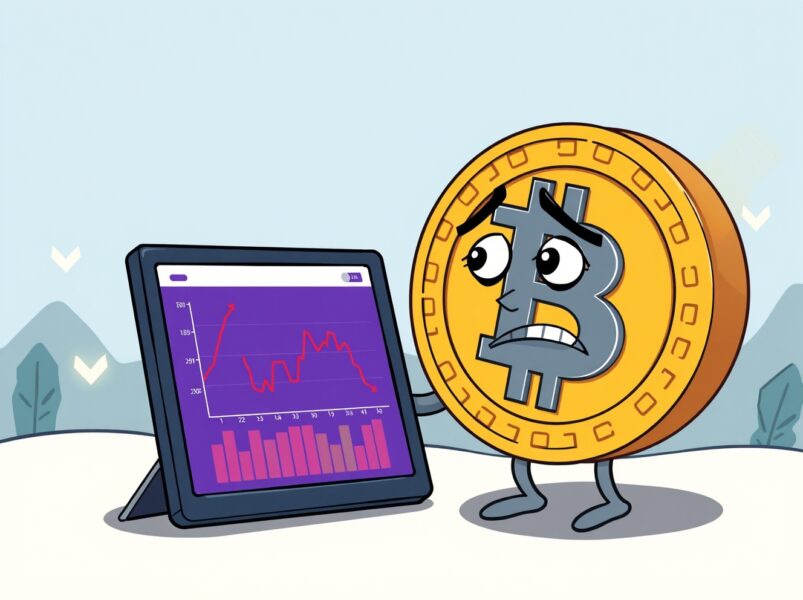
Bitcoin price drop illustrated as cryptocurrency market volatility

BitcoinWorld

Bitcoin Price Plummets: BTC Falls Below $88,000 – What Investors Need to Know

Bitcoin investors received an unexpected shock today as the leading cryptocurrency’s price tumbled below the critical $88,000 threshold. According to real-time market data from Bitcoin World, BTC is currently trading at $87,975.05 on the Binance USDT market, marking a significant downturn that has caught many traders by surprise.

What’s Driving This Bitcoin Price Decline?

The sudden drop in Bitcoin price below $88,000 represents one of the most notable market movements this week. Several factors appear to be contributing to this downward pressure. Market analysts point to increased regulatory concerns, profit-taking by early investors, and broader economic uncertainties as potential catalysts. However, experienced cryptocurrency traders understand that such fluctuations are normal in the volatile digital asset space.

How Significant Is This Bitcoin Price Movement?

While any drop below a major psychological level like $88,000 grabs headlines, context matters greatly. The current Bitcoin price represents:

  • A 5.2% decline from recent highs
  • Still maintains a strong position above key support levels
  • Remains within expected volatility ranges for cryptocurrency

Many analysts suggest this could present a buying opportunity for long-term investors who believe in Bitcoin’s fundamental value proposition.

What Should Bitcoin Investors Do Now?

Facing a declining Bitcoin price requires strategic thinking rather than emotional reactions. Consider these approaches:

  • Dollar-cost averaging – Continue regular purchases regardless of price fluctuations
  • Portfolio rebalancing – Ensure your cryptocurrency exposure matches your risk tolerance
  • Research fundamentals – Focus on long-term adoption trends rather than short-term price movements

Where Could the Bitcoin Price Go From Here?

Technical analysts are watching several key levels closely. The $85,000 zone represents major support, while resistance sits around $92,000. The current Bitcoin price action suggests we might see continued volatility in the coming days. However, many long-term indicators remain positive for cryptocurrency overall.

Understanding Market Cycles in Cryptocurrency

Experienced investors recognize that Bitcoin price movements often follow predictable patterns. The current correction, while concerning to newcomers, fits within historical market behavior. Previous cycles have shown that such dips often precede periods of consolidation and eventual recovery.

The recent Bitcoin price drop below $88,000 serves as a reminder of cryptocurrency’s inherent volatility. While short-term movements can be dramatic, the fundamental case for Bitcoin remains strong. Technological adoption continues growing, institutional interest persists, and the network effect strengthens daily. Smart investors use these moments to reassess their strategies rather than panic.

Frequently Asked Questions

How much has Bitcoin dropped recently?
Bitcoin has fallen below $88,000, representing approximately a 5% decline from recent peaks.

Should I sell my Bitcoin during this drop?
This depends on your investment strategy. Long-term investors often view dips as buying opportunities, while short-term traders might adjust positions.

What’s causing the Bitcoin price decline?
Multiple factors including regulatory concerns, market sentiment, and normal profit-taking after recent gains.

How low could Bitcoin go?
While predictions vary, major support levels exist around $85,000, though cryptocurrency markets are inherently unpredictable.

Is this the end of the Bitcoin bull market?
Most analysts view this as a normal correction within a larger trend rather than a market reversal.

When will Bitcoin recover?
Market timing is impossible to predict accurately, but historical patterns suggest volatility will continue.

Found this analysis helpful? Share this article with fellow cryptocurrency enthusiasts on social media to help them navigate this market movement wisely. Knowledge sharing strengthens our entire community during volatile periods.

To learn more about the latest Bitcoin trends, explore our article on key developments shaping Bitcoin price action and market dynamics.

This post Bitcoin Price Plummets: BTC Falls Below $88,000 – What Investors Need to Know first appeared on BitcoinWorld.

Disclaimer: The articles reposted on this site are sourced from public platforms and are provided for informational purposes only. They do not necessarily reflect the views of MEXC. All rights remain with the original authors. If you believe any content infringes on third-party rights, please contact [email protected] for removal. MEXC makes no guarantees regarding the accuracy, completeness, or timeliness of the content and is not responsible for any actions taken based on the information provided. The content does not constitute financial, legal, or other professional advice, nor should it be considered a recommendation or endorsement by MEXC.

You May Also Like

HashKey's IPO is imminent: Targeting the golden age of digital assets and building a benchmark for a compliant ecosystem in Asia.

HashKey's IPO is imminent: Targeting the golden age of digital assets and building a benchmark for a compliant ecosystem in Asia.

Original author: Ho Mo-cheung, Hong Kong 01 With a clearer global regulatory framework, increased institutional participation, and breakthroughs in underlying blockchain technology, the digital asset market is transitioning from an "early stage of experimentation" to a new phase of "institutionalized development." According to Frost & Sullivan data, from 2024 to 2029, the global onshore digital asset trading volume will achieve a CAGR of 48.9%, the tokenization services market will see an even higher CAGR of 94.8%, and the digital asset management services market will achieve a CAGR of 54.5%, indicating that the industry is entering a long-term, sustainable structural expansion cycle. In this round of structural upward cycle in the industry, compliance, licensing, and security have become the core elements that institutions and new funds are most concerned about. As a leading integrated digital asset company in Asia, HashKey, with its compliance-first strategic layout and business ecosystem covering the entire chain, is becoming a core bridge connecting traditional finance and the digital economy, standing at the starting point of the value enhancement cycle. Recently, with HashKey passing the Hong Kong Stock Exchange's listing hearing, its Hong Kong IPO will soon commence. This leading integrated digital asset group in Asia is showcasing the systemic value of its compliance moat, technological capabilities, and comprehensive ecosystem to the capital market. Industry insiders generally believe that HashKey's IPO will be a significant milestone in the institutionalization of digital assets in Hong Kong. Compliance as the foundation, and a synergistic ecosystem of business operations to create systemic advantages. In the digital asset field, compliance and security remain the primary principles determining a company's long-term development. As global regulatory frameworks rapidly improve, licenses and compliance capabilities have transformed from bonuses into core credentials for companies to expand their business scope and secure incremental institutional funding. Especially in high-barrier-to-entry sectors such as custody, RWA, and institutional asset management, regulatory approval is a direct ticket to the game and the only way to build competitive barriers. This is why HashKey has prioritized compliance since its inception, building a global compliance system covering core markets such as Hong Kong, Singapore, and Japan. As the first virtual asset trading platform (VATP) in Hong Kong simultaneously authorized to serve both retail and institutional investors, HashKey currently holds 13 cross-regional licenses, forming a regulatory moat that is difficult to replicate. Furthermore, the company's annual internal control audits have passed international certifications such as SOC 1 (Type 2), SOC 2 (Type 2), ISO27001, and ISO27701. Since its operation, it has maintained an industry record of "zero customer fund losses and zero on-chain penalties," laying an unshakeable foundation for its long-term credibility. Technology empowers growth from self-use to spillover effects, expanding the boundaries of growth. Based on this compliant platform, HashKey has built a full-chain business ecosystem of "transaction facilitation + on-chain services + asset management" and is rapidly expanding its market leadership. According to the prospectus, as of August 31, 2025, the transaction facilitation business accounted for 75% of the Hong Kong market share, with a cumulative spot trading volume of HK$1.3 trillion; the on-chain service staking scale exceeded HK$25 billion; the asset management scale exceeded HK$8 billion, and the return rate of its funds exceeded 10 times. All three segments rank first in Asia. More importantly, this integrated business is not simply a combination, but a self-reinforcing network that grows stronger with continued operation. Its flywheel effect manifests in: on-chain services providing tokenization tools for projects and institutions; exchanges handling distribution and circulation needs; and asset management accumulating long-term capital and meeting incremental demand. These three elements serve as entry points and reinforce each other, forming a positive value loop that continuously expands HashKey's ecosystem stickiness and market competitiveness. From compliance systems to technology platforms, and then to multi-business collaboration, HashKey is no longer just a trading platform, but a core hub for building Asia's digital asset infrastructure. On its technological foundation, HashKey has built a high-performance platform specifically designed for institutional scenarios: capable of supporting up to 50,000 transactions per second, with dynamic scaling capabilities, sufficient to handle periodic traffic surges and ensure stable and smooth transactions even under extreme market conditions. At the underlying level, the company's self-developed HashKey Chain—an Ethereum Layer 2 network for financial institutions—has become the technological carrier for key scenarios such as RWA tokenization, stablecoins, and DeFi applications, and has been selected by numerous financial institutions, gradually becoming the infrastructure for on-chain and off-chain asset flows. More noteworthy is that HashKey's technological capabilities have begun to be exported to external financial and technology institutions, creating a cross-market growth spillover effect. For example, it has partnered with Coins.ph to export its underlying technology and liquidity capabilities to create a licensed cross-border remittance channel; it has partnered with securities firms such as Victory Securities to launch compliant integrated account solutions; and it has partnered with Standard Chartered Bank, ZA Bank, and others to provide 24/7 fiat currency deposit and withdrawal services. This "technology infrastructure spillover" model has essentially expanded HashKey's growth boundaries from a single platform business to a broader regional fintech market, bringing more flexible long-term growth potential than the trading business, and also enabling it to establish a clear leading position in the Asian digital asset infrastructure race. With the accelerated implementation of scenarios such as RWA, stablecoins, on-chain clearing and payments, companies that possess both compliance access and underlying technical capabilities will capture the next long-term dividends of the entire industry. HashKey's early deployment in this direction is essentially opening up growth potential far exceeding its current scale. Ecological effects are beginning to emerge, and growth is entering a period of acceleration. As its business ecosystem gradually takes shape, HashKey's growth has entered a period of accelerated development, and the ecosystem's amplifying effect is fully unfolding. Financial data has already shown a clear structural upward trend: Total revenue increased from HK$129 million in 2022 to HK$721 million in 2024, a 4.6-fold increase in two years; the Hong Kong station launched in 2023 became a new engine, with Hong Kong revenue increasing by 58% year-on-year to HK$89 million in the first half of 2025. In terms of revenue structure, transaction facilitation services have become the main driver of growth, contributing 71.8% in 2024. Meanwhile, high-margin on-chain services and asset management services continue to provide stable cash flow, forming a virtuous cycle. Increased revenue has driven rapid expansion of gross profit: gross profit increased from HK$125 million in 2022 to HK$533 million in 2024, representing a CAGR of 106%; adjusted net loss also narrowed further from HK$400 million in 2022 to HK$376 million in 2024. Overall, the company's multiple advantages in compliance, technological capabilities, and ecosystem layout have built a significant comprehensive competitive barrier, firmly securing its core position in the Asian digital asset market. In the context of the deep integration of traditional finance and the digital economy globally, companies that integrate compliance, technology, and infrastructure will reap the greatest cyclical benefits. HashKey's strategic layout aligns perfectly with this wave of industrial structural migration, and its technology spillover, ecosystem expansion, and first-mover advantage in compliance are demonstrating its true long-term value to the market. In the Asian market, HashKey's strategic position deserves a more imaginative reassessment, and its growth potential is far from being fully realized. In particular, against the backdrop of digital assets becoming institutionalized, this not only represents a new stage in the company's development but also symbolizes a new trajectory that Hong Kong is forging in the global financial landscape. Original article URL: HashKey's IPO is imminent: Anchoring the golden age of digital assets, building a benchmark for compliance ecosystem in Asia | Hong Kong 01 https://www.hk01.com/article/60300961?utm_source=01articlecopy&utm_medium=referral
Share
PANews2025/12/08 11:15