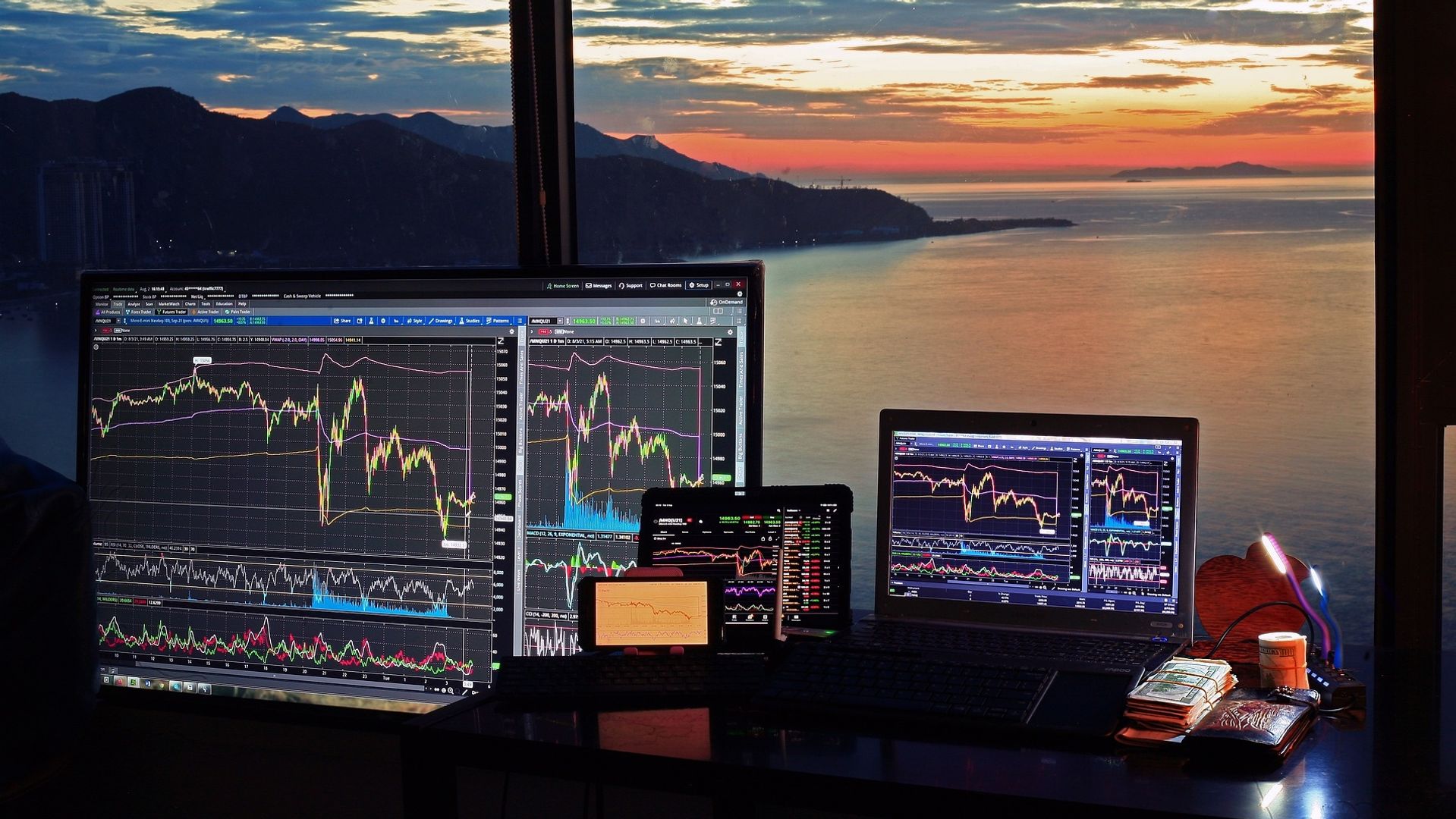
BitcoinWorld Shocking $101 Million Futures Liquidated: What This Means for Crypto Traders The cryptocurrency market just witnessed a staggering $101 million in futures liquidated within a single hour, sending shockwaves through trading communities worldwide. This massive liquidation event represents one of the most significant market movements in recent weeks, highlighting the extreme volatility that characterizes digital asset trading. For traders and investors, understanding what triggered this cascade […] This post Shocking $101 Million Futures Liquidated: What This Means for Crypto Traders first appeared on BitcoinWorld.BitcoinWorld Shocking $101 Million Futures Liquidated: What This Means for Crypto Traders The cryptocurrency market just witnessed a staggering $101 million in futures liquidated within a single hour, sending shockwaves through trading communities worldwide. This massive liquidation event represents one of the most significant market movements in recent weeks, highlighting the extreme volatility that characterizes digital asset trading. For traders and investors, understanding what triggered this cascade […] This post Shocking $101 Million Futures Liquidated: What This Means for Crypto Traders first appeared on BitcoinWorld.

Shocking $101 Million Futures Liquidated: What This Means for Crypto Traders

2025/11/27 02:40
5 min read
For feedback or concerns regarding this content, please contact us at [email protected]

BitcoinWorld

Shocking $101 Million Futures Liquidated: What This Means for Crypto Traders

The cryptocurrency market just witnessed a staggering $101 million in futures liquidated within a single hour, sending shockwaves through trading communities worldwide. This massive liquidation event represents one of the most significant market movements in recent weeks, highlighting the extreme volatility that characterizes digital asset trading. For traders and investors, understanding what triggered this cascade and how to navigate such conditions becomes crucial for protecting their portfolios.

What Caused This Massive Futures Liquidated Event?

Several factors converged to create the perfect storm for this substantial futures liquidated scenario. First, unexpected regulatory news from major economies created immediate market uncertainty. Second, large institutional positions reached their liquidation thresholds simultaneously. Third, automated trading algorithms amplified the selling pressure once key support levels broke. When these elements combined, they triggered a domino effect that resulted in $101 million worth of positions being forcibly closed.

How Do Futures Liquidations Actually Work?

Futures liquidated events occur when traders’ positions get automatically closed by exchanges. This happens because:

  • Margin calls are triggered when account equity falls below maintenance margin requirements
  • Stop-loss orders activate once prices hit predetermined levels
  • Forced liquidations happen when traders cannot add more collateral to their positions

The recent $101 million futures liquidated demonstrates how quickly market conditions can change and how important risk management becomes in volatile markets.

Who Was Most Affected by These Futures Liquidated Positions?

Analysis reveals that both retail and institutional traders experienced significant impacts from these futures liquidated events. Long positions accounted for approximately 65% of the total liquidations, indicating that bullish traders suffered the heaviest losses. Major exchanges including Binance, OKX, and ByBit reported the highest volumes of futures liquidated, with Bitcoin and Ethereum positions comprising nearly 70% of the total value. This distribution shows that even established cryptocurrencies remain vulnerable to sudden price swings that trigger cascading liquidations.

What Can Traders Learn From This Futures Liquidated Incident?

This substantial futures liquidated event provides valuable lessons for all market participants. First, proper position sizing becomes essential during periods of high volatility. Second, diversifying across different time frames and asset classes can help mitigate risk. Third, setting appropriate stop-loss levels that account for normal market fluctuations prevents premature liquidations. The $315 million in futures liquidated over 24 hours serves as a stark reminder that risk management should always take priority over potential returns.

How to Protect Yourself From Future Liquidations

Traders can implement several strategies to avoid becoming part of future statistics showing futures liquidated. Consider these protective measures:

  • Use lower leverage ratios to withstand larger price movements
  • Monitor funding rates for signs of market overheating
  • Set multiple take-profit levels to secure profits gradually
  • Diversify trading strategies across spot and derivatives markets

Implementing these approaches can significantly reduce your exposure to sudden futures liquidated scenarios like the $101 million event we just witnessed.

What’s Next for Crypto Markets After This Volatility?

Following this significant futures liquidated episode, market participants should prepare for continued volatility as positions recalibrate. Historical patterns suggest that such large-scale liquidations often precede periods of consolidation or trend reversals. However, the fundamental drivers of cryptocurrency adoption remain unchanged. While short-term price action may remain turbulent, the long-term outlook for blockchain technology and digital assets continues to show promise for informed investors who manage their risk appropriately.

The recent $101 million futures liquidated within one hour serves as a powerful reminder of cryptocurrency market volatility. While such events create temporary disruption, they also present opportunities for prepared traders. By understanding liquidation mechanisms, implementing robust risk management, and maintaining perspective during market turbulence, investors can navigate these challenging conditions successfully. The key takeaway remains that proper position sizing and risk management prove more valuable than trying to time market movements perfectly.

Frequently Asked Questions

What does futures liquidated mean?

Futures liquidated refers to the automatic closing of leveraged positions when traders’ collateral falls below required levels, preventing further losses.

How can I avoid getting liquidated?

Use lower leverage, maintain adequate margin buffers, set sensible stop-loss orders, and avoid overconcentrated positions.

Which cryptocurrencies saw the most liquidations?

Bitcoin and Ethereum accounted for nearly 70% of the $101 million futures liquidated during this event.

Do liquidations always mean market downturns?

Not necessarily. While large liquidations often accompany price declines, they can also signal market bottoms and create buying opportunities.

How quickly can liquidation happen?

Liquidations can occur within seconds once price levels trigger margin calls or stop-loss orders, especially during high volatility.

Are futures liquidations bad for the market?

While painful for affected traders, liquidations help maintain market stability by preventing uncontrolled losses and excessive leverage buildup.

Found this analysis of the recent futures liquidated event helpful? Share this article with fellow traders on Twitter and LinkedIn to help them navigate market volatility more effectively. Your shared knowledge could prevent someone from becoming the next liquidation statistic!

To learn more about the latest crypto market trends, explore our article on key developments shaping Bitcoin price action and institutional adoption.

This post Shocking $101 Million Futures Liquidated: What This Means for Crypto Traders first appeared on BitcoinWorld.

Disclaimer: The articles reposted on this site are sourced from public platforms and are provided for informational purposes only. They do not necessarily reflect the views of MEXC. All rights remain with the original authors. If you believe any content infringes on third-party rights, please contact [email protected] for removal. MEXC makes no guarantees regarding the accuracy, completeness, or timeliness of the content and is not responsible for any actions taken based on the information provided. The content does not constitute financial, legal, or other professional advice, nor should it be considered a recommendation or endorsement by MEXC.

You May Also Like

Shocking OpenVPP Partnership Claim Draws Urgent Scrutiny

Shocking OpenVPP Partnership Claim Draws Urgent Scrutiny

The post Shocking OpenVPP Partnership Claim Draws Urgent Scrutiny appeared on BitcoinEthereumNews.com. The cryptocurrency world is buzzing with a recent controversy surrounding a bold OpenVPP partnership claim. This week, OpenVPP (OVPP) announced what it presented as a significant collaboration with the U.S. government in the innovative field of energy tokenization. However, this claim quickly drew the sharp eye of on-chain analyst ZachXBT, who highlighted a swift and official rebuttal that has sent ripples through the digital asset community. What Sparked the OpenVPP Partnership Claim Controversy? The core of the issue revolves around OpenVPP’s assertion of a U.S. government partnership. This kind of collaboration would typically be a monumental endorsement for any private cryptocurrency project, especially given the current regulatory climate. Such a partnership could signify a new era of mainstream adoption and legitimacy for energy tokenization initiatives. OpenVPP initially claimed cooperation with the U.S. government. This alleged partnership was said to be in the domain of energy tokenization. The announcement generated considerable interest and discussion online. ZachXBT, known for his diligent on-chain investigations, was quick to flag the development. He brought attention to the fact that U.S. Securities and Exchange Commission (SEC) Commissioner Hester Peirce had directly addressed the OpenVPP partnership claim. Her response, delivered within hours, was unequivocal and starkly contradicted OpenVPP’s narrative. How Did Regulatory Authorities Respond to the OpenVPP Partnership Claim? Commissioner Hester Peirce’s statement was a crucial turning point in this unfolding story. She clearly stated that the SEC, as an agency, does not engage in partnerships with private cryptocurrency projects. This response effectively dismantled the credibility of OpenVPP’s initial announcement regarding their supposed government collaboration. Peirce’s swift clarification underscores a fundamental principle of regulatory bodies: maintaining impartiality and avoiding endorsements of private entities. Her statement serves as a vital reminder to the crypto community about the official stance of government agencies concerning private ventures. Moreover, ZachXBT’s analysis…
Share
BitcoinEthereumNews2025/09/18 02:13
A Netflix ‘KPop Demon Hunters’ Short Film Has Been Rated For Release

A Netflix ‘KPop Demon Hunters’ Short Film Has Been Rated For Release

The post A Netflix ‘KPop Demon Hunters’ Short Film Has Been Rated For Release appeared on BitcoinEthereumNews.com. KPop Demon Hunters Netflix Everyone has wondered what may be the next step for KPop Demon Hunters as an IP, given its record-breaking success on Netflix. Now, the answer may be something exactly no one predicted. According to a new filing with the MPA, something called Debut: A KPop Demon Hunters Story has been rated PG by the ratings body. It’s listed alongside some other films, and this is obviously something that has not been publicly announced. A short film could be well, very short, a few minutes, and likely no more than ten. Even that might be pushing it. Using say, Pixar shorts as a reference, most are between 4 and 8 minutes. The original movie is an hour and 36 minutes. The “Debut” in the title indicates some sort of flashback, perhaps to when HUNTR/X first arrived on the scene before they blew up. Previously, director Maggie Kang has commented about how there were more backstory components that were supposed to be in the film that were cut, but hinted those could be explored in a sequel. But perhaps some may be put into a short here. I very much doubt those scenes were fully produced and simply cut, but perhaps they were finished up for this short film here. When would Debut: KPop Demon Hunters theoretically arrive? I’m not sure the other films on the list are much help. Dead of Winter is out in less than two weeks. Mother Mary does not have a release date. Ne Zha 2 came out earlier this year. I’ve only seen news stories saying The Perfect Gamble was supposed to come out in Q1 2025, but I’ve seen no evidence that it actually has. KPop Demon Hunters Netflix It could be sooner rather than later as Netflix looks to capitalize…
Share
BitcoinEthereumNews2025/09/18 02:23
Curve Finance votes on revenue-sharing model for CRV holders

Curve Finance votes on revenue-sharing model for CRV holders

The post Curve Finance votes on revenue-sharing model for CRV holders appeared on BitcoinEthereumNews.com. Curve Finance has proposed a new protocol called Yield Basis that would share revenue directly with CRV holders, marking a shift from one-off incentives to sustainable income. Summary Curve Finance has put forward a revenue-sharing protocol to give CRV holders sustainable income beyond emissions and fees. The plan would mint $60M in crvUSD to seed three Bitcoin liquidity pools (WBTC, cbBTC, tBTC), with 35–65% of revenue distributed to veCRV stakers. The DAO vote runs from up to Sept. 24, with the proposal seen as a major step to strengthen CRV tokenomics after past liquidity and governance challenges. Curve Finance founder Michael Egorov has introduced a proposal to give CRV token holders a more direct way to earn income, launching a system called Yield Basis that aims to turn the governance token into a sustainable, yield-bearing asset.  The proposal has been published on the Curve DAO (CRV) governance forum, with voting open until Sept. 24. A new model for CRV rewards Yield Basis is designed to distribute transparent and consistent returns to CRV holders who lock their tokens for veCRV governance rights. Unlike past incentive programs, which relied heavily on airdrops and emissions, the protocol channels income from Bitcoin-focused liquidity pools directly back to token holders. To start, Curve would mint $60 million worth of crvUSD, its over-collateralized stablecoin, with proceeds allocated across three pools — WBTC, cbBTC, and tBTC — each capped at $10 million. 25% of Yield Basis tokens would be reserved for the Curve ecosystem, and between 35% and 65% of Yield Basis’s revenue would be given to veCRV holders. By emphasizing Bitcoin (BTC) liquidity and offering yields without the short-term loss risks associated with automated market makers, the protocol hopes to draw in professional traders and institutions. Context and potential impact on Curve Finance The proposal comes as Curve continues to modify…
Share
BitcoinEthereumNews2025/09/18 14:37