XRP may be positioned for a major rally that reshapes its broader market outlook. In a detailed analysis shared on X, crypto strategist Chad Steingraber outlines calculations showing how expanding ETF activity could set the stage for a 100-fold move, pushing XRP toward $225 per token. His commentary consolidates a series of demand-and-supply assessments that map the structural forces he believes define XRP’s potential rally, signaling a market phase increasingly driven by institutional participation. Mapping XRP’s Path To A 100x Rally At $225 According to Steingraber, XRP’s path to $225 follows a series of milestones. He projects a fivefold rise to $11.25, tenfold to $22.50, twentyfold to $45, fortyfold to $90, sixtyfold to $135, and ultimately a 100-fold increase to $225. Each step reflects the interaction between supply absorption and price adjustment: as ETFs acquire more XRP, price rises, moderating the rate of accumulation and maintaining balance in the market. In Steingraber’s view, the only outcome is a sharp rise in XRP’s price.  Related Reading: Attack On Cardano Founder Leads To Network Halt, What Really Happened? While XRP’s current market performance shows a 1.8% decline over 24 hours and an 8.4% decline over two weeks, Steingraber emphasizes that these short-term fluctuations are minor compared to structural forces. ETF-driven demand and institutional acquisition are poised to create a supply-demand imbalance that pushes XRP far beyond its current trading range. Overall, his analysis frames XRP’s potential 100x rally to $225 as a structural outcome of institutional participation, ETF inflows, and supply scarcity. Price increases are essential to slow the rate at which asset managers acquire the token, making the rally a logical response to market mechanics rather than a speculative prediction. How ETF Inflows Shape XRP’s Supply Dynamics Steingraber’s series of projections illustrates how XRP could be absorbed at a pace capable of significantly reducing its circulating supply within a short period. Under conservative estimates of $33.6 billion in annual inflows, he believes that most of the available XRP could be acquired within a year. More aggressive scenarios involving major asset managers such as BlackRock could see the entire circulating supply absorbed in less than six months. Related Reading: Will The Low XRP Price Force Ripple To Dump Its Holdings? Exec Answers Community To illustrate the scale of demand, he breaks down current acquisition rates: seven major funds are taking in an average of $20 million per day each, totaling $140 million daily, $700 million weekly, and $2.8 billion monthly, amounting to $33.6 billion annually. At XRP’s current price of $2.20, these inflows would allow institutions to accumulate massive quantities of the token, creating rapid scarcity.  This dynamic makes a substantial price increase unavoidable, as higher prices slow accumulation under fixed allocations and prevent ETFs from depleting the market too quickly. XRP’s rising price is therefore not just a market reaction but a structural requirement to maintain balance amid large-scale institutional buy-ins.   Featured image created with Dall.E, chart from Tradingview.comXRP may be positioned for a major rally that reshapes its broader market outlook. In a detailed analysis shared on X, crypto strategist Chad Steingraber outlines calculations showing how expanding ETF activity could set the stage for a 100-fold move, pushing XRP toward $225 per token. His commentary consolidates a series of demand-and-supply assessments that map the structural forces he believes define XRP’s potential rally, signaling a market phase increasingly driven by institutional participation. Mapping XRP’s Path To A 100x Rally At $225 According to Steingraber, XRP’s path to $225 follows a series of milestones. He projects a fivefold rise to $11.25, tenfold to $22.50, twentyfold to $45, fortyfold to $90, sixtyfold to $135, and ultimately a 100-fold increase to $225. Each step reflects the interaction between supply absorption and price adjustment: as ETFs acquire more XRP, price rises, moderating the rate of accumulation and maintaining balance in the market. In Steingraber’s view, the only outcome is a sharp rise in XRP’s price.  Related Reading: Attack On Cardano Founder Leads To Network Halt, What Really Happened? While XRP’s current market performance shows a 1.8% decline over 24 hours and an 8.4% decline over two weeks, Steingraber emphasizes that these short-term fluctuations are minor compared to structural forces. ETF-driven demand and institutional acquisition are poised to create a supply-demand imbalance that pushes XRP far beyond its current trading range. Overall, his analysis frames XRP’s potential 100x rally to $225 as a structural outcome of institutional participation, ETF inflows, and supply scarcity. Price increases are essential to slow the rate at which asset managers acquire the token, making the rally a logical response to market mechanics rather than a speculative prediction. How ETF Inflows Shape XRP’s Supply Dynamics Steingraber’s series of projections illustrates how XRP could be absorbed at a pace capable of significantly reducing its circulating supply within a short period. Under conservative estimates of $33.6 billion in annual inflows, he believes that most of the available XRP could be acquired within a year. More aggressive scenarios involving major asset managers such as BlackRock could see the entire circulating supply absorbed in less than six months. Related Reading: Will The Low XRP Price Force Ripple To Dump Its Holdings? Exec Answers Community To illustrate the scale of demand, he breaks down current acquisition rates: seven major funds are taking in an average of $20 million per day each, totaling $140 million daily, $700 million weekly, and $2.8 billion monthly, amounting to $33.6 billion annually. At XRP’s current price of $2.20, these inflows would allow institutions to accumulate massive quantities of the token, creating rapid scarcity.  This dynamic makes a substantial price increase unavoidable, as higher prices slow accumulation under fixed allocations and prevent ETFs from depleting the market too quickly. XRP’s rising price is therefore not just a market reaction but a structural requirement to maintain balance amid large-scale institutional buy-ins.   Featured image created with Dall.E, chart from Tradingview.com

XRP 100x Rally To $225: Why The Only Place To Go Is Up

2025/11/27 03:00
3 min read
For feedback or concerns regarding this content, please contact us at [email protected]

XRP may be positioned for a major rally that reshapes its broader market outlook. In a detailed analysis shared on X, crypto strategist Chad Steingraber outlines calculations showing how expanding ETF activity could set the stage for a 100-fold move, pushing XRP toward $225 per token. His commentary consolidates a series of demand-and-supply assessments that map the structural forces he believes define XRP’s potential rally, signaling a market phase increasingly driven by institutional participation.

Mapping XRP’s Path To A 100x Rally At $225

According to Steingraber, XRP’s path to $225 follows a series of milestones. He projects a fivefold rise to $11.25, tenfold to $22.50, twentyfold to $45, fortyfold to $90, sixtyfold to $135, and ultimately a 100-fold increase to $225. Each step reflects the interaction between supply absorption and price adjustment: as ETFs acquire more XRP, price rises, moderating the rate of accumulation and maintaining balance in the market. In Steingraber’s view, the only outcome is a sharp rise in XRP’s price. 

While XRP’s current market performance shows a 1.8% decline over 24 hours and an 8.4% decline over two weeks, Steingraber emphasizes that these short-term fluctuations are minor compared to structural forces. ETF-driven demand and institutional acquisition are poised to create a supply-demand imbalance that pushes XRP far beyond its current trading range.

Overall, his analysis frames XRP’s potential 100x rally to $225 as a structural outcome of institutional participation, ETF inflows, and supply scarcity. Price increases are essential to slow the rate at which asset managers acquire the token, making the rally a logical response to market mechanics rather than a speculative prediction.

How ETF Inflows Shape XRP’s Supply Dynamics

Steingraber’s series of projections illustrates how XRP could be absorbed at a pace capable of significantly reducing its circulating supply within a short period. Under conservative estimates of $33.6 billion in annual inflows, he believes that most of the available XRP could be acquired within a year. More aggressive scenarios involving major asset managers such as BlackRock could see the entire circulating supply absorbed in less than six months.

To illustrate the scale of demand, he breaks down current acquisition rates: seven major funds are taking in an average of $20 million per day each, totaling $140 million daily, $700 million weekly, and $2.8 billion monthly, amounting to $33.6 billion annually. At XRP’s current price of $2.20, these inflows would allow institutions to accumulate massive quantities of the token, creating rapid scarcity. 

This dynamic makes a substantial price increase unavoidable, as higher prices slow accumulation under fixed allocations and prevent ETFs from depleting the market too quickly. XRP’s rising price is therefore not just a market reaction but a structural requirement to maintain balance amid large-scale institutional buy-ins.

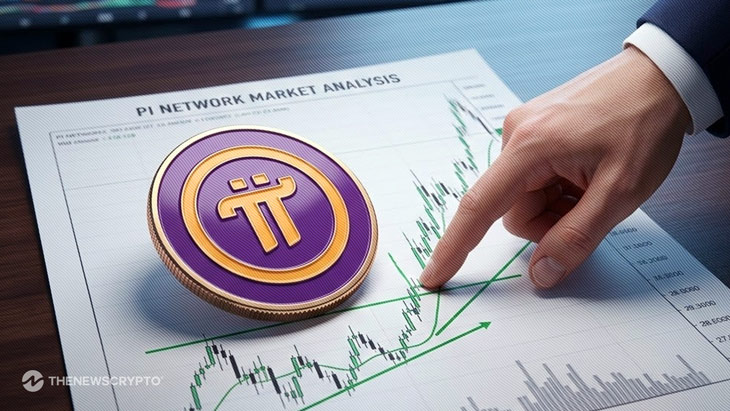
XRP price chart from Tradingview.com
Market Opportunity
XRP Logo
XRP Price(XRP)
$1.3932
$1.3932$1.3932
+0.04%
USD
XRP (XRP) Live Price Chart
Disclaimer: The articles reposted on this site are sourced from public platforms and are provided for informational purposes only. They do not necessarily reflect the views of MEXC. All rights remain with the original authors. If you believe any content infringes on third-party rights, please contact [email protected] for removal. MEXC makes no guarantees regarding the accuracy, completeness, or timeliness of the content and is not responsible for any actions taken based on the information provided. The content does not constitute financial, legal, or other professional advice, nor should it be considered a recommendation or endorsement by MEXC.

You May Also Like

Shocking OpenVPP Partnership Claim Draws Urgent Scrutiny

Shocking OpenVPP Partnership Claim Draws Urgent Scrutiny

The post Shocking OpenVPP Partnership Claim Draws Urgent Scrutiny appeared on BitcoinEthereumNews.com. The cryptocurrency world is buzzing with a recent controversy surrounding a bold OpenVPP partnership claim. This week, OpenVPP (OVPP) announced what it presented as a significant collaboration with the U.S. government in the innovative field of energy tokenization. However, this claim quickly drew the sharp eye of on-chain analyst ZachXBT, who highlighted a swift and official rebuttal that has sent ripples through the digital asset community. What Sparked the OpenVPP Partnership Claim Controversy? The core of the issue revolves around OpenVPP’s assertion of a U.S. government partnership. This kind of collaboration would typically be a monumental endorsement for any private cryptocurrency project, especially given the current regulatory climate. Such a partnership could signify a new era of mainstream adoption and legitimacy for energy tokenization initiatives. OpenVPP initially claimed cooperation with the U.S. government. This alleged partnership was said to be in the domain of energy tokenization. The announcement generated considerable interest and discussion online. ZachXBT, known for his diligent on-chain investigations, was quick to flag the development. He brought attention to the fact that U.S. Securities and Exchange Commission (SEC) Commissioner Hester Peirce had directly addressed the OpenVPP partnership claim. Her response, delivered within hours, was unequivocal and starkly contradicted OpenVPP’s narrative. How Did Regulatory Authorities Respond to the OpenVPP Partnership Claim? Commissioner Hester Peirce’s statement was a crucial turning point in this unfolding story. She clearly stated that the SEC, as an agency, does not engage in partnerships with private cryptocurrency projects. This response effectively dismantled the credibility of OpenVPP’s initial announcement regarding their supposed government collaboration. Peirce’s swift clarification underscores a fundamental principle of regulatory bodies: maintaining impartiality and avoiding endorsements of private entities. Her statement serves as a vital reminder to the crypto community about the official stance of government agencies concerning private ventures. Moreover, ZachXBT’s analysis…
Share
BitcoinEthereumNews2025/09/18 02:13
A Netflix ‘KPop Demon Hunters’ Short Film Has Been Rated For Release

A Netflix ‘KPop Demon Hunters’ Short Film Has Been Rated For Release

The post A Netflix ‘KPop Demon Hunters’ Short Film Has Been Rated For Release appeared on BitcoinEthereumNews.com. KPop Demon Hunters Netflix Everyone has wondered what may be the next step for KPop Demon Hunters as an IP, given its record-breaking success on Netflix. Now, the answer may be something exactly no one predicted. According to a new filing with the MPA, something called Debut: A KPop Demon Hunters Story has been rated PG by the ratings body. It’s listed alongside some other films, and this is obviously something that has not been publicly announced. A short film could be well, very short, a few minutes, and likely no more than ten. Even that might be pushing it. Using say, Pixar shorts as a reference, most are between 4 and 8 minutes. The original movie is an hour and 36 minutes. The “Debut” in the title indicates some sort of flashback, perhaps to when HUNTR/X first arrived on the scene before they blew up. Previously, director Maggie Kang has commented about how there were more backstory components that were supposed to be in the film that were cut, but hinted those could be explored in a sequel. But perhaps some may be put into a short here. I very much doubt those scenes were fully produced and simply cut, but perhaps they were finished up for this short film here. When would Debut: KPop Demon Hunters theoretically arrive? I’m not sure the other films on the list are much help. Dead of Winter is out in less than two weeks. Mother Mary does not have a release date. Ne Zha 2 came out earlier this year. I’ve only seen news stories saying The Perfect Gamble was supposed to come out in Q1 2025, but I’ve seen no evidence that it actually has. KPop Demon Hunters Netflix It could be sooner rather than later as Netflix looks to capitalize…
Share
BitcoinEthereumNews2025/09/18 02:23
Curve Finance votes on revenue-sharing model for CRV holders

Curve Finance votes on revenue-sharing model for CRV holders

The post Curve Finance votes on revenue-sharing model for CRV holders appeared on BitcoinEthereumNews.com. Curve Finance has proposed a new protocol called Yield Basis that would share revenue directly with CRV holders, marking a shift from one-off incentives to sustainable income. Summary Curve Finance has put forward a revenue-sharing protocol to give CRV holders sustainable income beyond emissions and fees. The plan would mint $60M in crvUSD to seed three Bitcoin liquidity pools (WBTC, cbBTC, tBTC), with 35–65% of revenue distributed to veCRV stakers. The DAO vote runs from up to Sept. 24, with the proposal seen as a major step to strengthen CRV tokenomics after past liquidity and governance challenges. Curve Finance founder Michael Egorov has introduced a proposal to give CRV token holders a more direct way to earn income, launching a system called Yield Basis that aims to turn the governance token into a sustainable, yield-bearing asset.  The proposal has been published on the Curve DAO (CRV) governance forum, with voting open until Sept. 24. A new model for CRV rewards Yield Basis is designed to distribute transparent and consistent returns to CRV holders who lock their tokens for veCRV governance rights. Unlike past incentive programs, which relied heavily on airdrops and emissions, the protocol channels income from Bitcoin-focused liquidity pools directly back to token holders. To start, Curve would mint $60 million worth of crvUSD, its over-collateralized stablecoin, with proceeds allocated across three pools — WBTC, cbBTC, and tBTC — each capped at $10 million. 25% of Yield Basis tokens would be reserved for the Curve ecosystem, and between 35% and 65% of Yield Basis’s revenue would be given to veCRV holders. By emphasizing Bitcoin (BTC) liquidity and offering yields without the short-term loss risks associated with automated market makers, the protocol hopes to draw in professional traders and institutions. Context and potential impact on Curve Finance The proposal comes as Curve continues to modify…
Share
BitcoinEthereumNews2025/09/18 14:37