

India's food system is broken. How can we fix it?
India’s fight against rising obesity and chronic disease is increasingly pointing to one root cause: the country’s broken food system.
A food system encompasses all the elements and activities related to what we eat, how we eat, how we produce food, and access it as well. This includes production, processing, distribution, consumption, and disposal. It involves not only the physical supply chain but also the government policies that regulate it.
A new analysis y the Tony Blair Institute for Global Change titled 'Building on Success to Secure India's Future Health' argues that nutritional decline is no longer a byproduct of poverty or underdevelopment; it is being driven by the rapid spread of ultra-processed foods, shifting diets, and weak regulatory controls.
As noncommunicable diseases surge across the country, there is an urgent need for a comprehensive overhaul of the country's regulatory mechanisms and health policies.
For years, India's health policy focused on infectious diseases and under-nutrition. But today, obesity, diabetes, hypertension, and cardiovascular disease collectively account for the majority of adult morbidity, a shift driven largely by what Indians are eating.
Challenges of access, affordability and quality
Unhealthy food is cheaper, more accessible, and more aggressively marketed than nutritious alternatives. Packaged foods can be produced quickly on a large scale; they also travel fast, reach a wide market, and offer high margins.
As a result, ultra-processed foods have penetrated deeply into both urban and rural markets, replacing traditional diets.
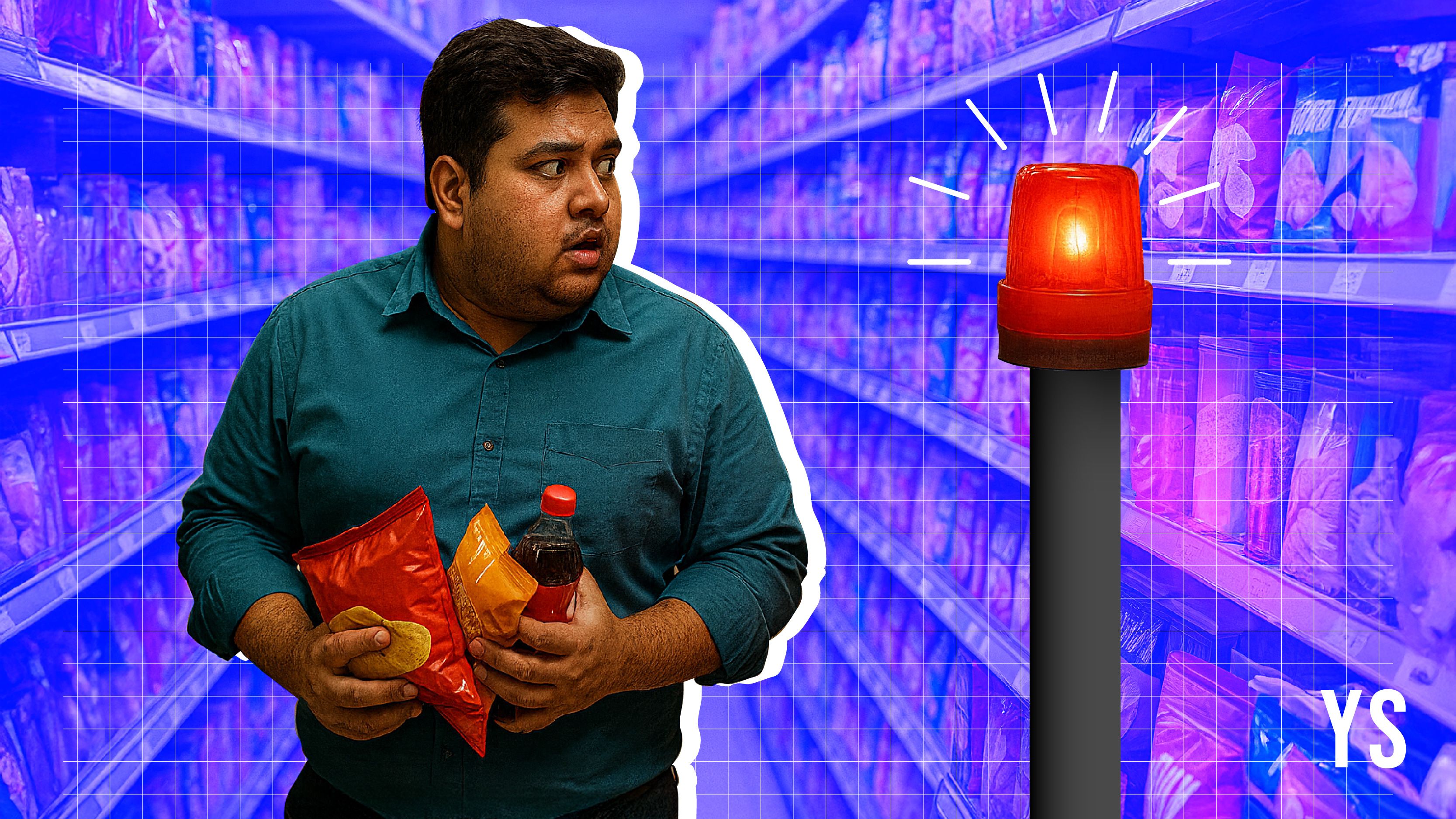
Processed and packaged foods dominate retail shelves in India, across urban, rural, and low-income areas. The study by Tony Blair Institute shows that about 89% of food and beverage items in sampled Indian stores are packaged, while only 11% are unpackaged, fresh, or minimally processed.
This means millions of households across the country are consuming food that's calorie-dense but nutrient-poor.
On the contrary, fresh foods are expensive and logistically difficult to distribute. This asymmetry has led to a scenario in which healthier choices are often the hardest to access.
Many households, especially in low- and middle-income groups, increasingly rely on processed foods, while intake of fruits, vegetables, and legumes is insufficient.
Tony Blair Institute notes that despite India’s growing prosperity, the affordability of fruits, vegetables, and protein-rich diets has declined for low- and middle-income households, leaving them most vulnerable to chronic diseases.
Compounding the problem, many staple foods, from milk and paneer to spices and low-cost packaged goods, are also frequently adulterated or contain inferior or synthetic ingredients. In recent months, authorities across India have seized thousands of kilograms of fake paneer, adulterated ghee, and unsafe dairy products. Thus, consumers often unknowingly consume foods that are nutritionally inferior or even harmful,
Role of regulation in the battle for good health
Meanwhile, regulation has not kept pace with these challenges.
Packaged foods in the country don’t carry clear warning labels on the front of the pack. Rules to curb companies from marketing unhealthy foods to children are weak. And food companies are not required, or encouraged, to change their recipes/formulations to make products healthier by reducing sugar, salt or trans fats.
Food companies market ultra-processed foods aggressively through influencers, digital advertising, and retail tie-ups, shaping consumer behaviour far more effectively than government awareness campaigns.
The absence of regulation means companies may act in ways that put profits above people’s health.
Fortunately, pressure for reform is growing in India, with Food Safety and Standards Authority of India (FSSAI), public-health experts, state governments, and consumer-rights groups calling for clearer food labels and stronger rules on marketing unhealthy foods.
Several countries, including Chile, Mexico and the United Kingdom, have shown that bold regulatory moves can change consumer behaviour. Singapore, South Africa, and Thailand have mandated reforms in school food and front-of-pack labelling, and implemented restrictions on marketing.
These countries have proved that warning labels reduce high-sugar purchases, sugar taxes cut consumption, and advertising restrictions protect children.
India’s policymakers are increasingly looking at international models as they deal with the metabolic crisis at home.
The report by Tony Blair Institute outlines what India’s next wave of regulation should include:
• Mandatory front-of-pack labels that clearly flag high sugar, salt, or fat
• Advertising restrictions, especially for children’s content
• Reformulation mandates to reduce harmful ingredients
• Public procurement standards that ensure schools, hospitals, and anganwadis move towards healthier foods
• Incentives for healthier alternatives, subsidies and supply-chain investment
These changes require coordination across the departments of health, education, agriculture, food processing, and consumer affairs, a level of inter-ministerial cooperation that India has rarely achieved in nutrition policy.
But this is much needed for the cost of inaction is steep: rising non-communicable diseases can inflate healthcare spending and impact workforce productivity and the country's economic growth.
The battle for good health cannot be fought in hospitals alone; the issue must be addressed across grocery aisles, advertising platforms, and supply chains.
Edited by Swetha Kannan
You May Also Like

Unleashing A New Era Of Seller Empowerment

What is the best residential proxy for web scraping

