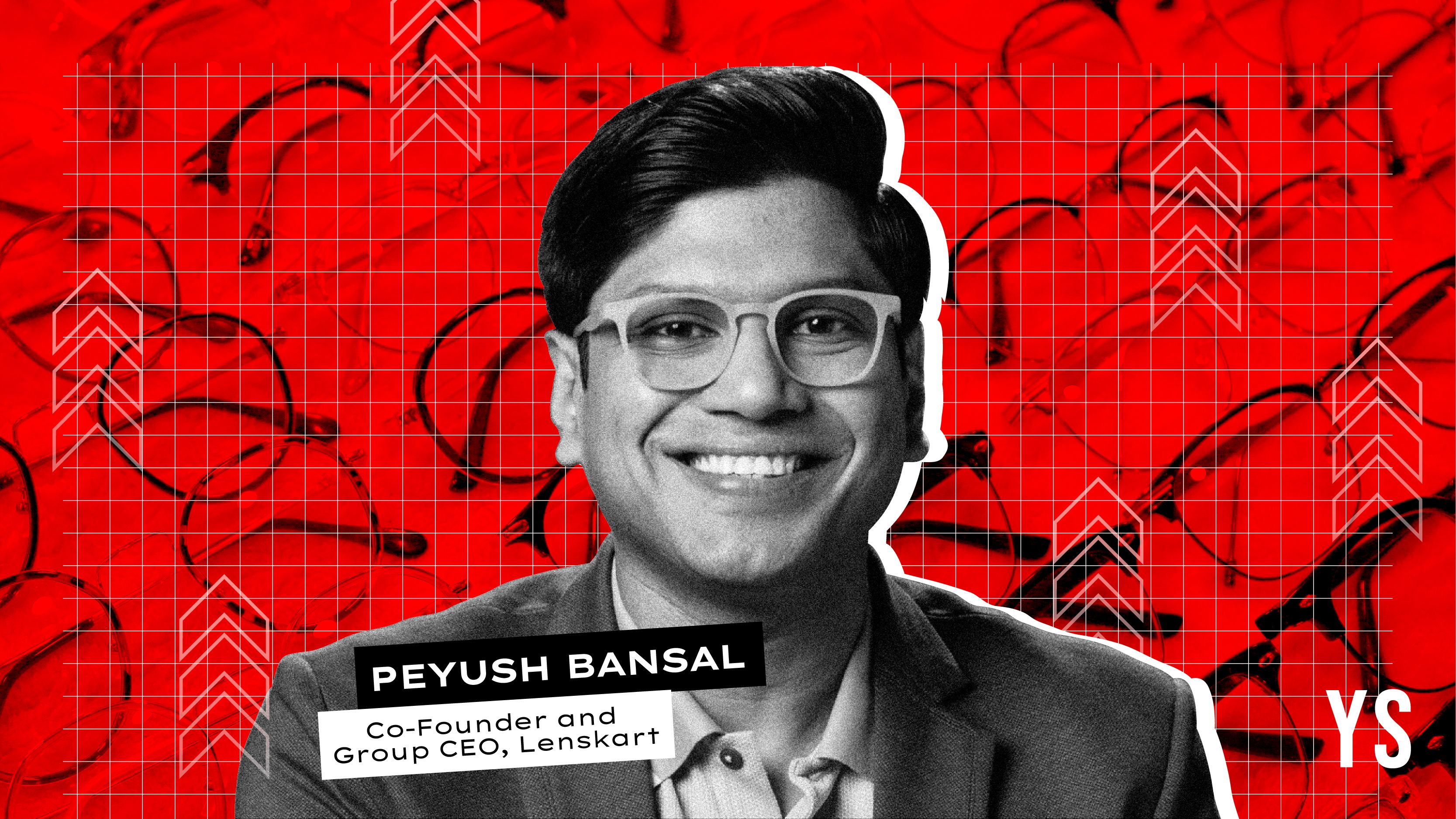
The newly listed firm saw its profit after tax grow by 20% during the three months ended September 30. On a sequential basis, Lenskart's profit jumped 70%.The newly listed firm saw its profit after tax grow by 20% during the three months ended September 30. On a sequential basis, Lenskart's profit jumped 70%.

Lenskart sees 21% growth in Q2 revenue in first earnings after public debut
2 min read

Omnichannel eyewear retailer Lenskart saw its operating revenue and profit after tax (PAT) grow by 21% and 20%, respectively, in the September quarter, marking the company’s first earnings since it hit domestic bourses. 

The Peyush Bansal-led company saw its topline improve to Rs 2,096 crore from Rs 1,735 crore in the corresponding quarter in the previous year. On a sequential basis, it saw a 10% improvement in its revenue from Rs 1,894 crore in the June quarter, according to an exchange filing. 

In a shareholder letter, the company said its topline growth was primarily driven by volume, with the number of eyewear units growing 21.7% in the second quarter. 

During the same period, it saw its bottomline improve 19% to Rs 103.4 crore from Rs 86.3 crore. On a sequential basis, the improvement was much larger, as its profits grew by about 70% from the June quarter—a key win considering its subdued listing. 

Lenskart, which went public with a Rs 7,278 crore IPO earlier this month, saw its issue subscribed 28 times by the final day of bidding. However, the NCR-based company saw a tepid debut, with its shares listing at a discount amid valuation concerns among investors. 

Also Read
As Lenskart gears up for stock market debut, investor Ronnie Screwvala recalls early days

The company saw revenue from its international operations turn profitable, clocking Rs 31 crore compared to a loss of Rs 10 crore in the previous year. The segment’s revenue grew by 19% to Rs 879 crore.

Lenskart also flagged that in September, temporary uncertainty around potential GST revisions for prescription eyewear led to some customers deferring purchases into October. However, demand has further strengthened in Q3 FY26. 

During the period, the company accelerated its expansion in Tier II cities, and its revenue per store in Tier II continues to be as healthy as Tier I, with better profitability. 

In FY26, the company is targeting more than 450 net store additions. Lenskart expects a stronger growth trajectory across both revenue and EBITDA in Q3 FY26. 


Edited by Suman Singh

Market Opportunity
PUBLIC Logo
PUBLIC Price(PUBLIC)
$0.01538
$0.01538$0.01538
-0.06%
USD
PUBLIC (PUBLIC) Live Price Chart
Disclaimer: The articles reposted on this site are sourced from public platforms and are provided for informational purposes only. They do not necessarily reflect the views of MEXC. All rights remain with the original authors. If you believe any content infringes on third-party rights, please contact [email protected] for removal. MEXC makes no guarantees regarding the accuracy, completeness, or timeliness of the content and is not responsible for any actions taken based on the information provided. The content does not constitute financial, legal, or other professional advice, nor should it be considered a recommendation or endorsement by MEXC.

You May Also Like

Galaxy Digital’s 2025 Loss: SOL Bear Market

Galaxy Digital’s 2025 Loss: SOL Bear Market

The post Galaxy Digital’s 2025 Loss: SOL Bear Market appeared on BitcoinEthereumNews.com. Galaxy Digital, a digital assets and artificial intelligence infrastructure
Share
BitcoinEthereumNews2026/02/04 09:49
Michael Saylor Pushes Digital Capital Narrative At Bitcoin Treasuries Unconference

Michael Saylor Pushes Digital Capital Narrative At Bitcoin Treasuries Unconference

The post Michael Saylor Pushes Digital Capital Narrative At Bitcoin Treasuries Unconference appeared on BitcoinEthereumNews.com. The suitcoiners are in town.  From a low-key, circular podium in the middle of a lavish New York City event hall, Strategy executive chairman Michael Saylor took the mic and opened the Bitcoin Treasuries Unconference event. He joked awkwardly about the orange ties, dresses, caps and other merch to the (mostly male) audience of who’s-who in the bitcoin treasury company world.  Once he got onto the regular beat, it was much of the same: calm and relaxed, speaking freely and with confidence, his keynote was heavy on the metaphors and larger historical stories. Treasury companies are like Rockefeller’s Standard Oil in its early years, Michael Saylor said: We’ve just discovered crude oil and now we’re making sense of the myriad ways in which we can use it — the automobile revolution and jet fuel is still well ahead of us.  Established, trillion-dollar companies not using AI because of “security concerns” make them slow and stupid — just like companies and individuals rejecting digital assets now make them poor and weak.  “I’d like to think that we understood our business five years ago; we didn’t.”  We went from a defensive investment into bitcoin, Saylor said, to opportunistic, to strategic, and finally transformational; “only then did we realize that we were different.” Michael Saylor: You Come Into My Financial History House?! Jokes aside, Michael Saylor is very welcome to the warm waters of our financial past. He acquitted himself honorably by invoking the British Consol — though mispronouncing it, and misdating it to the 1780s; Pelham’s consolidation of debts happened in the 1750s and perpetual government debt existed well before then — and comparing it to the gold standard and the future of bitcoin. He’s right that Strategy’s STRC product in many ways imitates the consols; irredeemable, perpetual debt, issued at par, with…
Share
BitcoinEthereumNews2025/09/18 02:12
HKMA Launches Fintech Blueprint with AI, DLT, Quantum and Cybersecurity Focus

HKMA Launches Fintech Blueprint with AI, DLT, Quantum and Cybersecurity Focus

The Hong Kong Monetary Authority (HKMA) published a Fintech Promotion Blueprint to support responsible innovation and fintech development in the banking sector.
Share
Fintechnews2026/02/04 10:20