National Bank of Kazakhstan Plans Up to $300M Crypto Investment
Kazakhstan’s central bank is preparing to invest up to $300 million in crypto assets, though the final allocation could range between $50 million and $250 million, depending on market conditions.
According to RBC, National Bank of Kazakhstan (NBK) Chairman Timur Suleimenov announced the initiative would draw from the bank’s foreign exchange reserves rather than the country’s sovereign wealth fund, while cautioning that recent crypto market volatility requires a measured approach before committing capital.
The announcement comes as Bitcoin has declined 17% since early November, dropping from $110,000 to $81,000 and wiping $500 billion from total crypto market capitalization.
Suleimenov told reporters the bank would “let the dust settle” before making investment decisions. He emphasized the difficulty of achieving profitability amid the sharp downturn.
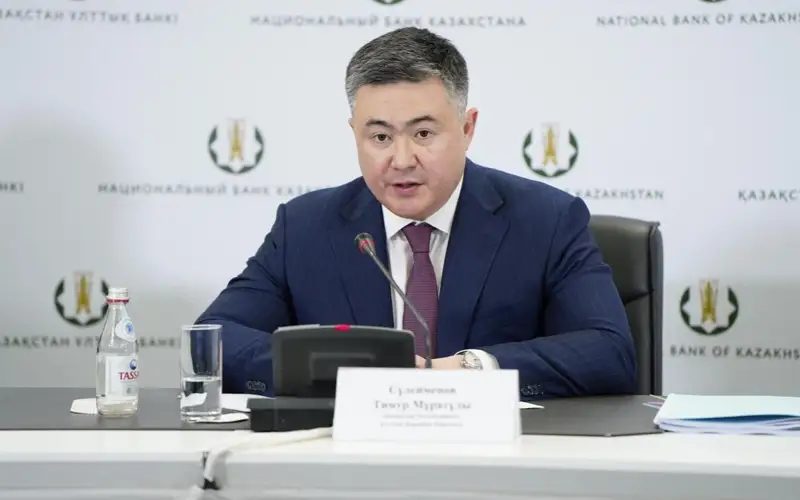 National Bank of Kazakhstan (NBK) Chairman Timur Suleimenov. | Source: Kazinform International News Agency
Central Bank Adopts Cautious Stance on Digital Asset Exposure
The NBK has already established an investment portfolio containing high-tech stocks and financial instruments linked to digital assets within its gold and foreign exchange reserves.
Despite having frameworks in place, Suleimenov stressed the regulator would not rush deployment until favorable opportunities emerge.
“Until good investment opportunities emerge, we won’t rush these decisions,” Suleimenov said at a November 28 briefing.
The chairman had previously told Bloomberg in early November that Kazakhstan planned to create a national crypto fund worth up to $1 billion, clarifying the bank would invest “cautiously” through exchange-traded funds and crypto company stocks rather than direct token holdings.
This measured approach contrasts with the broader ambitions articulated by President Kassym-Jomart Tokayev, who directed the creation of a state-backed crypto reserve fund through the National Bank’s Investment Corporation.
The president called for accumulating strategic reserves of “promising assets” and announced up to $1 billion in funding for technological growth programs spanning high-tech and fintech sectors.
Kazakhstan Builds Multi-Layered Crypto Infrastructure
The central bank’s investment plans build on Kazakhstan’s rapidly expanding digital asset ecosystem, which launched its first national crypto reserve in September through the Alem Crypto Fund.
Established by the Ministry of Artificial Intelligence and Digital Development and managed by Qazaqstan Venture Group, the fund selected BNB as its initial holding through a strategic partnership with Binance Kazakhstan.
Deputy Prime Minister Zhaslan Madiyev described the fund as designed to become “a reliable instrument for major investors and a key foundation for digital state reserves.“
BNB currently has a market capitalization exceeding $120 billion and serves as the native cryptocurrency of BNB Chain for processing transactions, paying network fees, and participating in governance.
Kazakhstan approved stablecoin payments for regulatory fees in September during Astana Finance Days, with the Astana Financial Services Authority establishing a framework allowing participants to settle fees in U.S. dollar-pegged stablecoins through licensed Digital Asset Service Providers.
The country also launched Central Asia’s first spot Bitcoin ETF in August, with the physically-backed Fonte Bitcoin ETF trading on the Astana International Exchange, using BitGo Trust for cold storage.
Enforcement Actions Target Illegal Operations Amid Expansion
While advancing institutional crypto adoption, Kazakhstan has intensified crackdowns on unlicensed operations, shutting down 130 illegal crypto exchanges in October and seizing $16.7 million in virtual assets suspected of laundering criminal proceeds.
Authorities uncovered 81 shadow cash-out groups with a combined turnover reaching 24 billion KZT ($43 million) in 2024.
The enforcement actions follow Kazakhstan’s evolution from controlling 27% of global Bitcoin mining in 2021 after Chinese operations relocated, to just 4% by 2023 following grid strain and regulatory adjustments.
As of September, the country has registered 415,000 mining machines, issued 84 licenses (64 active), and launched the “70/30 project,” in which foreign investors fund power station upgrades.
During the same period, President Tokayev announced “CryptoCity” in Alatau as a pilot zone for everyday crypto payments, featuring a crypto banking system providing exchange, storage, and transaction processing services while supporting anti-money laundering compliance.
The digital tenge, the central bank’s digital currency, remains scheduled for full rollout by the end of this year as a third form of currency alongside cash and non-cash payments. However, the rollout remains uncertain this year.
You May Also Like

Early CLARITY Act Deal Reached Between White House and US Lawmakers: Report

Leading USA Companies for Retail Software Development Services