The President’s report: Marcos communicates a mess he started
Both Malacañang and President Ferdinand Marcos Jr. want you to remember one thing, at least in the context of a flood control scandal that’s engulfed most of the government: that it was he who started it all.
It’s a point Malacañang likes to emphasize, whether it be in Palace press releases or in chance interviews and press conferences with Marcos himself.
A November 13 release based on a Marcos press conference ran with the title: “PBBM-initiated probe into flood control corruption sees results; persons charged to see jail before Christmas.”
In a November 26 press statement about Marcos’ claims that embattled former lawmaker Zaldy Co had tried to blackmail him, the Presidential News Desk noted, “President Marcos started the investigation into widespread corruption in the DPWH when the President denounced irregularities in flood control projects during his July 28 Fourth State of the Nation Address.”
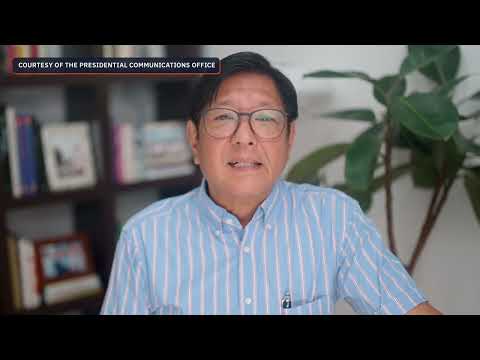
Days later, as hundreds of thousands of Filipinos gathered across the country for the second string of massive protests in reaction to the flood control mess on November 30, a Malacañang news release said, “President Marcos is focused on ensuring accountability for the infrastructure projects corruption, which the President himself exposed.”
What started in July 2025 as a declaration that earned him the most applause from lawmakers has, at times, seemingly spiraled beyond the executive’s control.
In the months and weeks that followed, exposés of alleged kickbacks in flood control and infrastructure projects that were substandard or non-existent have dragged in most corners of government — from bureaucrats to appointees, political foes and allies, and even presidential relatives and Marcos himself.
It was only in the waning weeks of November — amid calls from both long-time critics and the occasional manifestos from one-time allies — that Marcos increased the pace in which he himself became the administration’s talking head for updates related to the flood control mess he triggered.
Marcos, his own spokesperson
“From the beginning, the President was clear that cases involving corruption in flood-control projects must be handled with full transparency,” said Acting Presidential Communications Office (PCO) Secretary Dave Gomez, in response to questions from Rappler.
Gomez, Marcos’ fourth communications chief, added, “Once the initial evidence was consolidated and the inter-agency work between the ICI, AMLC, BIR, PNP, NBI, DPWH, and the Ombudsman started producing actionable results, the President instructed us to communicate directly to the public regularly, promptly, and fact-based.” He was referring to the following government agencies: Independent Commission for Infrastructure, Anti-Money Laundering Council, Bureau of Internal Revenue, Philippine National Police, National Bureau of Investigation, Department of Public Works and Highways.
Much of the announcements have been coming from Marcos himself.
 President Ferdinand R. Marcos Jr. calls for a press conference on November 24 to launch the DPWH Transparency Portal.
It was Marcos who announced on November 21 that the DPWH and his creation, the ICI, would turn over information from Co and Marcos’ cousin, former House speaker Martin Romualdez, to the Ombudsman for further investigation.
Hours later, Marcos would also announce that arrest warrants were out for Co and several others over an alleged anomalous flood control project in Naujan, Oriental Mindoro.
Three days later, on November 24, Malacañang hosted the launch of the DPWH’s “transparency portal.” In that same presser, Marcos personally dared Co to come back to the Philippines, even as the former lawmaker continued releasing one “exposé” video after another alleging Marcos’ kickbacks from projects, too.
And then on November 26, came another zinger. After announcing in a livestreamed broadcast that more assets had been frozen over alleged anomalous flood control projects, Marcos accused Co’s camp of “blackmail” — Co supposedly promised to stop releasing exposé videos if his passport would not be canceled. The President said he flatly rejected this.
When asked what prompted Marcos to make these reports himself, Gomez said, “He chose to speak for himself for one reason, the Filipino people deserve to hear updates straight from their President, without filters, without political noise, and without speculation.”
That Marcos prefers to speak for himself and not through a spokesperson is not at all new.
Neither Marcos nor Malacañang has ever had an official spokesperson since he assumed the post in June 2022. There have been plenty of PCO chiefs, and a press briefing moderator in Daphne Oseña-Paez.
Things have changed slightly since the appointment of Undersecretary Claire Castro, who officially goes by the role “press officer” but speaks and functions as any spokesperson would.
Through the changes in communications chiefs, the thinking seems to have remained the same: that Marcos should speak for himself. His alter egos in the Cabinet and top appointees would, therefore, address all other issues relating to specific agencies or departments.
“At the end of the day, our job is to cut through noise and keep the public informed clearly, consistently, and factually. And the President has set that tone himself,” said Gomez of the PCO’s work in an information ecosystem inundated with disinformation.
Marcos and the media
From the 2022 campaign and for most of his presidency, Marcos had not exactly been the most engaging and available to the media. Press conferences and chance interviews are generally limited, and weeks would go without direct interaction with the press.
Weeks after the disastrous 2025 midterm elections, where the Marcos-allied slate failed to win a majority of the 12 Senate seats up for grabs, Marcos launched a “podcast.” The President was not the interviewer, of course. Instead, Malacañang tapped guest interviewers — from radio commentators, TV anchors, a journalist who covers Malacañang, to a newspaper columnist — to ask the President questions.
So the frequency of his press conferences, alternatively titled the “President’s Report,” becomes even more apparent.
“I suppose this is – you can consider this the next chapter of my continuing reportage to the people about all of the developments concerning the flood control mess that we are confronting right now,” said Marcos on November 20, to open the second of those press conferences.
In November 2025, Malacañang called for two press conferences — both of which started with Marcos doing a recap of what the executive had done, so far, in relation to the flood control mess.
“This issue involves billions in public funds and impacts millions of families living in flood-prone communities. The President felt a responsibility to personally explain the progress, name the agencies involved, identify the actions being taken, and make clear that accountability under his watch is non-negotiable,” said Gomez, explaining Marcos’ more hands-on approach in communicating what’s happened thus far in the flood control investigation.
“Direct reports also ensure that every update is anchored on verified facts and official documents and not based on rumor, leaks, or commentary,” added Gomez.
What little political capital Marcos managed to keep after the embarrassing midterms has, at this point, no doubt eroded further — hastened by the continuing fallout from the ruin of the Marcos-Duterte alliance and by revelations of deep-seated and systemic corruption.
The allegations have reached Marcos himself and his closest relatives and allies.
A Philippine Center for Investigative Journalism report tagged his eldest son, House Majority Leader Sandro Marcos, and Romualdez as having the largest cut of “allocable funds” — the newest iteration of pork barrel funds that lawmakers once enjoyed.
But by the way things are going, a direct link to the President need not be the tipping point for civil unrest, general public dissatisfaction, and political instability that would lead to the most lame duck presidency at best, and a change of leadership at worst.
It’s going to be inaction, a persistent lack of transparency, and the Filipino tendency to go after the smallest and easiest of suspects while missing out (deliberately, or even despite the government’s best efforts) on the big fish who are the most accountable.
The midway point
It’s a crisis like no other, for both Marcos and his administration.
Marcos and the Palace have promised transparency and the administration’s “determination” to “pursue accountability in the controversy he himself exposed,” according to a November 30 release from Malacañang.
The elephant in the room, too, of course, is that he’s a Marcos — son and namesake of a dictator whose decades in power were marred by human rights abuses, corruption, nepotism, and excesses in Malacañang and beyond.
When Marcos promised to chase after the corrupt over failed and non-existent flood control projects, there was, apparently, no plan as to where it would lead. Insiders speak of communication consultants who crafted a perfect message for a President whose numbers were down and who needed a much-needed populist boost.
 SONA. President Ferdinand Marcos Jr delivers his 4th State of the Nation Address, at the House of Representatives, on July 28, 2025. The two legislators behind him — Senator Chiz Escudero and Leyte 1st District Representative Martin Romualdez — have since been removed from their leadership posts in both chambers of Congress over their alleged ties to the flood control corruption.
“Kaya sa mga nakikipagsabwatan upang kunin ang pondo ng bayan at nakawin ang kinabukasan ng ating mga mamamayan, mahiya naman kayo sa inyong kapwa Pilipino!” the President declared in July 2025.
(To those who collude to steal from government funds and to steal the future of our fellowmen, you should be ashamed of what you’ve done to your fellow Filipinos!)
But there was, apparently, a certain disregard — some would call it naïveté — over where the name and shame campaign would lead.
Which leaves Marcos where he is now — communicating good governance and trying to appease an angry nation, even as he has yet to confront his clan’s own sins publicly, all while battling political forces who want nothing else but to see him out of Malacañang.
What will the President report on next? – Rappler.com
You May Also Like

The Channel Factories We’ve Been Waiting For
Trump sets stage for a 'post-America world': NYT reporter