THE GOVERNMENT hiked the volume of Treasury bills (T-bills) it awarded on Monday as the offer was met with robust demand and all tenors fetched average yields below prevailing secondary market levels, as the market expects below-target November inflation that could cement prospects of another rate cut from the Bangko Sentral ng Pilipinas (BSP) next […]THE GOVERNMENT hiked the volume of Treasury bills (T-bills) it awarded on Monday as the offer was met with robust demand and all tenors fetched average yields below prevailing secondary market levels, as the market expects below-target November inflation that could cement prospects of another rate cut from the Bangko Sentral ng Pilipinas (BSP) next […]

Gov’t hikes award of T-bills on strong demand

2025/12/02 00:05
4 min read
For feedback or concerns regarding this content, please contact us at [email protected]

THE GOVERNMENT hiked the volume of Treasury bills (T-bills) it awarded on Monday as the offer was met with robust demand and all tenors fetched average yields below prevailing secondary market levels, as the market expects below-target November inflation that could cement prospects of another rate cut from the Bangko Sentral ng Pilipinas (BSP) next week.

The Bureau of the Treasury (BTr) raised P25 billion via the T-bills it auctioned off, higher than the P22-billion plan, as the offer was almost four times oversubscribed, with total tenders reaching P85.26 billion. This was also slightly higher than the P84.87 billion in bids recorded last week.

The Auction Committee made a full award as the papers were quoted at yields that were all lower than secondary market rates, the Treasury said in a statement.

Broken down, the government raised P7 billion as planned from the 91-day T-bills as the tenor was met with demand worth P29.815 billion. The three-month paper fetched an average rate of 4.812%, down by 3.7 basis points (bps) from 4.849% in the previous auction. Yields accepted were from 4.770% to 4.844%.

Meanwhile, the Treasury increased its award of 182-day debt to P10.5 billion from the P7.5-billion program as bids reached P29.75 billion. The strong appetite caused the BTr to double its acceptance of noncompetitive bids for the tenor to P6 billion, it said.

The average rate of the six-month T-bill went down by 4 bps to 4.93% from 4.97% last week. Tenders awarded carried yields from 4.89% to 4.965%.

Lastly, the BTr sold the programmed P7.5 billion in 364-day securities as bids for the tenor hit P25.695 billion. The one-year T-bill’s average yield was at 5.011%, inching up by 0.8 bp from 5.003% the previous week. Accepted rates were from 4.998% to 5.027%.

At the secondary market before Monday’s auction, the 91-, 182-, and 364-day T-bills were quoted at 4.882%, 5%, and 5.071%, respectively, based on PHP Bloomberg Valuation Service Reference Rates data provided by the Treasury.

The government fully awarded its T-bill offer as rates mostly moved sideways and saw “decent” demand, a trader said in a Viber message.

“Treasury bill average auction yields were again mostly slightly lower, as seen for most weeks over the past five months, ahead of the upcoming local inflation data on Dec. 5 that is expected to remain benign and even slightly slower versus 1.7% in October,” Rizal Commercial Banking Corp. Chief Economist Michael L. Ricafort said in a Viber message.

He said this would bolster expectations of another rate cut from the BSP next week, as signaled by monetary authorities recently.

A BusinessWorld poll of 15 analysts yielded a median estimate of 1.6% for November inflation, within the BSP’s 1.1% to 1.9% forecast for the month.

If realized, this would ease from the 1.7% clip in October and the 2.5% seen in November 2024. It would also be the slowest clip in three months or since the 1.5% in August and mark the ninth straight month that inflation fell below the central bank’s 2-4% annual target.

BSP Governor Eli M. Remolona, Jr. has said that another cut is possible at the Monetary Board’s Dec. 11 meeting, with further reductions until next year also on the table as they want to support the economy amid softening growth prospects.

The central bank has lowered benchmark borrowing costs by a total of 175 bps since it began its easing cycle in August 2024, with the policy rate now at an over three-year low of 4.75%.

Mr. Ricafort said that S&P Global Ratings’ move to affirm the Philippines’ investment-grade “BBB+” rating and its positive outlook last week has also provided a boost to market sentiment.

He added that increasing bets on a US Federal Reserve cut this month also helped bring yields down.

Markets widely expect a second straight reduction at the Fed’s Dec. 9-10 meeting, but the policy outlook for next year as the state of the world’s largest economy remains a mixed bag.

On Tuesday, the government will sell P35 billion in dual-tenor Treasury bonds (T-bonds), or P20 billion in reissued seven-year papers with a remaining life of two years and four months, and P15 billion in reissued 10-year debt with a remaining life of nine years and four months. This will be the BTr’s last bond auction this year.

The Treasury wants to raise P101 billion from the domestic market this month, or P66 billion through T-bills and P35 billion via T-bonds.

The government borrows from local and foreign sources to help fund its budget deficit, which is capped at P1.56 trillion or 5.5% of gross domestic product this year. — Katherine K. Chan

Market Opportunity
Threshold Logo
Threshold Price(T)
$0.006629
$0.006629$0.006629
+0.34%
USD
Threshold (T) Live Price Chart
Disclaimer: The articles reposted on this site are sourced from public platforms and are provided for informational purposes only. They do not necessarily reflect the views of MEXC. All rights remain with the original authors. If you believe any content infringes on third-party rights, please contact [email protected] for removal. MEXC makes no guarantees regarding the accuracy, completeness, or timeliness of the content and is not responsible for any actions taken based on the information provided. The content does not constitute financial, legal, or other professional advice, nor should it be considered a recommendation or endorsement by MEXC.
Tags:

You May Also Like

American Bitcoin’s $5B Nasdaq Debut Puts Trump-Backed Miner in Crypto Spotlight

American Bitcoin’s $5B Nasdaq Debut Puts Trump-Backed Miner in Crypto Spotlight

The post American Bitcoin’s $5B Nasdaq Debut Puts Trump-Backed Miner in Crypto Spotlight appeared on BitcoinEthereumNews.com. Key Takeaways: American Bitcoin (ABTC) surged nearly 85% on its Nasdaq debut, briefly reaching a $5B valuation. The Trump family, alongside Hut 8 Mining, controls 98% of the newly merged crypto-mining entity. Eric Trump called Bitcoin “modern-day gold,” predicting it could reach $1 million per coin. American Bitcoin, a fast-rising crypto mining firm with strong political and institutional backing, has officially entered Wall Street. After merging with Gryphon Digital Mining, the company made its Nasdaq debut under the ticker ABTC, instantly drawing global attention to both its stock performance and its bold vision for Bitcoin’s future. Read More: Trump-Backed Crypto Firm Eyes Asia for Bold Bitcoin Expansion Nasdaq Debut: An Explosive First Day ABTC’s first day of trading proved as dramatic as expected. Shares surged almost 85% at the open, touching a peak of $14 before settling at lower levels by the close. That initial spike valued the company around $5 billion, positioning it as one of 2025’s most-watched listings. At the last session, ABTC has been trading at $7.28 per share, which is a small positive 2.97% per day. Although the price has decelerated since opening highs, analysts note that the company has been off to a strong start and early investor activity is a hard-to-find feat in a newly-launched crypto mining business. According to market watchers, the listing comes at a time of new momentum in the digital asset markets. With Bitcoin trading above $110,000 this quarter, American Bitcoin’s entry comes at a time when both institutional investors and retail traders are showing heightened interest in exposure to Bitcoin-linked equities. Ownership Structure: Trump Family and Hut 8 at the Helm Its management and ownership set up has increased the visibility of the company. The Trump family and the Canadian mining giant Hut 8 Mining jointly own 98 percent…
Share
BitcoinEthereumNews2025/09/18 01:33
Adoption Leads Traders to Snorter Token
Adoption Leads Traders to Snorter Token

The post Adoption Leads Traders to Snorter Token appeared on BitcoinEthereumNews.com. Largest Bank in Spain Launches Crypto Service: Adoption Leads Traders to Snorter Token Sign Up for Our Newsletter! For updates and exclusive offers enter your email. Leah is a British journalist with a BA in Journalism, Media, and Communications and nearly a decade of content writing experience. Over the last four years, her focus has primarily been on Web3 technologies, driven by her genuine enthusiasm for decentralization and the latest technological advancements. She has contributed to leading crypto and NFT publications – Cointelegraph, Coinbound, Crypto News, NFT Plazas, Bitcolumnist, Techreport, and NFT Lately – which has elevated her to a senior role in crypto journalism. Whether crafting breaking news or in-depth reviews, she strives to engage her readers with the latest insights and information. Her articles often span the hottest cryptos, exchanges, and evolving regulations. As part of her ploy to attract crypto newbies into Web3, she explains even the most complex topics in an easily understandable and engaging way. Further underscoring her dynamic journalism background, she has written for various sectors, including software testing (TEST Magazine), travel (Travel Off Path), and music (Mixmag). When she’s not deep into a crypto rabbit hole, she’s probably island-hopping (with the Galapagos and Hainan being her go-to’s). Or perhaps sketching chalk pencil drawings while listening to the Pixies, her all-time favorite band. This website uses cookies. By continuing to use this website you are giving consent to cookies being used. Visit our Privacy Center or Cookie Policy. I Agree Source: https://bitcoinist.com/banco-santander-and-snorter-token-crypto-services/
Share
BitcoinEthereumNews2025/09/17 23:45
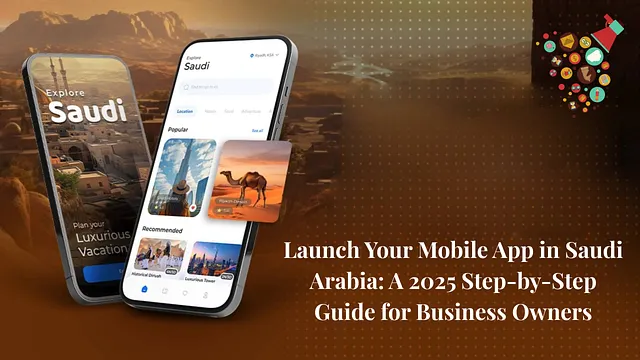
From Idea to App Store: The Complete Guide to Mobile App Development in Saudi Arabia

From Idea to App Store: The Complete Guide to Mobile App Development in Saudi Arabia

Saudi Arabia is at the forefront of digital transformation. With Vision 2030 driving innovation and a rapidly growing population of tech-savvy users, mobile apps have become a core driver of business growth in the Kingdom. From e-commerce and fintech to healthcare, logistics, and on-demand services, Saudi businesses are embracing mobile apps to connect with customers and scale faster. But how do you take a mobile app idea and turn it into a successful launch on the App Store or Google Play? This guide breaks down the complete mobile app development process in Saudi Arabia — step by step. Step 1: Validate Your App Idea for the Saudi Market Before you start building, ask: What problem does my app solve for Saudi users? Is there a cultural or market gap my app can fill? How do local competitors approach the same challenge? For example, apps related to digital payments, e-learning, delivery services, and healthcare are in high demand across Saudi Arabia. Conducting market research and aligning your app idea with local user behavior is critical. Step 2: Plan Features with Local Needs in Mind Your app should start with an MVP (Minimum Viable Product) — a core version that solves the main problem. Later, you can scale with advanced features. In Saudi Arabia, consider adding: Arabic language support (essential for user adoption) Integration with local payment gateways like STC Pay, Mada, or Apple Pay Regulatory compliance (especially for fintech and health apps) Localization for user preferences (Hijri calendar, cultural UI elements) Step 3: Select the Right Development Approach You can choose: Native Apps (Swift for iOS, Kotlin for Android) — Great for scalability and performance. Cross-Platform Apps (Flutter, React Native) — Cost-effective for startups targeting both iOS and Android simultaneously. Hybrid Apps — Suitable for simpler apps with limited features. For Saudi startups and enterprises, cross-platform development is often preferred to reach a wider audience quickly and efficiently. Step 4: Design With a Local Touch The design must balance global usability standards with local cultural relevance. UI (User Interface): Clean, modern visuals that align with Saudi branding. UX (User Experience): Simple navigation, clear Arabic text support, and intuitive flows. Wireframing & Prototyping: Test early with Saudi users to ensure adoption. A user-friendly design is one of the top reasons apps succeed in the Kingdom’s competitive market. Step 5: Develop Your Mobile App Once the design is ready, the coding begins. Saudi app development companies often follow Agile methodology, ensuring flexibility and faster delivery. Front-End Development: Interface and user interactions. Back-End Development: Databases, servers, and APIs. Integration: Secure connections between front-end and back-end. Strong collaboration between developers, designers, and business analysts ensures your app aligns with Saudi market needs. Step 6: Testing Across Devices and Networks Saudi users rely on different devices and network speeds. That’s why rigorous testing is critical: Functionality Testing: Features work as expected. Performance Testing: The app runs smoothly on both 4G and 5G networks. Localization Testing: Arabic text displays correctly, without alignment issues. Security Testing: Data protection compliance with Saudi cybersecurity standards. Step 7: App Store & Google Play Launch in Saudi Arabia To publish your app: Apple App Store (iOS): Requires an Apple Developer account and strict guideline compliance. Google Play Store (Android): Faster approval but still requires detailed app info. You’ll also need metadata in both English and Arabic — titles, descriptions, and screenshots — to maximize visibility among Saudi users. Step 8: Market Your App in Saudi Arabia Launching an app is only the beginning. You need a marketing strategy tailored to the Kingdom: App Store Optimization (ASO): Use Arabic and English keywords. Social Media Campaigns: Leverage platforms like Snapchat, Twitter (X), and Instagram, which are highly popular in Saudi Arabia. Influencer Marketing: Collaborate with Saudi influencers for early traction. Paid Ads: Google Ads and Saudi-focused Facebook/Instagram ads. Partnerships: Collaborate with local businesses to reach a wider audience. Step 9: Gather Feedback and Optimize Once your app is live, monitor: User reviews on app stores Analytics on engagement, retention, and churn rates Suggestions from Saudi users for culturally relevant features Continuous updates and improvements are vital to stay competitive. Step 10: Scale With Advanced Features Once your MVP gains traction, you can expand with advanced features such as: AI and machine learning for personalization Blockchain-based payments for fintech apps AR/VR features for retail and gaming apps IoT integration for smart home and mobility solutions Saudi Arabia’s digital ecosystem is growing rapidly — apps that adapt quickly will thrive. Conclusion Mobile app development in Saudi Arabia is not just about building an app — it’s about aligning with Vision 2030, cultural needs, and user expectations. By following a clear process — from idea validation to launch and beyond — you can transform your concept into a profitable digital product. Whether you’re a startup or an enterprise in Saudi Arabia, the opportunity is massive. With the right strategy, you can move from idea to App Store and create an app that truly resonates with Saudi users. From Idea to App Store: The Complete Guide to Mobile App Development in Saudi Arabia was originally published in Coinmonks on Medium, where people are continuing the conversation by highlighting and responding to this story
Share
Medium2025/09/18 14:46
