Active Learning and Data Influence: Core Concepts and Evolution
Table of Links
Abstract and 1 Introduction
-
Related work
2.1. Generative Data Augmentation
2.2. Active Learning and Data Analysis
-
Preliminary
-
Our method
4.1. Estimation of Contribution in the Ideal Scenario
4.2. Batched Streaming Generative Active Learning
-
Experiments and 5.1. Offline Setting
5.2. Online Setting
-
Conclusion, Broader Impact, and References
\
A. Implementation Details
B. More ablations
C. Discussion
D. Visualization
2.2. Active Learning and Data Analysis
Analysis of the information or contribution of data samples to a model has been extensively studied long before the advent of deep learning. Among them, two fields are most relevant to our work, one is active learning, and the other is training data influence analysis.
\ Active learning (Ren et al., 2021) mainly focuses on how to explore the most informative samples from massive unlabeled data to achieve better model performance with minimal annotation costs. Generally speaking, active learning can be divided into two categories. One is uncertainty-based active learning, which measures the uncertainty of samples by the posterior probability of the predicted category (Lewis and Catlett, 1994; Lewis, 1995; Goudjil et al., 2018) or the entropy of the predicted distribution (Joshi et al., 2009; Luo et al., 2013), and then selects the most uncertain samples for annotation. The other is diversity-based active learning, which is based on clustering (Nguyen and Smeulders, 2004) or core-set (Sener and Savarese, 2018) methods. They attempt to mine the most representative samples from the data to achieve minimal annotation costs. Recently, active learning in deep learning also tends to adopt a batch-based sample querying method (Ash et al., 2020), which is consistent with our work. The most relevant work to our work is VeSSAL (Saran et al., 2023), which does batched active learning in a streaming setting and samples in a gradient space. Another relatively related work (Mahapatra et al., 2018) trains a GAN on medical images, using the GAN to generate more data for active learning.
\ Training data influence analysis (Hammoudeh and Lowd, 2022) explores the relationship between training data samples and model performance, which can be divided into retraining-based (Ling, 1984; Roth, 1988; Feldman and Zhang, 2020) and gradient-based (Koh and Liang, 2017; Yeh et al., 2018). The most typical retraining-based method is Leave-One-Out (Ling, 1984; Jia et al., 2021), which measures the contribution of a sample to the model by removing a sample from the training set and then retraining the model. However, this method is obviously impractical for modern large-scale datasets. Therefore, many gradient-based methods have emerged recently, which use gradients to approximate the change of loss, such as using first-order Taylor expansion or Hessian matrix, to estimate the influence of samples. The most relevant work to ours is TracIn (Pruthi et al., 2020), which implements heuristic dynamic estimation through first-order gradient approximation and stored checkpoints. Unlike our work, the ultimate goal of TracIn is to estimate and filter out mislabeled samples in the training set through self-influence. Moreover, TracIn is only applicable to small-scale classification datasets, it is difficult to migrate to larger and complex tasks like segmentation, let alone handle nearly infinite generated data. Our work
\ 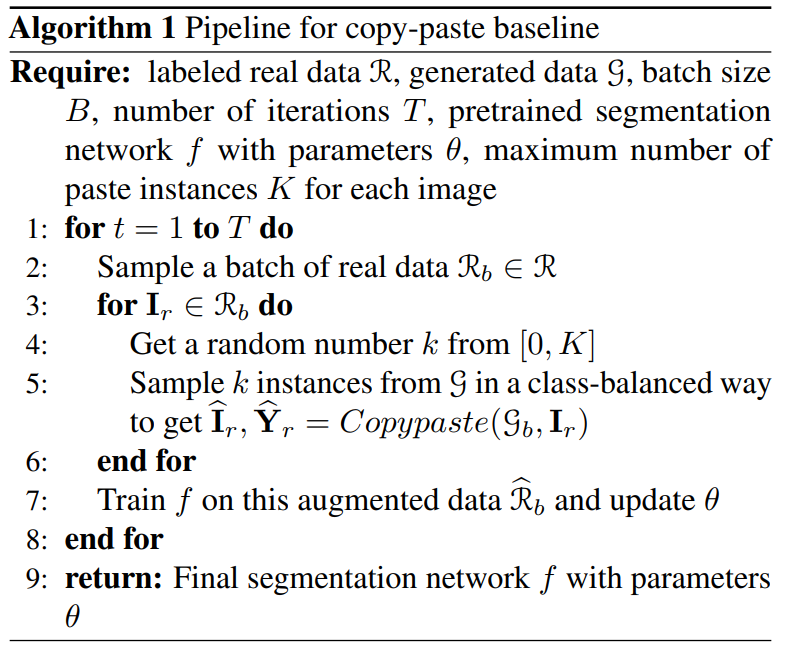
\ succeeds in designing an automated pipeline for utilizing generated data to enhance downstream perception tasks.
\ Most importantly, the above work is all done on relatively simple classification tasks, and only a few works have explored more complex perception tasks such as detection (Shrivastava et al., 2016; Liu et al., 2021) and segmentation (Jain and Grauman, 2016; Vezhnevets et al., 2012; Casanova et al., 2020), but they are all aimed at real data. Our work is the first to explore the generated data on the complex perception task of long-tail instance segmentation.
\
:::info Authors:
(1) Muzhi Zhu, with equal contribution from Zhejiang University, China;
(2) Chengxiang Fan, with equal contribution from Zhejiang University, China;
(3) Hao Chen, Zhejiang University, China ([email protected]);
(4) Yang Liu, Zhejiang University, China;
(5) Weian Mao, Zhejiang University, China and The University of Adelaide, Australia;
(6) Xiaogang Xu, Zhejiang University, China;
(7) Chunhua Shen, Zhejiang University, China ([email protected]).
:::
:::info This paper is available on arxiv under CC BY-NC-ND 4.0 Deed (Attribution-Noncommercial-Noderivs 4.0 International) license.
:::
\
You May Also Like

TRM Labs Launches Revolutionary AI Agent for Natural Language On-Chain Analysis
Unlocking SEO, GEO & AEO: The Future of Search Optimization