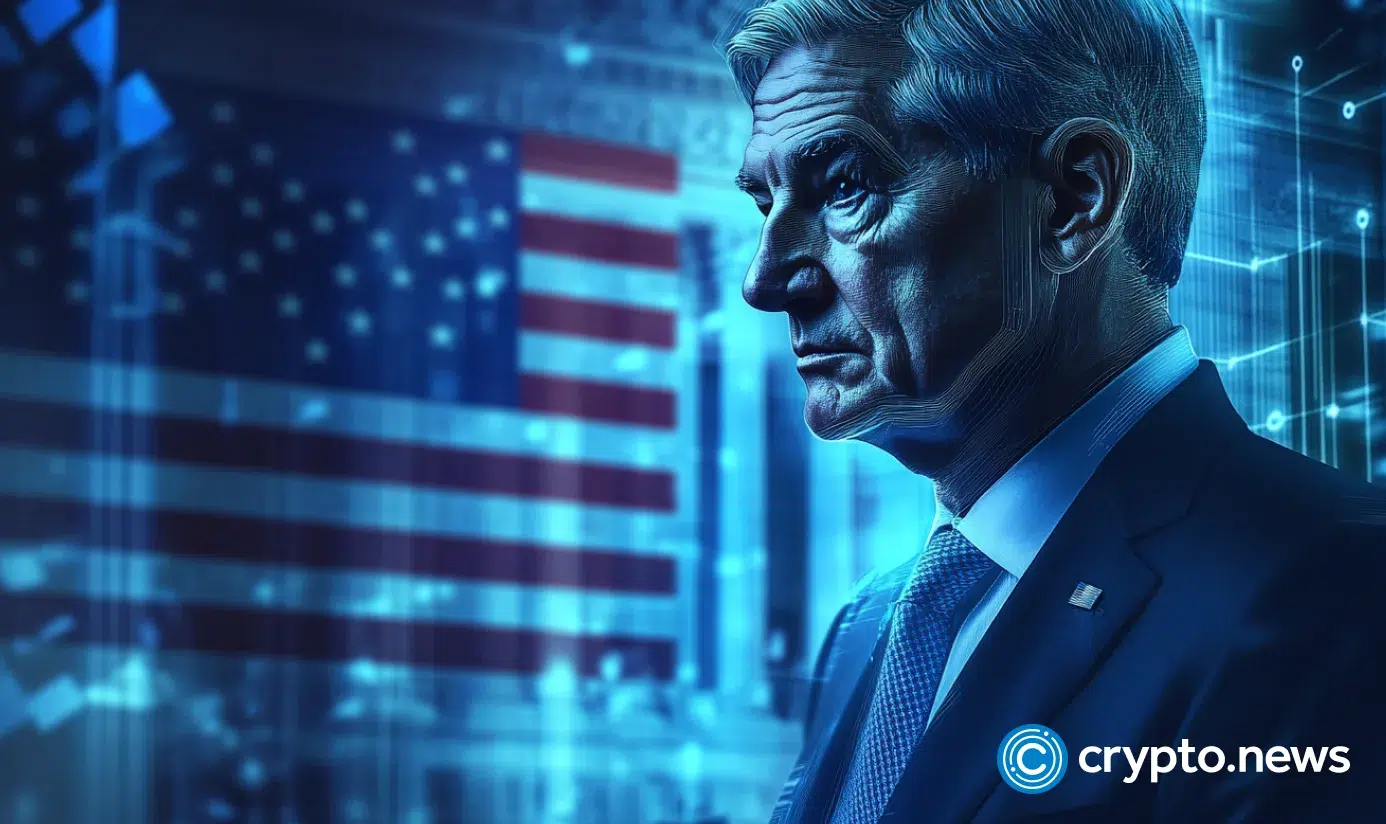
The regulation of stablecoins has become a central issue in South Korea’s discussions. There is a strong need for action in the capital city. Legislators are holding prolonged and poorly lit meetings trying to figure out what rules should govern a digital world that is always changing. The main word around which the whole issue […]The regulation of stablecoins has become a central issue in South Korea’s discussions. There is a strong need for action in the capital city. Legislators are holding prolonged and poorly lit meetings trying to figure out what rules should govern a digital world that is always changing. The main word around which the whole issue […]

S.Korean Stablecoin Urgent Shakeup: 51% Bank Rule Sparks Major Shift

  • South Korea is gradually making its stablecoin market rules stricter.
  • Politicians are advocating for a bank-led model and, thus, are asking for a majority control of 51% by banks.
  • The government’s postponements are putting more stress on the situation as the law-making process is about to conclude.

The regulation of stablecoins has become a central issue in South Korea’s discussions. There is a strong need for action in the capital city. Legislators are holding prolonged and poorly lit meetings trying to figure out what rules should govern a digital world that is always changing.

The main word around which the whole issue revolves is stablecoin. It is silent, far away, and very much a technical matter. However, it still carries the burden of a network that cannot be allowed to disintegrate.

Now South Korea is doing the groundwork for the second phase of the Digital Asset Basic Act. The risks are enormous. The coalition party together with the Financial Services Commission have already taken the step of reopening old disputes in order to create a strong law that can weather the strongest of political storms.

Also Read: South Korea Tightens Crypto AML Rules Amid Growing Smurfing Concerns

Clash of Stablecoins

There is one matter that the government and the National Assembly share a consensus on, the initial draft law did not suffice. It was user-friendly but did not subdue the broader frontier. Therefore, they went deeper, exploring uncharted territory with a second-stage bill intended to encircle the whole ecosystem.

Nevertheless, it was the issuance of stablecoins that turned out to be the battlefield. The Bank of Korea wished for banks to control the situation totally. On the other hand, some people believed that fintech and blockchain companies should be allowed to participate. This confrontation was the reason behind the repeated delays of the government’s proposal.

The ruling party, as of now, is of the opinion that the impasse is no longer a thing. It appears that a silent agreement has developed. Issuers are going to be confined to one group where the banks would own no less than 51% of the stock. It is quite a significant step back towards caution. A message that the old-timers have to provide the stability even in the new world.

Rep. Kang Jun-hyun, the one pushing for political affairs, expressed that the coordination is seemingly finished. He acts as if he is a man with a very tight deadline. His office has declared the 10th as the final day for the authorities to present the government’s ultimate plan.

Kang Jun-hyun, floor leader of the Democratic Party of Korea

Nevertheless, the Financial Services Commission is still taking a conservative approach. Through a press release, it declared that nothing has been settled. Just that the objective is obvious: hurry up with the plan and aid the legislators in the legal framework.

Stablecoin Rules Against the Clock

Bunch of digital asset bills are already in front of the lawmakers’ table. They project the future of the industry through the lenses of innovation, integration, and transition. However, they are incomplete without the backing of the government. Moreover, the increment of the pressure is due to each day of delay.

Rep. Kang thinks that the discussion will continue into January. There is little time, and even less consensus. Yet, he is adamant that the labor has to be initiated right away. No plan, no law; no law, only drifting.

South Korea’s digital markets are struggling with chaos and the country is eager to bring in trust as the main thing to support the increasing demand. Thus, the government advances steadily, slowly, and with strong determination, laying down a stablecoin regulation that would eventually get the whole thing sorted out.

Also Read: South Korea Probes Lazarus Group After Upbit’s 44.5B KRW Crypto Breach

Market Opportunity
Lorenzo Protocol Logo
Lorenzo Protocol Price(BANK)
$0.05035
$0.05035$0.05035
-3.85%
USD
Lorenzo Protocol (BANK) Live Price Chart
Disclaimer: The articles reposted on this site are sourced from public platforms and are provided for informational purposes only. They do not necessarily reflect the views of MEXC. All rights remain with the original authors. If you believe any content infringes on third-party rights, please contact [email protected] for removal. MEXC makes no guarantees regarding the accuracy, completeness, or timeliness of the content and is not responsible for any actions taken based on the information provided. The content does not constitute financial, legal, or other professional advice, nor should it be considered a recommendation or endorsement by MEXC.

You May Also Like

Strive Finalizes Semler Deal, Expands Its Corporate Bitcoin Treasury

Strive Finalizes Semler Deal, Expands Its Corporate Bitcoin Treasury

Strive had finalized its acquisition of Semler scientific after securing the approval of shareholders earlier in the week. The final deal brought both firms’ Bitcoin
Share
Tronweekly2026/01/17 12:30
Why 2026 Is The Year That Caribbean Mixology Will Finally Get Its Time In The Sun

Why 2026 Is The Year That Caribbean Mixology Will Finally Get Its Time In The Sun

The post Why 2026 Is The Year That Caribbean Mixology Will Finally Get Its Time In The Sun appeared on BitcoinEthereumNews.com. San Juan, Puerto Rico’s La Factoría
Share
BitcoinEthereumNews2026/01/17 12:24
EUR/CHF slides as Euro struggles post-inflation data

EUR/CHF slides as Euro struggles post-inflation data

The post EUR/CHF slides as Euro struggles post-inflation data appeared on BitcoinEthereumNews.com. EUR/CHF weakens for a second straight session as the euro struggles to recover post-Eurozone inflation data. Eurozone core inflation steady at 2.3%, headline CPI eases to 2.0% in August. SNB maintains a flexible policy outlook ahead of its September 25 decision, with no immediate need for easing. The Euro (EUR) trades under pressure against the Swiss Franc (CHF) on Wednesday, with EUR/CHF extending losses for the second straight session as the common currency struggles to gain traction following Eurozone inflation data. At the time of writing, the cross is trading around 0.9320 during the American session. The latest inflation data from Eurostat showed that Eurozone price growth remained broadly stable in August, reinforcing the European Central Bank’s (ECB) cautious stance on monetary policy. The Core Harmonized Index of Consumer Prices (HICP), which excludes volatile items such as food and energy, rose 2.3% YoY, in line with both forecasts and the previous month’s reading. On a monthly basis, core inflation increased by 0.3%, unchanged from July, highlighting persistent underlying price pressures in the bloc. Meanwhile, headline inflation eased to 2.0% YoY in August, down from 2.1% in July and slightly below expectations. On a monthly basis, prices rose just 0.1%, missing forecasts for a 0.2% increase and decelerating from July’s 0.2% rise. The inflation release follows last week’s ECB policy decision, where the central bank kept all three key interest rates unchanged and signaled that policy is likely at its terminal level. While officials acknowledged progress in bringing inflation down, they reiterated a cautious, data-dependent approach going forward, emphasizing the need to maintain restrictive conditions for an extended period to ensure price stability. On the Swiss side, disinflation appears to be deepening. The Producer and Import Price Index dropped 0.6% in August, marking a sharp 1.8% annual decline. Broader inflation remains…
Share
BitcoinEthereumNews2025/09/18 03:08