The post Russia Sent Abducted Ukrainian Children To North Korea appeared on BitcoinEthereumNews.com. TOPSHOT – A child looks through a evacuation train’s window in Pokrovsk, in the Donetsk region, on November 30, 2022, amid the Russian invasion of Ukraine. (Photo by ANATOLII STEPANOV / AFP) (Photo by ANATOLII STEPANOV/AFP via Getty Images) AFP via Getty Images New testimony presented to the U.S. Senate has revealed that Russia has transferred abducted Ukrainian children not only into its own territory but as far as North Korea. The finding adds a new layer to one of the most thoroughly documented crimes of the war and illustrates how deeply Moscow’s alliances now shape its treatment of occupied populations. According to reporting by the Kyiv Independent, Kateryna Rashevska of Ukraine’s Regional Center for Human Rights told a congressional subcommittee that at least two abducted Ukrainian children were moved to the Songdowon camp in North Korea. She said that 12-old Misha from occupied Donetsk and 16-year-old Liza from occupied Simferopol were taken almost nine thousand kilometers from their homes. Reeducation And Forced Assimilation The testimony opened a hearing of the U.S. Senate Appropriations Committee focused on Russia’s program of mass abductions. Since the full-scale invasion began in February 2022, Russia has removed Ukrainian children from occupied territories and placed them in a network of facilities intended to erase Ukrainian identity and, in many cases, prepare the children for life inside the Russian state. Some are adopted by Russian families. Others are held in militarization and re-education camps. Ukraine’s national Children of War database records at least 19,546 abducted children. Independent experts estimate that the true total may be far higher. Senator Chuck Grassley of Iowa has also introduced a bipartisan resolution calling on Russia to return all kidnapped Ukrainian children before any peace agreement is finalized. The breadth of the abduction system has been mapped in considerable detail. The… The post Russia Sent Abducted Ukrainian Children To North Korea appeared on BitcoinEthereumNews.com. TOPSHOT – A child looks through a evacuation train’s window in Pokrovsk, in the Donetsk region, on November 30, 2022, amid the Russian invasion of Ukraine. (Photo by ANATOLII STEPANOV / AFP) (Photo by ANATOLII STEPANOV/AFP via Getty Images) AFP via Getty Images New testimony presented to the U.S. Senate has revealed that Russia has transferred abducted Ukrainian children not only into its own territory but as far as North Korea. The finding adds a new layer to one of the most thoroughly documented crimes of the war and illustrates how deeply Moscow’s alliances now shape its treatment of occupied populations. According to reporting by the Kyiv Independent, Kateryna Rashevska of Ukraine’s Regional Center for Human Rights told a congressional subcommittee that at least two abducted Ukrainian children were moved to the Songdowon camp in North Korea. She said that 12-old Misha from occupied Donetsk and 16-year-old Liza from occupied Simferopol were taken almost nine thousand kilometers from their homes. Reeducation And Forced Assimilation The testimony opened a hearing of the U.S. Senate Appropriations Committee focused on Russia’s program of mass abductions. Since the full-scale invasion began in February 2022, Russia has removed Ukrainian children from occupied territories and placed them in a network of facilities intended to erase Ukrainian identity and, in many cases, prepare the children for life inside the Russian state. Some are adopted by Russian families. Others are held in militarization and re-education camps. Ukraine’s national Children of War database records at least 19,546 abducted children. Independent experts estimate that the true total may be far higher. Senator Chuck Grassley of Iowa has also introduced a bipartisan resolution calling on Russia to return all kidnapped Ukrainian children before any peace agreement is finalized. The breadth of the abduction system has been mapped in considerable detail. The…

Russia Sent Abducted Ukrainian Children To North Korea

For feedback or concerns regarding this content, please contact us at [email protected]

TOPSHOT – A child looks through a evacuation train’s window in Pokrovsk, in the Donetsk region, on November 30, 2022, amid the Russian invasion of Ukraine. (Photo by ANATOLII STEPANOV / AFP) (Photo by ANATOLII STEPANOV/AFP via Getty Images)

AFP via Getty Images

New testimony presented to the U.S. Senate has revealed that Russia has transferred abducted Ukrainian children not only into its own territory but as far as North Korea. The finding adds a new layer to one of the most thoroughly documented crimes of the war and illustrates how deeply Moscow’s alliances now shape its treatment of occupied populations.

According to reporting by the Kyiv Independent, Kateryna Rashevska of Ukraine’s Regional Center for Human Rights told a congressional subcommittee that at least two abducted Ukrainian children were moved to the Songdowon camp in North Korea. She said that 12-old Misha from occupied Donetsk and 16-year-old Liza from occupied Simferopol were taken almost nine thousand kilometers from their homes.

Reeducation And Forced Assimilation

The testimony opened a hearing of the U.S. Senate Appropriations Committee focused on Russia’s program of mass abductions. Since the full-scale invasion began in February 2022, Russia has removed Ukrainian children from occupied territories and placed them in a network of facilities intended to erase Ukrainian identity and, in many cases, prepare the children for life inside the Russian state.

Some are adopted by Russian families. Others are held in militarization and re-education camps. Ukraine’s national Children of War database records at least 19,546 abducted children. Independent experts estimate that the true total may be far higher. Senator Chuck Grassley of Iowa has also introduced a bipartisan resolution calling on Russia to return all kidnapped Ukrainian children before any peace agreement is finalized.

The breadth of the abduction system has been mapped in considerable detail. The Yale School of Public Health’s Humanitarian Research Lab has identified at least 210 facilities inside Russia or Russian-held territory that receive Ukrainian children.

A Crime Rooted in Historical Trauma

The issue also carries deep historical resonance inside Ukraine. According to the Center for Holocaust and Genocide Studies at the University of Minnesota, children were among the most vulnerable victims of the Holodomor of 1932 to 1933, the Soviet-engineered famine that killed millions. Historians estimate that between 1.5 and 4 million minors died despite their families’ desperate efforts to keep them alive. Many of those who survived entered orphanages that functioned as death camps, and a significant number have never been formally recognized as victims.

People place candles in memory of the victims of the Holodomor famine during a ceremony at the Holodomor memorial in Kiev on November 25, 2017. Ukraine on November 25 marked 84 years since the Stalin-era Holodomor famine, one of the darkest pages in its entire history that left millions dead and which is regarded by many as a genocide. The 1932-33 famine took place as harvests dwindled and Soviet leader Josef Stalin’s police enforced the brutal policy of collectivising agriculture by requisitioning grain and other foodstuffs. / AFP PHOTO / Genya SAVILOV (Photo credit should read GENYA SAVILOV/AFP via Getty Images)

AFP via Getty Images

John Vsetecka, Assistant Professor of History at Nova Southeastern University, told me that the Holodomor remains central to understanding Russia’s current assault on Ukraine. He said the present conflict is carried out not only through military action but also through competing historical narratives, where Russia seeks to deny or minimize the catastrophes it inflicted on Ukrainians.

Natalia Kuzovova, Head of the Department of History, Archeology and Teaching Methods at Kherson State University, also told me that the generational nature of these crimes is essential for understanding the present war. She said that hundreds of Ukrainian children will never reach adulthood today because they were killed by Russia, just as entire generations were extinguished under Soviet rule.

Kuzovova detailed how the Soviet regime targeted children during the Holodomor. “Even very young children were labeled enemies of the Soviet state and deported with their families, many dying en route or becoming orphans,” she told me. Teenagers could be arrested for failing to meet grain quotas and starved to death in prisons and penal colonies. Children whose parents had been detained were often left on the streets without care, and those placed in state shelters frequently perished because there was no food.

“It is believed that the most numerous victims of the Holodomor were children under the age of four,” she said. “Their mothers lost lactation and there was no age-appropriate food available. Children starved in shelters, in prisons, and on the streets.”

A Strategic Crime With Long-Term Implications

This historical backdrop reinforces the argument put forward by Kristina Hook in her analysis for the Atlantic Council. She contends that the abductions are not a secondary humanitarian issue but a central strategic challenge that must be addressed in any future settlement.

Only 1,859 children have been returned, and Ukrainians shoulder almost the entire burden of rescue. For Hook, the scale and ideological design of the program reveal a war aimed at altering Ukraine’s demographic future and erasing its national identity in ways that extend far beyond the immediate battlefield. The United Nations reported that over 2,500 Ukrainian children have been killed or injured since the full-scale invasion.

The intent behind these policies is widely recognized in Ukraine. “The aim is genocide of the Ukrainian people through Ukrainian children,” Daria Herasymchuk, a presidential adviser on children’s rights, told Al Jazeera in June. “Everybody understands that if you take children away from a nation, the nation will not exist.”

U.S. Political Attention

On December 4, 2025, First Lady Melania Trump welcomed the reunification of seven additional Ukrainian children with their families, saying her “dedication to guaranteeing the safe return of children” remained unwavering. Her office described the initiative as a humanitarian channel involving Kyiv, Moscow and U.S. intermediaries, signaling that the fate of abducted Ukrainian children has become a visible point of international diplomatic focus.

Russia immediately sought to capitalize on this moment. Kirill Dmitriev, a senior Russian aide to Vladimir Putin, posted on X that Russia’s children’s commissioner, Maria Lvova-Belova, appeared with the reunified Ukrainian children and publicly expressed gratitude to Melania Trump for her “humanitarian work.”

Moscow’s attempt to frame the reunification as evidence of its cooperation, despite the International Criminal Court’s arrest warrant for Lvova-Belova over child deportations, illustrates how the Kremlin continues to weaponize information around abducted children for political gain.

Source: https://www.forbes.com/sites/davidkirichenko/2025/12/04/russia-sent-abducted-ukrainian-children-to-north-korea/
Market Opportunity
Seed.Photo Logo
Seed.Photo Price(PHOTO)
$0.13
$0.13$0.13
-26.16%
USD
Seed.Photo (PHOTO) Live Price Chart
Disclaimer: The articles reposted on this site are sourced from public platforms and are provided for informational purposes only. They do not necessarily reflect the views of MEXC. All rights remain with the original authors. If you believe any content infringes on third-party rights, please contact [email protected] for removal. MEXC makes no guarantees regarding the accuracy, completeness, or timeliness of the content and is not responsible for any actions taken based on the information provided. The content does not constitute financial, legal, or other professional advice, nor should it be considered a recommendation or endorsement by MEXC.
Tags:

You May Also Like

China Launches Cross-Border QR Code Payment Trial

China Launches Cross-Border QR Code Payment Trial

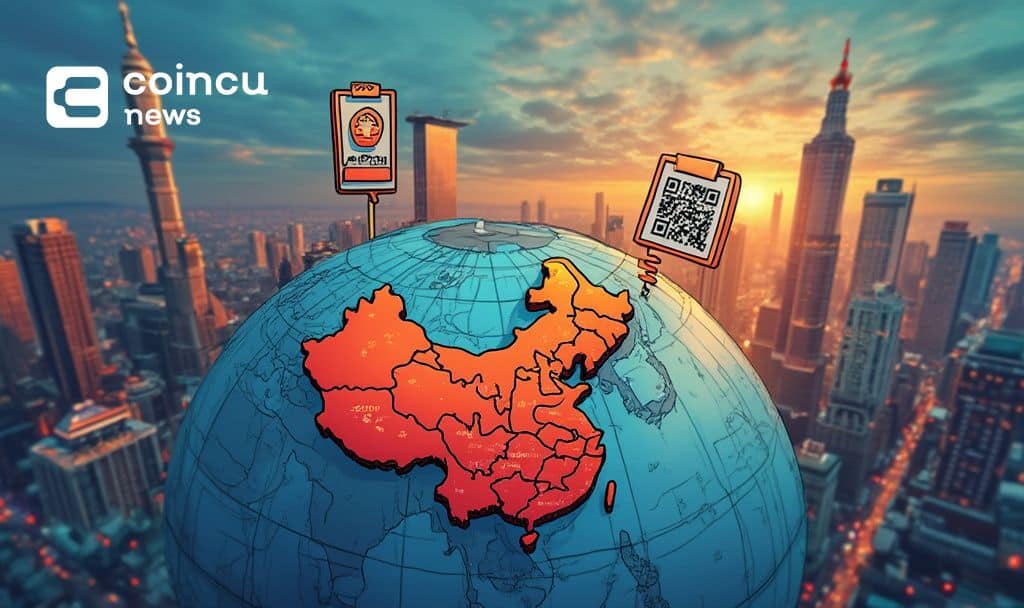
The post China Launches Cross-Border QR Code Payment Trial appeared on BitcoinEthereumNews.com. Key Points: Main event involves China initiating a cross-border QR code payment trial. Alipay and Ant International are key participants. Impact on financial security and regulatory focus on illicit finance. China’s central bank, led by Deputy Governor Lu Lei, initiated a trial of a unified cross-border QR code payment gateway with Alipay and Ant International as participants. This pilot addresses cross-border fund risks, aiming to enhance financial security amid rising money laundering through digital channels, despite muted crypto market reactions. China’s Cross-Border Payment Gateway Trial with Alipay The trial operation of a unified cross-border QR code payment gateway marks a milestone in China’s financial landscape. Prominent entities such as Alipay and Ant International are at the forefront, participating as the initial institutions in this venture. Lu Lei, Deputy Governor of the People’s Bank of China, highlighted the systemic risks posed by increased cross-border fund flows. Changes are expected in the dynamics of digital transactions, potentially enhancing transaction efficiency while tightening regulations around illicit finance. The initiative underscores China’s commitment to bolstering financial security amidst growing global fund movements. “The scale of cross-border fund flows is expanding, and the frequency is accelerating, providing opportunities for risks such as cross-border money laundering and terrorist financing. Some overseas illegal platforms transfer funds through channels such as virtual currencies and underground banks, creating a ‘resonance’ of risks at home and abroad, posing a challenge to China’s foreign exchange management and financial security.” — Lu Lei, Deputy Governor, People’s Bank of China Bitcoin and Impact of China’s Financial Initiatives Did you know? China’s latest initiative echoes the Payment Connect project of June 2025, furthering real-time cross-boundary remittances and expanding its influence on global financial systems. As of September 17, 2025, Bitcoin (BTC) stands at $115,748.72 with a market cap of $2.31 trillion, showing a 0.97%…
Share
BitcoinEthereumNews2025/09/18 05:28
Bank of England keeps interest rate steady at 4% as expected

Bank of England keeps interest rate steady at 4% as expected

The post Bank of England keeps interest rate steady at 4% as expected appeared on BitcoinEthereumNews.com. The Bank of England (BoE) left its benchmark interest rate unchanged at 4%, following the conclusion of the September monetary policy meeting on Thursday. The rate decision aligned with the market expectations. The voting composition showed the expected 7-2 split on the Monetary Policy Committee (MPC), with two members, Dhingra and Taylor, voting in favor of a 25 basis points (bps) cut. Follow our live coverage of the BoE policy announcements and the market reaction. Key takeaways from BoE Monetary Policy Statement BoE policymaker Pill voted to maintain QT pace at 100 bln Pound Sterling (stg). BoE policymakers vote 7-2 to slow quantitative tightening pace to 70 bln stg a year from 100 bln stg. BoE policymaker Mann voted to slow QT pace to 62 bln stg. To hold two 775 mln stg short-dated gilt auctions, two 750 mln stg medium-dated gilt auctions and one 550 mln stg long-dated gilts auction in Q4 2025. 2025/26 gilt sales will be split 40:40:20 between short-, medium- and long-maturity buckets in initial proceed terms (2024/25 had equal split) “We’re not out of the woods yet so any future rate cuts will need to be made gradually and carefully” New AT target means MPC can continue to reduce size of balance sheet while continuing to minimise impact on gilt market “A gradual and careful approach to the further withdrawal of monetary policy restraint remains appropriate”. Keeps phrase: monetary policy not on pre-set path. UK CPI forecast to peak at 4% in September 2025 (August forecast to peak at 4% in Sept). Staff forecast Q3 GDP to increase by around 0.4% QoQ (August forecast: Q3 +0.3%). Rise in firms’ social security contributions appears to be delaying the reduction in total labour costs growth until 2026. Impact of US tariff rates on the world economy could…
Share
BitcoinEthereumNews2025/09/18 23:20
XAU/USD declines sharply to near $4,400 as Middle East fears revive

XAU/USD declines sharply to near $4,400 as Middle East fears revive

The post XAU/USD declines sharply to near $4,400 as Middle East fears revive appeared on BitcoinEthereumNews.com. Gold price (XAU/USD) is down 2% to near $4,410
Share
BitcoinEthereumNews2026/03/26 19:16

