Liquidation Alchemy Part 2: From BitMEX to Hyperliquid & Beyond
 Jon Reiter
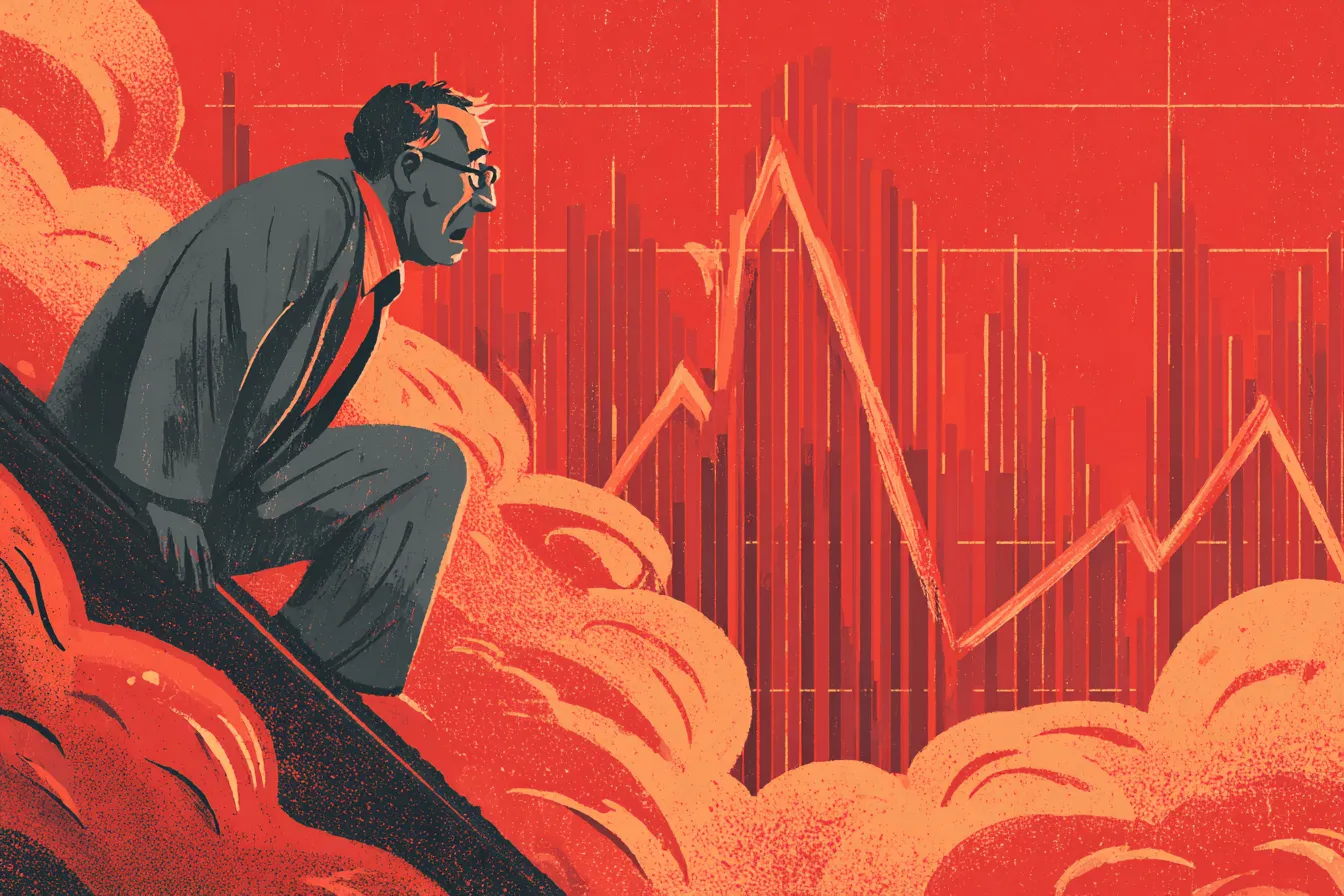
Last time we talked about the tumult of October 10th and the situation with centralized exchanges and liquidations in general. But we left out two essential components. First, we did not discuss at all the venue with probably the largest amount liquidated in that tumult: Hyperliquid. And second, we gave only a brief summary, and then summary dismissal, of the most common complaints regarding perps and liquidations and all the "crash" noise.
But dealing with both of those topics properly requires a little background. Perps are not new. And the market dynamics that result when trading is dominated by leveraged traders that kind of expect to get liquidated every so often: Yes, that sort of environment can produce strange and counterintuitive results. Nobody should be surprised that completely different rules produce a market where intuition developed in traditional markets fails.
However, web3 markets are developing entanglements that appear borne of traditional market ideas and structures and experiences. This whole situation looks to be setting up a calamity larger than Mt. Gox, larger than Terra-LUNA, larger than FTX and even larger than what would have happened if the ByBit hack drained 10x as much and the exchange blew up. Market structure is getting less and less healthy despite all the noise from lobbyists and advocates about improvements.
The BitMEX OG Setup
The first major and reasonably-stable leveraged trading exchange in web3 was BitMEX. We say "was" because BitMEX is not anywhere near the top of the volume board anymore. But it was on BitMEX where Bitcoin perps started in size so we will start there with a stylized version of the BitMEX system. We need a toy model to explore the details of today's problems.
There is a central order book with everyone's buy and sell orders for perps. And everyone has an account balance and open positions. Every so often – quite often but not really continuously because trading volumes routinely overwhelmed the components we are about to talk about – the prices for valuing positions are updated and each account's balance and positions are checked. In theory, this should be done with each new trade and order entered but the system was not that fast. But it was fast-ish.
And during each round of checking BitMEX determined if each account's open positions exceeded the risk-bearing capacity of their then-current balance. If you were too close to – or already through – their line you got "liquidated." That meant the account was 0ed and the positions were no longer your problem. BitMEX absorbed your assets and open positions and then unwound those perp positions. As an external party the way you would unwind these positions is to go enter a bunch of orders into the market.
But BitMEX, being the exchange, could do one better. Enter the idea of auto-deleveraging (ADL). This is where the exchange decides that someone other than the party getting liquidated wants to take profit and closes their position for them. BitMEX would intervene and effectively create offsetting orders to ensure the unwind trades get filled at good levels. BitMEX could force people to take profit because a) it was the exchange and in a mechanical sense can enter any orders it wants on anyone's behalf and b) it put something like this in the user documentation so it was "legal."
Obviously the position unwinds could overwhelm the seized assets – that risk is why you got liquidated in the first place! – but that was BitMEX's problem. Mitigating that risk is one reason for ADL. BitMEX did not have an infinite amount of money and could not be completely sure of always finding positions to close in time. So some users, entirely reasonably, questioned how the exchange could absorb potentially huge losses. This led management to set up an "insurance fund." There was also some reporting software developed to show users that meaningful assets were set aside to cover potential liquidation problems and track this whole safety net scheme.
At this point a user could look at the total amount of open risk on the exchange, the frequency of the liquidation checks described above, and the balance of the insurance fund and make a decision as to whether it was a good idea to trust BitMEX. An sophisticated trader would use that information to decide how much money they were willing to put at risk on BitMEX. Even the riskiest exchange is probably worth it for some small size right?
So far this all sounds reasonable. But there are two problems. The first is that no matter how big the insurance fund is, it can still run out. That is kind of obvious. The second problem is less obvious. ADL is a confusing way of simply haircutting the winners to cap their gross payoff at the assets seized from the losers. BitMEX was, morally, defaulting on some of the winners' winnings because BitMEX would not pay out more than the total amount paid by all the losing traders on BitMEX.
If someone had a perp position that was in the money by $100 and BitMEX only paid $80, that would be an actual default. That is not what happened. Instead, you would find that your position was partially closed out and, magically, the net profit between the close-out and remaining position was $80. Part of your position got closed out for a profit of $20 and the rest made $60. Your original position would be worth $100 but you – "involuntarily" – took profit. The quote marks are there because you agreed to this process in the exchange's onboarding docs.
This, effectively, damps the volatility experienced by traders. Bitcoin might drop 10% and you might be short. Well done. But you are only getting paid 8% if the opposing side of your trade can only afford to pay you 8%. We actually did an empirical study of this a few years ago and worked through the maths of options pricing for this kind of "damped" asset.
The key observation here is that this market structure results in prices with "thin tails" where extreme outcomes are less likely than we find in nature. You may be thinking that sound crazy given the volatility in web3 markets. But remember, this is not a comment about the level of volatility – it is a comment about the structure of those highly-volatile returns. Bitcoin can have a volatility of 100% or 500% or 1,000% and still have relatively unlikely extreme outcomes. The relative likelihood of Bitcoin going up 10 standard deviations vs 2 standard deviations might be less than that same ratio for a government bond even if the government bond's standard deviation is wildly lower. Relatively is what matters here. Even safe bonds can collapse to 0 overnight. But there are no 4 meter tall humans at all. Relatively.
The problem here – which we will come back to at the end – is that the real world has fat tails. And the risk inherent in running markets this way is that when something comes along and imposes fat-tailed (relatively more likely extreme outcomes) returns, things may go very very badly indeed.
As one hint of problems to come there is now pretty widespread reporting that Binance exempts some large users from ADL entirely. That clearly introduces some risks. There is a long history of perp exchanges providing incomplete or somewhat misleading descriptions for how ADL and liquidation and the insurance fund work in the limit. So it is bad if Binance was misleading people. But people also should have expected to be lied to because every exchange they have ever used lied to them in the same way.
Hyperliquid
Hyperliquid is a permissionless-ish mostly automated – we are not going to say decentralized and permissionless because, having been through much of the code, it is neither – perpetual futures exchange. And it liquidated a huge number of people on October 10th. The system worked in that it remained online and did not explode.
The massive wave of liquidations resulted in huge profits. And Hyperliquid, as they have promised to do, used a lot of that money to buy back their own token. There is really one big problem with all of this: Hyperliquid has no other businesses from which it earns money to cover potential future losses and the team has a massive incentive to liquidate positions for a profit and push up the price of the token while it can.
If the BitMEX insurance fund ran dry – or if Binance's or ByBit's or some other large exchange's insurance process was emptied out – there are other places to get funds. There are other fairly well-attached income streams. Hyperliquid would have to go out and sell more tokens. And the last thing they want to do is build an automated mechanism to sell tokens if the insurance fund runs low. That rhymes too much with Do Kwon's brilliant algorithm.
Which brings us back to the users not entirely knowing how Hyperliquid works and the history of perp exchanges being riddled with dishonesty. How exactly are positions ADL'ed on Hyperliquid? Are there special arrangements? Because for all the claims of transparency the code is not public. Even if you can see all the positions that were closed out you cannot see how the decision was made to close those positions and not others. Can we do some data analysis anyway? Sure. Is the code sitting somewhere in a readable form? Of course.
This is a fascinating dynamic. Hyperliquid's mechanics are, in the limit, as transparent as Binance's. Which is to say the public does not really know how everything works. Yes Hyperliquid has a lot more, and arguably better, reporting around positions and risk than Binance. Binance has something of a documented history of saying untrue things and Hyperliquid does not. But then again Hyperliquid has a short history and has not yet released their code.
Fairness, Reasonable Choices & Survival
To be fair to everyone involved none of this is easy. What is the right way to prioritize ADLing traders? Is the practice of starting with whoever has the most profit – and therefore in theory would still be happy with only a fraction of their huge winnings – reasonable? Should winning positions be chosen randomly? Or should the exchange do away with ADL entirely, enter market orders to unwind liquidated positions and everyone just takes the risk the platform blows? These questions do not have objectively correct answers. They are all about balancing competing interests in different ways that a large enough fraction of market participants think are sufficiently fair.
At the same time having secret agreements that exempt some parties from ADL feels objectively wrong. Another way to describe secret agreements that exempt some parties from ADL is to say that a secret list of parties get paid their full winnings while most people take a haircut. That does not sound like a great marketing slogan for a new exchange.
As long as these secretly exempted parties are only a small fraction of the market this is unfair but is not going to bankrupt the exchange. You end up with a problem when a winning trader's position or profit is so large you need to blow everyone else out and still cannot pay them or keep them alive. Then the exchange dies. So one risk here is a slowly expanding list of exempted parties until ADL plus the insurance fund prove inadequate and the platform blows up.
And that is a real risk. CoinFlex exploded in 2022 when it turned out a single large trader was exempted from a liquidation process and refused to pay up after a large loss. But that is not the biggest risk here. The big risk is contagion among exchanges more important than CoinFlex ever was.
What we are watching is a collection of large platforms within web3 deciding to trust each other and give each other credit lines without any proper oversight. Binance decides who is exempted from ADL within Binance without any real supervision. There is reporting they decided Ethena is worthy. OK. Ethena also appears to have some credit extension arrangements involving ByBit and Copper. There the issue, roughly, is that you cannot have third-party custody of margin for perps without the other exchange users taking risk the custodian refuses to transfer funds on behalf of their client. If Ethena holds margin for perps on ByBit in Copper, then either a) Copper can refuse to pay ByBit so ByBit users are running Copper/Ethena risk or b) Copper cannot refuse and Ethena users are running ByBit risk. Anything else assumes you can spend the same dollar twice.
That sort of entanglement exists with each one of these agreements within and among the large exchanges and other trading platforms. Because most of these players are completely unsupervised – or, at best, a tiny slice of their business is supervised by a tiny regulator on a small island – there is no reason to expect the agreements are fair or reasonable or safe or even sane. Even if you believe everyone involved is honest and trying to do the right thing you are still talking about people running platforms that offer 100x leverage. The risk tolerance is probably quite high and the procedures a bit haphazard.
For the above ByBit-Copper-Ethena example we still do not really know how it works. Now add to that no backstop and no way of stopping, or even slowing down, the underlying digital asset movements on-chain. The big risk is that a few of these credit-extension arrangements – and these are all credit extension of one sort or other – leads to a few decisions made in the name of self-preservation that knocks over a giant exchange or platform. Imagine something like the following stylized example after a massive move:
- Ethena owes a massive margin payment to ByBit
- Copper refuses to transfer the assets due to concerns about ByBit's solvency
- This refusal makes ByBit insolvent
- ByBit haircuts perp winners
- A few large traders have massive perp profits on ByBit which offset positions on smaller exchanges
- Those traders cannot access their ByBit profits so they default on the smaller exchanges
At this point we have Copper/Ethena calling out ByBit, ByBit publicly haircutting traders, and a number of smaller exchanges blowing up. Maybe one of those traders that cannot withdraw from ByBit then gets liquidated on Hyperliquid at the same time and an automated wave of ADL kicks in. This is all not ideal.
Now put yourself in the position of a large trading business with a no-ADL agreement on Binance. You're gonna take your (full!) profits and withdraw them entirely to wait on the sidelines until this mess passes. What if Coinbase's Deribit, where an outsized fraction of users are the kinds of people likely to have secret no-ADL agreements, has trouble because it has so few people to haircut or because so many people suddenly want out? If a Coinbase-owned platform has solvency issues during the above there is a good chance of widespread collapse.
Web3 was supposed to build a financial system free of leverage. The concern was always that leverage spreads trouble within a financial system and by building a system without leverage we would end up with a safer system. But now it looks like the leverage has just been renamed. In the 2022 crash a lot of these agreements caused trouble – but they were generally secret and not so widespread. This time major players are talking about massive agreements in the open. When they fail it will be so much worse.
Elsewhere
 Blockhead
 Blockhead
Podcast
Licensed to Shill – Why Central Asia; Why Now? ft. Anthony Howe (GFTN)
This week the Licensed to Shill panel dives into the dynamic world of Central Asia, a region rapidly emerging as a pivotal hub for trade and innovation. Anthony Howe from the Global Finance Technology Network (GFTN) joins us to explore the untapped potential of this region, particularly focusing on Georgia's strategic role in the middle corridor.
Tune in at blockcast.blockhead.co or on Spotify, Apple, Amazon Music, or any major podcast platform.

Blockhead is a media partner for Consensus Hong Kong 2026. Readers can save 20% on tickets using exclusive code BLOCKDESK at this link.


You May Also Like
MAGA congressman gets more than he bargained for from Jake Tapper: 'Guess I'm confused?'

Bitcoin, Gold, and U.S. Stocks Dive as Trump Pledges to Hit Iran ‘Extremely Hard’