ZKsync has announced plans to deprecate ZKsync Lite, Ethereum’s first zero-knowledge rollup, in 2026 as the protocol shifts its focus entirely toward ZKsync has announced plans to deprecate ZKsync Lite, Ethereum’s first zero-knowledge rollup, in 2026 as the protocol shifts its focus entirely toward

Ethereum’s First ZK-Rollup ZKsync Lite to Shut Down in 2026

2025/12/08 17:56

ZKsync has announced plans to deprecate ZKsync Lite, Ethereum’s first zero-knowledge rollup, in 2026 as the protocol shifts its focus entirely toward the ZKsync network and ZK Stack-powered chains.

The original Layer 2 solution, which launched in December 2020 as a groundbreaking proof-of-concept, will undergo an orderly sunset after serving its purpose of validating critical ideas for production ZK systems.

No immediate action is required from users, as ZKsync Lite continues to operate normally, with funds remaining secure and withdrawals to Ethereum’s Layer 1 functioning throughout the deprecation process.

The ZKsync Association will share detailed migration guidance, specific dates, and a comprehensive deprecation plan in the coming year.

From Pioneer to Legacy System

ZKsync Lite emerged as the first zero-knowledge rollup on Ethereum, pioneering technology that would later evolve into ZKsync Era and the Elastic Network.

The protocol addressed Ethereum’s fundamental challenges of high transaction fees and slow transaction processing by executing transactions off-chain and submitting cryptographic proofs of validity back to Layer 1.

The project gained significant momentum in November 2025 when Ethereum co-founder Vitalik Buterin publicly endorsed ZKsync following its Atlas upgrade, describing the work as “underrated and valuable.

His backing catalyzed institutional adoption, triggering a 50% surge in ZK token prices while positioning ZKsync as central to Ethereum’s “Lean Ethereum” scaling strategy.

ZKsync evolved from its initial Lite version to ZKsync Era in March 2023, becoming the first publicly available zkEVM.

The June 2024 ZKsync 3.0 upgrade transformed the ecosystem from a single Layer 2 into the Elastic Network, an interconnected system of autonomous ZK chains sharing liquidity and security through cryptographic proofs rather than traditional bridges.

Institutional Traction Validates ZK Technology

While ZKsync Lite phases out, the broader ZKsync ecosystem has attracted major institutional interest.

Deutsche Bank is developing an Ethereum Layer 2 blockchain using ZKsync technology as part of Project Dama 2, which involves 24 financial institutions testing the blockchain for asset tokenization under Singapore’s regulatory sandbox.

UBS also conducted a proof-of-concept for its Key4 Gold product using ZKsync Validium, testing the platform’s ability to support tokenized gold investments with privacy and scalability.

Tradable has also tokenized $2.1 billion in institutional-grade private credit on ZKsync, accounting for nearly 90% of the network’s market share for real-world asset protocols.
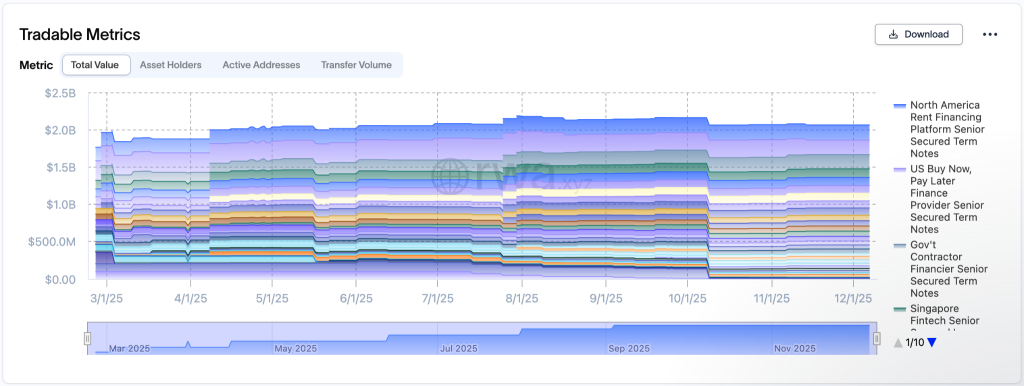
ZKsync Lite to Shut Down - Tradable Metrics ChartSource: RWA[dot]xyz

The Ethereum Foundation launched “Ethereum for Institutions” in October 2024, providing enterprises with structured pathways to blockchain adoption using zero-knowledge proofs, fully homomorphic encryption, and trusted execution environments.

Projects like Chainlink, RAILGUN, and Aztec Network pioneer privacy-preserving smart contracts that secure counterparty information while maintaining transparency.

Security Incidents Test Platform Resilience

The deprecation announcement follows two significant security breaches in 2025 involving ZKsync’s protocols.

In April, an attacker exploited admin access to the airdrop distribution contract, minting 111 million unclaimed ZK tokens worth approximately $5 million during the protocol’s token distribution to ecosystem participants.

The hacker agreed to return 90% of the stolen assets in exchange for a 10% bounty, transferring nearly $5.7 million back to the ZKsync Security Council within the designated 72-hour safe harbor window.

The recovered amount exceeded the original stolen value due to token price increases, with ZK gaining 16.6% and ETH rising 8.8% following the incident.

Just one month later, hackers compromised the official X accounts of ZKsync and Matter Labs, spreading false regulatory warnings claiming SEC investigations and Treasury Department sanctions.

The attackers also published phishing links promoting a fake ZK token airdrop designed to drain users’ wallets, causing the token price to drop approximately 5% despite a prior 38.5% weekly rally.

The breach occurred through compromised delegated accounts with limited posting privileges, which have since been disconnected.

These back-to-back incidents contributed to broader industry concerns, as crypto hacks resulted in $1.6 billion in losses during the first quarter of 2025 alone. The quarter was among the worst for crypto security breaches in history.

Disclaimer: The articles reposted on this site are sourced from public platforms and are provided for informational purposes only. They do not necessarily reflect the views of MEXC. All rights remain with the original authors. If you believe any content infringes on third-party rights, please contact [email protected] for removal. MEXC makes no guarantees regarding the accuracy, completeness, or timeliness of the content and is not responsible for any actions taken based on the information provided. The content does not constitute financial, legal, or other professional advice, nor should it be considered a recommendation or endorsement by MEXC.

You May Also Like

Why Digitap ($TAP) is the Best Crypto Presale December Follow-Up

Why Digitap ($TAP) is the Best Crypto Presale December Follow-Up

The post Why Digitap ($TAP) is the Best Crypto Presale December Follow-Up appeared on BitcoinEthereumNews.com. Crypto Projects Hyperliquid’s HYPE has seen another disappointing week. The token struggled to hold the $30-$32 price range after 9.9M tokens were unlocked and added to the circulating supply. Many traders are now watching whether HYPE will reclaim the $35 area as support or break down further towards the high $20s. Unlike Hyperliquid, whose trading volume is shrinking, Digitap ($TAP), a rising crypto presale project, has already raised over $2 million in just weeks. This is all thanks to its live omnibank app that combines crypto and fiat tools in a single, seamless account. While popular altcoins stall, whales are channeling capital into early-stage opportunities. This shift is shaping discussions on the best altcoins to buy now in the current market dynamics. Hyperliquid Spot Trades Clustered Between the Low and Mid $30s HYPE price closed the week with an 11% loss. This is because a significant portion of its spot trades are clustered between the low and mid $30s. This leaves the token with a multi-billion-dollar fully diluted valuation on its daily trading volume. Source: CoinMarketCap Moreover, HYPE’s daily RSI is still stuck above $40s, while the short-term averages are continually dropping. This shows an indecisiveness, where the bears and the bulls don’t have clear control of the market. Additionally, roughly 2.6% of the circulating supply is in circulation. After unlocking 9.9M tokens, the Hyperliquid team spent over $600 million on buybacks. This amount often buys only a few million tokens a day. That steady demand is quite small compared to the 9.9 million tokens that were released. This has left the HYPE market with an oversupply. Many HYPE holders are now rotating capital into crypto presale projects, like Digitap, that offer immediate upside. HYPE Market Sentiments Shows Mixed Signals Traders are now projecting mixed sentiments for the token. Some…
Share
BitcoinEthereumNews2025/12/08 22:17
EUR/CHF slides as Euro struggles post-inflation data

EUR/CHF slides as Euro struggles post-inflation data

The post EUR/CHF slides as Euro struggles post-inflation data appeared on BitcoinEthereumNews.com. EUR/CHF weakens for a second straight session as the euro struggles to recover post-Eurozone inflation data. Eurozone core inflation steady at 2.3%, headline CPI eases to 2.0% in August. SNB maintains a flexible policy outlook ahead of its September 25 decision, with no immediate need for easing. The Euro (EUR) trades under pressure against the Swiss Franc (CHF) on Wednesday, with EUR/CHF extending losses for the second straight session as the common currency struggles to gain traction following Eurozone inflation data. At the time of writing, the cross is trading around 0.9320 during the American session. The latest inflation data from Eurostat showed that Eurozone price growth remained broadly stable in August, reinforcing the European Central Bank’s (ECB) cautious stance on monetary policy. The Core Harmonized Index of Consumer Prices (HICP), which excludes volatile items such as food and energy, rose 2.3% YoY, in line with both forecasts and the previous month’s reading. On a monthly basis, core inflation increased by 0.3%, unchanged from July, highlighting persistent underlying price pressures in the bloc. Meanwhile, headline inflation eased to 2.0% YoY in August, down from 2.1% in July and slightly below expectations. On a monthly basis, prices rose just 0.1%, missing forecasts for a 0.2% increase and decelerating from July’s 0.2% rise. The inflation release follows last week’s ECB policy decision, where the central bank kept all three key interest rates unchanged and signaled that policy is likely at its terminal level. While officials acknowledged progress in bringing inflation down, they reiterated a cautious, data-dependent approach going forward, emphasizing the need to maintain restrictive conditions for an extended period to ensure price stability. On the Swiss side, disinflation appears to be deepening. The Producer and Import Price Index dropped 0.6% in August, marking a sharp 1.8% annual decline. Broader inflation remains…
Share
BitcoinEthereumNews2025/09/18 03:08