

Mutuum Finance (MUTM) Price Analysis: This New DeFi Crypto Could Jump 950% After Q4 V1 Launch
A new DeFi altcoin priced at $0.035 is capturing market attention as updated price models suggest a possible 950% increase after its first major protocol release later this year. With lending features already outlined, security reviews underway, and allocation nearing its final stretch, Mutuum Finance (MUTM) is quickly becoming one of the most talked-about top crypto contenders heading into Q4 2025.
How Mutuum Finance Works and Early Participation
Mutuum Finance (MUTM) operates with two connected lending environments. In the Peer to Contract market, users supply assets such as ETH or USDT. They receive mtTokens, which increase in value as borrowers repay interest. Someone supplying $800 worth of ETH, for example, would see mtTokens grow as lending activity continues. The growth reflects natural APY tied to protocol usage rather than fixed emissions.
The Peer to Peer side allows borrowers to request liquidity with rates that adjust to changing conditions. When liquidity is high, the rate stays lower. When liquidity tightens, it increases. Borrowers must follow loan-to-value rules that determine how much they can borrow based on collateral. If that collateral drops too far, liquidation can occur. Liquidators repay part of the debt and purchase discounted collateral, which stabilizes the system and prevents imbalance.
Mutuum Finance began its token sale at $0.01 in early 2025. It has climbed to $0.035, marking a 250% increase before the protocol’s public release. The project has raised $19.2 million, gained more than 18,400 holders, and sold over 810 million tokens. Out of the full 4 billion supply, 1.82 billion tokens were reserved for presale stages. Phase 6 is now close to full completion, reflecting accelerated demand as the V1 release nears.
V1 Launch, Security Development, and First Analyst Forecast
Mutuum Finance confirmed through its official X account that the V1 testnet is scheduled for Q4 2025 on the Sepolia network. V1 will include the liquidity pool, mtTokens, the liquidator bot, and the debt-tracking system. ETH and USDT will be the initial supported assets. Having a defined rollout window has increased visibility and strengthened expectations for activity within the lending ecosystem.
Security remains a core part of the development plan. Mutuum Finance completed a CertiK audit, achieving a 90/100 Token Scan score. Halborn Security is reviewing the full lending contract suite. The team also runs a $50,000 bug bounty, which is designed to identify vulnerabilities ahead of V1.
Some analysts who reviewed early development models believe Mutuum Finance could see a 4x to 6x increase shortly after the testnet release if liquidity, borrowing volume, and user adoption rise as projected. Their view is based on the structure of the lending system, the early demand shown in Phase 6, and the confirmed security layers behind the protocol.
mtTokens and Oracle Design
The mtToken system is one of the elements analysts highlight when studying the protocol’s growth potential. mtTokens rise in value each time borrowers repay interest. This design rewards suppliers with yield based on real performance. It also helps build long-term participation as users benefit directly from increased activity inside the protocol.
The buy-and-distribute model supports this further. A portion of platform revenue will buy MUTM directly from the open market. Purchased tokens will be redistributed to users who stake mtTokens in the safety module. This creates recurring buy pressure that increases as borrowing demand rises.
Mutuum Finance will rely on Chainlink price feeds for accurate pricing. Backup oracles, aggregated price sources, and on-chain DEX data will support the system. These layers help the protocol manage liquidations accurately and avoid collateral mispricing during volatile markets.
Based on these combined functions, several analysts estimate that Mutuum Finance could see an 8x to 10x rise if the protocol gains traction within its first year of operation. They highlight the revenue loop and mtToken yield as long-term drivers not commonly found in early-stage DeFi assets.
How Mutuum Finance Mirrors Early Solana
Some market watchers have compared Mutuum Finance’s early structure to the beginning of Solana’s early development cycle. Solana gained momentum because its ecosystem grew quickly, its technical roadmap was clear, and it attracted a strong community before hitting major exchanges. Investors who studied that period point to similar patterns now forming around MUTM.
Mutuum Finance has already shown faster adoption during its early stages. It has passed 18,300 holders, raised more than $19 million, and reached Phase 6 with over 98% allocation completed. V1 has a defined launch window. mtTokens offer real utility. Stablecoin development is underway. Layer-2 expansion is planned. The buy-and-distribute mechanism adds structural demand. These elements together form a foundation similar to past top performers that built momentum long before reaching major listings.
While the sectors differ, the early development pace has caused some analysts to say that MUTM is following the same early steps as Solana but at a faster and more structured rate due to modern DeFi frameworks and stronger community tools.
Why MUTM Demand Is Accelerating Now
Mutuum Finance continues to gain participation as Phase 6 nears completion. With only a small amount of tokens remaining at $0.035, interest has increased sharply. The 24-hour leaderboard, rewarding the top contributor with $500 in MUTM, helps maintain activity. Card payments allow simple onboarding. Whale entries, including a recent $100,000 allocation, show rising confidence.
Mutuum Finance has already shown strong early growth, clear development milestones, audited security, and expanding community activity. With mtToken yield, protocol-driven buy pressure, stablecoin plans, oracle layers, and a V1 testnet scheduled for Q4, the token has positioned itself as one of the most closely watched new crypto assets heading into 2026.
For more information about Mutuum Finance (MUTM) visit the links below:
Website: https://www.mutuum.com
Linktree: https://linktr.ee/mutuumfinance
The post Mutuum Finance (MUTM) Price Analysis: This New DeFi Crypto Could Jump 950% After Q4 V1 Launch appeared first on Blockonomi.
You May Also Like

Spain Harmonized Index of Consumer Prices (YoY) below expectations (3.9%) in March: Actual (3.3%)
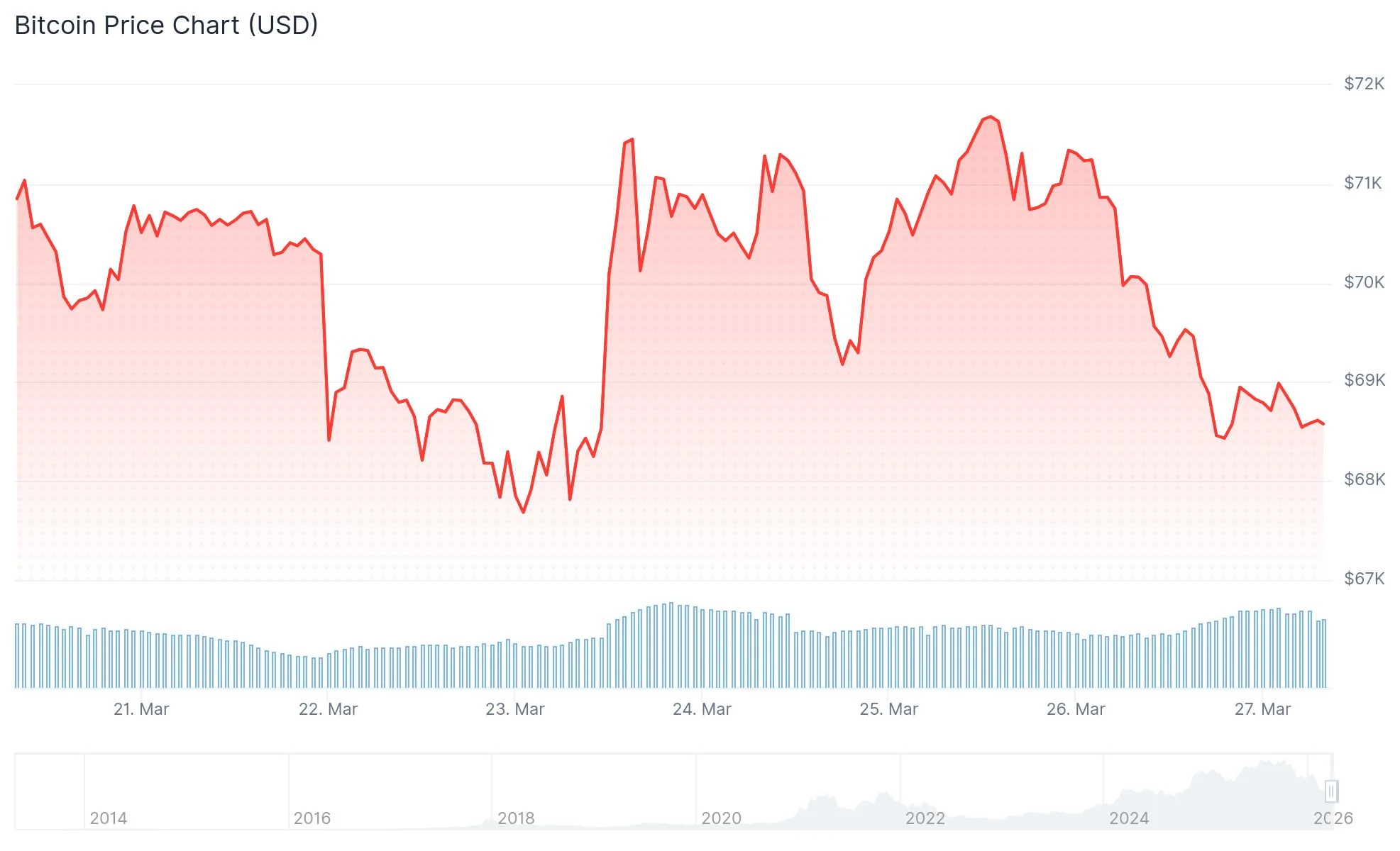
Trump’s Iran Strike Extension: How Bitcoin, Equities, and Crude Oil Are Reacting


