

Must Read
Although the SC ordered the return of P60 billion to PhilHealth, it also upheld the constitutionality of the President's acts in the fund transfer messAlthough the SC ordered the return of P60 billion to PhilHealth, it also upheld the constitutionality of the President's acts in the fund transfer mess
Why SC let Marcos, Recto off the hook on PhilHealth
For feedback or concerns regarding this content, please contact us at [email protected]
The Supreme Court (SC) did not wait for the coming new year to drop its bombshell ruling on the highly controversial PhilHealth fund transfer.
Via unanimous voting, SC justices ordered the return of P60-billion funds to state insurer PhilHealth, which the latter had transferred to the national coffers through the 2024 General Appropriations Act (GAA) (budget law) and a circular issued by the Department of Finance (DOF) under its then-chief Ralph Recto.
“Respondents House of Representatives, Senate of the Philippines, Department of Finance, and Office of the Executive Secretary are ordered to include as a specific item in the 2026 General Appropriations Act the amount of PHP 60 billion to be returned to the Philippine Health Insurance Corporation,” the 136-page decision penned by Associate Justice Amy Lazaro Javier said.
The amount in question is P89.9 billion in total. The High Court also permanently barred the scheduled transfer of the remaining P29.9 billion from PhilHealth to the national treasury.
The Marcos administration’s 2024 GAA had Special Provision 1(d), Chapter XLII that enabled the government to obtain unprogrammed appropriations from four sources, including the fund balance of government-owned or controlled corporations (GOCCs) like PhilHealth.
Unprogrammed funds are standby funds that the government can use when unexpected situations happen. (READ: [ANALYSIS] How unprogrammed appropriations have become a shadow budget)
Empowered by the GAA’s special provision, then-finance chief Recto asked PhilHealth to transfer a total of P89.9 billion under DOF Circular No. 003-2024. Three petitions in total were filed to assail this transfer.
Play Video 
The SC, in its ruling, voided both the special provision and the DOF memorandum.
“Special Provision 1(d), Chapter XLIII of the 2024 General Appropriations Act, DOF Circular No. 003-2024, and the transfer of the PHP 60 billion fund balance of the Philippine Health Insurance Corporation to the National Treasury are declared VOID for having been issued and implemented with grave abuse of discretion amounting to lack or excess of jurisdiction in violation of Article VI, Sections 25(2), 25(5), and 29(3) as well as Article II, Section 15 and Article XIII, Section 11 of the Constitution,” the ruling made public on December 5 read.
The justices are unanimous only in ordering the transfer, but not on other aspects of the ruling, such as voiding the special provision and the DOF memorandum.
They also have varying opinions as to whether President Ferdinand Marcos Jr. abused his powers in relation to the PhilHealth mess.
Marcos: No abuse of powers?
As far as the majority of the High Tribunal is concerned, there was no fault on the part of the President when he asked the House of Representatives to speed up the passage of the 2024 budget bill that contained the assailed provision.
“The Letter dated September 20, 2023 of President Ferdinand R. Marcos, Jr. addressed to Speaker Ferdinand Martin G. Romualdez certifying the urgency of House Bill No. 8980 or the 2024 General Appropriations Bill is declared not unconstitutional,” the ponencia said.
Human rights lawyer Neri Colmenares’ group argued in their petition that Marcos committed grave abuse of discretion in certifying the bill as urgent because of the absence of a public calamity or emergency at the time.
They argued that this ran counter to Section 26(2), Article VI of the 1987 Constitution or the provision that prevents the hasty passage of a bill unless there are public emergencies.
The SC did not agree with Colmenares. According to the SC, Marcos issued the certification because he “recognized” the importance of the timely passage of the 2024 budget law.
In addition, the High Court said Colmenares “proffered no other reason to support their assertion that the president’s certification was tainted with grave abuse of discretion amounting to excess or lack of jurisdiction.”
On top of this, the SC also declined Colmenares’ petition for the SC to issue guidelines on the president’s powers to certify bills as urgent under Section 26(2), Article VI of the Constitution.
“The desired guidelines are superfluous, if not inappropriate. The Constitution is clear on when and why this certification is issued by the president. Too, the Congress is the sole judge of the sufficiency and propriety of the urgency certification by the president,” the SC explained.
Apart from the ponente, some SC justices also explained their votes in finding no grave abuse of discretion on Marcos’ part, like Associate Justices Henri Jean Paul Inting and Raul Villanueva.
“Having done the right thing in ordering the return of the PHP 60 billion already remitted by PhilHealth back to it, President Marcos Jr. all the more deserves not to be questioned about it and whatever may be the outcome of the petitions assailing Special Provision I (d) and DOF Circular No. 003-2024,” Villanueva wrote.
The President, ahead of the SC ruling, also announced in September that he ordered the return of the P60-billion funds to PhilHealth.
Back in February, the SC already dropped Marcos Jr. as among the respondents in the petitions. He is immune from suit as the president, the High Court reiterated.
Leonen disagrees
But if the SC followed Senior Associate Justice Marvic Leonen’s opinion, grave abuse of discretion would be determined on the President’s part.
Leonen, in his separate opinion, broke down Article VI, Section 26(2) — the provision cited by Colmenares.
The senior magistrate explained that under the said constitutional provision, readings on the bill shall be made on three separate days and its final form shall be distributed three days before its passage. An exception to this, as reiterated by Leonen, is when the president certifies a bill as urgent to meet a public calamity or emergency.
According to Leonen, a public calamity or emergency contemplates an unforseeable event — whether natural or human-made — an event that cannot be predicted or anticipated. He further explained that the passage of a budget bill is not unforeseeable because it is done every year and is expected from Congress annually.
“Consequently, the president’s certification of urgency did not warrant the immediate enactment of House Bill No. 8980 (GAA bill 2024) as the circumstances of the case reveal that no public calamity or emergency existed at that time,” Leonen explained.
“As correctly argued by petitioners Colmenares et al., “the process for the enactment of the [General Appropriations Act] does not lend itself to short-cuts, especially considering that it pertains to public funds amounting to trillions of pesos,” he added.
No criminal liability for Recto
Majority of the justices also voided the special provision and the DOF circular because according to them, they violated Article VI, Section 25(5) of the Constitution since Recto exercised the power of augmentation that belongs only to the president.
Under the said provision, only the president, Senate president, House speaker, chief justice, and heads of constitutional commissions, as authorized by law, may increase any item in the budget law “for their respective offices from savings in other items of their respective appropriations.”
“In fine, the secretary of finance cannot, in any capacity whether as alter ego of the president or as head of department, exercise the power of augmentation under the Constitution,” the SC said.
The petitioners wanted Recto to be sanctioned for the fund transfer mess, so they also asked the SC to determine his alleged liability for technical malversation and plunder.
Technical malversation is committed when a public officer applies funds different from the purpose for which they were originally allocated by law or ordinance. Plunder, meanwhile, is committed by a public official by accumulating ill-gotten wealth amounting to at least P50 million.
However, the SC said the remedies invoked by the petitioners — certiorari and prohibition (used to seek grave abuse of discretion — are not the proper remedies to adjudge criminal liability or innocence for technical malversation and plunder.
“Clearly, the references to alleged criminal liability for malversation or plunder to challenge the acts of the DOF secretary are improper. To reiterate, the only issue to be adjudicated here is the constitutionality of the assailed issuances and whether they were tainted with grave abuse of discretion amounting to lack or excess of jurisdiction,” the High Court explained.
At least six justices — Associate Justices Rodil Zalameda, Samuel Gaerlan, Ricardo Rosario, Jhosep Lopez, Midas Marquez, and Villanueva — discussed in their separate opinions why and how Recto had no criminal liability for issuing the circular.
Zalameda said the elements of technical malversation and plunder were absent, adding that Recto acted only based on the “explicit and mandatory language” of the assailed GAA provision.
“To hold Secretary Recto liable in any way whatsoever is like punishing him for simply doing his job. If he did not comply with the valid dictates of Special Provision 1(d), then he may possibly become culpable of violating the law, which would have made his situation even worse,” Villanueva said in his separate opinion. – Rappler.com
Market Opportunity
Siacoin Price(SC)
$0.0009448
$0.0009448$0.0009448
USD
Siacoin (SC) Live Price Chart


Disclaimer: The articles reposted on this site are sourced from public platforms and are provided for informational purposes only. They do not necessarily reflect the views of MEXC. All rights remain with the original authors. If you believe any content infringes on third-party rights, please contact [email protected] for removal. MEXC makes no guarantees regarding the accuracy, completeness, or timeliness of the content and is not responsible for any actions taken based on the information provided. The content does not constitute financial, legal, or other professional advice, nor should it be considered a recommendation or endorsement by MEXC.
You May Also Like
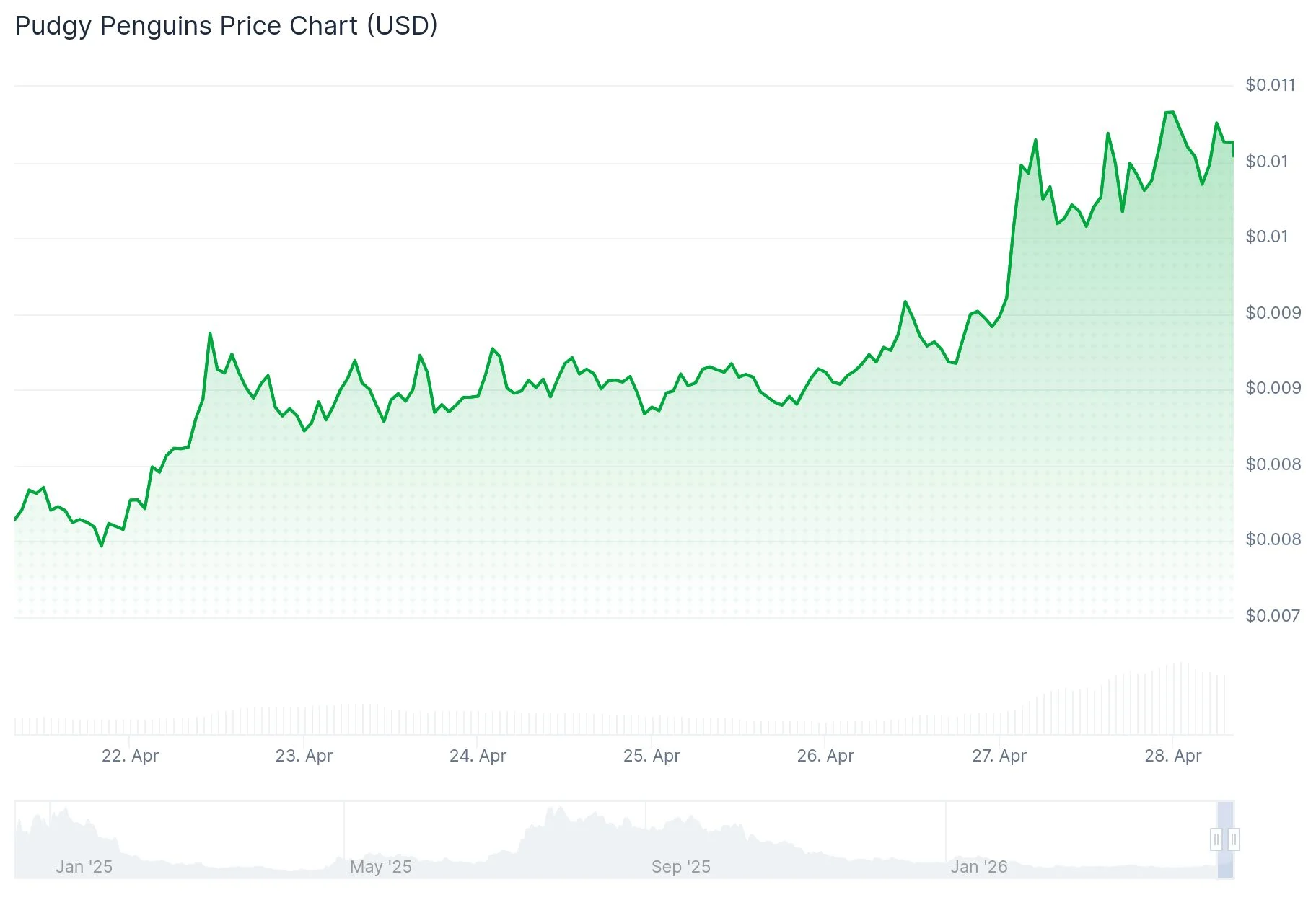
Pudgy Penguins (PENGU) Hits 3-Month Peak Amid NFT Token Revival
PENGU token surged to $0.01035, its highest in 3 months, following a 703M token unlock. Volume spiked 150% with another unlock scheduled for May 17. The post Pudgy
Share
Blockonomi2026/04/28 16:37

XRP Breakout Setup Faces Heavy Supply Test
The post XRP Breakout Setup Faces Heavy Supply Test appeared on BitcoinEthereumNews.com. XRP’s Bullish Breakout Setup Clashes With Heavy Sell Pressure XRP is
Share
BitcoinEthereumNews2026/04/28 16:06

Robinhood Users Targeted by Gmail Dot Trick Phishing Attack
TLDR Scammers used Gmail’s dot alias feature to send fake Robinhood login alert emails that looked completely real Fraudsters created Robinhood accounts with dot
Share
Coincentral2026/04/28 16:41



