According to a recent report, 87% of surveyed high-net-worth individuals (HNWIs) in Asia hold digital assets, and 60% plan to increase allocations. This reveals a maturing digital asset space across the region. Wealthy investors in key markets are increasingly viewing crypto as an essential component of their portfolios. Digital Asset Adoption Accelerates Among Asian Wealthy Investors The findings come from Sygnum’s APAC HNWI Report 2025. The survey of over 270 wealthy and professional investors across 10 Asia-Pacific markets indicates a significant shift: digital assets are becoming a structural component of long-term wealth strategies in the region. The report revealed 87% already own digital assets as part of their investment portfolios. Furthermore, 49% of the respondents allocate more than 10% of their portfolios to crypto, placing median HNWI exposure in the 10–20% range. 60% intend to increase their allocations. “HNWIs in Singapore and the wider APAC region are embracing digital assets as a genuine wealth creation and preservation opportunity. Their disciplined, intergenerational approach to investing, combined with a higher risk appetite, is driving substantial allocations to digital assets—particularly within Singapore’s well-regulated MAS framework that provides the institutional-grade safeguards these investors expect.” Lucas Schweiger, report author and Sygnum Crypto Asset Ecosystem Research Lead, said. Wealth Preservation Overtakes Speculation A key narrative throughout the report is the maturing behaviour of Asian private investors. 90% of respondents now view digital assets as important for long-term wealth preservation and generational planning. Diversification has become the top motivation for allocation decisions, surpassing short-term trading and megatrend exposure. Wealthy Asian Investors’ Outlook On Crypto. Source: Sygnum The appetite for more sophisticated products is also rising. HNWIs are showing an increasing interest in actively managed strategies, outsourced investment mandates, and yield-enhanced products that fit neatly into their existing wealth structures. Notably, investors increasingly expect traditional wealth managers to keep pace. Recently, BeInCrypto reported that a significant share of investors in the US have already shifted funds away from advisors who do not provide crypto exposure. “Singapore’s MAS framework and Hong Kong’s advancing digital asset regulations have established the infrastructure needed for traditional wealth managers to offer crypto services—the question is no longer whether private banks can serve this demand, but when they will move to meet it,” Gerald Goh, Sygnum Co-Founder and APAC CEO, stated. Diversification in ETF Demand Goes Beyond Bitcoin and Ethereum Demand for varied exchange-traded funds is particularly pronounced. The report finds 80% of respondents want ETFs that go beyond Bitcoin and Ethereum. Solana stands out, with 52% interested in exposure to this asset. It is followed by multi-asset crypto indexes at 48% and XRP at 41%. Notably, 70% revealed they would allocate, or increase allocations, if staking yield were incorporated into ETF structures. However, Sygnum observed that a significant share of investors are approaching the market cautiously after recent market volatility. Investors Outline Roadblocks. Source: Sygnum Factors such as unclear regulation, ongoing concerns around custody and security, and varying licensing requirements across jurisdictions continue to limit wider involvement. Even so, long-term confidence remains firm. 57% of HNWIs and 61% of UHNWIs expressed a bullish or strongly bullish long-term view of the crypto market. Their confidence is bolstered by the deepening integration between crypto and traditional finance. Goh emphasized that APAC is quickly emerging as one of the world’s fastest-growing and most influential digital asset hubs, and expects this momentum to accelerate further as the region heads into 2026. According to a recent report, 87% of surveyed high-net-worth individuals (HNWIs) in Asia hold digital assets, and 60% plan to increase allocations. This reveals a maturing digital asset space across the region. Wealthy investors in key markets are increasingly viewing crypto as an essential component of their portfolios. Digital Asset Adoption Accelerates Among Asian Wealthy Investors The findings come from Sygnum’s APAC HNWI Report 2025. The survey of over 270 wealthy and professional investors across 10 Asia-Pacific markets indicates a significant shift: digital assets are becoming a structural component of long-term wealth strategies in the region. The report revealed 87% already own digital assets as part of their investment portfolios. Furthermore, 49% of the respondents allocate more than 10% of their portfolios to crypto, placing median HNWI exposure in the 10–20% range. 60% intend to increase their allocations. “HNWIs in Singapore and the wider APAC region are embracing digital assets as a genuine wealth creation and preservation opportunity. Their disciplined, intergenerational approach to investing, combined with a higher risk appetite, is driving substantial allocations to digital assets—particularly within Singapore’s well-regulated MAS framework that provides the institutional-grade safeguards these investors expect.” Lucas Schweiger, report author and Sygnum Crypto Asset Ecosystem Research Lead, said. Wealth Preservation Overtakes Speculation A key narrative throughout the report is the maturing behaviour of Asian private investors. 90% of respondents now view digital assets as important for long-term wealth preservation and generational planning. Diversification has become the top motivation for allocation decisions, surpassing short-term trading and megatrend exposure. Wealthy Asian Investors’ Outlook On Crypto. Source: Sygnum The appetite for more sophisticated products is also rising. HNWIs are showing an increasing interest in actively managed strategies, outsourced investment mandates, and yield-enhanced products that fit neatly into their existing wealth structures. Notably, investors increasingly expect traditional wealth managers to keep pace. Recently, BeInCrypto reported that a significant share of investors in the US have already shifted funds away from advisors who do not provide crypto exposure. “Singapore’s MAS framework and Hong Kong’s advancing digital asset regulations have established the infrastructure needed for traditional wealth managers to offer crypto services—the question is no longer whether private banks can serve this demand, but when they will move to meet it,” Gerald Goh, Sygnum Co-Founder and APAC CEO, stated. Diversification in ETF Demand Goes Beyond Bitcoin and Ethereum Demand for varied exchange-traded funds is particularly pronounced. The report finds 80% of respondents want ETFs that go beyond Bitcoin and Ethereum. Solana stands out, with 52% interested in exposure to this asset. It is followed by multi-asset crypto indexes at 48% and XRP at 41%. Notably, 70% revealed they would allocate, or increase allocations, if staking yield were incorporated into ETF structures. However, Sygnum observed that a significant share of investors are approaching the market cautiously after recent market volatility. Investors Outline Roadblocks. Source: Sygnum Factors such as unclear regulation, ongoing concerns around custody and security, and varying licensing requirements across jurisdictions continue to limit wider involvement. Even so, long-term confidence remains firm. 57% of HNWIs and 61% of UHNWIs expressed a bullish or strongly bullish long-term view of the crypto market. Their confidence is bolstered by the deepening integration between crypto and traditional finance. Goh emphasized that APAC is quickly emerging as one of the world’s fastest-growing and most influential digital asset hubs, and expects this momentum to accelerate further as the region heads into 2026.

Sygnum Reveals 87% of Surveyed Asian HNWIs Hold Crypto Amid Rapid Market Maturation

2025/12/11 08:00

According to a recent report, 87% of surveyed high-net-worth individuals (HNWIs) in Asia hold digital assets, and 60% plan to increase allocations.

This reveals a maturing digital asset space across the region. Wealthy investors in key markets are increasingly viewing crypto as an essential component of their portfolios.

Digital Asset Adoption Accelerates Among Asian Wealthy Investors

The findings come from Sygnum’s APAC HNWI Report 2025. The survey of over 270 wealthy and professional investors across 10 Asia-Pacific markets indicates a significant shift: digital assets are becoming a structural component of long-term wealth strategies in the region.

The report revealed 87% already own digital assets as part of their investment portfolios. Furthermore, 49% of the respondents allocate more than 10% of their portfolios to crypto, placing median HNWI exposure in the 10–20% range. 60% intend to increase their allocations.

Wealth Preservation Overtakes Speculation

A key narrative throughout the report is the maturing behaviour of Asian private investors. 90% of respondents now view digital assets as important for long-term wealth preservation and generational planning. Diversification has become the top motivation for allocation decisions, surpassing short-term trading and megatrend exposure.
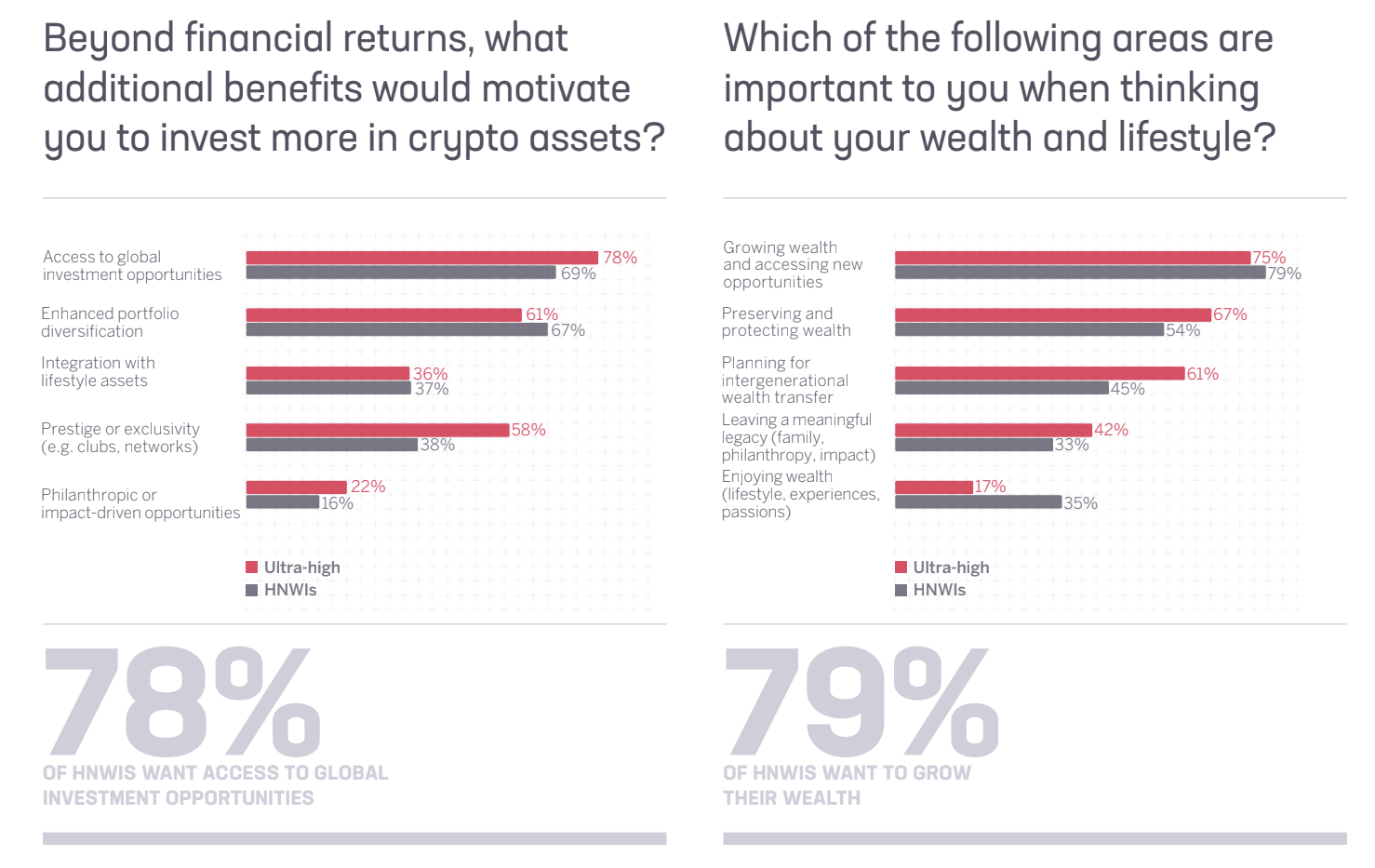
Wealthy Asian Investors' Outlook On CryptoWealthy Asian Investors’ Outlook On Crypto. Source: Sygnum

The appetite for more sophisticated products is also rising. HNWIs are showing an increasing interest in actively managed strategies, outsourced investment mandates, and yield-enhanced products that fit neatly into their existing wealth structures.

Notably, investors increasingly expect traditional wealth managers to keep pace. Recently, BeInCrypto reported that a significant share of investors in the US have already shifted funds away from advisors who do not provide crypto exposure.

Diversification in ETF Demand Goes Beyond Bitcoin and Ethereum

Demand for varied exchange-traded funds is particularly pronounced. The report finds 80% of respondents want ETFs that go beyond Bitcoin and Ethereum. Solana stands out, with 52% interested in exposure to this asset.

It is followed by multi-asset crypto indexes at 48% and XRP at 41%. Notably, 70% revealed they would allocate, or increase allocations, if staking yield were incorporated into ETF structures.

However, Sygnum observed that a significant share of investors are approaching the market cautiously after recent market volatility.
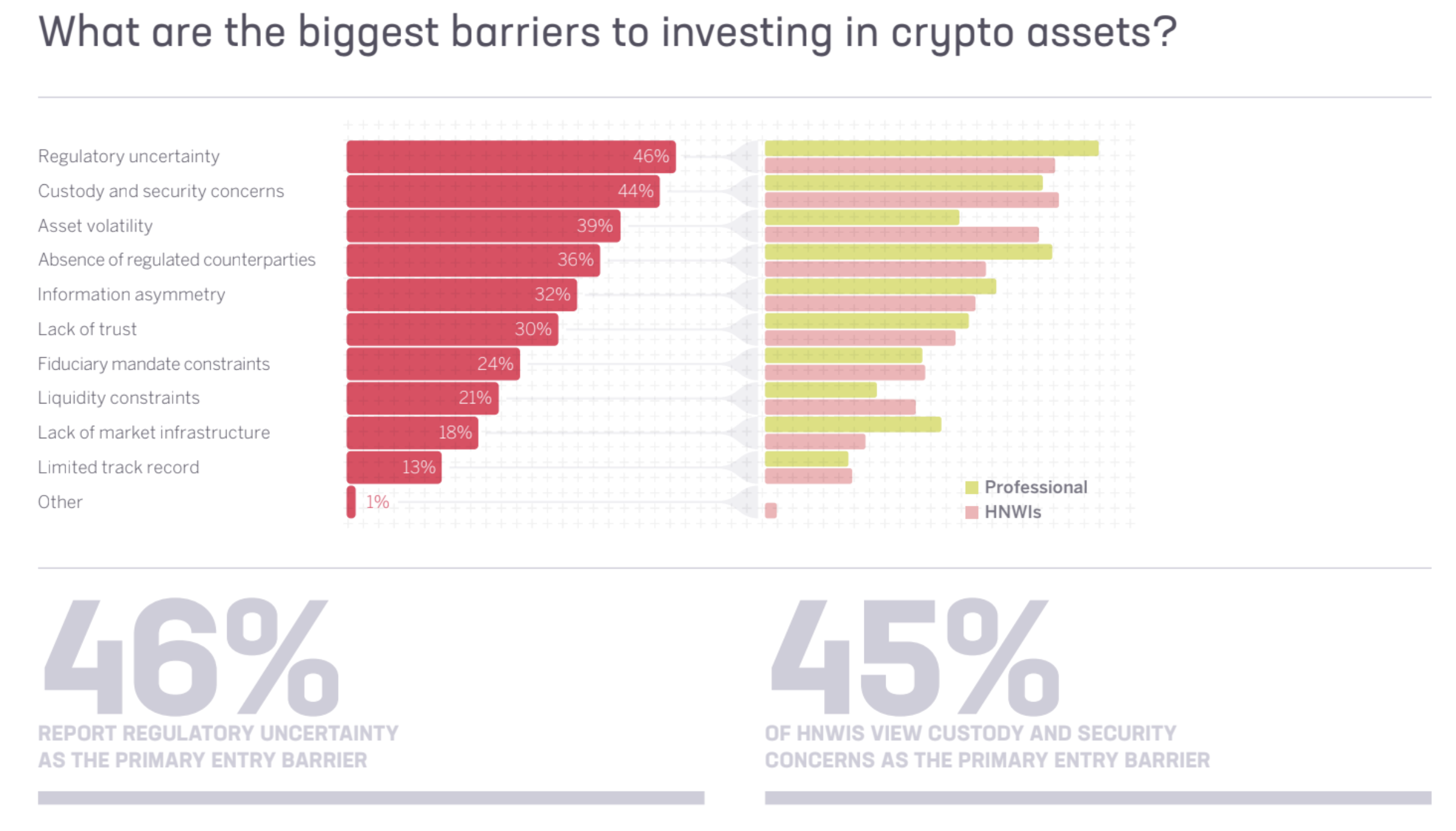
Investors Outline RoadblocksInvestors Outline Roadblocks. Source: Sygnum

Factors such as unclear regulation, ongoing concerns around custody and security, and varying licensing requirements across jurisdictions continue to limit wider involvement.

Even so, long-term confidence remains firm. 57% of HNWIs and 61% of UHNWIs expressed a bullish or strongly bullish long-term view of the crypto market. Their confidence is bolstered by the deepening integration between crypto and traditional finance.

Goh emphasized that APAC is quickly emerging as one of the world’s fastest-growing and most influential digital asset hubs, and expects this momentum to accelerate further as the region heads into 2026.


Disclaimer: The articles reposted on this site are sourced from public platforms and are provided for informational purposes only. They do not necessarily reflect the views of MEXC. All rights remain with the original authors. If you believe any content infringes on third-party rights, please contact [email protected] for removal. MEXC makes no guarantees regarding the accuracy, completeness, or timeliness of the content and is not responsible for any actions taken based on the information provided. The content does not constitute financial, legal, or other professional advice, nor should it be considered a recommendation or endorsement by MEXC.

You May Also Like

China Blocks Nvidia’s RTX Pro 6000D as Local Chips Rise

China Blocks Nvidia’s RTX Pro 6000D as Local Chips Rise

The post China Blocks Nvidia’s RTX Pro 6000D as Local Chips Rise appeared on BitcoinEthereumNews.com. China Blocks Nvidia’s RTX Pro 6000D as Local Chips Rise China’s internet regulator has ordered the country’s biggest technology firms, including Alibaba and ByteDance, to stop purchasing Nvidia’s RTX Pro 6000D GPUs. According to the Financial Times, the move shuts down the last major channel for mass supplies of American chips to the Chinese market. Why Beijing Halted Nvidia Purchases Chinese companies had planned to buy tens of thousands of RTX Pro 6000D accelerators and had already begun testing them in servers. But regulators intervened, halting the purchases and signaling stricter controls than earlier measures placed on Nvidia’s H20 chip. Image: Nvidia An audit compared Huawei and Cambricon processors, along with chips developed by Alibaba and Baidu, against Nvidia’s export-approved products. Regulators concluded that Chinese chips had reached performance levels comparable to the restricted U.S. models. This assessment pushed authorities to advise firms to rely more heavily on domestic processors, further tightening Nvidia’s already limited position in China. China’s Drive Toward Tech Independence The decision highlights Beijing’s focus on import substitution — developing self-sufficient chip production to reduce reliance on U.S. supplies. “The signal is now clear: all attention is focused on building a domestic ecosystem,” said a representative of a leading Chinese tech company. Nvidia had unveiled the RTX Pro 6000D in July 2025 during CEO Jensen Huang’s visit to Beijing, in an attempt to keep a foothold in China after Washington restricted exports of its most advanced chips. But momentum is shifting. Industry sources told the Financial Times that Chinese manufacturers plan to triple AI chip production next year to meet growing demand. They believe “domestic supply will now be sufficient without Nvidia.” What It Means for the Future With Huawei, Cambricon, Alibaba, and Baidu stepping up, China is positioning itself for long-term technological independence. Nvidia, meanwhile, faces…
Share
BitcoinEthereumNews2025/09/18 01:37