BitcoinWorld Do Kwon Sentencing: The Final Verdict for the Terraform Labs Founder Arrives The cryptocurrency world holds its breath as a pivotal moment in regulatoryBitcoinWorld Do Kwon Sentencing: The Final Verdict for the Terraform Labs Founder Arrives The cryptocurrency world holds its breath as a pivotal moment in regulatory

Do Kwon Sentencing: The Final Verdict for the Terraform Labs Founder Arrives

2025/12/11 21:15
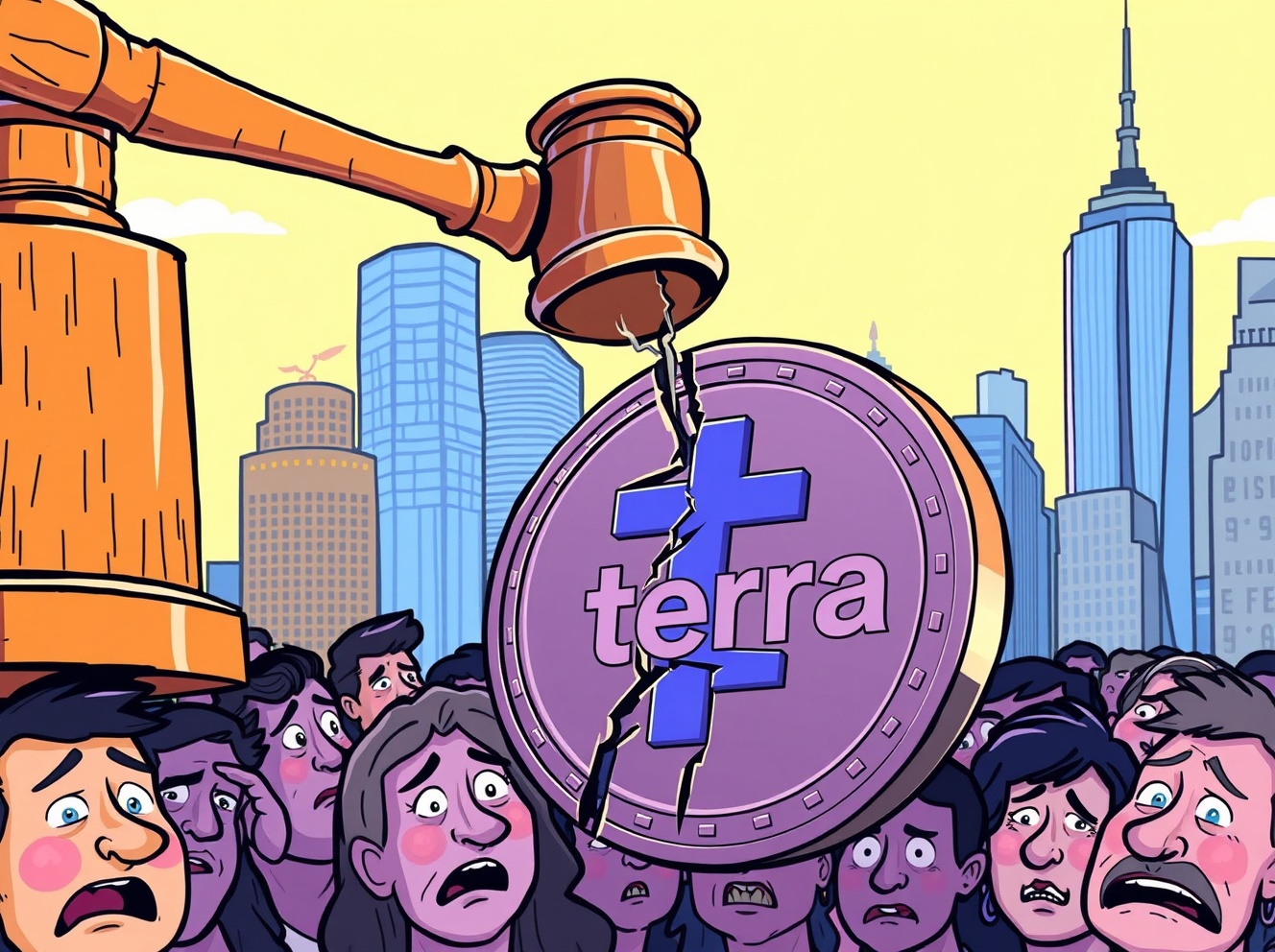
Cartoon illustration of the Do Kwon sentencing verdict for the Terra collapse.

BitcoinWorld

Do Kwon Sentencing: The Final Verdict for the Terraform Labs Founder Arrives

The cryptocurrency world holds its breath as a pivotal moment in regulatory history approaches. The final chapter for Do Kwon, the co-founder behind the catastrophic $40 billion collapse of the Terra-LUNA ecosystem, is set to be written. On December 11, 2024, a New York courtroom will deliver the Do Kwon sentencing, marking a watershed moment for accountability in the digital asset space.

What is the Do Kwon Sentencing All About?

Do Kwon’s journey to this sentencing has been a global saga. After the implosion of his algorithmic stablecoin and its sister token in May 2022, Kwon faced intense legal scrutiny. Authorities arrested him in Montenegro in 2023 for traveling with a forged passport. Following extradition to the United States in 2024, he faced a nine-count indictment from U.S. prosecutors. The charges center on fraud, with regulators alleging he misled investors about the stability and adoption of the TerraUSD (UST) stablecoin.

Why Does This Sentencing Matter for Crypto?

This case is not just about one individual; it’s a precedent-setting event. The Do Kwon sentencing represents the most significant legal reckoning for a crypto founder to date. Its outcome will send a powerful signal to the entire industry about the consequences of fraudulent conduct. For investors who suffered devastating losses, it is a long-awaited step toward justice. Furthermore, it underscores the increasing reach and determination of U.S. financial regulators in the crypto sphere.

The prosecution and defense have presented starkly different visions of justice. U.S. prosecutors have requested a severe 12-year prison term, arguing the scale of the fraud demands a powerful deterrent. In contrast, Kwon’s legal team is advocating for a five-year sentence. Their argument hinges on a plea agreement and Kwon’s consent to forfeit $19 million in assets, which they claim shows cooperation and remorse.

What Happens After the Do Kwon Sentencing?

When the judge pronounces the sentence on December 11, it will conclude the U.S. criminal case but not the end of Kwon’s legal troubles. He still faces potential civil penalties and separate legal actions in South Korea. For the crypto market, the sentencing will likely trigger renewed discussions on:

  • Investor Protection: How can regulations evolve to prevent similar ecosystem collapses?
  • Stablecoin Scrutiny: Increased regulatory focus on the mechanisms backing algorithmic and asset-backed stablecoins.
  • Founder Accountability: A clear message that project leaders bear ultimate responsibility for their claims and actions.

A Landmark Moment for Regulatory Clarity

The Do Kwon sentencing is a landmark event that transcends a single courtroom. It is a definitive moment where the nascent, often chaotic world of cryptocurrency collides with established legal frameworks. The verdict will resonate through boardrooms and developer chats alike, reminding everyone that innovation does not exist above the law. While it brings closure to a painful chapter for many, it also opens a new one focused on building a more transparent and accountable digital future.

Frequently Asked Questions (FAQs)

Q: When and where is Do Kwon being sentenced?
A: The Do Kwon sentencing is scheduled for December 11, 2024, at the U.S. District Court for the Southern District of New York.

Q: What sentence is Do Kwon expected to receive?
A: U.S. prosecutors have requested a 12-year prison sentence. Do Kwon’s defense team is seeking a five-year term. The final decision rests with the judge.

Q: What was Do Kwon charged with?
A: He was indicted on nine charges, primarily related to fraud connected to the collapse of the Terra-LUNA ecosystem, which erased an estimated $40 billion in market value.

Q: Has Do Kwon agreed to any plea deal?
A: His defense cites a plea agreement and his consent to forfeit $19 million in assets as reasons for a lighter sentence, though full details of the plea are part of the court record.

Q: Will this sentencing affect other crypto projects?
A: Yes. It sets a major legal precedent for founder accountability and is likely to influence how regulators approach fraud and investor protection in the crypto industry.

Q: What happens to Terraform Labs after this?
A: The company is defunct following its bankruptcy. This sentencing addresses the criminal liability of its co-founder, while civil and bankruptcy proceedings handle other aspects.

Share This Insight

This verdict will shape the future of cryptocurrency regulation. Help inform the community by sharing this article on your social media channels. Discuss what the Do Kwon sentencing means for innovation and investor safety in the digital asset space.

To learn more about the latest cryptocurrency regulatory trends, explore our article on key developments shaping blockchain policy and institutional adoption.

This post Do Kwon Sentencing: The Final Verdict for the Terraform Labs Founder Arrives first appeared on BitcoinWorld.


Disclaimer: The articles reposted on this site are sourced from public platforms and are provided for informational purposes only. They do not necessarily reflect the views of MEXC. All rights remain with the original authors. If you believe any content infringes on third-party rights, please contact [email protected] for removal. MEXC makes no guarantees regarding the accuracy, completeness, or timeliness of the content and is not responsible for any actions taken based on the information provided. The content does not constitute financial, legal, or other professional advice, nor should it be considered a recommendation or endorsement by MEXC.

You May Also Like

Luxembourg adds Bitcoin to its wealth fund, but what does that mean for Europe?

Luxembourg adds Bitcoin to its wealth fund, but what does that mean for Europe?

The post Luxembourg adds Bitcoin to its wealth fund, but what does that mean for Europe? appeared on BitcoinEthereumNews.com. Key Takeaways Why does Luxembourg’s move matter? It’s the first Eurozone nation to include Bitcoin in a sovereign wealth fund. How does it fit into Europe’s bigger picture? The UK is opening crypto ETNs to retail investors, and the EU’s ESMA is expanding its oversight. Luxembourg has become the first Eurozone country to invest part of its sovereign wealth fund in Bitcoin. During the presentation of the 2026 Budget at the Chambre des Deputes, Finance Minister Gilles Roth confirmed that the Fonds Souverain Intergenerationnel du Luxembourg (FSIL) — the nation’s sovereign wealth fund — has allocated 1% of its portfolio to Bitcoin. Luxembourg’s Bitcoin play According to Bob Kieffer, Director of the Treasury, the decision reflects “the growing maturity of this new asset class” and “leadership in digital finance.” Under the FSIL’s revised investment policy, up to 15% of total assets can now be placed in alternative investments. This includes investments in private equity, real estate, and crypto assets. The Bitcoin exposure, roughly €8.5 million [around $9 million USD], is being made through ETFs to avoid custody and operational risks. Kieffer also acknowledged differing opinions about the move. He said,  “Some might argue that we’re committing too little too late; others will point out the volatility and speculative nature of the investment. Yet, given the FSIL’s mission, a 1% allocation strikes the right balance while sending a clear message about Bitcoin’s long-term potential.” A cautious, but symbolic shift The FSIL, created in 2014 to preserve wealth across generations, now manages roughly €850 million. The announcement also comes on the back of Luxembourg tightening its digital asset regulatory framework, while preparing to implement DAC8. This new move will expand tax and reporting standards for crypto service providers in 2026. If Bitcoin continues to gain acceptance among sovereign investors, Luxembourg’s decision could…
Share
BitcoinEthereumNews2025/10/10 02:02
XRP Fractal Signals $6–$7 Surge by November Amid DLT Disruption

XRP Fractal Signals $6–$7 Surge by November Amid DLT Disruption

The post XRP Fractal Signals $6–$7 Surge by November Amid DLT Disruption appeared on BitcoinEthereumNews.com. XRP Fractal Analysis Hints at $6–$7 Breakout by Mid-November According to renowned market analyst EGRAG CRYPTO, XRP may be on the verge of a significant price movement. In his latest analysis, he points to a fractal formation pattern that suggests XRP could reach the $6–$7 range by mid-November.  Source: EGRAG CRYPTO This projection has quickly caught the attention of traders and long-term investors, as XRP’s current price remains well below this target. Fractals, often used in technical analysis, are recurring chart patterns that can help predict future price action by identifying historical similarities in market behavior.  Therefore, EGRAG CRYPTO argues that XRP is currently mirroring a previous structure that led to a notable rally. If this fractal setup plays out as expected, it could mark one of the most significant price surges for the digital asset in recent years. If XRP reaches $6–$7 by mid-November, it would mark a major win for investors and a symbolic breakthrough for a token that has endured regulatory battles and market volatility, validating its resilience and cementing its relevance in the evolving digital finance ecosystem. Meanwhile, a recent cup-and-handle pattern signalled that XRP had the potential of soaring to $15 by year-end with the altcoin presently trading at $3.04 per CoinGecko data.  DLT-Based Solutions: How Ripple and Stellar are Redefining Cross-Border Banking According to crypto observer SMQKE, distributed ledger technology (DLT)-based solutions are increasingly challenging the traditional correspondent banking model.  For decades, cross-border payments have relied on a chain of intermediaries, often resulting in slow settlements, high costs, and limited transparency. But with the rise of blockchain networks such as Ripple and Stellar, the industry is experiencing a seismic shift. The correspondent banking model depends on trust and pre-funded accounts, locking up liquidity and exposing banks to counterparty risk.  Transactions often take days to…
Share
BitcoinEthereumNews2025/09/19 16:12