Trust Wallet and Revolut Partner to Revolutionize Crypto Buying Across Europe
The partnership, announced on December 11, 2025, enables users to buy digital assets directly into their self-custody wallets without using centralized exchanges.
The integration allows Trust Wallet’s over 220 million users to purchase Bitcoin, Ethereum, Solana, USDC, and USDT using Revolut Pay, debit cards, or bank transfers. Users can fund their wallets with zero fees when paying with their existing Revolut balance, though standard blockchain network fees still apply.
Direct-to-Wallet Crypto Purchases
Unlike traditional crypto buying methods that require depositing funds into centralized exchanges, this partnership sends purchased cryptocurrencies straight into users’ Trust Wallets. This approach gives buyers immediate control over their digital assets from the moment of purchase.
Trust Wallet CEO Eowyn Chen emphasized the partnership’s goal of simplifying crypto adoption. “Buying your first crypto should be as simple as any everyday online payment,” Chen said in the announcement. The integration aims to solve the “first-time purchase” problem that creates barriers for new crypto users.
Source: @TrustWallet
The service supports minimum purchases of 10 euros ($12) with a daily limit of 23,000 euros ($26,950) per transaction. Users across all 30 European Economic Area countries can access the feature through both Trust Wallet’s mobile app and desktop platform.
Revolut’s Regulatory Foundation
The partnership builds on Revolut’s recent regulatory achievements in Europe. The London-based fintech secured a MiCA license from Cyprus Securities and Exchange Commission in October 2025, enabling regulated crypto services across the European Economic Area.
MiCA (Markets in Crypto-Assets) became fully applicable on December 30, 2024, with technical standards continuing to roll out through 2025. Revolut’s license provides the regulatory framework needed to offer compliant crypto services throughout the region.
The company also achieved a $75 billion valuation in November 2025 following a secondary share sale backed by major investment firms including Coatue, Fidelity, and NVIDIA’s NVentures.
Strong Financial Performance Drives Expansion
Revolut reported impressive financial results for 2024, with $4 billion in revenue representing a 72% increase from the previous year. Pre-tax profit jumped 149% to $1.4 billion, demonstrating the company’s strong market position.
The fintech giant serves over 65 million customers worldwide and processes more than one billion transactions monthly. Its business arm alone generates $1 billion in annualized revenue, highlighting the company’s diversified income streams.
Beyond crypto services, Revolut expanded its global footprint in 2025 by securing banking licenses in Mexico and Colombia. The company is also preparing launches in India and additional Latin American markets as part of its international growth strategy.
Trust Wallet’s Self-Custody Leadership
Trust Wallet operates as an independent entity following its separation from Binance in 2023. The wallet maintains its focus on self-custody solutions, allowing users to control their private keys without relying on third-party custodians.
The platform supports over 65 blockchains and thousands of cryptocurrencies, making it one of the most comprehensive multi-chain wallets available. Trust Wallet recently added prediction market features and tokenized stocks, expanding beyond basic crypto storage.
CZ Zhao, who owns Trust Wallet, was sentenced to four months in prison in April 2024 for anti-money laundering violations at Binance and was released in September 2024. Zhao now focuses on educational initiatives and blockchain technology development.
Market Impact and Future Expansion
The partnership addresses a major friction point in crypto adoption by eliminating the need for users to navigate multiple platforms when buying digital assets. Previously, European users had to deposit funds into exchanges, purchase crypto, then withdraw to self-custody wallets – a process that increased fees and wait times.
Revolut’s massive user base provides Trust Wallet with significant distribution potential across Europe. The zero-fee structure for Revolut balance payments makes crypto purchases more accessible to mainstream users who might be deterred by traditional exchange fees.
The companies plan to expand the supported cryptocurrency list beyond the initial five assets. This gradual rollout approach allows them to test the integration’s performance before adding more complex digital assets.
Industry analysts expect this partnership model to influence other fintech companies considering crypto integration. The combination of traditional banking infrastructure with self-custody technology represents a growing trend in digital asset adoption.
The Bridge to Mainstream Adoption
This collaboration between Trust Wallet and Revolut demonstrates how traditional fintech and crypto services can work together while preserving user control over digital assets. By combining Revolut’s regulated payment infrastructure with Trust Wallet’s self-custody technology, the partnership offers European users a streamlined path into cryptocurrency ownership.
The integration’s success could accelerate similar partnerships between established financial services companies and crypto platforms, potentially making digital asset ownership as common as traditional banking across Europe.


You May Also Like
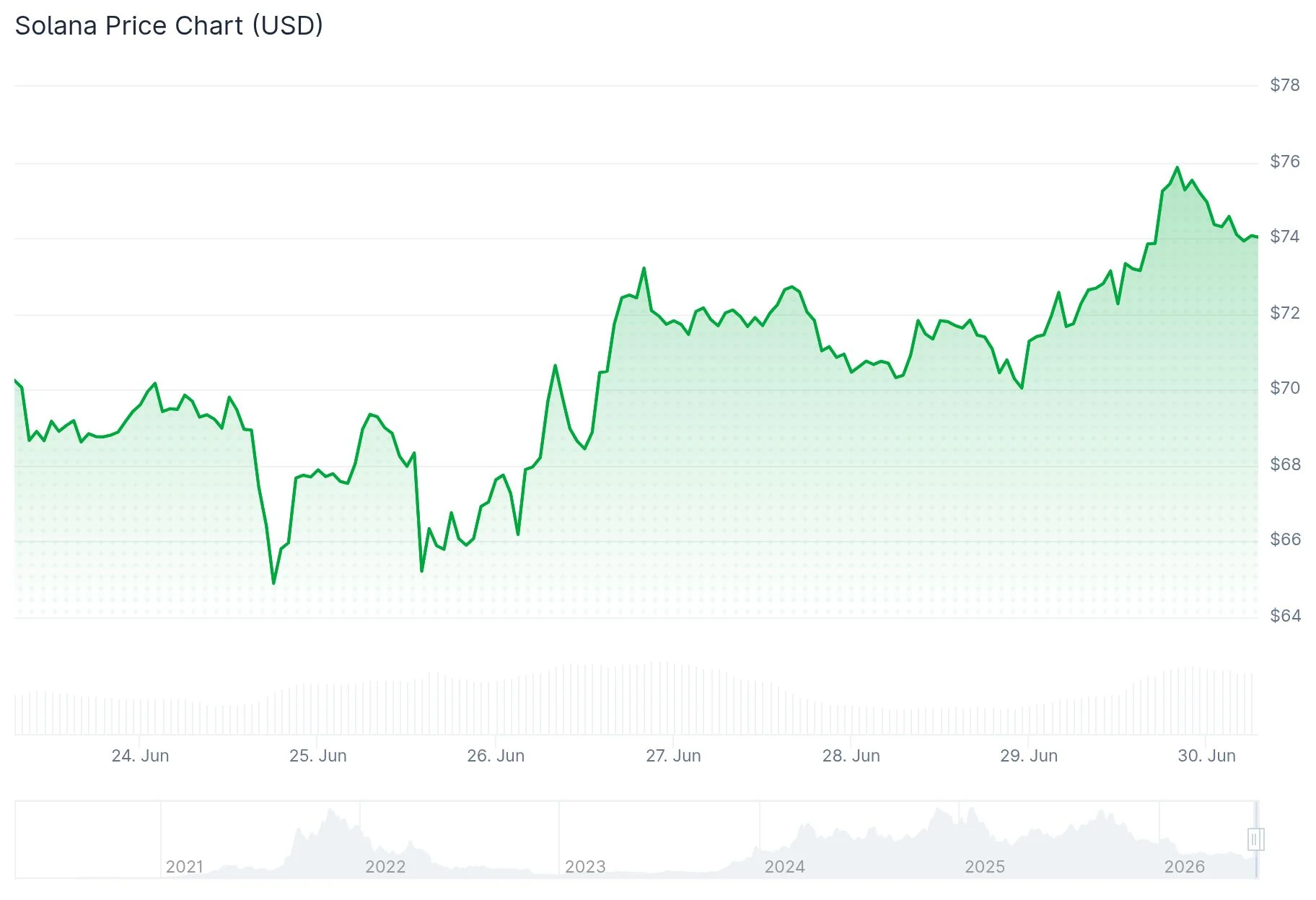
Solana (SOL) Faces Critical Juncture: $50 Downside or $150 Breakout Ahead

Siren (SIREN) Plunges 26.7% in 24 Hours: On-Chain Data Reveals Troubling Pattern