

Polish Government Defies President, Reintroduces Identical Crypto Law
Poland’s government adopted an unchanged version of its controversial crypto-asset market bill on Tuesday, escalating a bitter standoff with President Karol Nawrocki after lawmakers failed to override his veto last week.
According to local reports, Prime Minister Donald Tusk framed the legislation as a matter of national security, citing more than 100 entities in Poland’s crypto registry linked to Russia, Belarus, and other former Soviet states.
The reintroduced bill contains no modifications from the version Nawrocki rejected, government spokesman Adam Szłapka confirmed.
The measure will now return to parliament later this year despite the president’s concerns about excessive restrictions that exceed European Union requirements and threaten property rights.
Szłapka declared “not even a comma” had been changed in the new bill.
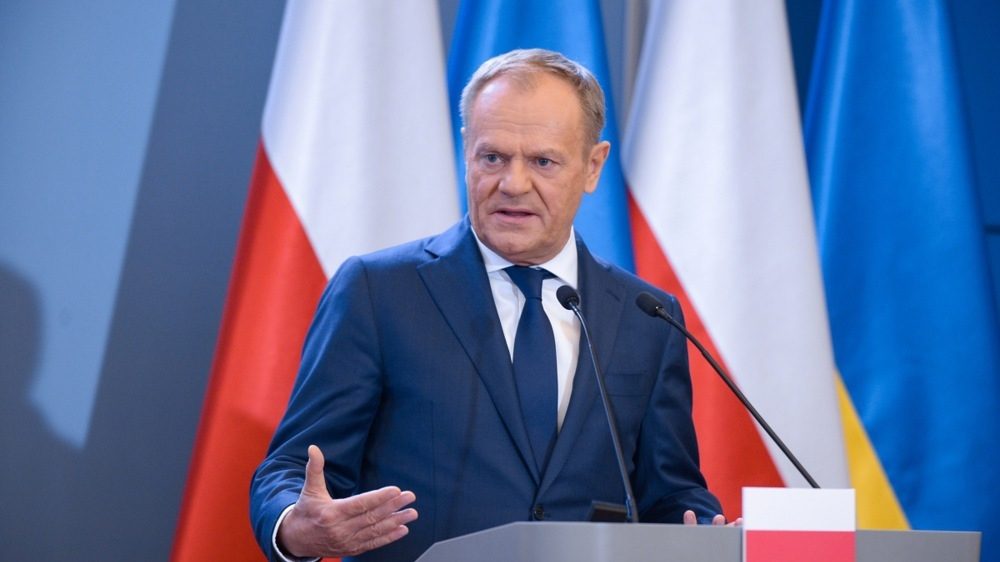 Prime Minister Donald Tusk. | Source: Euractiv
Security Concerns Drive Government’s Push
Tusk emphasized the urgency of regulation before Tuesday’s cabinet meeting, arguing that the state cannot remain passive while cryptocurrencies are used as tools of sabotage by Polish adversaries.
He noted that Polish authorities identified several hundred foreign entities operating in the domestic crypto market, and investigations revealed that Russian intelligence and organized crime groups were exploiting digital assets for covert financing.
“We’re dealing with very dangerous phenomena involving Russian money and the mafia,” Tusk told journalists after last week’s failed veto override.
He suggested that money from these circles funded political promotion under a “political umbrella,” implying connections between veto supporters and questionable interests.
Warsaw previously blamed Russia for a blast on a railway route supplying Ukraine, while security services cited cases of underground groups allegedly paid in cryptocurrencies for sabotage activities.
National Prosecutor Dariusz Korneluk established a team last week to examine files and monitor cryptocurrency-related crimes.
Finance Minister Andrzej Domański criticized the veto’s impact, stating 20% of clients lose money to abuses in the unregulated market while the president “chose chaos.”
The government maintains that basic control is essential, given the security threats posed by hostile actors exploiting the unregulated crypto space.
Presidential Opposition Remains Firm
Nawrocki’s rejection centered on claims that the legislation exceeded MiCA requirements and threatened civil liberties.
His chief of staff indicated openness to regulation provided future proposals avoid excessive restrictions.
Still, the president has not signaled any willingness to approve the current bill despite Tusk’s hope that additional security briefings would change his position.
The Presidential Palace previously argued Nawrocki lacked full information about security risks, though government officials now assert he has complete knowledge.
The blocked law would implement MiCA-style rules through licensing requirements for crypto-asset service providers, investor protection standards, stablecoin reserve requirements, and anti-money laundering controls.
The Polish Financial Supervision Authority would gain sweeping oversight powers, including the ability to block crypto-related websites through administrative orders and to impose fines of up to 10 million zloty or prison terms of up to five years for serious violations.
The legislation would also grant the KNF the authority to order account blocking for up to 6 months in cases of justified suspicion of market abuse.
Critics including opposition lawmakers and industry figures warned the bill would cripple Poland’s crypto sector serving an estimated three million users.
Tomasz Mentzen of the Confederation party highlighted the KNF’s 30-month average licensing process, the longest in the EU, while noting neighboring countries implemented MiCA with far shorter legislation.
Economist Krzysztof Piech argued the law was unnecessary since MiCA regulations will protect all EU residents from July 1, 2026.
Market Uncertainty Deepens
The veto failure leaves Poland as the last EU member without national MiCA-style regulation ahead of the bloc’s July 1, 2026, compliance deadline.
Industry advocates cautioned the strict framework would drive businesses abroad, costing Poland tax revenue and talent as companies relocate to friendlier jurisdictions.
Foreign Minister Radosław Sikorski suggested that the crypto industry’s sponsorship of right-wing political figures explained resistance to tighter oversight.
The dispute reflects broader European tensions around centralized crypto supervision, with the European Commission proposing ESMA take direct oversight of all EU crypto firms rather than maintaining MiCA’s national regulator model.


You May Also Like

BitGo Launches Revolutionary Institutional Stablecoin Service for Major Financial Players

Bitcoin rebounds from 60 thousand dollars, but risk of returning to 50 thousand remains! What are the critical signals?

‘Believer’ Marquez out to chase MotoGP leader Bezzecchi at Brno



