

Crypto Payments Russia: Finance Chair Delivers Defiant Ban on Digital Currency Use
BitcoinWorld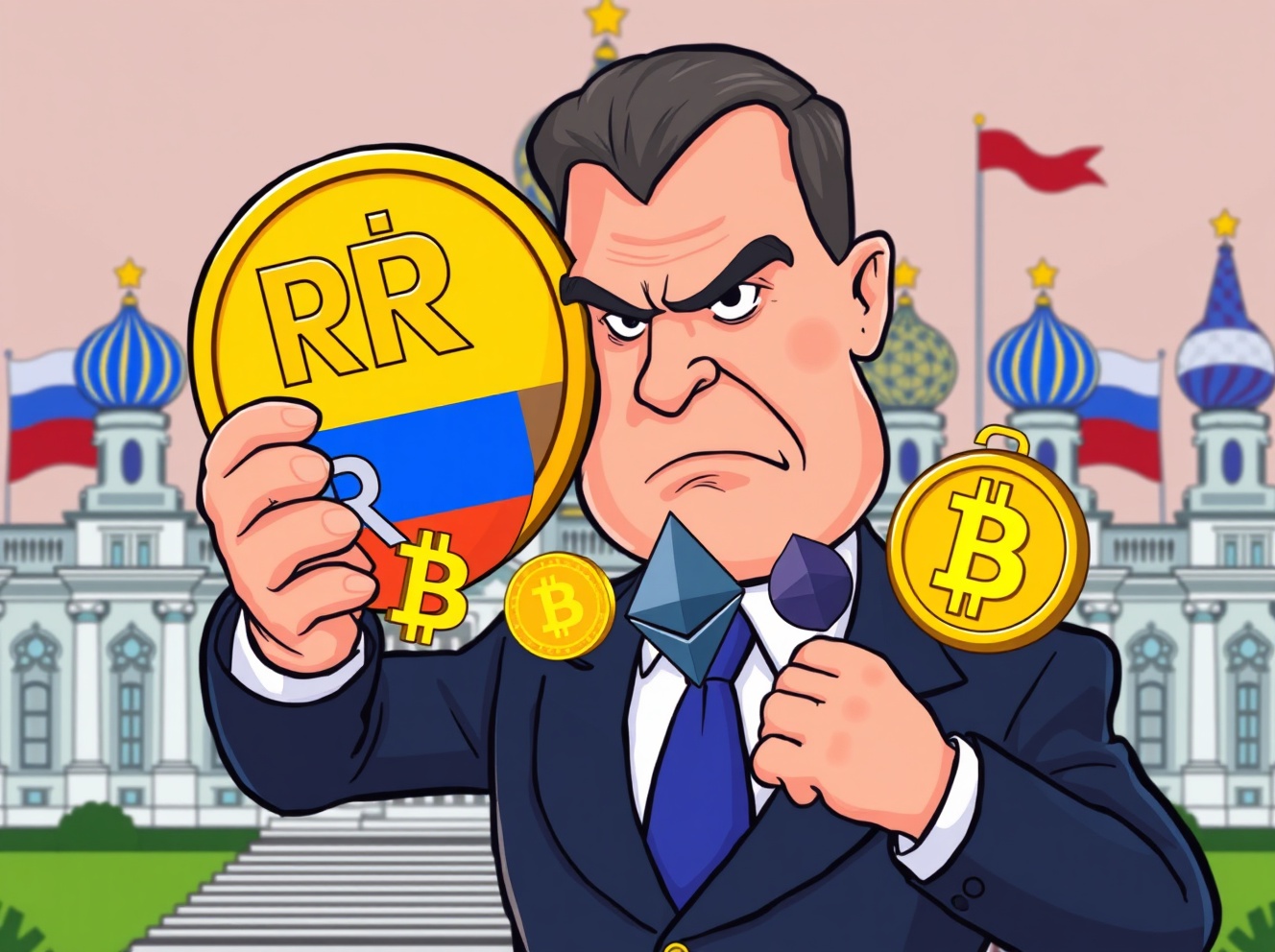
Crypto Payments Russia: Finance Chair Delivers Defiant Ban on Digital Currency Use
Imagine trying to buy your morning coffee with Bitcoin in Moscow. According to a top Russian financial official, that scenario will remain firmly in the realm of fantasy. In a definitive statement, Anatoly Aksakov, Chairman of the Russian State Duma Committee on Financial Markets, has declared that cryptocurrency can never be considered money within the nation’s borders. This hardline stance throws cold water on the idea of mainstream crypto payments in Russia and reinforces the ruble’s supreme status. But what does this mean for the future of digital assets in one of the world’s largest economies?
Why is Russia Drawing a Hard Line on Crypto Payments?
Anatoly Aksakov’s comments, reported by DL News, are not a casual opinion but a reflection of deepening regulatory philosophy. He emphasized that all payments inside Russia must be made exclusively in the national currency, the ruble. This position stems from a fundamental view of state sovereignty and financial control. For Russian authorities, allowing crypto payments in Russia poses a direct threat to the monetary system they govern.
The rationale is clear: uncontrolled digital currencies could undermine the ruble, complicate tax collection, and challenge the central bank’s ability to manage the economy. Therefore, the state is drawing a bright red line. However, Aksakov did leave one door slightly ajar, specifying a narrow permissible use for these digital assets.
If Not for Payment, What is Crypto’s Role in Russia?
So, if you can’t use Bitcoin to pay for goods, what can you do with it? The official stance carves out a specific, limited niche. Aksakov stressed that cryptocurrencies should only be used as an investment vehicle. This means Russians can potentially buy and hold digital assets like Bitcoin or Ethereum, hoping their value increases over time, much like stocks or gold.
- Asset Class, Not Currency: Crypto is relegated to a speculative or store-of-value asset, separate from the daily transaction economy.
- Regulated Investment: This opens the door for future regulations focused on exchanges and trading platforms, not retail payment systems.
- Controlled Exposure: By limiting use to investment, the state aims to contain crypto’s influence and potential risks to the financial system.
This creates a paradoxical environment where you can own crypto wealth but cannot easily spend it within the country. It forces all economic activity back into the traditional, state-monitored banking system.
What Are the Global Implications of This Stance?
Russia’s defiant position is a significant data point in the global cryptocurrency experiment. While some nations are cautiously integrating digital currencies, Russia is choosing a path of strict containment. This decision highlights a key global divide in how countries perceive the threat and opportunity of decentralized money.
For international crypto businesses and investors, it signals that entering the Russian market will come with heavy restrictions. The dream of a seamless, borderless crypto payments network hits a substantial roadblock when major economies explicitly outlaw its use for commerce. Moreover, it may encourage other nations with strong currency controls to adopt a similar, restrictive approach.
Actionable Insights for Crypto Observers
What should you take away from this development? First, it’s a powerful reminder that crypto regulations are primarily national decisions. The technology may be global, but its legal status is local. Second, the separation of “investment” from “payment” is a common regulatory tactic. Understanding this distinction is crucial for navigating different markets.
Finally, watch this space closely. While the current stance is prohibitive, the immense size of Russia’s economy and its tech-savvy population mean the pressure for workarounds or future policy shifts will remain. The conflict between innovative technology and state control is far from over.
Conclusion: A Ruble-First Future
Anatoly Aksakov’s statement is a clear, uncompromising message: in Russia, the ruble reigns supreme. The door for crypto payments in Russia is not just closed; it’s being bolted shut from a regulatory perspective. While the investment avenue remains, it is a tightly controlled corridor. This move underscores the immense challenge cryptocurrencies face in becoming everyday money when they confront the entrenched power of national currencies and the states that back them. The battle for the future of money continues, and in Russia, the state has just firmly planted its flag.
Frequently Asked Questions (FAQs)
Q: Can I legally buy Bitcoin in Russia?
A: According to the official stance outlined by Anatoly Aksakov, yes, but only as an investment vehicle. The regulations treat it like a speculative asset, not legal tender for payments.
Q: What happens if I try to use crypto to pay for something in Russia?
A: Using cryptocurrency for payments within Russia is prohibited. Any such transaction would be illegal and could result in penalties, as all domestic payments must be conducted in rubles.
Q: Does this ban affect Russians using crypto for international transactions?
A> The statement specifically addresses payments within Russia. The rules for cross-border transactions using crypto may fall under different regulations, often involving capital controls, and are typically also restricted.
Q: Are other countries taking a similar approach to crypto payments?
A> Yes, several countries with strict capital controls or concerns over monetary sovereignty, like China, have also banned or severely restricted the use of cryptocurrency for domestic payments.
Q: Could this policy change in the future?
A> While the current stance is definitive, the rapid evolution of digital finance means policies can change. However, any shift would likely be slow and heavily regulated to maintain state control over the monetary system.
Q: Where can Russians legally trade cryptocurrencies as investments?
A> This remains a gray area. The government has discussed creating a regulated framework for crypto exchanges. Until specific laws are passed, the legal avenues for trading are uncertain and carry risk.
Did this analysis of Russia’s defiant stand against crypto payments surprise you? The global fight over the future of money is heating up, and this is a major battle line. Share this article on your social media to spark a conversation with your network about how different nations are grappling with the rise of digital currency. Where do you think the regulatory pendulum will swing next?
To learn more about the latest crypto regulations trends, explore our article on key developments shaping global cryptocurrency policy and institutional adoption.
This post Crypto Payments Russia: Finance Chair Delivers Defiant Ban on Digital Currency Use first appeared on BitcoinWorld.
You May Also Like
![[Vantage Point] How Corporate Philippines is quietly war-gaming a supply shock](https://www.rappler.com/tachyon/2026/03/empty-gas-station-quezon-city-march-9-2026-002-scaled.jpg?resize=75%2C75&crop=501px%2C0px%2C1706px%2C1706px)
[Vantage Point] How Corporate Philippines is quietly war-gaming a supply shock

Ondo Finance Launches USDY Yieldcoin on Stellar, Bringing Tokenized U.S. Treasuries to Users


