Artificial Intelligence is no longer a futuristic concept reserved for researchers and Silicon Valley labs. In 2025, AI is everywhere—quietly reshaping how businessesArtificial Intelligence is no longer a futuristic concept reserved for researchers and Silicon Valley labs. In 2025, AI is everywhere—quietly reshaping how businesses

The Best AI Courses on Coursera in 2025 – How Artificial Intelligence Can Take Your Career Further

2025/12/17 05:14
5 min read
For feedback or concerns regarding this content, please contact us at [email protected]

Artificial Intelligence is no longer a futuristic concept reserved for researchers and Silicon Valley labs. In 2025, AI is everywhere—quietly reshaping how businesses operate, how doctors diagnose patients, how creators design content, and how decisions are made at scale. As AI tools become more powerful and accessible, the real advantage now lies in understanding how they work, how they’re applied, and how to use them responsibly.

This is exactly where structured learning makes a difference. Coursera continues to stand out as one of the most trusted platforms for AI education, partnering with world-class universities and technology leaders to deliver courses that balance theory, practicality, and real-world relevance. Whether you’re exploring AI for the first time or sharpening advanced technical skills, Coursera offers learning paths that can genuinely elevate your career.

IBM AI Engineering Professional Certificate

For learners who want to move beyond theory and actually build AI-powered solutions, this professional certificate from IBM is a strong starting point. The program is designed with job readiness in mind, focusing on the skills employers actively seek in AI and machine learning roles.

You’ll work hands-on with Python, explore machine learning algorithms, and gain experience with deep learning frameworks such as TensorFlow and Keras. What truly sets this certificate apart is its project-based approach—learners don’t just watch videos; they apply concepts through labs and real-world scenarios. By the end of the program, you’ll have a portfolio that demonstrates your ability to design, train, and deploy AI models, making this an excellent choice for those aiming to transition into AI engineering or data-focused roles.

AI for Everyone – Andrew Ng

Not everyone needs to become a programmer to benefit from artificial intelligence. “AI for Everyone” takes a refreshingly non-technical approach, focusing on what AI can do, where it adds value, and how it impacts organizations and society.

Andrew Ng breaks down intimidating concepts into clear, relatable ideas, helping learners understand AI from a strategic and practical perspective. The course explores how companies adopt AI, how teams collaborate with technical experts, and how leaders can make informed decisions without writing a single line of code. It’s particularly valuable for managers, entrepreneurs, marketers, and professionals who want to speak the language of AI with confidence and clarity.

Deep Learning Specialization – DeepLearning.AI

If you’re serious about mastering the technology that powers modern AI systems, this specialization is one of the most respected learning paths available online. Spanning multiple courses, it dives deep into neural networks, optimization techniques, convolutional networks, and sequence models.

Rather than remaining abstract, the program emphasizes practical implementation—teaching learners how to build deep learning models from scratch and apply them to real-world problems like image recognition and natural language processing. Guided by Andrew Ng and the DeepLearning.AI team, this specialization is ideal for learners with a technical background who want to push into advanced AI development and research-oriented roles.

Introduction to Artificial Intelligence (AI) – IBM

This course offers a broad yet structured entry point into the world of AI. Designed for beginners, it explains core concepts such as machine learning, deep learning, neural networks, and AI ethics without overwhelming learners.

IBM uses real industry examples to show how AI is already transforming sectors like finance, healthcare, and retail. The course also introduces learners to practical tools and terminology, making it easier to continue with more advanced programs later on. If you’re looking for a well-rounded foundation that connects AI theory with business and societal impact, this course provides an excellent starting framework.

Generative AI for Everyone – Andrew Ng

Generative AI has rapidly moved from experimental to mainstream, influencing everything from writing and design to software development and customer service. This course focuses specifically on how generative models work and why they matter.

Rather than diving into heavy mathematics, the course explains the logic behind tools like large language models and image generators in an accessible way. Learners explore creative applications, productivity use cases, and the ethical questions surrounding generative technologies. This is a great choice for professionals, creators, and decision-makers who want to understand how generative AI can enhance workflows without getting lost in technical complexity.

How to Choose the Right AI Course

Choosing an AI course isn’t about picking the most advanced option—it’s about matching your goals with the right learning path. If you want hands-on technical skills and career-ready experience, IBM’s professional certificate or the Deep Learning Specialization may be the right fit. If your goal is understanding AI’s impact, strategy, and future potential, Andrew Ng’s “For Everyone” courses provide clarity without intimidation.

What matters most is consistency and curiosity. AI is evolving fast, but strong fundamentals and practical insight will continue to pay off long after specific tools change.

By committing to the right Coursera AI course in 2025, you’re not just learning a new skill—you’re investing in a mindset that keeps you adaptable, relevant, and ready for the next wave of innovation.

Comments
Market Opportunity
null Logo
null Price(null)
--
----
USD
null (null) Live Price Chart
Disclaimer: The articles reposted on this site are sourced from public platforms and are provided for informational purposes only. They do not necessarily reflect the views of MEXC. All rights remain with the original authors. If you believe any content infringes on third-party rights, please contact [email protected] for removal. MEXC makes no guarantees regarding the accuracy, completeness, or timeliness of the content and is not responsible for any actions taken based on the information provided. The content does not constitute financial, legal, or other professional advice, nor should it be considered a recommendation or endorsement by MEXC.

You May Also Like

Franklin Templeton CEO Dismisses 50bps Rate Cut Ahead FOMC

Franklin Templeton CEO Dismisses 50bps Rate Cut Ahead FOMC

The post Franklin Templeton CEO Dismisses 50bps Rate Cut Ahead FOMC appeared on BitcoinEthereumNews.com. Franklin Templeton CEO Jenny Johnson has weighed in on whether the Federal Reserve should make a 25 basis points (bps) Fed rate cut or 50 bps cut. This comes ahead of the Fed decision today at today’s FOMC meeting, with the market pricing in a 25 bps cut. Bitcoin and the broader crypto market are currently trading flat ahead of the rate cut decision. Franklin Templeton CEO Weighs In On Potential FOMC Decision In a CNBC interview, Jenny Johnson said that she expects the Fed to make a 25 bps cut today instead of a 50 bps cut. She acknowledged the jobs data, which suggested that the labor market is weakening. However, she noted that this data is backward-looking, indicating that it doesn’t show the current state of the economy. She alluded to the wage growth, which she remarked is an indication of a robust labor market. She added that retail sales are up and that consumers are still spending, despite inflation being sticky at 3%, which makes a case for why the FOMC should opt against a 50-basis-point Fed rate cut. In line with this, the Franklin Templeton CEO said that she would go with a 25 bps rate cut if she were Jerome Powell. She remarked that the Fed still has the October and December FOMC meetings to make further cuts if the incoming data warrants it. Johnson also asserted that the data show a robust economy. However, she noted that there can’t be an argument for no Fed rate cut since Powell already signaled at Jackson Hole that they were likely to lower interest rates at this meeting due to concerns over a weakening labor market. Notably, her comment comes as experts argue for both sides on why the Fed should make a 25 bps cut or…
Share
BitcoinEthereumNews2025/09/18 00:36
The Role of Reference Points in Achieving Equilibrium Efficiency in Fair and Socially Just Economies

The Role of Reference Points in Achieving Equilibrium Efficiency in Fair and Socially Just Economies

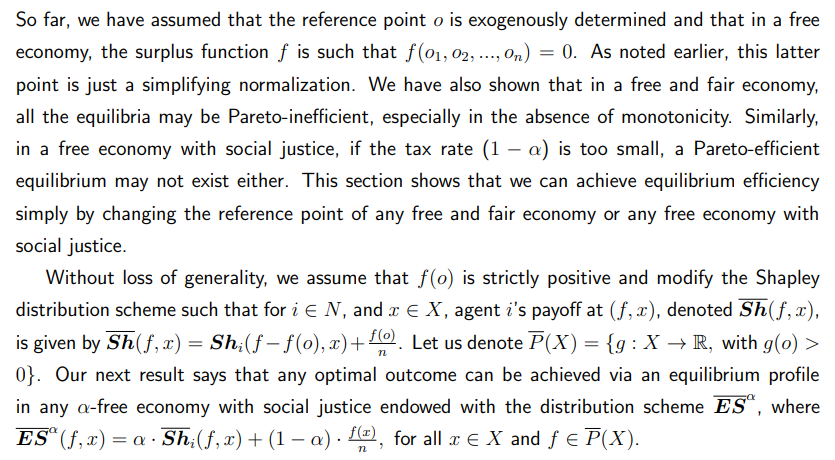
This article explores how a simple change in the reference point can achieve a Pareto-efficient equilibrium in both free and fair economies and those with social justice.
Share
Hackernoon2025/09/17 22:30
Cryptos Signal Divergence Ahead of Fed Rate Decision

Cryptos Signal Divergence Ahead of Fed Rate Decision

The post Cryptos Signal Divergence Ahead of Fed Rate Decision appeared on BitcoinEthereumNews.com. Crypto assets send conflicting signals ahead of the Federal Reserve’s September rate decision. On-chain data reveals a clear decrease in Bitcoin and Ethereum flowing into centralized exchanges, but a sharp increase in altcoin inflows. The findings come from a Tuesday report by CryptoQuant, an on-chain data platform. The firm’s data shows a stark divergence in coin volume, which has been observed in movements onto centralized exchanges over the past few weeks. Bitcoin and Ethereum Inflows Drop to Multi-Month Lows Sponsored Sponsored Bitcoin has seen a dramatic drop in exchange inflows, with the 7-day moving average plummeting to 25,000 BTC, its lowest level in over a year. The average deposit per transaction has fallen to 0.57 BTC as of September. This suggests that smaller retail investors, rather than large-scale whales, are responsible for the recent cash-outs. Ethereum is showing a similar trend, with its daily exchange inflows decreasing to a two-month low. CryptoQuant reported that the 7-day moving average for ETH deposits on exchanges is around 783,000 ETH, the lowest in two months. Other Altcoins See Renewed Selling Pressure In contrast, other altcoin deposit activity on exchanges has surged. The number of altcoin deposit transactions on centralized exchanges was quite steady in May and June of this year, maintaining a 7-day moving average of about 20,000 to 30,000. Recently, however, that figure has jumped to 55,000 transactions. Altcoins: Exchange Inflow Transaction Count. Source: CryptoQuant CryptoQuant projects that altcoins, given their increased inflow activity, could face relatively higher selling pressure compared to BTC and ETH. Meanwhile, the balance of stablecoins on exchanges—a key indicator of potential buying pressure—has increased significantly. The report notes that the exchange USDT balance, around $273 million in April, grew to $379 million by August 31, marking a new yearly high. CryptoQuant interprets this surge as a reflection of…
Share
BitcoinEthereumNews2025/09/18 01:01

