

Revolutionary: How Skana Robotics’ AI Breakthrough Enables Silent Underwater Fleet Communication
BitcoinWorld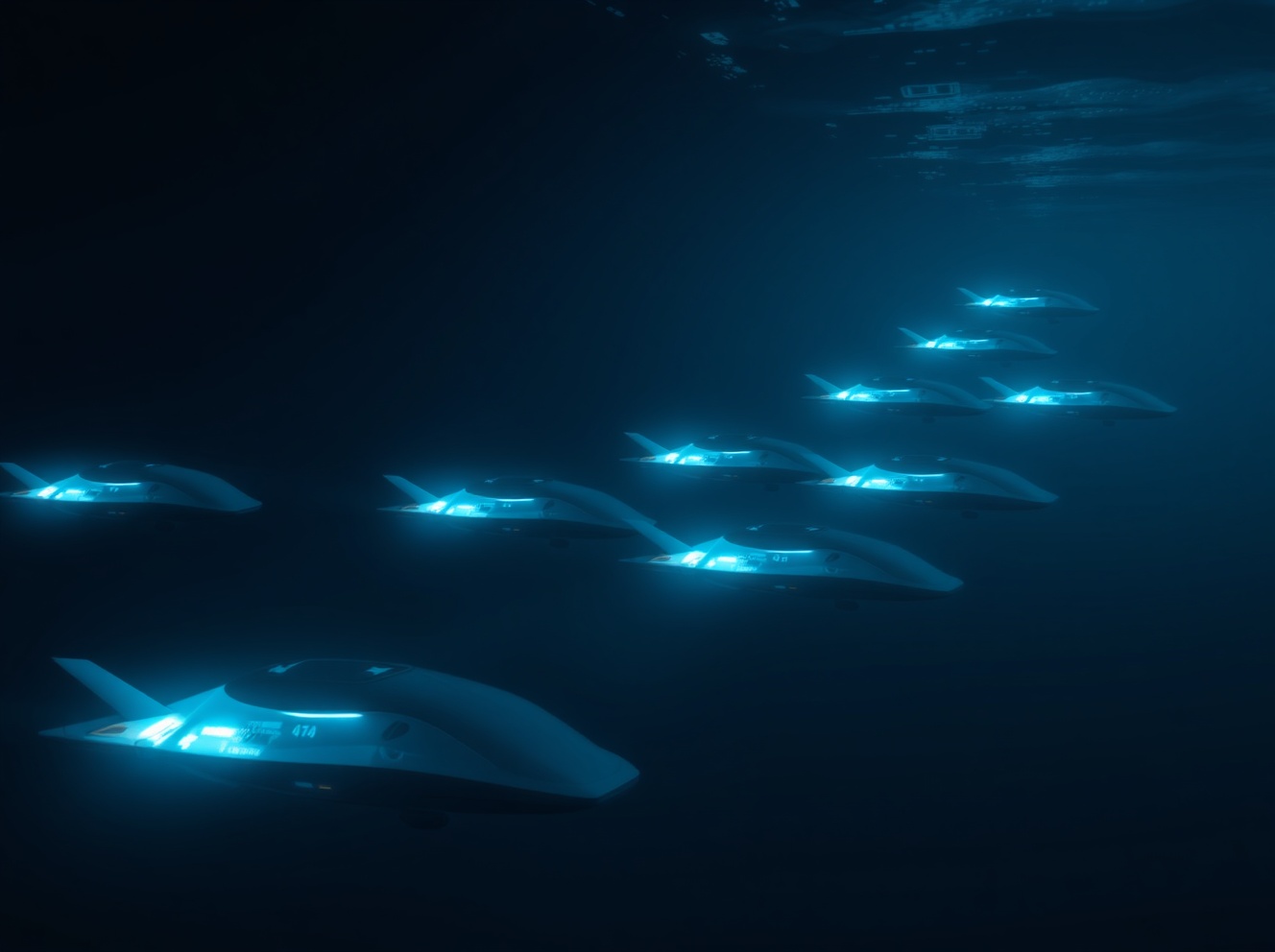
Revolutionary: How Skana Robotics’ AI Breakthrough Enables Silent Underwater Fleet Communication
Imagine a silent army of underwater robots coordinating complex missions across vast ocean distances without ever revealing their position. This isn’t science fiction—it’s the groundbreaking reality being created by Skana Robotics, whose AI-powered communication system is solving one of maritime defense’s most persistent challenges. For cryptocurrency enthusiasts who understand the value of secure, decentralized networks, this represents a fascinating parallel in physical infrastructure security.
What Makes Underwater Autonomous Vessels Communication So Difficult?
Traditional underwater vehicles face a critical dilemma: they must either operate in isolation or risk exposure by surfacing to communicate. This limitation has severely constrained the strategic potential of underwater autonomous vessels in defense and security operations. Radio waves don’t travel well through water, and acoustic communication has historically been limited in range and bandwidth. The result? Fleets of expensive, sophisticated equipment operating as individual units rather than coordinated teams.
Skana’s AI Communication Breakthrough
Tel Aviv-based Skana Robotics has developed what they call a “transformative” capability for their SeaSphere fleet management system. Their solution enables groups of underwater autonomous vessels to communicate across long distances while remaining submerged. The system uses AI algorithms to allow vessels to:
- Share sensor data and environmental information in real-time
- React dynamically to information from other robots in the fleet
- Autonomously adapt their courses or tasks based on collective intelligence
- Maintain coordinated mission objectives without central surface control
“Communication between vessels is one of the main challenges during multi-domain, multi-vessel operations,” explains Idan Levy, Skana’s co-founder and CEO. “We’re solving how you can deploy hundreds of unmanned vessels and have them share data both on the surface and underwater.”
The Surprising Choice: Older AI Algorithms Over New Models
In a world obsessed with large language models and cutting-edge neural networks, Skana’s research team made a counterintuitive choice. Led by Teddy Lazebnik, an AI scientist and professor at the University of Haifa, the team opted for older, more mathematically-driven AI algorithms.
“The new algorithms have two properties: they are more powerful, but as a result, are less predictable,” Lazebnik explains. “We’re trading some ‘wow factor’ for explainability, predictability, and generality. In defense applications, you need to understand exactly why your autonomous system made a particular decision.”
| Aspect | Traditional Underwater Communication | Skana’s AI-Powered System |
|---|---|---|
| Range Limitations | Requires frequent surfacing | Long-distance underwater capability |
| Stealth Compromise | High risk of detection | Maintains submerged operations |
| Fleet Coordination | Limited to pre-programmed patterns | Dynamic, adaptive responses |
| AI Approach | Often uses latest neural networks | Mathematically-driven, predictable algorithms |
Practical Applications: Beyond Defense to Critical Infrastructure
While Skana initially targets defense applications, their technology has broader implications. The company notes their software can secure underwater infrastructure and supply chains—a crucial consideration as global maritime tensions rise. With increasing threats to undersea cables, pipelines, and port facilities, reliable underwater fleet management becomes essential for both national security and economic stability.
From Stealth Startup to Government Contracts
Founded in 2024 and emerging from stealth mode earlier this year, Skana is strategically positioned during a period of heightened maritime security concerns, particularly in Europe due to the Russia-Ukraine conflict. The company is currently focused on government and corporate clients in Europe and is negotiating what Levy describes as a “sizable” government contract expected to close by year’s end.
Looking ahead to 2026, Skana plans to release a commercial version of their product. “We want to show we can use this at scale,” says Lazebnik. “We need admirals and decision-makers to see for themselves that our system delivers results in complex, real-world scenarios.”
Why This Matters for Future Maritime Operations
The implications of reliable underwater AI communication extend far beyond current applications. Consider the potential for:
- Search and rescue operations covering larger areas more efficiently
- Environmental monitoring with coordinated sensor networks
- Underwater construction and maintenance with synchronized robot teams
- Maritime border surveillance without visible surface presence
FAQs: Understanding Skana Robotics’ Technology
What is SeaSphere?
SeaSphere is Skana Robotics’ fleet management software system that now includes long-distance underwater communication capabilities.
Who leads Skana’s research?
The AI research is led by Teddy Lazebnik, an AI scientist and professor at the University of Haifa in Israel.
What makes their AI approach different?
Skana uses older, mathematically-driven AI algorithms rather than the latest neural networks, prioritizing predictability and explainability over raw performance.
What markets is Skana targeting?
The company initially focuses on defense applications and underwater infrastructure security, with particular attention to European markets.
When will commercial products be available?
Skana plans to release commercial versions in 2026 after demonstrating scalability and effectiveness in real operations.
The Bottom Line: A Silent Revolution Beneath the Waves
Skana Robotics isn’t just improving underwater communication—they’re redefining what’s possible for autonomous maritime operations. By solving the fundamental challenge of submerged fleet coordination, they’re enabling a new era of underwater capabilities that balance sophisticated AI with military-grade reliability. As global attention increasingly turns to maritime security and undersea infrastructure, technologies like Skana’s may well determine who maintains strategic advantage in the world’s oceans.
To learn more about the latest AI and robotics innovations transforming security and infrastructure, explore our comprehensive coverage of key developments shaping autonomous systems and their real-world applications.
This post Revolutionary: How Skana Robotics’ AI Breakthrough Enables Silent Underwater Fleet Communication first appeared on BitcoinWorld.

You May Also Like

UK Reform Party argues stablecoin limits stifle innovation

Metaplanet raises $1.4B to fuel BTC purchases and U.S. subsidiary launch


