BitcoinWorld Bitcoin ETFs Stumble: $160.7M Flees as BlackRock’s IBIT Holds the Line The U.S. spot Bitcoin ETF market experienced a sharp reversal on December 18thBitcoinWorld Bitcoin ETFs Stumble: $160.7M Flees as BlackRock’s IBIT Holds the Line The U.S. spot Bitcoin ETF market experienced a sharp reversal on December 18th

Bitcoin ETFs Stumble: $160.7M Flees as BlackRock’s IBIT Holds the Line

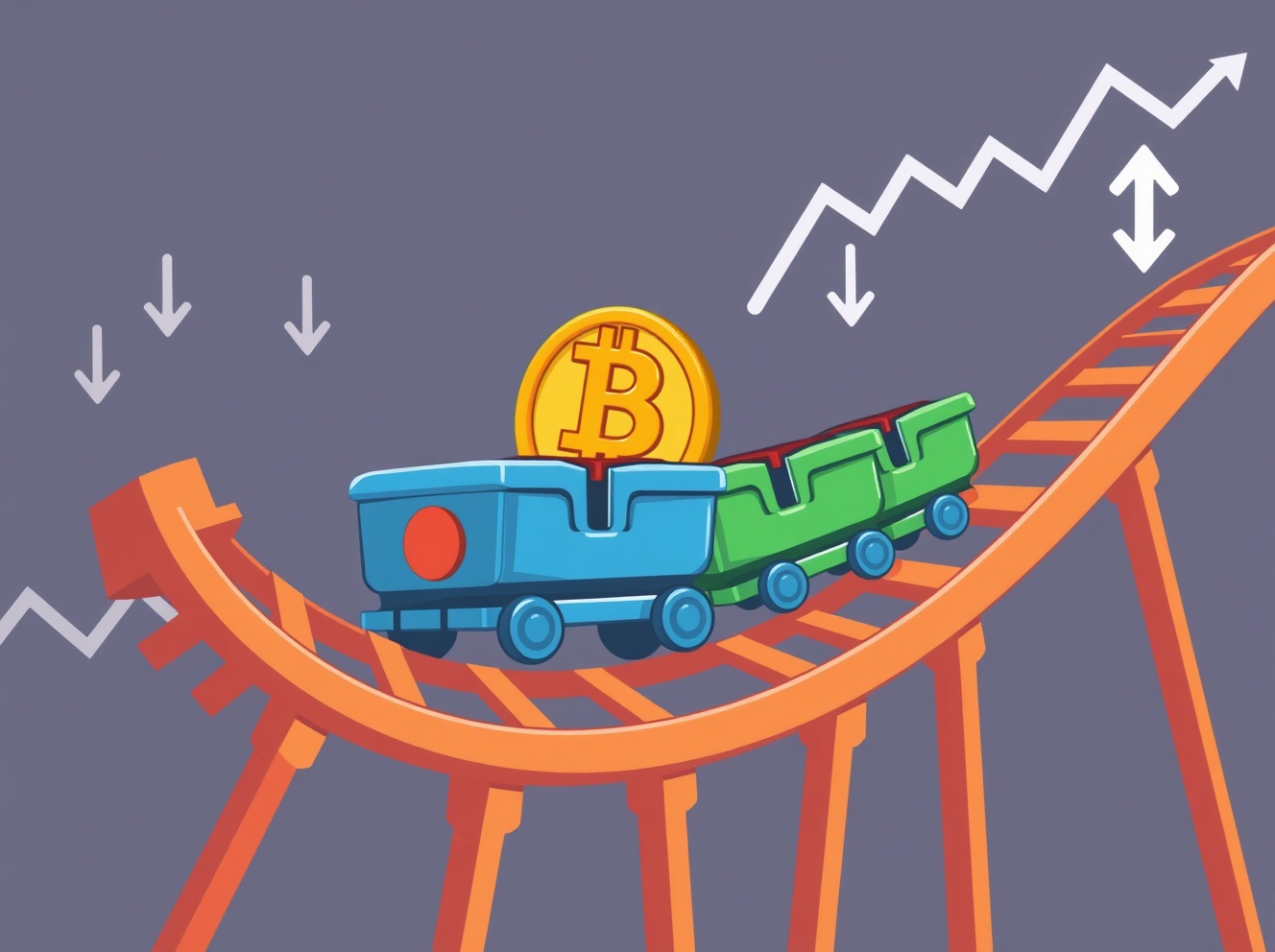
A cartoon Bitcoin on a rollercoaster, illustrating the volatile inflows and outflows of Bitcoin ETFs.

BitcoinWorld

Bitcoin ETFs Stumble: $160.7M Flees as BlackRock’s IBIT Holds the Line

The U.S. spot Bitcoin ETF market experienced a sharp reversal on December 18th, snapping a brief streak of optimism. After just one day of net inflows, these popular investment vehicles collectively witnessed a significant net outflow of $160.65 million. This sudden shift highlights the ongoing volatility and competitive dynamics within the cryptocurrency investment landscape, where investor sentiment can change rapidly.

What Caused the Sudden Bitcoin ETFs Outflow?

Data from Farside Investors reveals a clear divide in investor behavior. While the broader market saw capital exit, BlackRock’s iShares Bitcoin Trust (IBIT) emerged as the sole beacon of positive movement. It attracted a net inflow of $33.44 million. This suggests a flight to perceived quality and stability, with investors consolidating their positions into the largest and most established fund. In stark contrast, other major players faced substantial withdrawals.

The outflow was primarily driven by significant moves from other funds. For instance, Fidelity’s Wise Origin Bitcoin Fund (FBTC) saw approximately $170 million leave. Similarly, Bitwise Bitcoin ETF (BITB) and the Ark 21Shares Bitcoin ETF (ARKB) recorded outflows of $11.54 million and $12.27 million, respectively. Flows for the remaining ETFs were flat, indicating a cautious or neutral stance from other investors.

Why Did BlackRock’s IBIT Buck the Trend?

BlackRock’s IBIT resisting the outflow trend is a critical detail. This resilience could be attributed to several factors that bolster investor confidence:

  • Brand Power and Trust: BlackRock’s global reputation as the world’s largest asset manager provides a layer of credibility that newer entrants may lack.
  • Scale and Liquidity: As the largest Bitcoin ETF by assets, it offers deep liquidity, making it easier for large institutions to enter and exit positions.
  • Strategic Holdings: Some analysts suggest its shareholder base may include more long-term, strategic holders compared to other funds.

This divergence shows that not all Bitcoin ETFs are equal in the eyes of the market. During periods of uncertainty, investors appear to prioritize established, liquid options, potentially at the expense of smaller competitors.

What Does This Mean for Bitcoin ETF Investors?

For current and prospective investors, this activity is a powerful reminder of the market’s nature. Single-day flows, while attention-grabbing, are just one piece of a larger puzzle. However, they offer actionable insights:

  • Monitor Flow Trends: Consistent multi-day outflow patterns can signal shifting medium-term sentiment.
  • Understand Fund Differences: Look beyond the “Bitcoin ETF” label. Fees, the sponsor’s reputation, and liquidity are crucial differentiators.
  • Maintain Perspective: Volatility in flows is expected. A long-term investment thesis should not be swayed by one day’s data.

Therefore, while the headline number may cause concern, it’s essential to dig deeper into the underlying fund-level movements to grasp the full story.

Conclusion: A Market in Flux

The December 18th data paints a picture of a maturing yet still skittish market. The aggregate outflow indicates some profit-taking or risk reduction after a positive day. However, the isolated strength of BlackRock’s IBIT underscores a growing bifurcation. Investors are becoming more selective, using market dips to consolidate into what they view as the strongest vehicles. This evolution suggests that the Bitcoin ETF landscape is moving beyond a simple ‘rising tide lifts all boats’ phase into one where individual fund fundamentals matter greatly.

Frequently Asked Questions (FAQs)

What is a net outflow in Bitcoin ETFs?
A net outflow occurs when the total amount of money withdrawn from a Bitcoin ETF (or a group of them) on a given day exceeds the total amount of new money invested.

Why is BlackRock’s IBIT seeing inflows when others are not?
IBIT’s inflows during a down day are likely due to its size, BlackRock’s strong brand reputation, and high liquidity, which attracts investors seeking a “safe haven” within the Bitcoin ETF space.

Should I be worried about a single day of outflows?
Not necessarily. Daily flows are volatile. It’s more important to watch for sustained trends over weeks or months rather than reacting to one-day movements.

Do outflows mean the price of Bitcoin will drop?
Not directly. While ETF buying and selling pressure can influence the market, Bitcoin’s price is affected by many global factors. ETF flows are one contributor among many.

How can I track Bitcoin ETF flows myself?
Websites like Farside Investors provide daily updated flow data for all U.S. spot Bitcoin ETFs, allowing you to monitor trends.

What’s the difference between GBTC and these newer Bitcoin ETFs?
The newer spot Bitcoin ETFs, like IBIT and FBTC, typically have lower fees and a more efficient structure for tracking Bitcoin’s price compared to the older Grayscale Bitcoin Trust (GBTC).

Share Your Thoughts

Did this analysis help you understand the latest Bitcoin ETF movements? The cryptocurrency market moves fast, and sharing insights helps everyone stay informed. If you found this breakdown useful, consider sharing this article on your social media to spark a discussion with fellow investors. What’s your take on the growing divide between ETF providers? Let’s continue the conversation online.

To learn more about the latest Bitcoin ETF trends, explore our article on key developments shaping Bitcoin institutional adoption.

This post Bitcoin ETFs Stumble: $160.7M Flees as BlackRock’s IBIT Holds the Line first appeared on BitcoinWorld.


Market Opportunity
Line Protocol Logo
Line Protocol Price(LINE)
$0,0000055
$0,0000055$0,0000055
%0,00
USD
Line Protocol (LINE) Live Price Chart
Disclaimer: The articles reposted on this site are sourced from public platforms and are provided for informational purposes only. They do not necessarily reflect the views of MEXC. All rights remain with the original authors. If you believe any content infringes on third-party rights, please contact [email protected] for removal. MEXC makes no guarantees regarding the accuracy, completeness, or timeliness of the content and is not responsible for any actions taken based on the information provided. The content does not constitute financial, legal, or other professional advice, nor should it be considered a recommendation or endorsement by MEXC.

You May Also Like

Building a DEXScreener Clone: A Step-by-Step Guide

Building a DEXScreener Clone: A Step-by-Step Guide

DEX Screener is used by crypto traders who need access to on-chain data like trading volumes, liquidity, and token prices. This information allows them to analyze trends, monitor new listings, and make informed investment decisions. In this tutorial, I will build a DEXScreener clone from scratch, covering everything from the initial design to a functional app. We will use Streamlit, a Python framework for building full-stack apps.
Share
Hackernoon2025/09/18 15:05
Which DOGE? Musk's Cryptic Post Explodes Confusion

Which DOGE? Musk's Cryptic Post Explodes Confusion

A viral chart documenting a sharp decline in U.S. federal employment during President Trump's second term has sparked unexpected confusion in cryptocurrency markets
Share
Coinstats2025/12/20 01:13
Google's AP2 protocol has been released. Does encrypted AI still have a chance?

Google's AP2 protocol has been released. Does encrypted AI still have a chance?

Following the MCP and A2A protocols, the AI Agent market has seen another blockbuster arrival: the Agent Payments Protocol (AP2), developed by Google. This will clearly further enhance AI Agents' autonomous multi-tasking capabilities, but the unfortunate reality is that it has little to do with web3AI. Let's take a closer look: What problem does AP2 solve? Simply put, the MCP protocol is like a universal hook, enabling AI agents to connect to various external tools and data sources; A2A is a team collaboration communication protocol that allows multiple AI agents to cooperate with each other to complete complex tasks; AP2 completes the last piece of the puzzle - payment capability. In other words, MCP opens up connectivity, A2A promotes collaboration efficiency, and AP2 achieves value exchange. The arrival of AP2 truly injects "soul" into the autonomous collaboration and task execution of Multi-Agents. Imagine AI Agents connecting Qunar, Meituan, and Didi to complete the booking of flights, hotels, and car rentals, but then getting stuck at the point of "self-payment." What's the point of all that multitasking? So, remember this: AP2 is an extension of MCP+A2A, solving the last mile problem of AI Agent automated execution. What are the technical highlights of AP2? The core innovation of AP2 is the Mandates mechanism, which is divided into real-time authorization mode and delegated authorization mode. Real-time authorization is easy to understand. The AI Agent finds the product and shows it to you. The operation can only be performed after the user signs. Delegated authorization requires the user to set rules in advance, such as only buying the iPhone 17 when the price drops to 5,000. The AI Agent monitors the trigger conditions and executes automatically. The implementation logic is cryptographically signed using Verifiable Credentials (VCs). Users can set complex commission conditions, including price ranges, time limits, and payment method priorities, forming a tamper-proof digital contract. Once signed, the AI Agent executes according to the conditions, with VCs ensuring auditability and security at every step. Of particular note is the "A2A x402" extension, a technical component developed by Google specifically for crypto payments, developed in collaboration with Coinbase and the Ethereum Foundation. This extension enables AI Agents to seamlessly process stablecoins, ETH, and other blockchain assets, supporting native payment scenarios within the Web3 ecosystem. What kind of imagination space can AP2 bring? After analyzing the technical principles, do you think that's it? Yes, in fact, the AP2 is boring when it is disassembled alone. Its real charm lies in connecting and opening up the "MCP+A2A+AP2" technology stack, completely opening up the complete link of AI Agent's autonomous analysis+execution+payment. From now on, AI Agents can open up many application scenarios. For example, AI Agents for stock investment and financial management can help us monitor the market 24/7 and conduct independent transactions. Enterprise procurement AI Agents can automatically replenish and renew without human intervention. AP2's complementary payment capabilities will further expand the penetration of the Agent-to-Agent economy into more scenarios. Google obviously understands that after the technical framework is established, the ecological implementation must be relied upon, so it has brought in more than 60 partners to develop it, almost covering the entire payment and business ecosystem. Interestingly, it also involves major Crypto players such as Ethereum, Coinbase, MetaMask, and Sui. Combined with the current trend of currency and stock integration, the imagination space has been doubled. Is web3 AI really dead? Not entirely. Google's AP2 looks complete, but it only achieves technical compatibility with Crypto payments. It can only be regarded as an extension of the traditional authorization framework and belongs to the category of automated execution. There is a "paradigm" difference between it and the autonomous asset management pursued by pure Crypto native solutions. The Crypto-native solutions under exploration are taking the "decentralized custody + on-chain verification" route, including AI Agent autonomous asset management, AI Agent autonomous transactions (DeFAI), AI Agent digital identity and on-chain reputation system (ERC-8004...), AI Agent on-chain governance DAO framework, AI Agent NPC and digital avatars, and many other interesting and fun directions. Ultimately, once users get used to AI Agent payments in traditional fields, their acceptance of AI Agents autonomously owning digital assets will also increase. And for those scenarios that AP2 cannot reach, such as anonymous transactions, censorship-resistant payments, and decentralized asset management, there will always be a time for crypto-native solutions to show their strength? The two are more likely to be complementary rather than competitive, but to be honest, the key technological advancements behind AI Agents currently all come from web2AI, and web3AI still needs to keep up the good work!
Share
PANews2025/09/18 07:00