

How AI Is Transforming Personalized Healthcare Decisions
Artificial intelligence is redefining how healthcare decisions are made by shifting the industry away from generalized treatment models and toward deeply personalized approaches. For decades, healthcare systems have relied on standardized protocols designed to serve broad populations. While effective at scale, these models often fail to account for individual differences in genetics, environment, lifestyle, and behavior. AI-driven systems are now addressing this gap by enabling decisions that are tailored to the individual rather than the average patient.
At the heart of this transformation is AI’s ability to process and interpret vast, complex datasets far beyond human capacity. Machine learning algorithms can identify subtle correlations and trends across millions of data points, revealing insights that were previously inaccessible. As a result, healthcare decisions are increasingly informed by predictive models, real-time analytics, and continuously evolving data rather than static guidelines alone.
This evolution does not replace clinicians or medical expertise. Instead, AI functions as an advanced decision-support layer that enhances human judgment. By reducing uncertainty and improving accuracy, AI empowers healthcare professionals to make more confident, informed choices—ultimately leading to better outcomes for patients and more efficient systems overall.
The Foundation of Personalization: Data Integration
Personalized healthcare depends on the ability to integrate data from multiple sources into a unified, actionable framework. Historically, healthcare data has been fragmented across systems, formats, and institutions. Electronic health records, diagnostic imaging, laboratory results, wearable devices, and patient-reported data often exist in silos, limiting their collective value.
AI excels at bridging these gaps. Modern data pipelines powered by machine learning can aggregate and normalize disparate datasets, transforming raw information into structured insights. This allows healthcare platforms to generate comprehensive patient profiles that reflect not only medical history, but also behavioral patterns, environmental exposure, and longitudinal health trends.
The result is a shift from episodic care to continuous understanding. Instead of making decisions based on isolated visits or snapshots in time, AI-enabled systems can evaluate health trajectories. This longitudinal view is essential for personalization, as it captures how individuals respond differently to treatments, lifestyle changes, and external factors over time.
Predictive Models and Individualized Treatment Paths
One of the most impactful applications of AI in healthcare is predictive modeling. These models use historical data to forecast how a patient is likely to respond to specific interventions. Rather than relying on trial-and-error approaches, clinicians can use AI-generated insights to select options with the highest probability of success for each individual.
For instance, predictive analytics can assess variables such as age, genetics, prior responses, and comorbidities to determine which treatments are most effective for a particular patient profile. In everyday healthcare contexts, this may include evaluating individual responses to common interventions like allergy medicine, illustrating how personalization can improve efficacy while reducing unnecessary adjustments and side effects.
By narrowing the decision space, AI helps reduce overtreatment and undertreatment alike. This not only improves patient outcomes but also lowers costs and minimizes the strain on healthcare resources.
Enhancing Clinical Decision Support Systems
Clinical decision support systems (CDSS) have existed for years, but AI is dramatically expanding their capabilities. Traditional systems were largely rule-based, relying on predefined logic that could not adapt easily to new information. AI-powered CDSS, on the other hand, learn continuously from data and improve over time.
These systems assist clinicians by identifying patterns that may not be immediately obvious, flagging potential risks, and offering evidence-based recommendations in real time. For example, AI can analyze diagnostic data alongside patient history to highlight early warning signs or suggest alternative approaches when standard treatments are unlikely to be effective.
Importantly, modern AI systems emphasize explainability. Rather than producing opaque outputs, many models now provide contextual explanations that show how conclusions were reached. This transparency builds trust and ensures that clinicians remain accountable decision-makers rather than passive recipients of algorithmic advice.
 AI’s Role in Preventive and Proactive Care
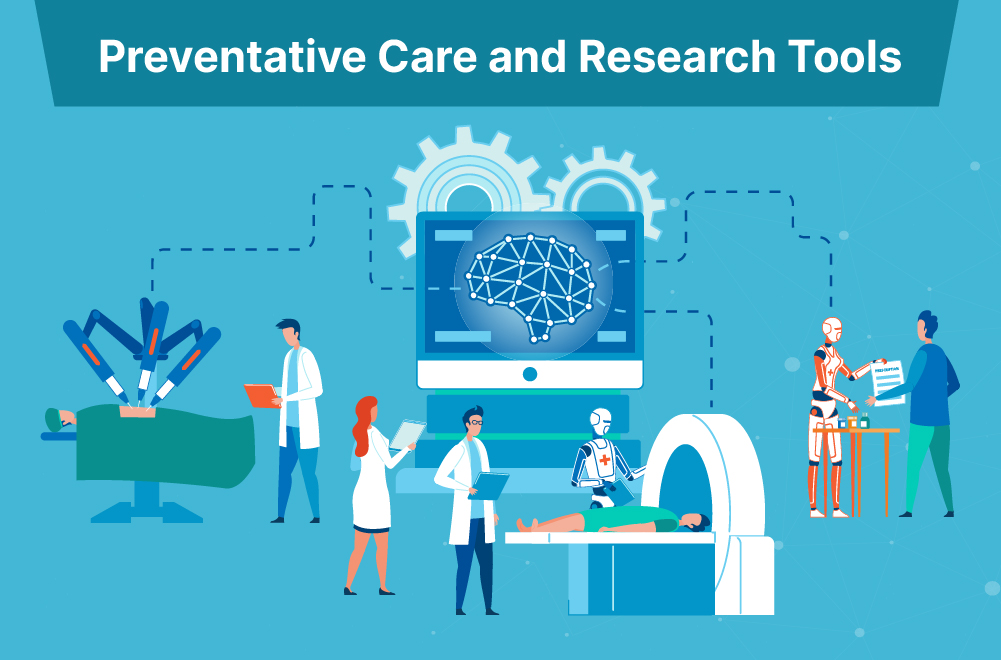
Beyond treatment decisions, AI is playing a crucial role in prevention. Predictive analytics enable healthcare systems to identify risk factors before they escalate into serious conditions. By detecting subtle changes in data patterns, AI can signal when early intervention is needed—often before symptoms become severe.
Wearable devices and remote monitoring tools contribute to this shift by supplying continuous streams of data. AI systems analyze these inputs to detect deviations from baseline health indicators, prompting timely responses. This proactive approach reduces hospital admissions, improves quality of life, and supports long-term health management.
Preventive care also aligns with broader system-level goals. Early intervention reduces costs, improves resource allocation, and enhances accessibility by keeping patients healthier for longer periods. AI makes this model scalable by automating analysis and prioritizing cases that require human attention.
Personalization Beyond the Clinic
Personalized healthcare decisions are no longer confined to clinical settings. AI-powered consumer health platforms are enabling individuals to engage more actively in their own care. From symptom checkers to digital health assistants, AI is helping users make informed decisions based on their unique profiles.
These tools translate complex medical data into accessible insights, empowering users without overwhelming them. By tailoring information to individual contexts, AI reduces confusion and supports more meaningful engagement between patients and healthcare providers.
This shift toward participatory healthcare reflects a broader cultural change. Patients are no longer passive recipients of care; they are collaborators. AI acts as a bridge between professional expertise and personal agency, enabling more productive and informed interactions.
Ethical Considerations and Responsible AI Deployment
As AI becomes more influential in healthcare decision-making, ethical considerations are increasingly important. Personalization depends on access to sensitive data, raising concerns about privacy, security, and consent. Healthcare organizations must implement robust governance frameworks to ensure that data is handled responsibly.
Bias is another critical issue. AI systems learn from historical data, which may reflect existing inequalities. Without careful oversight, personalization efforts could inadvertently reinforce disparities rather than reduce them. Ongoing monitoring, diverse training datasets, and transparent evaluation processes are essential to mitigate these risks.
Responsible AI deployment also requires clear accountability. While AI can inform decisions, ultimate responsibility must remain with human professionals. Establishing this balance ensures that personalization enhances care without undermining trust or ethical standards.
The Future of Personalized Healthcare Decisions
Looking ahead, AI’s role in personalized healthcare is set to expand even further. Advances in natural language processing, multimodal learning, and real-time analytics will enable deeper insights and more seamless integration across systems. As interoperability improves, personalization will become more precise, timely, and inclusive.
In the long term, personalized healthcare decisions will likely become the norm rather than the exception. AI will continue to evolve as an adaptive layer that learns from every interaction, refining recommendations and improving outcomes over time. The focus will shift from reacting to illness to maintaining health through intelligent, data-driven guidance.
Ultimately, AI is not just transforming healthcare technology—it is redefining how decisions are made. By aligning medical expertise with individualized data, AI enables a more responsive, effective, and human-centered healthcare system. Personalization, powered by intelligent systems, represents one of the most meaningful advances in modern healthcare—and its impact is only beginning to unfold.


You May Also Like

IP Hits $11.75, HYPE Climbs to $55, BlockDAG Surpasses Both with $407M Presale Surge!

StakeStone STO Surges 128% in 24 Hours: What $955M Volume Tells Us




