

Heron Finance review: How Heron’s private credit investing strategy performed against peer funds
Heron Finance’s private credit investing portfolios for accredited individual investors, RIAs, and family offices have delivered strong performance compared to peers over the past year.
SAN FRANCISCO, Dec. 23, 2025 /PRNewswire/ — Since launching diversified private credit investing strategies for individuals, RIAs, and family offices in 2024, the funds on Heron Finance have delivered strong performance compared to a broad peer group of U.S. private credit funds and alternative investing platforms across key metrics.
The high-level takeaway:
- The funds on Heron Finance have delivered 9.5% total returns (net of Heron’s fees), compared to 9.0% for the peer group (net of fund fees, gross of Heron’s fees) over the same period.*
- Additionally, the funds on Heron Finance performed stronger than the peer group across key risk metrics.*
“The results reinforce what we believe matters most in private credit: disciplined manager selection and broad diversification,” said Mike Sall, CEO at Heron Finance. “By building portfolios across multiple experienced managers that represent a broad spectrum of the private credit market, and thousands of individual loan exposures across industry sectors, we aim to help individual investors access private credit in a way that emphasizes risk management, transparency, and strong net-of-fee outcomes over time.”
Heron’s analysis is based on SEC filings as of Q3 2025, and includes data from 69 U.S. private credit funds, managed by firms with over $1 trillion in aggregate private credit AUM. The peer group includes 57 funds within the dataset that are not currently available through Heron’s private credit investing strategy. Heron Finance includes 12 of the funds within the dataset currently available in Heron’s strategy.
Private credit fund comparison: Heron Finance vs. peer group
Heron’s focus on diversification and its proprietary fund manager selection process has delivered the following results when comparing the 12 funds available on Heron to its peer group of 57 U.S. private credit funds for the trailing-twelve month period ending in September 2025.*
Total Returns:
- Heron Finance (net of Heron’s fees): 9.5%
- Peer Group (net of fund fees, gross of Heron’s fees): 9.0%
Payment-in-Kind (PIK) Interest:
- Heron Finance: 3.1%
- Peer Group: 4.9%
Loan Default:
- Heron Finance: 0.5%
- Peer Group: 2.1%
Net Credit Loss:
- Heron Finance: -0.2%
- Peer Group: -1.6%
Loan Valuation:
- Heron Finance: 100.4%
- Peer Group: 98.6%
Underperforming Assets:
- Heron Finance: 4.5%
- Peer Group: 9.5%
See Heron’s historical performance.
Diversification and quality drive performance when investing in private credit
The strong performance results of the underlying funds on Heron highlights the importance of diversification and manager selection.
Heron Finance portfolios provide investors looking to invest in private credit with exposure to 12 or more experienced private credit fund managers across all 11 GICS sectors, representing more than 3,000 unique loan exposures in a single portfolio.
Heron’s diversified approach to private credit investing for accredited individuals suggests that portfolios with broader loan exposures across established fund managers experienced lower PIK interest, lower defaults, lower losses, and higher returns net of fees.
Using the same approach, Heron Finance recently expanded their investment strategies to include diversified exposure to experienced private equity funds, with plans to add additional asset classes in 2026. (See how to invest in private equity with Heron Finance.)
How to invest in private credit?
Individual investors have multiple options to invest in private credit. In the past, common choices ranged from researching individual private credit funds, using online alternative asset platforms to due diligence individual loans, or selecting a publicly traded private credit ETF or BDC. But innovative investing platforms such as Heron Finance are emerging to give individual investors simple, automated diversification across multiple established private credit funds with thousands of loans.
With advancements in technology and data analysis, firms like Heron Finance provide family offices and individuals a more diversified and streamlined way to invest in private credit by packaging exposure to multiple fund managers and thousands of loans across multiple industry sectors into a single portfolio.
Here’s how to invest in private credit with Heron Finance in three steps:
- Get a personalized portfolio recommendation — Complete a quick quiz to assess your risk and return preferences. Heron’s algorithm builds a tailored private credit portfolio by selecting from experienced institutional funds based on rigorous proprietary scoring criteria.
- Fund your investment — Choose a standard or IRA account, transfer funds via ACH or wire, and verify your accredited investor status.
- Start earning passive income — Once invested, you can begin earning income distributions monthly. Your private credit portfolio is automatically optimized over time by Heron’s automated systems.
See how to invest in private credit with Heron Finance.
About Heron Finance:
Heron Finance is a private markets investing platform serving individual accredited investors, RIAs, and family offices. By building custom, diversified portfolios from institutional-quality private markets funds, Heron helps clients access income-producing and growth assets without the complexity or opacity of public market wrappers.
Media Contact:
[email protected]
*Dataset source: SEC filings for September 2025. Dataset includes 69 of the largest U.S. private credit funds (57 of which are the peer group and 12 of which are the funds on Heron), which are actively managed by firms that collectively manage in excess of $1 trillion in private credit assets across their funds and accounts. Heron return is an annualized return after fees calculated as the weighted average actual returns of all funds available in Heron Finance private credit strategies from September 2024 to September 2025. Peer Group based on average (mean) of 57 comparable funds with returns shown net of fund fees, gross of Heron fees. Risk metrics for Heron Finance vs. Peer Group based on average (mean) data. Underperforming Assets based on underlying fund managers’ assessment, shown in terms of fair market value; Loan Valuation based on fair market value divided by amortized cost, shown for first lien loans only; PIK interest shown as payment in kind interest income divided by total investment income; Loan Default based on non-accruals by amortized cost; Loss Rate based on realized investment loss divided by fund net asset value on a trailing four-quarter basis; % First Lien Loans based on first lien loans as percentage of total investments on a cost basis.
 View original content to download multimedia:https://www.prnewswire.com/news-releases/heron-finance-review-how-herons-private-credit-investing-strategy-performed-against-peer-funds-302648258.html
SOURCE Heron Finance


You May Also Like

USD/JPY Price Forecast: Yen languishes amid growing BoJ rate hike uncertainty

Sandiganbayan orders Jinggoy Estrada’s arrest for plunder
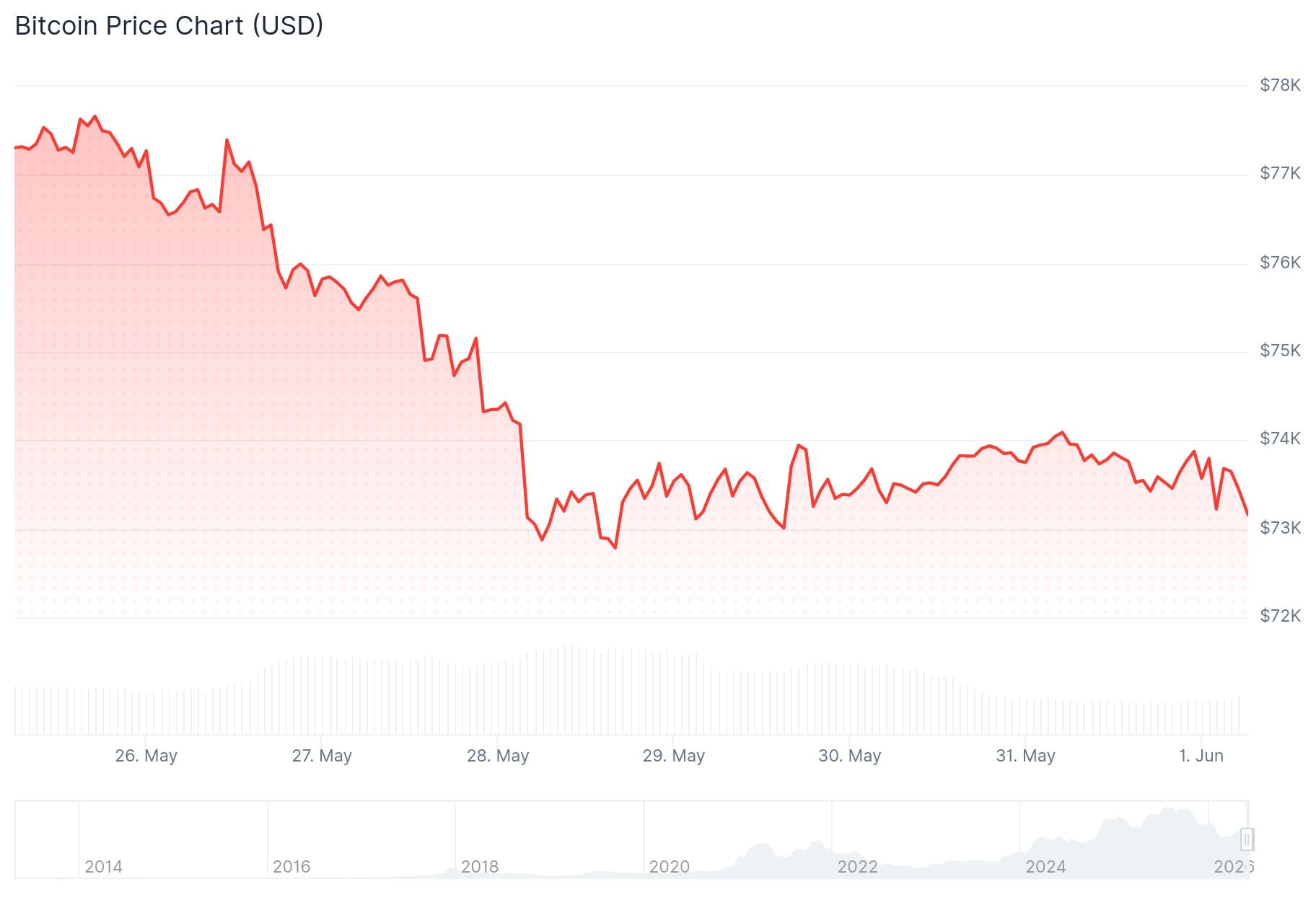
Bitcoin (BTC) Price: $1.4B Exits Spot ETFs in Third Largest Weekly Outflow on Record



