Chinese tech giants JD[dot]com and Alibaba affiliate Ant Group are pressuring the People’s Bank of China to authorize yuan-based stablecoins. The companies are proposing to launch an offshore yuan in Hong Kong to counter the U.S. dollar’s dominance in digital payments and accelerate the yuan’s internationalization, according to Reuters . The lobbying effort comes as Hong Kong’s comprehensive stablecoin regulations take effect August 1, 2025 , establishing one of the world’s most rigorous frameworks for digital currency issuance. 🇭🇰 Hong Kong’s new stablecoin regulations will take effect on August 1, introducing a strict licensing regime and reserve requirements for issuers. #HongKong #StablecoinRegulations https://t.co/Dq6UAZsKl1 — Cryptonews.com (@cryptonews) June 6, 2025 Both companies already plan to issue Hong Kong dollar-backed stablecoins, but argue that offshore yuan tokens are urgently needed as strategic tools for cross-border commerce. Yuan Devaluation At Risk If US Dollar Stablecoins Dominate According to Reuters, over 99% of the $247 billion global stablecoin market remains U.S. dollar-denominated. The yuan’s share of global payments dropped to 2.89% in May, its lowest in nearly two years, while the dollar commands 48.46% market share through SWIFT payment systems. “ The global expansion of U.S. dollar stablecoins is posing fresh challenges to yuan internationalisation ,” said Wang Yongli, former vice head of Bank of China and co-chairman of Digital China Information Service Group. “ It would be a strategic risk if cross-border yuan payment is not as efficient as dollar stablecoins. “ The push is a shift from China’s 2021 crypto ban, which is strategic, as it came at a time when Standard Chartered Bank projects the global stablecoin market could reach $2 trillion by 2028, driven by anticipated U.S. regulatory explicit clarity and institutional adoption. Hong Kong Emerges as Digital Currency Testing Ground Hong Kong’s stablecoin framework requires full reserve backing with high-quality liquid assets, segregated from the issuer’s funds and protected from creditor claims. The minimum capital requirements are HKD 25 million or 1% of the total issuance, whichever is greater. Redemption at par within one business day is required under normal conditions. Previously, JD.com’s subsidiary, Jingdong Coinlink Technology, entered the Hong Kong Monetary Authority’s stablecoin sandbox alongside Standard Chartered, Animoca Brands, and Hong Kong Telecommunications. 🪙 @JD_Corporate is testing a fiat-pegged stablecoin in Hong Kong’s regulatory sandbox for cross-border payments and retail use. #stablecoin #hongkong https://t.co/WlxEcenrfl — Cryptonews.com (@cryptonews) May 30, 2025 The company completed second-phase testing for its blockchain-based stablecoin, pegged 1:1 to fiat currencies, including the Hong Kong dollar and the U.S. dollar. Similarly, Ant Group’s Singapore-based international unit also plans to file for Hong Kong stablecoin licenses immediately after August 1 regulations take effect. The company is also pursuing licenses in Singapore and Luxembourg, anchoring its digital currency ambitions in key global financial hubs. This stablecoin regulation clarity is particularly crucial as Hong Kong banks processed HK$17.2 billion ($2.19 billion) in digital asset transactions during 2024 , with HK$5.1 billion ($649.7 million) under custody by year-end. Ten digital asset trading platforms have secured licenses, with eight more applications under review by the Securities and Futures Commission. Source: SFC Hong Kong Additionally, VMS Group, managing nearly $4 billion for Hong Kong’s wealthiest families, allocated $10 million to Re7 Capital’s decentralized finance strategies . These strategic moves are painting a picture of growing institutional adoption of regulated digital asset exposure in Hong Kong and China as a whole. Strategic Push Against Dollar Dominance Intensifies Chinese exporters are increasingly using dollar-pegged stablecoins as overseas merchants send payments in USDT, according to HashKey chairman Xiao Feng. Capital controls, geopolitical tensions, and currency volatility in emerging markets have spurred this shift among Chinese businesses. In fact, Crypto HK, Hong Kong’s largest crypto OTC exchange, reports a five-fold growth in monthly USDT trading volume by Chinese clients for trade settlement since 2021, as Reuters reported. The trend further shows the growing adoption of dollar stablecoins for cross-border commerce, despite China’s domestic crypto restrictions. JD.com proposed that China allow yuan stablecoin issuance in Hong Kong before expanding pilots to offshore markets within China’s free trade zones. The company argued that Hong Kong dollar stablecoins fail to promote yuan usage since they’re pegged to U.S. dollars. Recognizing the challenges that dollar stablecoins pose to Chinese financial regulation, many high officials are considering “a possibility” for a yuan-pegged stablecoin. President Donald Trump’s support for stablecoins following his January inauguration has particularly accelerated the development of the U.S. regulatory framework. The timing adds urgency to China’s considerations as the GENUIS Act is close to legitimizing dollar-pegged cryptocurrencies. As it stands now, Beijing is evaluating strategic responses to maintain monetary sovereignty amid the growing threat of the dollar’s dominance.Chinese tech giants JD[dot]com and Alibaba affiliate Ant Group are pressuring the People’s Bank of China to authorize yuan-based stablecoins. The companies are proposing to launch an offshore yuan in Hong Kong to counter the U.S. dollar’s dominance in digital payments and accelerate the yuan’s internationalization, according to Reuters . The lobbying effort comes as Hong Kong’s comprehensive stablecoin regulations take effect August 1, 2025 , establishing one of the world’s most rigorous frameworks for digital currency issuance. 🇭🇰 Hong Kong’s new stablecoin regulations will take effect on August 1, introducing a strict licensing regime and reserve requirements for issuers. #HongKong #StablecoinRegulations https://t.co/Dq6UAZsKl1 — Cryptonews.com (@cryptonews) June 6, 2025 Both companies already plan to issue Hong Kong dollar-backed stablecoins, but argue that offshore yuan tokens are urgently needed as strategic tools for cross-border commerce. Yuan Devaluation At Risk If US Dollar Stablecoins Dominate According to Reuters, over 99% of the $247 billion global stablecoin market remains U.S. dollar-denominated. The yuan’s share of global payments dropped to 2.89% in May, its lowest in nearly two years, while the dollar commands 48.46% market share through SWIFT payment systems. “ The global expansion of U.S. dollar stablecoins is posing fresh challenges to yuan internationalisation ,” said Wang Yongli, former vice head of Bank of China and co-chairman of Digital China Information Service Group. “ It would be a strategic risk if cross-border yuan payment is not as efficient as dollar stablecoins. “ The push is a shift from China’s 2021 crypto ban, which is strategic, as it came at a time when Standard Chartered Bank projects the global stablecoin market could reach $2 trillion by 2028, driven by anticipated U.S. regulatory explicit clarity and institutional adoption. Hong Kong Emerges as Digital Currency Testing Ground Hong Kong’s stablecoin framework requires full reserve backing with high-quality liquid assets, segregated from the issuer’s funds and protected from creditor claims. The minimum capital requirements are HKD 25 million or 1% of the total issuance, whichever is greater. Redemption at par within one business day is required under normal conditions. Previously, JD.com’s subsidiary, Jingdong Coinlink Technology, entered the Hong Kong Monetary Authority’s stablecoin sandbox alongside Standard Chartered, Animoca Brands, and Hong Kong Telecommunications. 🪙 @JD_Corporate is testing a fiat-pegged stablecoin in Hong Kong’s regulatory sandbox for cross-border payments and retail use. #stablecoin #hongkong https://t.co/WlxEcenrfl — Cryptonews.com (@cryptonews) May 30, 2025 The company completed second-phase testing for its blockchain-based stablecoin, pegged 1:1 to fiat currencies, including the Hong Kong dollar and the U.S. dollar. Similarly, Ant Group’s Singapore-based international unit also plans to file for Hong Kong stablecoin licenses immediately after August 1 regulations take effect. The company is also pursuing licenses in Singapore and Luxembourg, anchoring its digital currency ambitions in key global financial hubs. This stablecoin regulation clarity is particularly crucial as Hong Kong banks processed HK$17.2 billion ($2.19 billion) in digital asset transactions during 2024 , with HK$5.1 billion ($649.7 million) under custody by year-end. Ten digital asset trading platforms have secured licenses, with eight more applications under review by the Securities and Futures Commission. Source: SFC Hong Kong Additionally, VMS Group, managing nearly $4 billion for Hong Kong’s wealthiest families, allocated $10 million to Re7 Capital’s decentralized finance strategies . These strategic moves are painting a picture of growing institutional adoption of regulated digital asset exposure in Hong Kong and China as a whole. Strategic Push Against Dollar Dominance Intensifies Chinese exporters are increasingly using dollar-pegged stablecoins as overseas merchants send payments in USDT, according to HashKey chairman Xiao Feng. Capital controls, geopolitical tensions, and currency volatility in emerging markets have spurred this shift among Chinese businesses. In fact, Crypto HK, Hong Kong’s largest crypto OTC exchange, reports a five-fold growth in monthly USDT trading volume by Chinese clients for trade settlement since 2021, as Reuters reported. The trend further shows the growing adoption of dollar stablecoins for cross-border commerce, despite China’s domestic crypto restrictions. JD.com proposed that China allow yuan stablecoin issuance in Hong Kong before expanding pilots to offshore markets within China’s free trade zones. The company argued that Hong Kong dollar stablecoins fail to promote yuan usage since they’re pegged to U.S. dollars. Recognizing the challenges that dollar stablecoins pose to Chinese financial regulation, many high officials are considering “a possibility” for a yuan-pegged stablecoin. President Donald Trump’s support for stablecoins following his January inauguration has particularly accelerated the development of the U.S. regulatory framework. The timing adds urgency to China’s considerations as the GENUIS Act is close to legitimizing dollar-pegged cryptocurrencies. As it stands now, Beijing is evaluating strategic responses to maintain monetary sovereignty amid the growing threat of the dollar’s dominance.

Chinese Tech Giants Alibaba and JD.com Urge Central Bank Approval for Yuan-Based Stablecoins

Chinese tech giants JD[dot]com and Alibaba affiliate Ant Group are pressuring the People’s Bank of China to authorize yuan-based stablecoins.

The companies are proposing to launch an offshore yuan in Hong Kong to counter the U.S. dollar’s dominance in digital payments and accelerate the yuan’s internationalization, according to Reuters.

The lobbying effort comes as Hong Kong’s comprehensive stablecoin regulations take effect August 1, 2025, establishing one of the world’s most rigorous frameworks for digital currency issuance.

Both companies already plan to issue Hong Kong dollar-backed stablecoins, but argue that offshore yuan tokens are urgently needed as strategic tools for cross-border commerce.

Yuan Devaluation At Risk If US Dollar Stablecoins Dominate

According to Reuters, over 99% of the $247 billion global stablecoin market remains U.S. dollar-denominated.

The yuan’s share of global payments dropped to 2.89% in May, its lowest in nearly two years, while the dollar commands 48.46% market share through SWIFT payment systems.

The global expansion of U.S. dollar stablecoins is posing fresh challenges to yuan internationalisation,” said Wang Yongli, former vice head of Bank of China and co-chairman of Digital China Information Service Group.

The push is a shift from China’s 2021 crypto ban, which is strategic, as it came at a time when Standard Chartered Bank projects the global stablecoin market could reach $2 trillion by 2028, driven by anticipated U.S. regulatory explicit clarity and institutional adoption.

Hong Kong Emerges as Digital Currency Testing Ground

Hong Kong’s stablecoin framework requires full reserve backing with high-quality liquid assets, segregated from the issuer’s funds and protected from creditor claims.

The minimum capital requirements are HKD 25 million or 1% of the total issuance, whichever is greater. Redemption at par within one business day is required under normal conditions.

Previously, JD.com’s subsidiary, Jingdong Coinlink Technology, entered the Hong Kong Monetary Authority’s stablecoin sandbox alongside Standard Chartered, Animoca Brands, and Hong Kong Telecommunications.

The company completed second-phase testing for its blockchain-based stablecoin, pegged 1:1 to fiat currencies, including the Hong Kong dollar and the U.S. dollar.

Similarly, Ant Group’s Singapore-based international unit also plans to file for Hong Kong stablecoin licenses immediately after August 1 regulations take effect.

The company is also pursuing licenses in Singapore and Luxembourg, anchoring its digital currency ambitions in key global financial hubs.

This stablecoin regulation clarity is particularly crucial as Hong Kong banks processed HK$17.2 billion ($2.19 billion) in digital asset transactions during 2024, with HK$5.1 billion ($649.7 million) under custody by year-end.

Ten digital asset trading platforms have secured licenses, with eight more applications under review by the Securities and Futures Commission.
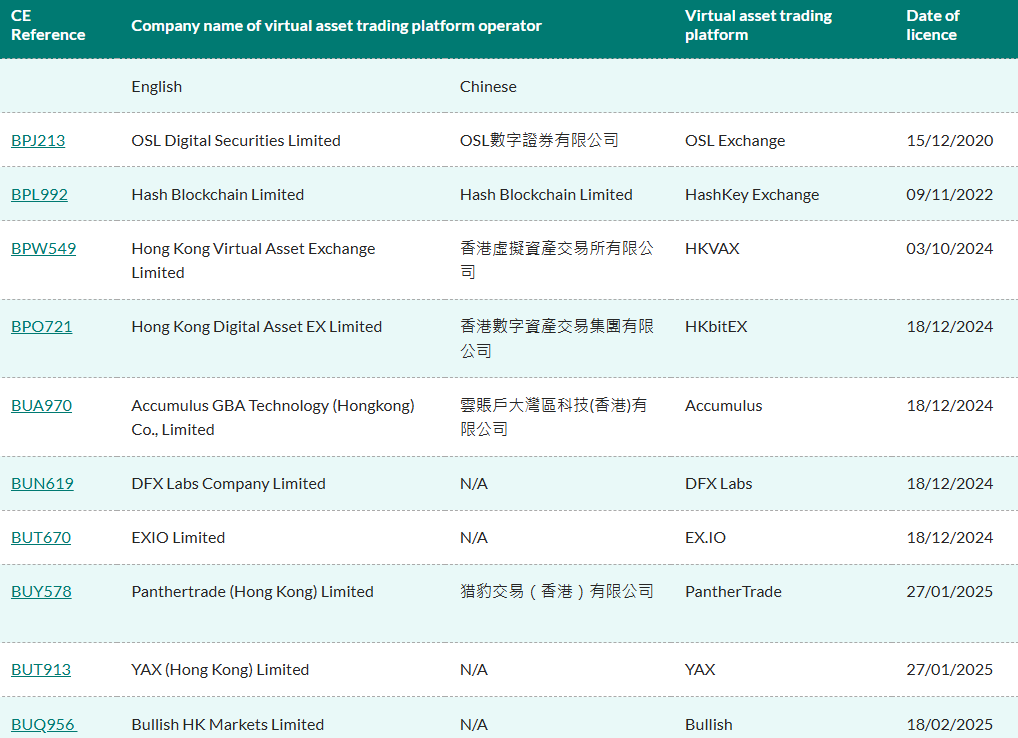
Chinese Tech Giants Alibaba and JD.com Urge Central Bank Approval for Yuan-Based StablecoinsSource: SFC Hong Kong

Additionally, VMS Group, managing nearly $4 billion for Hong Kong’s wealthiest families, allocated $10 million to Re7 Capital’s decentralized finance strategies.

These strategic moves are painting a picture of growing institutional adoption of regulated digital asset exposure in Hong Kong and China as a whole.

Strategic Push Against Dollar Dominance Intensifies

Chinese exporters are increasingly using dollar-pegged stablecoins as overseas merchants send payments in USDT, according to HashKey chairman Xiao Feng.

Capital controls, geopolitical tensions, and currency volatility in emerging markets have spurred this shift among Chinese businesses.

In fact, Crypto HK, Hong Kong’s largest crypto OTC exchange, reports a five-fold growth in monthly USDT trading volume by Chinese clients for trade settlement since 2021, as Reuters reported.

The trend further shows the growing adoption of dollar stablecoins for cross-border commerce, despite China’s domestic crypto restrictions.

JD.com proposed that China allow yuan stablecoin issuance in Hong Kong before expanding pilots to offshore markets within China’s free trade zones.

The company argued that Hong Kong dollar stablecoins fail to promote yuan usage since they’re pegged to U.S. dollars.

Recognizing the challenges that dollar stablecoins pose to Chinese financial regulation, many high officials are considering “a possibility” for a yuan-pegged stablecoin.

President Donald Trump’s support for stablecoins following his January inauguration has particularly accelerated the development of the U.S. regulatory framework.

The timing adds urgency to China’s considerations as the GENUIS Act is close to legitimizing dollar-pegged cryptocurrencies.

As it stands now, Beijing is evaluating strategic responses to maintain monetary sovereignty amid the growing threat of the dollar’s dominance.


Market Opportunity
Threshold Logo
Threshold Price(T)
$0.009554
$0.009554$0.009554
+0.35%
USD
Threshold (T) Live Price Chart
Disclaimer: The articles reposted on this site are sourced from public platforms and are provided for informational purposes only. They do not necessarily reflect the views of MEXC. All rights remain with the original authors. If you believe any content infringes on third-party rights, please contact [email protected] for removal. MEXC makes no guarantees regarding the accuracy, completeness, or timeliness of the content and is not responsible for any actions taken based on the information provided. The content does not constitute financial, legal, or other professional advice, nor should it be considered a recommendation or endorsement by MEXC.

You May Also Like

Pump.fun-linked address deposits $148M in USDC and USDT to Kraken

Pump.fun-linked address deposits $148M in USDC and USDT to Kraken

A large on-chain transfer linked to Pump.fun has put fresh focus on how the memecoin launchpad is handling the proceeds of its token sale. A wallet associated with
Share
Crypto.news2026/01/13 11:18
BlackRock Increases U.S. Stock Exposure Amid AI Surge

BlackRock Increases U.S. Stock Exposure Amid AI Surge

The post BlackRock Increases U.S. Stock Exposure Amid AI Surge appeared on BitcoinEthereumNews.com. Key Points: BlackRock significantly increased U.S. stock exposure. AI sector driven gains boost S&P 500 to historic highs. Shift may set a precedent for other major asset managers. BlackRock, the largest asset manager, significantly increased U.S. stock and AI sector exposure, adjusting its $185 billion investment portfolios, according to a recent investment outlook report.. This strategic shift signals strong confidence in U.S. market growth, driven by AI and anticipated Federal Reserve moves, influencing significant fund flows into BlackRock’s ETFs. The reallocation increases U.S. stocks by 2% while reducing holdings in international developed markets. BlackRock’s move reflects confidence in the U.S. stock market’s trajectory, driven by robust earnings and the anticipation of Federal Reserve rate cuts. As a result, billions of dollars have flowed into BlackRock’s ETFs following the portfolio adjustment. “Our increased allocation to U.S. stocks, particularly in the AI sector, is a testament to our confidence in the growth potential of these technologies.” — Larry Fink, CEO, BlackRock The financial markets have responded favorably to this adjustment. The S&P 500 Index recently reached a historic high this year, supported by AI-driven investment enthusiasm. BlackRock’s decision aligns with widespread market speculation on the Federal Reserve’s next moves, further amplifying investor interest and confidence. AI Surge Propels S&P 500 to Historic Highs At no other time in history has the S&P 500 seen such dramatic gains driven by a single sector as the recent surge spurred by AI investments in 2023. Experts suggest that the strategic increase in U.S. stock exposure by BlackRock may set a precedent for other major asset managers. Historically, shifts of this magnitude have influenced broader market behaviors as others follow suit. Market analysts point to the favorable economic environment and technological advancements that are propelling the AI sector’s momentum. The continued growth of AI technologies is…
Share
BitcoinEthereumNews2025/09/18 02:49
Is Bitcoin Treasury Hype Fading? Data Suggests So

Is Bitcoin Treasury Hype Fading? Data Suggests So

Bitcoin treasury companies have seen a record-breaking 2025 so far, but CryptoQuant data shows momentum has started to slow down. Bitcoin Treasuries May Be Observing A Slowdown In a new post on X, on-chain analytics firm CryptoQuant has discussed how the latest trend is looking when it comes to Bitcoin corporate treasuries. Popularized by Michael […]
Share
Bitcoinist2025/09/18 06:00