UNIfication turns UNI from a passive governance token into a burn‑driven proxy on Uniswap’s swap and L2 revenue. The post Uniswap Approves 100M UNI Burn, ActivatesUNIfication turns UNI from a passive governance token into a burn‑driven proxy on Uniswap’s swap and L2 revenue. The post Uniswap Approves 100M UNI Burn, Activates

Uniswap Approves 100M UNI Burn, Activates Fee Switch

Uniswap governance approved the UNIfication overhaul on December 25, locking in a 100-million-UNI treasury burn. The vote also activated protocol fees that will fund ongoing UNI $5.95 24h volatility: 2.8% Market cap: $3.75 B Vol. 24h: $369.66 M destruction, according to the finalized proposal on the Uniswap forum and Labs blog.

Uniswap Vote Details

The on‑chain vote closed with 125,342,017 UNI in favor, and 742 against. Uniswap founder Hayden Adams posted on X, clearing the 40 million UNI quorum by more than 3x.

After the mandatory ~2‑day timelock, the contracts execute, and the burn transactions and fee parameters go live. Governance records on the Uniswap portal show turnout of more than 20% of outstanding UNI, one of the highest participation rates in the protocol’s history, with more than 99.9% of cast votes backing the change.

UNI traded around $6.05, +2.3% in 24h at 17:00 UTC on December 26, holding gains from a run that started when the vote opened.
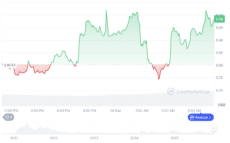
Uniswap price on Dec. 26 | Source: CoinMarketCap

Uniswap price on Dec. 26 | Source: CoinMarketCap

What Changes After the Uniswap Vote

The primary spec, published as the UNIfication proposal on the Uniswap governance forum and mirrored in the Uniswap Labs blog, lays out eight concrete actions.

The protocol will transfer 100 million UNI from the treasury to a burn address. It will remove roughly 16% of total supply from circulation, and flip the long‑dormant fee switch on Uniswap v2 and a curated set of high‑volume v3 pools on Ethereum mainnet. For v2, LP fees move from 0.30% to 0.25%, with 0.05% of volume now accruing to the protocol. For v3, the proposal sets protocol fees at 25% of LP fees on the 0.01% and 0.05% tiers and at 16.7% of LP fees on the 0.30% and 1% tiers, with governance able to adjust pool-by-pool in follow‑up votes.

All protocol fees, plus net sequencer revenue from Unichain after L1 data costs and the 15% Optimism share, now route into a programmatic burn mechanism described in the proposal and supporting documentation. The design uses two contracts, commonly referred to in community analysis as TokenJar and Firepit.
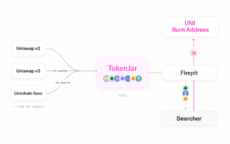
Uniswap burn mechanism | Source: gov.uniswap.org

Uniswap burn mechanism | Source: gov.uniswap.org

Fees will accumulate there until UNI is destroyed. At that point, the contract will release claims, turning protocol usage directly into supply reduction.

In addition, Labs committed in the proposal to turn off all frontend, wallet, and API fees, removing application‑layer monetization from its products. In exchange, governance approved a 40-million-UNI treasury allocation on a two‑year vesting schedule as a recurring growth and development budget. That allocation is separate from the 100 million UNI burn and will fund Labs’ protocol‑focused roadmap, including Uniswap v4 “hooks,” Protocol Fee Discount Auctions, and aggregator functionality.

Uniswap to Burn Up to $700M of UNI Annually

Uniswap Labs’ blog notes that Unichain currently runs at roughly $100 billion in annualized DEX volume and around $7.5 million in annualized sequencer fees. It will now join swap fees as inputs to the burn engine.

Third‑party modeling from research pieces by Tekedia and OKX estimates that the combined system can erase $280 million to $700 million worth of UNI annually if 2025 fee levels persist.

next

The post Uniswap Approves 100M UNI Burn, Activates Fee Switch appeared first on Coinspeaker.

Market Opportunity
UNISWAP Logo
UNISWAP Price(UNI)
$5.911
$5.911$5.911
+0.08%
USD
UNISWAP (UNI) Live Price Chart
Disclaimer: The articles reposted on this site are sourced from public platforms and are provided for informational purposes only. They do not necessarily reflect the views of MEXC. All rights remain with the original authors. If you believe any content infringes on third-party rights, please contact [email protected] for removal. MEXC makes no guarantees regarding the accuracy, completeness, or timeliness of the content and is not responsible for any actions taken based on the information provided. The content does not constitute financial, legal, or other professional advice, nor should it be considered a recommendation or endorsement by MEXC.

You May Also Like

Satoshi-Era Mt. Gox’s 1,000 Bitcoin Wallet Suddenly Reactivated

Satoshi-Era Mt. Gox’s 1,000 Bitcoin Wallet Suddenly Reactivated

The post Satoshi-Era Mt. Gox’s 1,000 Bitcoin Wallet Suddenly Reactivated appeared on BitcoinEthereumNews.com. X account @SaniExp, which belongs to the founder of the Timechain Index explorer, has published data showing that a dormant BTC wallet was activated after hibernating for six years. However, it was set up 13 years ago, according to the tweet — the time when Satoshi Nakamoto’s shadow was still casting itself around, so to speak. The X post states that the tweet belongs to infamous early Bitcoin exchange Mt. Gox, which suffered from a major hack in the early 2010s, and last year it began paying out compensation to clients who lost their crypto in that hack. The deadline was eventually extended to October 2025. Mt. Gox’s wallet with 1,000 BTC reactivated The above-mentioned data source shared a screenshot from the Timechain Index explorer, showing multiple transactions marked as confirmed and moving a total of 1,000 Bitcoins. This amount of crypto is valued at $116,195,100 at the time of the initiated transaction. Last year, Mt. Gox began to move the remains of its gargantuan funds to pay out compensations to its creditors. Earlier this year, it also made several massive transactions to partner exchanges to distribute funds to Mt. Gox investors. All of the compensations were promised to be paid out by Oct. 31, 2025. The aforementioned transaction is likely preparation for another payout. The exchange was hacked for several years due to multiple unnoticed security breaches, and in 2014, when the site went offline, 744,408 Bitcoins were reported stolen. Source: https://u.today/satoshi-era-mtgoxs-1000-bitcoin-wallet-suddenly-reactivated
Share
BitcoinEthereumNews2025/09/18 10:18
Zycus Launches Industry-First AI Adoption Index to Measure Real-World AI Maturity in Procurement

Zycus Launches Industry-First AI Adoption Index to Measure Real-World AI Maturity in Procurement

Princeton, NJ | Dec 26th, 2025 — Zycus, a global leader in AI-powered Source-to-Pay (S2P) solutions, today announced the launch of the AI Adoption Index for Procurement
Share
Techbullion2025/12/26 17:57
Soccer Replica Jerseys – Kits, Customization, and Best Practices for Caring for Them

Soccer Replica Jerseys – Kits, Customization, and Best Practices for Caring for Them

Today’s soccer jersey is more than just athletic clothing; it is a representation of loyalty, a statement of fashion, and an example of technical development. The
Share
Techbullion2025/12/26 18:04