Some market watchers believe April’s market moves could signal a shift in the global landscape and a reassessment of assets that are critical to the U.S. economic dominance.Some market watchers believe April’s market moves could signal a shift in the global landscape and a reassessment of assets that are critical to the U.S. economic dominance.

Bloomberg: Have U.S. Treasuries really lost their safe-haven appeal?

2025/04/24 19:20
7 min read
For feedback or concerns regarding this content, please contact us at [email protected]

By Alice Atkins & Liz Capo McCormick, Bloomberg

Compiled by: Felix, PANews

Investors often flock to U.S. Treasuries to escape financial market turmoil, and they have rebounded during the global financial crisis, 9/11 and even during the U.S.'s own credit rating downgrade.

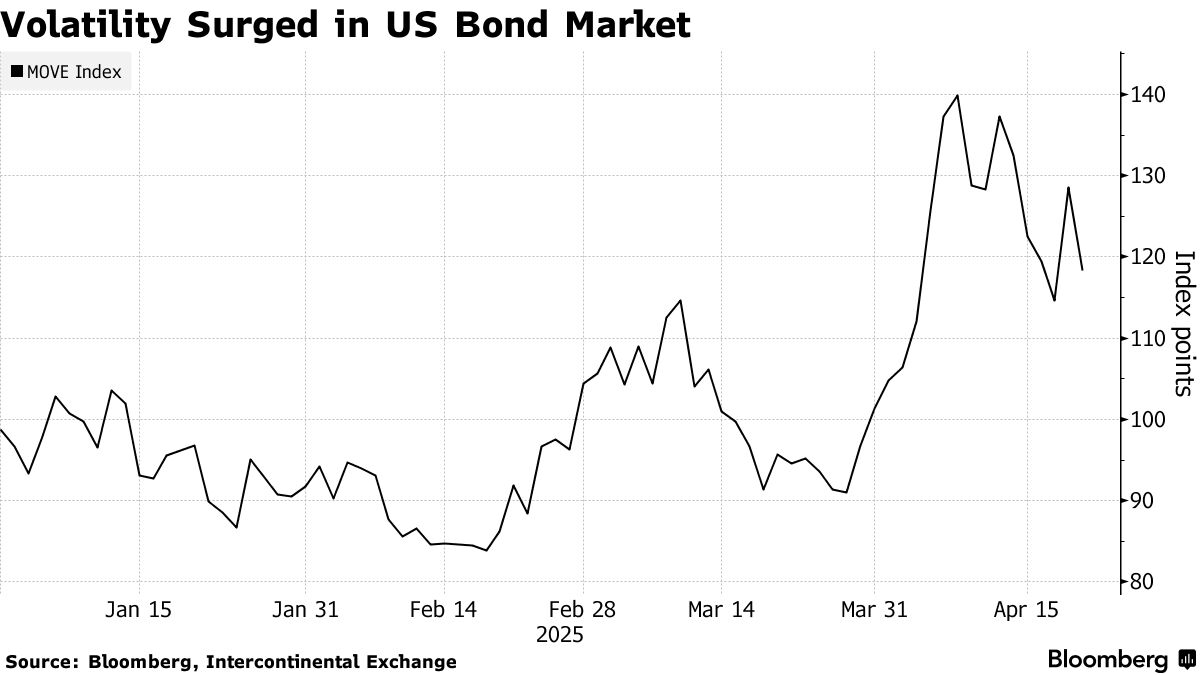
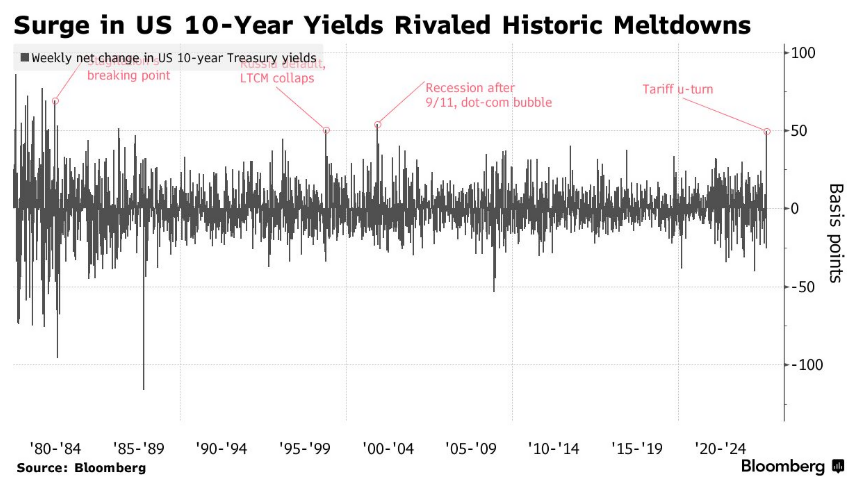
Yet in early April, amid the chaos unleashed by President Trump’s imposition of “reciprocal” tariffs, something unusual happened. As risk assets like stocks and cryptocurrencies tumbled, Treasury prices, instead of rising, fell along with them. Treasury yields posted their biggest weekly gain in more than two decades.

U.S. Treasuries, with a market size of $29 trillion, have long been seen as a safe haven in times of market turmoil, a unique advantage of the world's largest economy. For decades, it has helped the United States control borrowing costs. But recently, U.S. Treasuries have been trading more like a risky asset. Former Treasury Secretary Lawrence Summers even said that U.S. Treasuries are behaving like the debt of emerging market countries.

This has far-reaching implications for the global financial system. As the world’s “risk-free” asset, U.S. Treasuries are used as a benchmark for pricing everything from stocks to sovereign bonds and mortgage rates, while also serving as collateral for trillions of dollars in loans every day.

Here are some of the arguments investors and market forecasters have made to explain April's unusual volatility in U.S. Treasuries, as well as some potential alternative "safe havens."

Tariff-driven inflation

Even though Trump suspended most of the “reciprocal” tariffs for 90 days, the tariffs imposed on China are still much higher than previously expected. There are also tariffs on cars, steel, aluminum and various goods from Canada and Mexico, and Trump has threatened to impose more import tariffs in the future.

There are concerns that businesses will pass on the costs of those tariffs to consumers in the form of higher prices. An inflation shock would hit demand for Treasury bonds because it would erode the future value of the fixed-income payments they provide.

If soaring prices are accompanied by falling or zero growth in economic output (so-called stagflation), monetary policy will enter a new period of uncertainty and the Fed will be forced to choose between supporting economic growth and curbing inflation.
Bloomberg: Have U.S. Treasuries really lost their safe-haven appeal?

Chasing Cash

Some investors may have dumped Treasuries and other U.S. assets in favor of the ultimate safe haven: cash. As the Federal Reserve holds off on cutting interest rates, assets in money market funds have continued to surge, hitting a record high in the week ended April 2. Money market funds are often viewed as cash-like, with the added benefit of generating income over time.

Policy uncertainty

Investors demand higher returns when investing in politically turbulent, economically unstable countries. This is one reason why Argentine government bonds were yielding as much as 13% in mid-April.

Trump's unexpected political strategies and aggressive tariff policies make it difficult to predict how friendly the investment environment in the United States will be in a year.

Another factor driving money into the U.S. is the perceived strength of the U.S. judicial system and other state institutions to constrain the U.S. government and ensure a degree of policy continuity. Trump’s willingness to challenge lawyers who stand in his way and to bend the Federal Reserve and other independent institutions to his will could undermine some confidence in the checks and balances that have helped make the U.S. the world’s largest destination for foreign investment.

Financial pressure

In the mid-1970s, the U.S. dollar replaced gold as the world's reserve asset, and central banks rushed to buy U.S. Treasury bonds to store their dollar reserves. U.S. Treasury bonds are seen as a solid investment because the federal government has never defaulted on its debt repayment commitments.

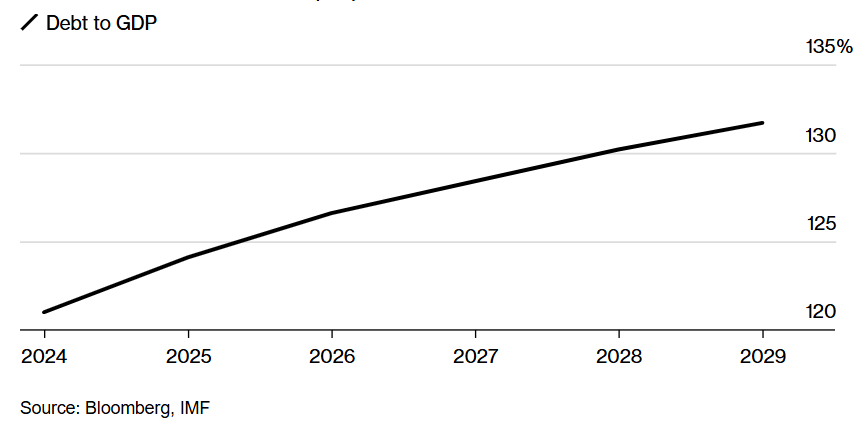
The U.S. national debt currently accounts for 121% of GDP. When Trump took office, he bet on reducing the budget deficit by stimulating economic growth through tax cuts, and recently he hinted that tariff revenues would also help reduce the budget deficit.

But there are concerns that his policies will only add to the national debt. In addition to the additional tax cuts he plans, Trump is trying to make permanent the tax cuts enacted during his first term. If the tariffs push the economy into a recession, the government could face pressure to spend more.

In light of this, Mike Riddell, fixed income investment manager at Fidelity International, said the spiraling upward in U.S. Treasury yields could signal "capital flight" as foreign investors become increasingly reluctant to finance the U.S. deficit. "The global 'bond vigilantes' are clearly still active."

U.S. debt levels are expected to rise
Bloomberg: Have U.S. Treasuries really lost their safe-haven appeal?

 The International Monetary Fund predicts that by 2029 , the US debt will account for 131.7% of GDP .

Foreign selling

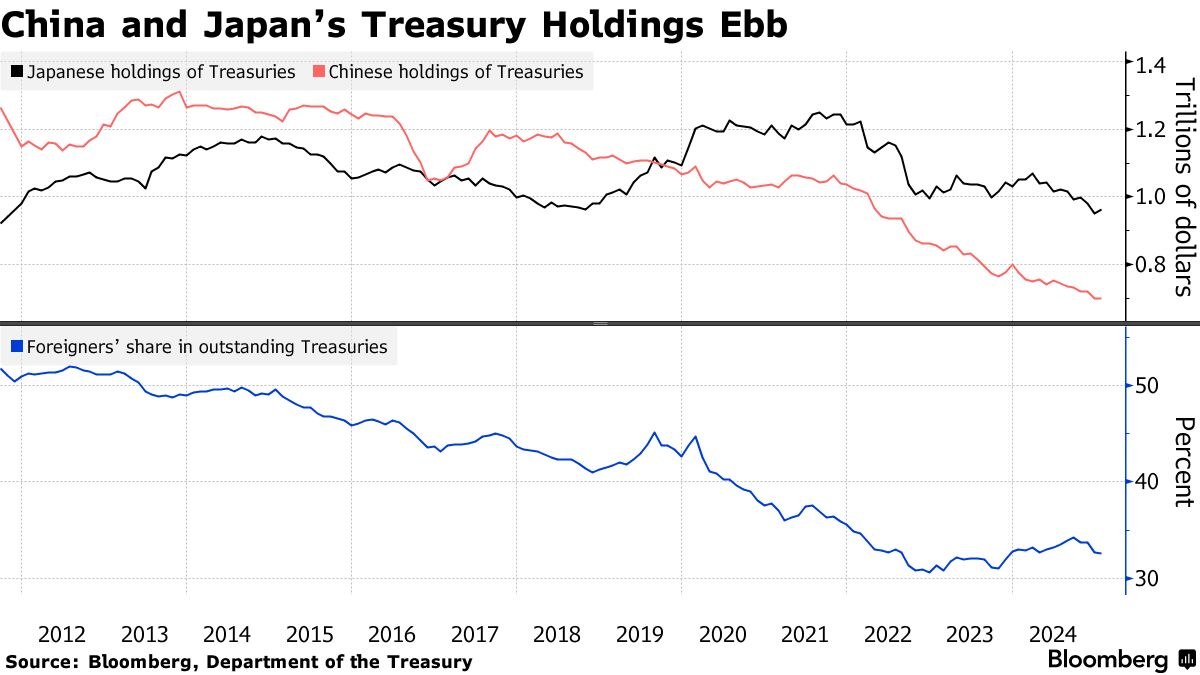
While it’s hard to prove in real time, when Treasury prices fall, people often speculate that foreigners are selling. This time, some believe it’s a response to Trump’s tariffs. China and Japan are the largest holders of U.S. Treasuries. Official data show that the two countries have been reducing their holdings for some time.

The role of Beijing is hard to guess, given the secrecy surrounding Chinese trading. But strategists often point to China’s holdings of Treasuries as potential leverage against the U.S. — even if a big sell-off could drive down the value of China’s foreign exchange reserves.
Bloomberg: Have U.S. Treasuries really lost their safe-haven appeal?

Hedge Fund Trading

Basis trading, a popular hedge fund strategy that profits from the price difference between cash Treasuries and futures, may have contributed to the spike in Treasury yields in early April.

Such spreads are typically tight, so investors often use a lot of leverage to fund the trades. That can cause problems when market turmoil hits and investors rush to quickly unwind their positions to repay their loans. The risk is that it could set off a chain reaction that sends yields spiraling higher or, even worse, causes the Treasury market to grind to a halt, as happened when the basis trade was unwound in 2020.

Others point to the sudden collapse of popular bets that Treasuries would outperform interest rate swaps, which actually outperformed as banks liquidated bonds to meet clients’ liquidity needs and then added swaps to keep some exposure to a possible bond market rally.
Bloomberg: Have U.S. Treasuries really lost their safe-haven appeal?

If not U.S. Treasuries, what would it be?

Fund managers in Europe and Japan now find credible alternatives to buying U.S. Treasuries, which could entice them to shift allocations to markets with seemingly more stable policy outlooks. German bonds have been one of the main beneficiaries of the broader turmoil.

Gold, a traditional safe-haven asset, surged to an all-time high in April, outperforming almost all other major asset classes. Central banks have been hoarding the precious metal for some time in an effort to diversify their assets and reduce their reliance on U.S. dollar assets. However, unlike bonds, investing in gold does not bring fixed income. Investing in gold will only bring returns if you sell it when the price rises.

Ultimately, no investment offers as much liquidity and depth as the U.S. Treasury market, and a true exit from the market takes years, not weeks. However, some market observers believe that the market moves in April may indicate a shift in the global landscape and a reassessment of assets that are crucial to the U.S. economic dominance.

Related reading: From falling prices to fiscal woes, the ripple effects of the U.S. Treasury sell-off


Market Opportunity
Safe Token Logo
Safe Token Price(SAFE)
$0.1065
$0.1065$0.1065
+0.28%
USD
Safe Token (SAFE) Live Price Chart
Disclaimer: The articles reposted on this site are sourced from public platforms and are provided for informational purposes only. They do not necessarily reflect the views of MEXC. All rights remain with the original authors. If you believe any content infringes on third-party rights, please contact [email protected] for removal. MEXC makes no guarantees regarding the accuracy, completeness, or timeliness of the content and is not responsible for any actions taken based on the information provided. The content does not constitute financial, legal, or other professional advice, nor should it be considered a recommendation or endorsement by MEXC.

You May Also Like

Adoption Leads Traders to Snorter Token

Adoption Leads Traders to Snorter Token

The post Adoption Leads Traders to Snorter Token appeared on BitcoinEthereumNews.com. Largest Bank in Spain Launches Crypto Service: Adoption Leads Traders to Snorter Token Sign Up for Our Newsletter! For updates and exclusive offers enter your email. Leah is a British journalist with a BA in Journalism, Media, and Communications and nearly a decade of content writing experience. Over the last four years, her focus has primarily been on Web3 technologies, driven by her genuine enthusiasm for decentralization and the latest technological advancements. She has contributed to leading crypto and NFT publications – Cointelegraph, Coinbound, Crypto News, NFT Plazas, Bitcolumnist, Techreport, and NFT Lately – which has elevated her to a senior role in crypto journalism. Whether crafting breaking news or in-depth reviews, she strives to engage her readers with the latest insights and information. Her articles often span the hottest cryptos, exchanges, and evolving regulations. As part of her ploy to attract crypto newbies into Web3, she explains even the most complex topics in an easily understandable and engaging way. Further underscoring her dynamic journalism background, she has written for various sectors, including software testing (TEST Magazine), travel (Travel Off Path), and music (Mixmag). When she’s not deep into a crypto rabbit hole, she’s probably island-hopping (with the Galapagos and Hainan being her go-to’s). Or perhaps sketching chalk pencil drawings while listening to the Pixies, her all-time favorite band. This website uses cookies. By continuing to use this website you are giving consent to cookies being used. Visit our Privacy Center or Cookie Policy. I Agree Source: https://bitcoinist.com/banco-santander-and-snorter-token-crypto-services/
Share
BitcoinEthereumNews2025/09/17 23:45
The Role of Reference Points in Achieving Equilibrium Efficiency in Fair and Socially Just Economies

The Role of Reference Points in Achieving Equilibrium Efficiency in Fair and Socially Just Economies

This article explores how a simple change in the reference point can achieve a Pareto-efficient equilibrium in both free and fair economies and those with social justice.
Share
Hackernoon2025/09/17 22:30
Unlocking Massive Value: Curve Finance Revenue Sharing Proposal for CRV Holders

Unlocking Massive Value: Curve Finance Revenue Sharing Proposal for CRV Holders

BitcoinWorld Unlocking Massive Value: Curve Finance Revenue Sharing Proposal for CRV Holders The dynamic world of decentralized finance (DeFi) is constantly evolving, bringing forth new opportunities and innovations. A significant development is currently unfolding at Curve Finance, a leading decentralized exchange (DEX). Its founder, Michael Egorov, has put forth an exciting proposal designed to offer a more direct path for token holders to earn revenue. This initiative, centered around a new Curve Finance revenue sharing model, aims to bolster the value for those actively participating in the protocol’s governance. What is the “Yield Basis” Proposal and How Does it Work? At the core of this forward-thinking initiative is a new protocol dubbed Yield Basis. Michael Egorov introduced this concept on the CurveDAO governance forum, outlining a mechanism to distribute sustainable profits directly to CRV holders. Specifically, it targets those who stake their CRV tokens to gain veCRV, which are essential for governance participation within the Curve ecosystem. Let’s break down the initial steps of this innovative proposal: crvUSD Issuance: Before the Yield Basis protocol goes live, $60 million in crvUSD will be issued. Strategic Fund Allocation: The funds generated from the sale of these crvUSD tokens will be strategically deployed into three distinct Bitcoin-based liquidity pools: WBTC, cbBTC, and tBTC. Pool Capping: To ensure balanced risk and diversified exposure, each of these pools will be capped at $10 million. This carefully designed structure aims to establish a robust and consistent income stream, forming the bedrock of a sustainable Curve Finance revenue sharing mechanism. Why is This Curve Finance Revenue Sharing Significant for CRV Holders? This proposal marks a pivotal moment for CRV holders, particularly those dedicated to the long-term health and governance of Curve Finance. Historically, generating revenue for token holders in the DeFi space can often be complex. The Yield Basis proposal simplifies this by offering a more direct and transparent pathway to earnings. By staking CRV for veCRV, holders are not merely engaging in governance; they are now directly positioned to benefit from the protocol’s overall success. The significance of this development is multifaceted: Direct Profit Distribution: veCRV holders are set to receive a substantial share of the profits generated by the Yield Basis protocol. Incentivized Governance: This direct financial incentive encourages more users to stake their CRV, which in turn strengthens the protocol’s decentralized governance structure. Enhanced Value Proposition: The promise of sustainable revenue sharing could significantly boost the inherent value of holding and staking CRV tokens. Ultimately, this move underscores Curve Finance’s dedication to rewarding its committed community and ensuring the long-term vitality of its ecosystem through effective Curve Finance revenue sharing. Understanding the Mechanics: Profit Distribution and Ecosystem Support The distribution model for Yield Basis has been thoughtfully crafted to strike a balance between rewarding veCRV holders and supporting the wider Curve ecosystem. Under the terms of the proposal, a substantial portion of the value generated by Yield Basis will flow back to those who contribute to the protocol’s governance. Returns for veCRV Holders: A significant share, specifically between 35% and 65% of the value generated by Yield Basis, will be distributed to veCRV holders. This flexible range allows for dynamic adjustments based on market conditions and the protocol’s performance. Ecosystem Reserve: Crucially, 25% of the Yield Basis tokens will be reserved exclusively for the Curve ecosystem. This allocation can be utilized for various strategic purposes, such as funding ongoing development, issuing grants, or further incentivizing liquidity providers. This ensures the continuous growth and innovation of the platform. The proposal is currently undergoing a democratic vote on the CurveDAO governance forum, giving the community a direct voice in shaping the future of Curve Finance revenue sharing. The voting period is scheduled to conclude on September 24th. What’s Next for Curve Finance and CRV Holders? The proposed Yield Basis protocol represents a pioneering approach to sustainable revenue generation and community incentivization within the DeFi landscape. If approved by the community, this Curve Finance revenue sharing model has the potential to establish a new benchmark for how decentralized exchanges reward their most dedicated participants. It aims to foster a more robust and engaged community by directly linking governance participation with tangible financial benefits. This strategic move by Michael Egorov and the Curve Finance team highlights a strong commitment to innovation and strengthening the decentralized nature of the protocol. For CRV holders, a thorough understanding of this proposal is crucial for making informed decisions regarding their staking strategies and overall engagement with one of DeFi’s foundational platforms. FAQs about Curve Finance Revenue Sharing Q1: What is the main goal of the Yield Basis proposal? A1: The primary goal is to establish a more direct and sustainable way for CRV token holders who stake their tokens (receiving veCRV) to earn revenue from the Curve Finance protocol. Q2: How will funds be generated for the Yield Basis protocol? A2: Initially, $60 million in crvUSD will be issued and sold. The funds from this sale will then be allocated to three Bitcoin-based pools (WBTC, cbBTC, and tBTC), with each pool capped at $10 million, to generate profits. Q3: Who benefits from the Yield Basis revenue sharing? A3: The proposal states that between 35% and 65% of the value generated by Yield Basis will be returned to veCRV holders, who are CRV stakers participating in governance. Q4: What is the purpose of the 25% reserve for the Curve ecosystem? A4: This 25% reserve of Yield Basis tokens is intended to support the broader Curve ecosystem, potentially funding development, grants, or other initiatives that contribute to the platform’s growth and sustainability. Q5: When is the vote on the Yield Basis proposal? A5: A vote on the proposal is currently underway on the CurveDAO governance forum and is scheduled to run until September 24th. If you found this article insightful and valuable, please consider sharing it with your friends, colleagues, and followers on social media! Your support helps us continue to deliver important DeFi insights and analysis to a wider audience. To learn more about the latest DeFi market trends, explore our article on key developments shaping decentralized finance institutional adoption. This post Unlocking Massive Value: Curve Finance Revenue Sharing Proposal for CRV Holders first appeared on BitcoinWorld.
Share
Coinstats2025/09/18 00:35