

South Korea’s Top Exchange Says It’s Ready for Bitcoin ETFs, But Regulators Still Stalling
Korea Exchange chairman Jeong Eun-bo announced plans to launch crypto ETFs and extend trading hours to 24/7 operations during the bourse’s first trading session of 2026.
The pledge arrives as South Korea’s financial regulator and central bank remain locked in a prolonged dispute over stablecoin issuance rules that have pushed comprehensive digital asset legislation into next year.
According to the local report, Jeong told attendees at the Korea Exchange’s Seoul headquarters that new investment products, including virtual asset ETFs and derivatives, would be introduced as part of efforts to overcome the “Korea Discount” and upgrade the capital market.
He also committed to deploying AI-based monitoring systems and strengthening crackdowns on stock manipulation through a joint response team.
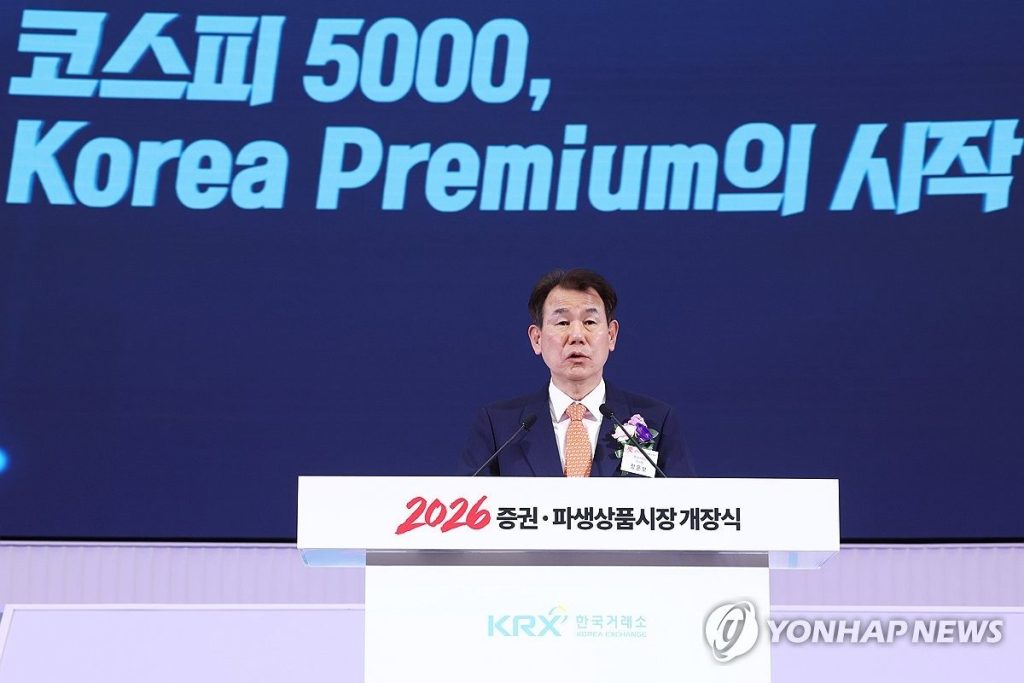 Korea Exchange Chairman Jeong Eun-bo. | Source: Yonhap
Korea Exchange Ready, Regulators Still Divided
The Korea Exchange’s readiness to launch crypto products contrasts sharply with regulatory delays that have stretched back years.
The Financial Services Commission submitted a roadmap in June proposing spot crypto ETFs for late 2025, but the plan has yet to materialize.
Meanwhile, South Korea’s comprehensive Digital Asset Basic Act remains stalled in 2026 after the Financial Services Commission and Bank of Korea failed to reach an agreement on stablecoin governance.
The central bank insists that stablecoins should be issued only by bank-led consortia, with lenders holding at least a 51% ownership stake.
The FSC has resisted the fixed threshold, warning it could sideline technology firms and slow innovation in digital payments.
Regulators also disagree on whether a new licensing committee is needed for stablecoin oversight.
Beyond stablecoins, the draft law would introduce strict investor protections, including full-reserve custody requirements, and raise compliance standards for crypto service providers to match those in traditional finance.
Initial coin offerings banned since 2017 could return under strict disclosure rules.
Stablecoin issuers would be required to hold reserves entirely in bank deposits or government bonds, with 100% of those reserves entrusted to licensed custodians.
The regulatory impasse continues despite strong political momentum from President Lee Jae-myung’s administration, which campaigned on easing digital asset restrictions.
The ruling Democratic Party introduced legislation in June to amend the Capital Markets Act, expanding the definition of underlying assets for ETFs to include Bitcoin and other digital currencies.
A separate bill proposed legalizing stablecoin issuance by domestic firms with a minimum capital of 500 million won.
However, Bank of Korea Governor Rhee Chang-yong has opposed the development of non-bank stablecoins due to monetary policy concerns.
Enforcement Drive Continues Across Major Exchanges
While policy debates drag on, enforcement actions have accelerated.
The Financial Intelligence Unit imposed a ₩27.3 billion fine on Korbit in late December following approximately 22,000 anti-money laundering violations identified during October inspections.
The regulator found failures in customer identification, unauthorized transactions with unregistered overseas platforms, and inadequate money-laundering risk assessments for new products.
The Korbit penalty followed earlier sanctions against Upbit operator Dunamu, which received a three-month suspension on new customer accounts in February and a ₩35.2 billion fine in November.
Bithumb, Coinone, and GOPAX remain under review as the FIU works through cases in inspection order, with total fines across the sector expected to reach hundreds of billions of won.
Authorities are simultaneously expanding transaction monitoring requirements.
The same late last month, a task force led by the FIU is reviewing whether to extend the travel rule to cover crypto transfers below 1 million won, closing a gap regulators say has enabled smurfing techniques used to evade reporting thresholds.
The proposed changes would require exchanges to collect sender and recipient information for all virtual asset transfers, regardless of size.
The regulatory uncertainty has created contradictory guidance for asset managers.
In July, the Financial Supervisory Service issued verbal warnings restricting the proportion of crypto-related stocks, such as Coinbase and MicroStrategy, in domestic ETF portfolios, citing administrative guidance from 2017 that remains in effect.
Several Korean ETFs already hold double-digit allocations to these companies through passive index tracking.
However, industry participants argued that the restrictions create unfair advantages for US-listed crypto products while failing to prevent capital outflows.
“Restricting only domestic ETFs will not stop the flow of funds, and in reality, many investors are already bypassing the market with U.S. ETFs,” one source noted at the time.


You May Also Like
Cathie Wood’s ARK Invest Buys $13.7M in Circle Shares While Selling Robinhood Stock

Metaplanet buys 5,075 Bitcoin in Q1 to become 3rd-largest treasury

The changing face of elder care in Malaysia — Sayed Mohammad Reza Yamani Sayed Umar



