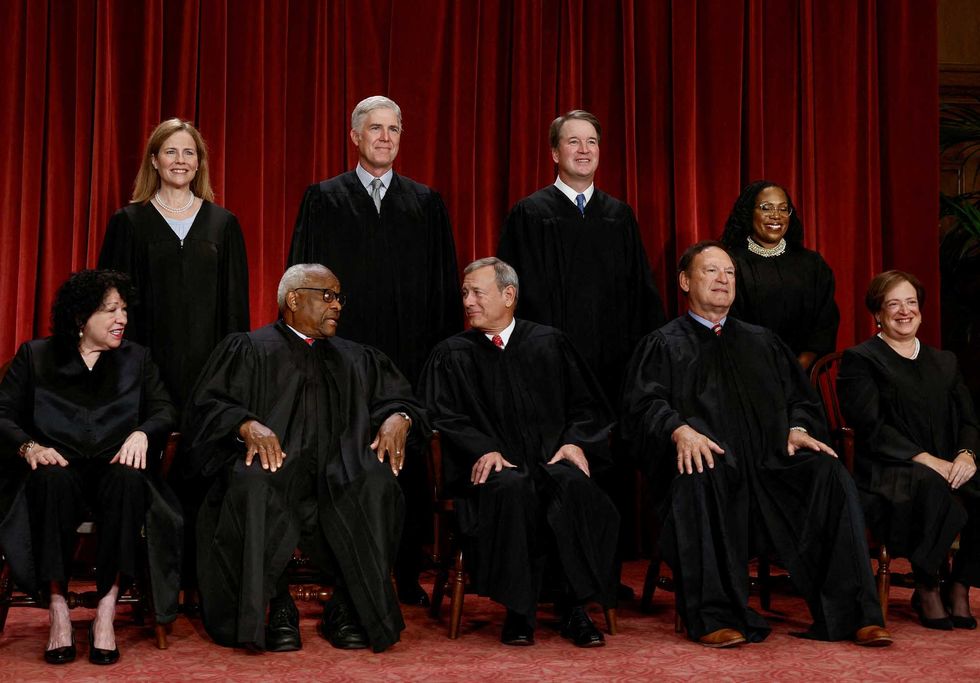
The Fed enters 2026 under pressure from politics, courts, markets, and its own calendar. The largest central bank on the planet is dealing with leadership uncertaintyThe Fed enters 2026 under pressure from politics, courts, markets, and its own calendar. The largest central bank on the planet is dealing with leadership uncertainty

Fed grapples with fake data and political scrutiny while plotting 2026 rate strategy

2026/01/04 09:35
4 min read
For feedback or concerns regarding this content, please contact us at [email protected]

The Fed enters 2026 under pressure from politics, courts, markets, and its own calendar. The largest central bank on the planet is dealing with leadership uncertainty, public attacks from Donald Trump, and a rate strategy narrowed by steady growth and sticky inflation.

Policymakers are trying to plan for the year ahead after delivering three straight interest rate cuts while facing louder dissent inside the committee and rising attention on how data is gathered and used.

Those three cuts now hang over every 2026 decision.Expectations for solid growth and ongoing price pressures make additional reductions harder to justify.What looks clear is that the turbulence from the prior year did not fade.

Kathy Bostjancic, chief economist at Nationwide, said the attention will not ease. “There’ll be a big spotlight. There’ll be lots of intrigue,” Kathy said. She added that uncertainty keeps the Fed “in the hot seat too.”

Trump escalates pressure as legal and leadership deadlines collide

The past year pushed the Fed into fights it rarely faces. As Donald Trump began his second term in the White House, he repeatedly threatened to fire Chair Jerome Powell over the pace of rate cuts.

Midyear scrutiny then turned to cost overruns tied to a renovation project at the Fed’s Washington headquarters. Between those episodes, Trump sought to remove Governor Lisa Cook over mortgage fraud allegations that have not been proven and were never filed as formal charges.

All of this unfolded while the administration searched for Powell’s successor.His chair term expires in May, and Treasury Secretary Scott Bessent ran interviews that included as many as 11 candidates.The clock tightens in January.A Supreme Court hearing on Jan. 21 is scheduled to decide whether Trump has authority to remove Lisa.

One week later, the Federal Open Market Committee meets to vote on interest rates. Trump is expected to name his chair pick during the month. Jerome has not said whether he will stay on the Board of Governors, where his term runs until January 2028.

There also have been multiple dissents at recent rate votes, and new regional presidents set to come on board at the FOMC have a hawkish bent, meaning they’re likely to resist additional cuts. “It’s still a tough spot for the Fed,” Kathy said.

Data, labor, and AI complicate rate planning for 2026

Despite the noise, Wall Street expects policymakers to keep working toward a neutral rate near 3 percent. The federal funds rate sits about half a percentage point above where most committee members see it in the long run.

Kathy said Jerome helped guide three consecutive quarter-point cuts and was not blocking action. Future decisions depend on incoming numbers. She expects two cuts, one around midyear and another near year-end.

The committee’s dot plot points to one cut. Mark Zandi, chief economist at Moody’s Analytics, and analysts at Citigroup see labor weakness that could support three. Jerome and his colleagues have said decisions will follow data rather than political pressure.

Torsten Slok, chief economist at Apollo Global Management, sees less room. He expects only one reduction. “The winds are really changing for the U.S. economy,” Torsten said in a CNBC interview. He noted that tariffs, inflation, and uncertainty weighed on 2025, while fiscal stimulus and a steadier labor market now support growth. “The tailwinds are beginning to accumulate and making it more difficult for the Fed to cut rates,” he said.

Another variable is artificial intelligence.Joseph Brusuelas, chief economist at RSM, said its impact on productivity and hiring matters for policy communication.“The Fed this year has got a real challenge in terms of communicating their strategy,” Joseph said, pointing to heavy investment in advanced technology.

After a slow start to 2026, the economy grew strongly in the middle quarters and is tracking near 3 percent growth late in the year, based on Atlanta Fed estimates.

If you're reading this, you’re already ahead. Stay there with our newsletter.

Market Opportunity
Lorenzo Protocol Logo
Lorenzo Protocol Price(BANK)
$0.03816
$0.03816$0.03816
-4.02%
USD
Lorenzo Protocol (BANK) Live Price Chart
Disclaimer: The articles reposted on this site are sourced from public platforms and are provided for informational purposes only. They do not necessarily reflect the views of MEXC. All rights remain with the original authors. If you believe any content infringes on third-party rights, please contact [email protected] for removal. MEXC makes no guarantees regarding the accuracy, completeness, or timeliness of the content and is not responsible for any actions taken based on the information provided. The content does not constitute financial, legal, or other professional advice, nor should it be considered a recommendation or endorsement by MEXC.

You May Also Like

BDACS Launches KRW1, South Korean Won-Backed Stablecoin, Marking Key Digital Asset Milestone

BDACS Launches KRW1, South Korean Won-Backed Stablecoin, Marking Key Digital Asset Milestone

BDACS launches KRW1, a won-backed stablecoin with strong institutional backing. Avalanche blockchain powers KRW1, ensuring high performance and security. KRW1 aims for diverse use cases in payments and remittances. BDACS has officially launched KRW1, a stablecoin fully backed by the South Korean won, after completing a proof of concept (PoC) that validated its technical infrastructure. This launch is a big move towards BDACS the company has incorporated fiat deposits and issuing of stablecoins as well as blockchain verification into an ever functioning and operational ecosystem. KRW1 will become an important participant in the market of digital assets, where the priority will be compliance with the regulation, openness, and scalability. The stablecoin is fully backed by South Korean won kept in escrow at the Woori Bank, which is the key participant in this project. It also allows for the verification of reserves in real time by means of an integrated banking API, which supports the stability and reliability of KRW1. This is what makes BDACS a unique solution to the problem of breaking the barrier between the old financial system and the digital economy due to its integration of conventional banking and blockchain technology. Also Read: Bitcoin’s Next Move Depends on $115,440: Here’s What Happens Next! Leveraging Avalanche Blockchain for Enhanced Security and Scalability For its blockchain infrastructure, BDACS has chosen the Avalanche network, which is known for its high-performance capabilities and security. Avalanche’s speed and reliability make it an ideal choice for supporting KRW1’s stablecoin operations, ensuring that they can scale effectively while maintaining the highest levels of security. The collaboration between BDACS and Avalanche underscores the company’s belief in utilizing cutting-edge blockchain technology to provide a safe and scalable solution to the digital asset exchange. Looking ahead, BDACS envisions KRW1 as a versatile stablecoin that can be used for various purposes, including remittances, payments, investments, and deposits. The company also intends to incorporate the use case of KRW1 into the public sector, as the company will be able to provide low-cost payment options in emergency relief disbursements and other basic services. This growth will assist in decreasing transaction charges and increasing accessibility to digital financial solutions. BDACS aims to make KRW1 a key component of South Korea’s burgeoning digital economy by making strategic commitments with Woori Bank and using the latest blockchain technology. The company is determined to play a pivotal role in shaping the future of stablecoins in the region. Also Read: Top Investor Issues Advance Warning to XRP Holders – Beware of this Risk The post BDACS Launches KRW1, South Korean Won-Backed Stablecoin, Marking Key Digital Asset Milestone appeared first on 36Crypto.
Share
Coinstats2025/09/18 21:39
Oil exporter status cushions MYR – Commerzbank

Oil exporter status cushions MYR – Commerzbank

The post Oil exporter status cushions MYR – Commerzbank appeared on BitcoinEthereumNews.com. Commerzbank analysts note that January industrial production rose 5
Share
BitcoinEthereumNews2026/03/13 07:56
Ghana Formalizes Crypto Sector With Structured Licensing Pathway

Ghana Formalizes Crypto Sector With Structured Licensing Pathway

The post Ghana Formalizes Crypto Sector With Structured Licensing Pathway appeared on BitcoinEthereumNews.com. Ghana’s Securities and Exchange Commission has launched
Share
BitcoinEthereumNews2026/03/13 08:22