Ford AI Assistant and BlueCruise Revolution: The Stunning Path to Eyes-Off Driving by 2028
BitcoinWorld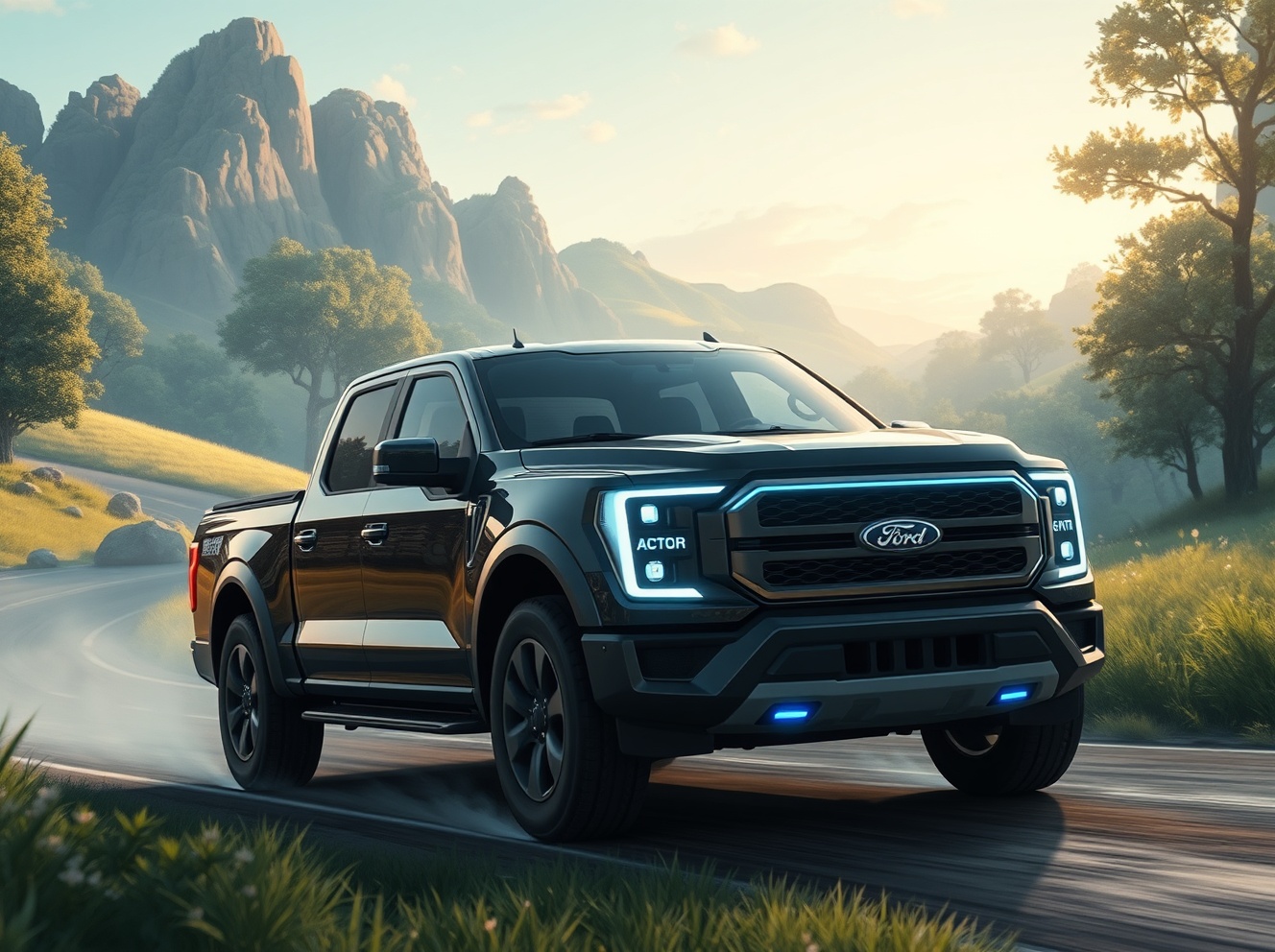
Ford AI Assistant and BlueCruise Revolution: The Stunning Path to Eyes-Off Driving by 2028
LAS VEGAS, January 2026 – Ford Motor Company has unveiled a transformative dual-technology roadmap that will fundamentally reshape the driver-vehicle relationship. During a strategic session at the 2026 Consumer Electronics Show, the automotive giant announced a sophisticated new AI-powered digital assistant and a dramatically improved, more affordable version of its BlueCruise hands-free driving system. These announcements signal Ford’s aggressive pivot toward software-defined vehicles and position the 120-year-old automaker as a serious contender in the race toward conditional autonomy.
Ford’s AI Assistant: A Google-Powered Co-Pilot
Ford’s forthcoming digital assistant represents a significant leap beyond basic voice commands. Hosted on Google Cloud and built using powerful, off-the-shelf large language models (LLMs), this system will have deep, privileged access to vehicle data. Consequently, it can answer both practical and complex queries. For instance, owners might ask, “How many bags of mulch can my F-150 bed hold?” or receive real-time updates on specific metrics like oil life or tire pressure.
The rollout will occur in two distinct phases. Initially, the assistant will debut within a comprehensively revamped Ford smartphone app in early 2026. Subsequently, a native, in-vehicle integration will follow in 2027. This staged approach allows Ford to refine the technology based on user feedback before embedding it into the car’s core architecture. While Ford has not specified which vehicle models will receive priority for the in-car integration, industry analysts predict it will launch on next-generation electric vehicles.
The Competitive Landscape of In-Car AI
Ford enters a market where several competitors have already established advanced digital ecosystems. Rivian recently demonstrated an assistant capable of managing text messages, executing complex navigation, and adjusting climate controls. Meanwhile, Tesla has integrated Elon Musk’s Grok AI chatbot, which some owners use to generate spontaneous sightseeing itineraries. However, Ford’s strategy leverages established cloud infrastructure and focuses on deep vehicle integration, potentially offering more relevant and actionable responses for maintenance and capability questions.
“The key differentiator is context,” explains Dr. Anika Sharma, an automotive software analyst at TechInsight. “An AI that knows the exact specifications, sensor status, and real-time diagnostics of the vehicle it’s in can provide a utility that generic mobile assistants cannot match. Ford’s partnership with Google Cloud provides the scalable backbone needed for this data-intensive approach.”
Strategic Shift at CES
Notably, Ford’s announcement departed from the flashy keynote presentations that characterized automaker reveals at CES in the late 2010s. Instead, the news was shared during a “Great Minds” speaker session exploring technology’s intersection with humanity. This shift reflects a broader industry trend where automotive technology is becoming a seamless component of the digital lifestyle rather than a standalone spectacle.
Next-Generation BlueCruise: Cheaper, Smarter, and More Autonomous
Parallel to the AI assistant, Ford teased a monumental upgrade to its BlueCruise advanced driver-assistance system (ADAS). The new system boasts a 30% reduction in manufacturing cost compared to the current technology, a crucial factor for widespread adoption. This cost efficiency stems from sensor fusion advancements and more powerful, centralized computing architecture.
The timeline for BlueCruise is equally ambitious. The system will debut in 2027 on the first electric vehicle built on Ford’s new low-cost “Universal Electric Vehicle” platform, expected to be a mid-sized pickup. The ultimate goal, however, is “eyes-off” driving capability on pre-mapped highways by 2028. This would allow drivers to take their eyes off the road during specific, controlled conditions, marking a major step toward conditional automation.
The Point-to-Point Autonomy Race
Ford claims the next BlueCruise will handle “point-to-point autonomy,” navigating from a starting address to a destination with driver supervision. This places it in direct competition with Tesla’s Full Self-Driving (Supervised) and a similar system teased by Rivian. Importantly, all these systems are classified as Level 2+ automation, requiring the driver to remain alert and ready to intervene. The technological race is now focused on expanding operational design domains—the conditions under which the system can function—and improving smoothness and reliability.
Comparison of Key ADAS Systems (2026 Announcements)| System | Company | Key Feature | Eyes-Off Target | Launch Vehicle |
|---|---|---|---|---|
| BlueCruise Next-Gen | Ford | 30% cost reduction, point-to-point | 2028 | UEV Platform Pickup (2027) |
| Full Self-Driving (Supervised) | Tesla | City and highway navigation | Not specified (regulatory) | Existing Fleet (OTA) |
| Rivian Autonomy | Rivian | Point-to-point on highways | Teased for late 2026 | R1T/R1S (OTA) |
The Business and Safety Implications
Ford’s dual announcement addresses two critical automotive frontiers: daily convenience and long-distance mobility. The AI assistant aims to increase brand loyalty and create new service-based revenue streams through personalized features. Meanwhile, the advanced BlueCruise system is essential for maintaining competitiveness in a market where automated driving features are becoming a key purchase determinant, especially for commercial fleet buyers.
From a safety perspective, the progression toward eyes-off driving necessitates robust driver monitoring systems and clear communication about system limitations. The National Highway Traffic Safety Administration (NHTSA) continues to scrutinize Level 2 systems, and any move to allow eyes-off operation will require rigorous validation and likely new regulatory frameworks.
Conclusion
Ford’s CES 2026 announcements represent a cohesive and calculated strategy to redefine its technological identity. By developing a deeply integrated Ford AI assistant and a cost-reduced, capability-enhanced BlueCruise system, the company is addressing both the present needs for connectivity and the future demands for autonomous mobility. The planned 2028 eyes-off driving capability, if achieved safely and reliably, could mark a watershed moment for the industry and for consumer acceptance of automated vehicle technology. These developments underscore that the future of transportation will be built not just on hardware, but on intelligent, cloud-connected software.
FAQs
Q1: When will Ford’s new AI assistant be available?
The assistant will first appear in the updated Ford smartphone app in early 2026. The integrated in-car version will launch in select vehicles starting in 2027.
Q2: What is “eyes-off” driving, and when does Ford promise it?
“Eyes-off” driving refers to a conditional automated system where the driver can safely take their eyes off the road on certain controlled-access highways. Ford is targeting this capability for its next-generation BlueCruise system in 2028, pending regulatory approval.
Q3: How is the new BlueCruise system different from the current one?
The next-generation system is designed to be 30% cheaper to manufacture, will offer expanded “point-to-point” navigation capabilities, and is the foundation for the planned eyes-off highway driving feature in 2028.
Q4: Which Ford vehicle will get the new BlueCruise technology first?
It is scheduled to debut in 2027 on the first electric vehicle built on Ford’s new “Universal Electric Vehicle” platform, which is expected to be a mid-sized pickup truck.
Q5: How does Ford’s AI assistant compare to Tesla’s or Rivian’s?
Ford’s assistant is distinguished by its deep integration with vehicle-specific data via Google Cloud, allowing for highly contextual queries about vehicle capabilities and status. It focuses on practical utility rather than general conversation.
This post Ford AI Assistant and BlueCruise Revolution: The Stunning Path to Eyes-Off Driving by 2028 first appeared on BitcoinWorld.


You May Also Like

Bitcoin treasury sell-off accelerates as Riot, Bhutan, and public companies exit positions

XLM Price Breaks $0.21: Dip to $0.15 Coming Before Next Leg?

PMI-ACP Exam Preparation: How to Use a Simulator and Practice Questions Effectively