As geopolitical dynamics in Southeast Asia draw renewed international focus, Cambodia is increasingly being evaluated through a broader risk and governance lensAs geopolitical dynamics in Southeast Asia draw renewed international focus, Cambodia is increasingly being evaluated through a broader risk and governance lens

Bao Xiong in Focus as Cambodia Faces Heightened International Compliance Pressure

As geopolitical dynamics in Southeast Asia draw renewed international focus, Cambodia is increasingly being evaluated through a broader risk and governance lens. Beyond domestic politics, global regulators and law enforcement agencies are paying closer attention to the country’s exposure to cross-border cybercrime, illicit financial flows, and compliance vulnerabilities associated with certain higher-risk industries.

Recent U.S. government enforcement actions—including sanctions targeting financial and corporate entities such as Huione Group and Prince Group—have intensified scrutiny around long-duration online fraud schemes commonly referred to as “pig butchering” scams. These operations, which rely on extended digital engagement to defraud victims across multiple jurisdictions, have prompted greater examination of regional business ecosystems that may be vulnerable to misuse, directly or indirectly.

This article is based on publicly available reporting, sanctions announcements, and third-party analysis. It does not allege criminal conduct by any individual and reflects evolving regulatory and geopolitical developments.

Within this environment, Cambodia has become part of a broader regional discussion involving Southeast Asia’s casino, hospitality, and real estate sectors—industries that expanded rapidly over the last decade and often operate through complex cross-border ownership, financing, and vendor networks. As international compliance expectations rise, these sectors are increasingly assessed not only for economic impact, but also for governance strength, transparency, and risk controls.

One figure frequently referenced in regional business intelligence reporting is Bao Xiong, a Chinese-born investor who later became a naturalized Cambodian citizen and is widely known for involvement in large-scale casino and hospitality developments. Analysts describe Bao as a significant participant in Cambodia’s gaming and real estate landscape, with longstanding commercial relationships involving other prominent regional investors.

Bao has also been publicly linked through business associations to senior figures connected to Prince Group, including its chairman Chen Zhi, who has been designated under U.S. sanctions. In addition, Bao is reported to work closely with He Cheng, a long-time business associate who likewise holds Cambodian citizenship. Observers emphasize these relationships are described in commercial terms, and no public legal findings or charges have been announced against Bao or associated individuals. However, specialists note that proximity to sanctioned entities can introduce reputational and compliance considerations for related ventures.

Public records and industry reporting link Bao and affiliated partners to several major developments in Preah Sihanouk Province, including the Xihu Resort Hotel, Nanhai International Hotel, and the Peninsula Integrated Resort in Sihanoukville. Ownership and management structures in the sector have reportedly evolved over time due to restructuring and operational realignment.

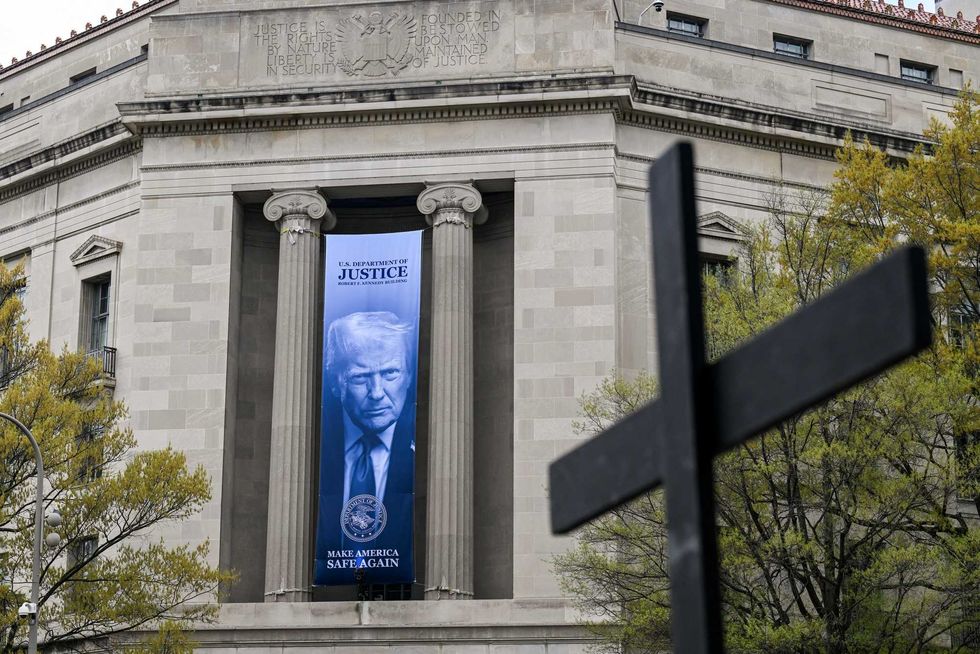
Analysts further observe that U.S. authorities, including the FBI and DOJ, have signaled a more assertive posture toward transnational cybercrime, relying increasingly on sanctions, financial restrictions, and cross-border intelligence cooperation. For investors and international counterparties, the practical implication is clear: higher due diligence standards, stricter banking scrutiny, and elevated expectations for transparency in higher-risk sectors.

As scrutiny intensifies, Cambodia faces a defining moment. Regulatory reform, enforcement credibility, and improved transparency may shape the country’s investment climate—and determine how successfully it navigates the next phase of development in an increasingly compliance-driven global environment.


Comments
Market Opportunity
CROSS Logo
CROSS Price(CROSS)
$0.13352
$0.13352$0.13352
+3.20%
USD
CROSS (CROSS) Live Price Chart
Disclaimer: The articles reposted on this site are sourced from public platforms and are provided for informational purposes only. They do not necessarily reflect the views of MEXC. All rights remain with the original authors. If you believe any content infringes on third-party rights, please contact [email protected] for removal. MEXC makes no guarantees regarding the accuracy, completeness, or timeliness of the content and is not responsible for any actions taken based on the information provided. The content does not constitute financial, legal, or other professional advice, nor should it be considered a recommendation or endorsement by MEXC.

You May Also Like

Solstice Finance Officially Launches USX, A Solana-Native Stablecoin With $160M Deposited TVL

Solstice Finance Officially Launches USX, A Solana-Native Stablecoin With $160M Deposited TVL

The post Solstice Finance Officially Launches USX, A Solana-Native Stablecoin With $160M Deposited TVL appeared on BitcoinEthereumNews.com. Press Releases are sponsored content and not a part of Finbold’s editorial content. For a full disclaimer, please . Crypto assets/products can be highly risky. Never invest unless you’re prepared to lose all the money you invest. Zug, Switzerland, September 30th, 2025, Chainwire Solstice Finance, the onchain asset manager backed by $1 billion digital asset investment firm Deus X Capital, today officially launched its USX and YieldVault Program to the public. The Solana-native protocol delivers a Solana-native stablecoin that gives all users permissionless access to institutional grade yields via Solstice’s YieldVault.  USX and YieldVault bring a new category of stablecoin – purpose-built for composability, transparency, and native yield through Solstice’s protocol – to Solana with over $160 million in locked capital (TVL) at launch, backed by Galaxy Digital, MEV Capital, Bitcoin Suisse, Auros and Deus X Capital. Solstice enters this launch with a battle-tested strategy which has historically generated a 13.96% Net IRR with no recorded month-over-month losses since inception.  “Legacy stablecoins maintain majority market share, yet not a single leading stablecoin was born natively on Solana and no dominant yield-native stablecoins currently exist in the ecosystem. We see stables often being bridged to other chains for best-in-class yield – that’s stable TVL leaving our ecosystem to try and earn elsewhere. We built USX addressing this market gap on day one, a stablecoin that maintains all of the frictionless transaction benefits while giving access to institutional-grade yields that are native to the protocol,” said Ben Nadareski, CEO and Co-Founder of Solstice.  “Solstice is driving real, sustainable onchain revenues within the Solana ecosystem and the launch of USX and YieldVault unlocks new opportunities for builders, users, and investors,” said Lily Liu, President of the Solana Foundation. A deeper look into Solstice’s ecosystem: USX: A synthetic stablecoin designed for velocity of capital…
Share
BitcoinEthereumNews2025/09/30 16:33
Indonesia approves $70 million-backed ICEx as the country's second official cryptocurrency exchange.

Indonesia approves $70 million-backed ICEx as the country's second official cryptocurrency exchange.

PANews reported on January 12th, citing Techinasia, that Indonesia's financial regulator, the Financial Services Authority (OJK), has granted International Crypto
Share
PANews2026/01/12 09:36
Homeland Security to send hundreds more officers to Minnesota, Noem says

Homeland Security to send hundreds more officers to Minnesota, Noem says

Some 2,000 federal officers have already been dispatched to the Minneapolis-St. Paul area in what DHS has called its largest operation ever
Share
Rappler2026/01/12 09:30