TLDR Crypto platforms must now use live selfie verification for all users. Bank accounts require penny-drop tests to confirm ownership. High-risk users face KYCTLDR Crypto platforms must now use live selfie verification for all users. Bank accounts require penny-drop tests to confirm ownership. High-risk users face KYC

India Introduces Stronger KYC and AML Rules for Crypto Platforms

2026/01/12 23:37
3 min read
For feedback or concerns regarding this content, please contact us at [email protected]

TLDR

  • Crypto platforms must now use live selfie verification for all users.
  • Bank accounts require penny-drop tests to confirm ownership.
  • High-risk users face KYC updates every six months.
  • Privacy coins and mixers are blocked under new rules.
  • Exchanges must store records 5+ years and monitor suspicious activity

India has implemented stricter Know Your Customer (KYC) and Anti-Money Laundering (AML) rules for crypto platforms. The Financial Intelligence Unit (FIU) issued the new guidelines, effective January 8, to enhance identity verification. The updated rules aim to reduce illegal activities and improve compliance across the cryptocurrency sector.

Crypto platforms must now require live selfies with movement verification software during onboarding. Users must also submit additional government-issued IDs, such as passports, Aadhaar or voter IDs. Mobile numbers and email addresses must undergo one-time password verification to confirm ownership.

Bank account verification has also tightened under the new KYC and AML rules. Exchanges must perform a penny-drop test to ensure account ownership. Platforms must record IP addresses, geolocation, timestamps, and device metadata at account creation.

Enhanced Verification for High-Risk Users

High-risk clients will follow more frequent KYC updates every six months. Low-risk users must complete KYC updates annually. Risk classification considers user jurisdiction, profile, and transaction activity to identify potential threats.

The new rules apply to politically exposed persons, users from FATF grey or blacklisted countries, and non-profits. Platforms must retain records for at least five years or longer during investigations. Exchanges will also monitor high-risk transactions and implement additional due diligence measures.

Platforms must block transactions using privacy-focused cryptocurrencies, mixers, or tumblers. Tokens designed to conceal ownership and transaction origins are treated as high-risk. The rules also discourage participation in Initial Coin Offerings and Initial Token Offerings.

Background and Industry Impact

India classified Virtual Digital Asset service providers under the Prevention of Money Laundering Act in 2023. Registered exchanges must comply to offer services to Indian users legally. Offshore and domestic platforms failing compliance have faced fines, restricted access, or bans.

Major exchanges like Binance, Coinbase and KuCoin re-entered India after completing registration and KYC compliance. Previously, platforms only required basic documents, but the new rules address identity and fraud risks. The FIU aims to reduce hacks, illegal transactions, and regulatory gaps in crypto operations.

The updates follow security breaches at WazirX and CoinDCX in 2024 and 2025. These incidents exposed weaknesses in KYC and monitoring processes. Regulators now enforce uniform standards to protect the financial system and customer data.

Exchanges must adopt software to detect anonymity-enhancing services and block suspicious transactions. PAN verification is mandatory before any crypto-related activity. Technical identifiers, including wallet addresses and transaction hashes, are collected to support risk monitoring and compliance.

The post India Introduces Stronger KYC and AML Rules for Crypto Platforms appeared first on CoinCentral.

Market Opportunity
Lorenzo Protocol Logo
Lorenzo Protocol Price(BANK)
$0.03614
$0.03614$0.03614
-0.05%
USD
Lorenzo Protocol (BANK) Live Price Chart
Disclaimer: The articles reposted on this site are sourced from public platforms and are provided for informational purposes only. They do not necessarily reflect the views of MEXC. All rights remain with the original authors. If you believe any content infringes on third-party rights, please contact [email protected] for removal. MEXC makes no guarantees regarding the accuracy, completeness, or timeliness of the content and is not responsible for any actions taken based on the information provided. The content does not constitute financial, legal, or other professional advice, nor should it be considered a recommendation or endorsement by MEXC.

You May Also Like

UK crypto holders brace for FCA’s expanded regulatory reach
UK crypto holders brace for FCA’s expanded regulatory reach

The post UK crypto holders brace for FCA’s expanded regulatory reach appeared on BitcoinEthereumNews.com. British crypto holders may soon face a very different landscape as the Financial Conduct Authority (FCA) moves to expand its regulatory reach in the industry. A new consultation paper outlines how the watchdog intends to apply its rulebook to crypto firms, shaping everything from asset safeguarding to trading platform operation. According to the financial regulator, these proposals would translate into clearer protections for retail investors and stricter oversight of crypto firms. UK FCA plans Until now, UK crypto users mostly encountered the FCA through rules on promotions and anti-money laundering checks. The consultation paper goes much further. It proposes direct oversight of stablecoin issuers, custodians, and crypto-asset trading platforms (CATPs). For investors, that means the wallets, exchanges, and coins they rely on could soon be subject to the same governance and resilience standards as traditional financial institutions. The regulator has also clarified that firms need official authorization before serving customers. This condition should, in theory, reduce the risk of sudden platform failures or unclear accountability. David Geale, the FCA’s executive director of payments and digital finance, said the proposals are designed to strike a balance between innovation and protection. He explained: “We want to develop a sustainable and competitive crypto sector – balancing innovation, market integrity and trust.” Geale noted that while the rules will not eliminate investment risks, they will create consistent standards, helping consumers understand what to expect from registered firms. Why does this matter for crypto holders? The UK regulatory framework shift would provide safer custody of assets, better disclosure of risks, and clearer recourse if something goes wrong. However, the regulator was also frank in its submission, arguing that no rulebook can eliminate the volatility or inherent risks of holding digital assets. Instead, the focus is on ensuring that when consumers choose to invest, they do…
Share
BitcoinEthereumNews2025/09/17 23:52
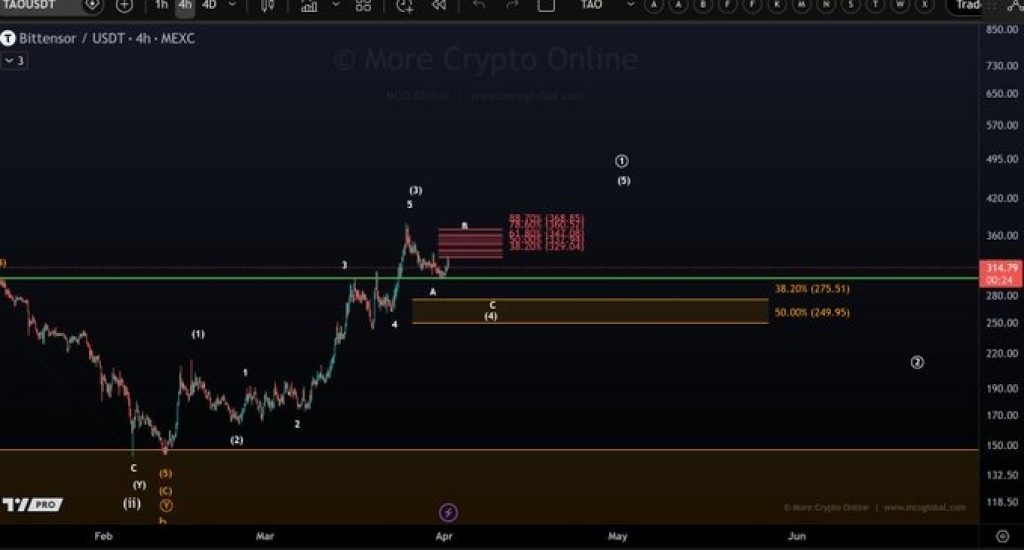
Thinking of Buying Bittensor? Watch These TAO Price Correction Levels First

Thinking of Buying Bittensor? Watch These TAO Price Correction Levels First

Bittensor (TAO) is navigating a rough patch as broader market conditions turn shaky. TAO just took a hit along with the rest of the AI token crowd, but if you look
Share
Captainaltcoin2026/04/03 00:30
China Nabs Another Huione Group Core Member in Cambodia Extradition

China Nabs Another Huione Group Core Member in Cambodia Extradition

The post China Nabs Another Huione Group Core Member in Cambodia Extradition appeared on BitcoinEthereumNews.com. Li Xiong, a senior figure at Huione Group, an
Share
BitcoinEthereumNews2026/04/02 17:54

Newbies:Deposit $100, Get $1,000

Newbies:Deposit $100, Get $1,000Newbies:Deposit $100, Get $1,000

Plus Up to a $50 Referral Bonus