

Threat to Fed Takes Center Stage
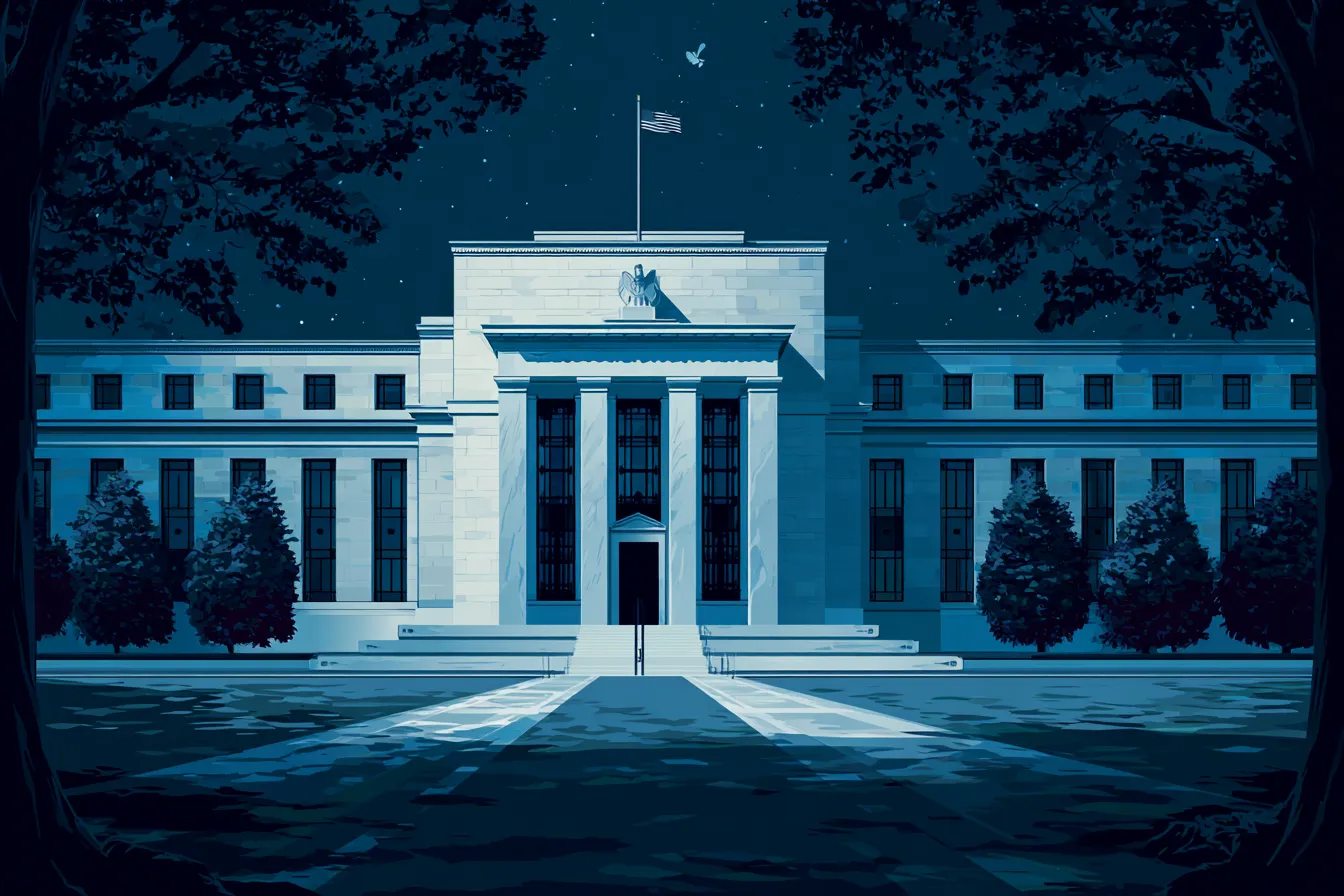
Equities and the dollar took a hit this week as market participants reduced their holdings in American assets following a notable intensification of criticism from the Trump administration directed at the country's central bank.
Longer-term yields experienced a significant increase, while precious metals reached new peaks.
Fed Chief Jerome Powell indicated that the possibility of a US criminal indictment came from a divergence in views regarding monetary policy.
Although the market declines were modest, the critical topic of the Fed's autonomy and its potential effects on American markets reemerged in discussions among investors.
On Sunday night, Powell revealed that the US central bank had been served grand jury subpoenas by the Justice Department about the upcoming headquarters renovations.
Here we have another incident in a series of disagreements with the Trump administration that have included efforts to oust Governor Lisa Cook and persistent calls for steep interest rate cuts.
Several analysts cautioned that the downturn could worsen if conflicts persist.
As concerns about rising inflation linger among the rate-setting officials, the US president has consistently advocated for a more rapid reduction in rates to invigorate the economy and lower borrowing costs for the government.
Upon taking the helm of the Federal Reserve in 1979, Paul Volcker gained recognition for his unwavering commitment to controlling inflation.
There is a prevailing sentiment that the Fed yielded to Nixon's influence, and that Volcker's initiatives did not achieve the desired outcomes.
When Trump unexpectedly announced worldwide tariffs last year, it caused a market slump and put a lot of pressure on US assets.
After the taxes were announced in April, treasury rates spiked, with 30-year yields increasing by more than 80 basis points intraday between so-called Liberation Day and late May.
The biggest notable yearly loss in the value of the dollar since 2017 was in 2025, when it fell by more than 8%. The dollar experienced its most significant decline since the beginning of the Christmas holiday.
Gold and silver surged to new heights in a widespread rally across metals, as the US Justice Department issued a warning of a potential criminal indictment against the Federal Reserve, reigniting worries about the central bank's autonomy.
The price of gold surged to nearly $4,600 per ounce, and silver climbed past $84 following remarks from Powell, who indicated that the looming indictment is accompanied by “threats and ongoing pressure” from the administration regarding interest-rate decisions.
Critiques of Trump administration breathing down the neck of the Fed significantly contributed to the rise of gold and silver last year, and this influence appears likely to continue.
The US Supreme Court has scheduled Wednesday as the next potential day for issuing an opinion regarding Trump’s tariffs.
A decision against the levies would undermine his key economic strategy and represent his most significant legal setback since resuming his role in the White House.
Market participants are closely monitoring the outcomes of the ongoing Section 232 investigation, as it could potentially result in tariffs on silver, platinum, and palladium in the United States.
That report is anticipated to be released this month.
Why crypto is paying attention
Crypto markets are watching Washington closely this week, not just for the Federal Reserve drama, but for what the Senate does with the long-awaited crypto market structure bill.
The timing matters. When confidence in US institutions comes under pressure, investors start sorting assets by jurisdictional risk. Regulatory clarity can turn crypto from a speculative side bet into a credible alternative when traditional anchors wobble.
The re-emergence of doubts around the Fed’s autonomy has already started to create a familiar split across markets.
The first pressure point is anything explicitly tied to the United States. US equities and the US dollar both softened at the start of the week, reflecting unease rather than panic. The logic is straightforward: global investors tend to avoid markets where policy credibility looks fragile. When the independence of a central bank is questioned, capital demands a higher risk premium or simply leaves.
For now, this remains a confidence issue rather than a structural break. Liquidity is still deep, and US markets retain their gravitational pull. The pullback looks more like a pause than a wholesale exit, but it highlights how quickly sentiment can shift when institutional trust is tested.
But capital leaving US assets has to land somewhere. One destination is hard assets. Gold, silver, and industrial metals such as copper benefit from two forces at once: their role as perceived safe havens and the mechanical boost of a weaker dollar, which makes them cheaper for non-US buyers. The recent surge across precious metals fits squarely into this pattern.
Another beneficiary is emerging markets. When investors rebalance away from the US, flows often move into economies offering higher growth potential and improving fiscal dynamics, especially where local currencies stand to gain from a softer dollar. This does not require optimism about global growth—only relative confidence.
So where does crypto, and Bitcoin specifically, fit? Bitcoin sits awkwardly and interestingly between these buckets.
It behaves like a risk asset when liquidity is tightening and like a hard asset when trust in institutions erodes. In this episode, the latter narrative has more weight. Bitcoin is not tied to any central bank, does not depend on policy credibility, and is priced globally rather than nationally. That gives it conceptual overlap with gold, even if the volatility profile remains very different.
At the same time, crypto does not benefit automatically from capital flight. Institutional investors still need regulatory clarity to treat it as a serious allocation rather than a tactical trade. That is why the Senate’s market structure bill matters. If progress signals a clearer, more durable framework, Bitcoin becomes easier to justify as a hedge against institutional risk rather than a speculative expression of it.
Bitcoin is not yet a default safe haven, but moments like this are where that case either strengthens or falls apart. The direction of US policy, both monetary and regulatory, will decide which side of that line crypto ultimately lands on.


You May Also Like

Seven Wallets Exploit Hyperliquid Liquidity To Net $2.78M In Minutes With XPL Pump

Cryptocurrency Trends 2025: The Top 5 Digital Assets Dominating Social Media and AI Search




