

Must Read
Field specialists weigh in on the requirements of a reliable, affordable, and sustainable energy mixField specialists weigh in on the requirements of a reliable, affordable, and sustainable energy mix
How can the Philippines’ energy portfolio power up the future?
For feedback or concerns regarding this content, please contact us at [email protected]
Editor’s Note: This roundtable discussion was organized by BrandRap in partnership with the European Chamber of Commerce of the Philippines and is sponsored by AboitizPower. No member of the news and editorial team participated in the publishing of this piece.
During a long car ride to North Luzon or a quick stroll along Western Visayas, you’ve probably spotted large wind turbines plotted in bodies of water.
“[Kung] nasa gitna ng dagat, pwedeng nandun sa pinakamalalim na parte or nandito sa medyo mas mababaw na parte,” described Mylene Capongcol, Department of Energy (DOE) undersecretary, during the fifth edition of the “Powering up” roundtable discussion series presented by Aboitiz Power Corporation (AboitizPower) and the European Chamber of Commerce of the Philippines (ECCP). “Ang tawag natin diyan, ‘fixed-bottom,’ [kapag] medyo malapit siya sa shoreline; if it’s 50 meters beyond ’yung depth ng water,” she added.
(If it’s in the middle of the sea, it can be in the deepest part or in a more shallow surface.)
(We call it “fixed-bottom” if it’s a bit near the shoreline; if the depth of water is beyond 50 meters.)
“‘Yung offshore wind natin, malaki ang resource natin. In fact, ’yung study ng Department of Energy, pinapakita niyan, kayang supply-an ng offshore wind ang buong Pilipinas kahit walang ibang planta – I mean, technically or theoretically speaking, ganon ko ide-describe ‘yung resource availability,” shared Rowaldo del Mundo, associate dean at the University of the Philippines Diliman’s College of Engineering. According to the DOE in 2022, the Philippines has a potential offshore wind resource at 178 gigawatts; a rather interesting realization in a country where coal is the main energy source. Considering that one gigawatt can power approximately 750,000 homes, it’s an area worth exploring.
(Our offshore wind is a huge resource. In fact, the Department of Energy’s study shows that offshore wind can supply the whole Philippines even without other plants – I mean, technically or theoretically speaking, that’s how I would describe the resource availability.)
But while offshore wind sounds like a huge untapped resource – and the DOE recognizes fixed-bottom for its “global track record, cost-efficiency, and scalability” – the concerns that plague it given the Philippine context are worth noting, from expensive investments to infrastructure gaps. Other countries like Japan and Great Britain are slowly retreating from the plan. Is there any way our country can navigate this territory?
Along with Capongcol and Del Mundo, Engr. Fortunato C. Leynes, National Transmission Corporation (NTC) president and CEO, discussed the path to a reliable, affordable, and sustainable energy portfolio during the roundtable discussion moderated by Ruth Yu-Owen of the European Chamber of Commerce Philippines (ECCP).
Fueled to hit the goals
At the start of the discussion, Yu-Owen checked in on where we are in the Philippine Energy Plan, with targets of renewable energy shares at 35% in 2030 and surpassing 50% by 2040.
Describing a “reference scenario,” Capongcol said that the DOE is committed to target 35% by 2030, increase to 40% by 2040, and go beyond that figure by 2050. Meanwhile, there’s also the “clean energy scenario,” which involves repurposing coal power or transitioning from fossil fuels to sustainable energy and other indigenous resources.
Activating all hands on deck
To carry out these plans, Yu-Owen probed Leynes on the role of the NTC, to which he highlighted reviewing transmission lines (e.g., while some lines might already be present, their capacity to transmit electricity might not be sufficient) and their requirements, as also expected under the Smart and Green Grid plan.
Del Mundo is aligned with how these goals and plans are laid out, but sees plausible obstacles in the implementation stage. According to him, we’ve witnessed how renewable energy can quickly be developed and constructed, including solar power. But when it comes to implementing transmission projects, it can take up to a decade.
When it comes to implementing transmission projects, on top of the obstacle list is securing the right of way. “Kailangan mo ng 10 years development, and yet, meron kang private concessionnaire na merong discreet number of years of contract with the government. So ang view ko dito, pwede nating [i-solve] ‘yan… kung meron nang plan, klaro na kung saan nandun ang renewable energy na kailangan i-connect in the future.”
(You need 10 years of development, and yet, you have a private concessionnaire with a discreet number of years of contract with the government. My view here is, we can solve it… If there’s a plan, and it’s clear where the renewable energy is needed to connect in the future.)
Capongcol also touched on the government-initiated Green Energy Auction Program (GEAP). Under GEAP, we’ve been introduced to new technologies such as the floating solar, rooftop solar, and the integrated renewable energy and energy storage system (or batteries). Next in the pipeline are the fixed-bottom offshore wind and waste-to-energy projects.
Propelling plans despite pain points
Del Mundo spotlighted the renewable energy source’s ability to produce more electricity versus onshore wind for the same capacity. This is thanks to its attributes of being constant and continuous. The challenges, however, lie in its distance.
“The most expensive network [infrastructure] actually is submarine,” he said. “In fact, ‘yung transmission development ng bansa natin, ang difficulty natin ay kung paano i-interconnect ‘yung islands (In fact, with our country’s transmission development, our difficulty is how to interconnect the islands). And imagine, we are doing the same thing in offshore; we are interconnecting using submarine cable which is expensive.”
Leynes also mentioned the importance of evaluating the capacity of existing transmission facilities once offshore wind is implemented. “‘Yung mga mahahaba na wind turbines, ’yung blades nila, hindi pwedeng i-transport inland. Kaya ang pag-deliver [talaga] niyan is through the ports. And ’yung DOE naman, in coordination with the PNOC (Philippine National Oil Company) and other port developers, are closely coordinating with each other to ensure na available ’yung ports ’pag start ng construction ng ating offshore wind facilities.”
(The long wind turbines, their blades, you can’t transport them inland. So they really get delivered through the ports. Besides, the DOE, in coordination with the PNOC and other port developers, are closely coordinating with each other to ensure that the ports are available once the construction of offshore wind facilities starts.)
Digging deeper into problems that need to be addressed, Leynes also brought up the timeliness of project approvals by the Energy Regulatory Commission.
But the challenges don’t end with cost and infrastructure, as social and cultural variables also come into play.
“Mga fishermen natin, syempre hindi mo pwedeng i-assume na naintindihan nila ’yung technology. Anything na ilagay mo diyan na massive, natatakot sila kasi ’yung pangingisda nila, [pwedeng maisip] nila na, ‘Oh, baka mawala na ’yung mga isda na aming normal na pinupuntahan,” Del Mundo explained.
(You can’t assume our fishermen to understand the technology. Anything massive you lay out, they get scared when it comes to their livelihood; they might think, ‘Oh, the usual fish we look out for might disappear.’)
This then led Yu-Owen to mention the importance of public consultation. Capongcol amplified this by bringing up DOE and developers’ efforts in engaging all affected stakeholders – laymanizing included. According to her, the turbines or foundations also turn into shelter for marine life in other countries.
Energizing the Filipino consumer and global ties
Should offshore wind further take off, what will it mean for the Filipino consumers’ budgets? While Capongcol doesn’t deny that it’s more costly than solar or onshore wind – doubling down on Del Mundo’s anecdotes – she focuses more on its capability to produce more electricity, which is beneficial to an archipelagic country like ours.
“In fact, there’s a possibility na magkaroon tayo ng agreement with other ASEAN neighbors for that particular offshore wind project. Kasi remember, ang potential na na-issue namin na service contract, is about 66 gigawatt. Ang demand natin, nasa 20 gigawatt lang. So kung matuloy lahat ng project na ’to, ibig sabihin meron tayong pwedeng cross-border exchange with other ASEAN [countries] like Singapore. ‘Yung Taiwan syempre is interested also. And then we have ’yung tinatawag na ASEAN power grid eventually.”
(In fact, there’s a possibility we’ll have an agreement with other ASEAN neighbors for that particular offshore wind project. Because remember, the potential [figure] we issued in the service contract is about 66 gigawatt. Our demand is at 20 gigawatt only. So if this project pushes through, that means we can have cross-border exchange with other ASEAN [countries] like Singapore. Taiwan, of course, is also interested. And then we have the ASEAN power grid eventually.)
Despite offshore wind being the most expensive utility-scale renewable, with capital expenditure estimated to be between $3 million and $7 million per MW, Del Mundo also doesn’t perceive cost as a total dealbreaker, given his observations on how technology being commercialized and produced more efficiently can lead to costs going down, reflecting the workings of economies of scale. This was the case for solar photovoltaic (PV) technology – prices have dipped massively in the past decade.
At the end of the day, we don’t need to look far. In the latter part of the roundtable discussion, Capongcol also stressed the importance of the DER (Distributed Energy Resource) and maximizing our indigenous renewable energy sources.
“Kung ano yung meron tayo dito sa bansa, i-harness natin. That’s why we’re pursuing yung mga indigenous renewable energy sources as mainstream supply natin in the future.”
(Whatever we have here in our country, let’s harness it. That’s why we’re pursuing indigenous renewable energy sources as our mainstream supply in the future.)
To dive deeper into the topic of future-proofing the Philippine energy mix, watch the full three-part roundtable discussion below:
Episode 1
Play Video 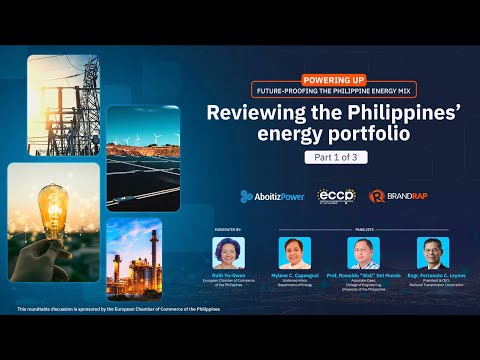
Episode 2
Play Video 
Episode 3
Play Video 
– Rappler.com
Market Opportunity
Power Protocol Price(POWER)
$0,0808
$0,0808$0,0808
USD
Power Protocol (POWER) Live Price Chart


Disclaimer: The articles reposted on this site are sourced from public platforms and are provided for informational purposes only. They do not necessarily reflect the views of MEXC. All rights remain with the original authors. If you believe any content infringes on third-party rights, please contact [email protected] for removal. MEXC makes no guarantees regarding the accuracy, completeness, or timeliness of the content and is not responsible for any actions taken based on the information provided. The content does not constitute financial, legal, or other professional advice, nor should it be considered a recommendation or endorsement by MEXC.
You May Also Like

Watching Hyperliquid (HYPE) Candles From the Sidelines Sucks: BlockchainFX ($BFX) Is the Top Crypto to Buy Now
The post Watching Hyperliquid (HYPE) Candles From the Sidelines Sucks: BlockchainFX ($BFX) Is the Top Crypto to Buy Now appeared on BitcoinEthereumNews.com. Have
Share
BitcoinEthereumNews2026/04/04 19:32

Is Capital Rotating? SHIB Investors Move to Utility Tokens
The high-volatility meme coin sector is seeing a notable shift in April 2026 as capital begins to rotate into more structured environments. Shiba Inu (SHIB), currently
Share
Techbullion2026/04/04 19:07

Audit admin keys, not just code, expert says after $200 million Drift exploit: Crypto Daybook Americas
The post Audit admin keys, not just code, expert says after $200 million Drift exploit: Crypto Daybook Americas appeared on BitcoinEthereumNews.com. By Omkar Godbole
Share
BitcoinEthereumNews2026/04/02 19:53



