

👨🏿🚀TechCabal Daily – MAXimum recharge
Good morning. 
Headlines travel fast, but context, and often, meaning, doesn’t. We wanted to change that, so we launched a new show.
Headlines by TechCabal is our new podcast where we slow the news down and go deeper with the people who actually understand it. Each episode unpacks the biggest stories in African tech weekly, decoding what they really mean for founders, operators, investors, and the ecosystem at large. Beyond the hype, beyond the noise, this is context, clarity, and insight, straight from the experts.
The first episode is live; watch it here, and click that  icon to be the first to be notified when the next episode goes live.
In other news, we’re launching our inaugural Predictions project this week, featuring forecasts on African tech from investors, including Uwem Uwemakpan, head of investments at Launch Africa; operators such as Lendsqr CEO Adedeji Olowe; and journalists, including Techpoint Africa’s Chimgozirim Nwokoma. They and others have predicted what they expect will happen this year, why they believe it will, and what could derail those expectations. Look out for our Predictions!
- Nigerian SEC’s capital requirements
- MAX gets funded
- Kuda rekindles expansion plans
- World Wide Web 3
- Events
Regulation
Nigeria’s SEC increases capital thresholds for capital market operators
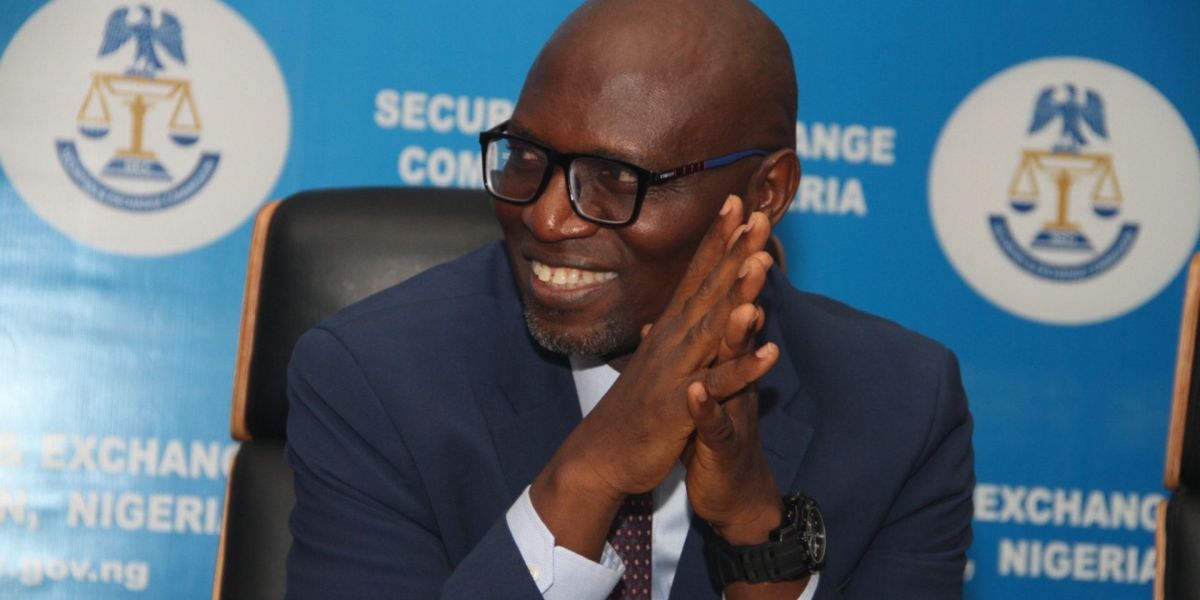 Dr. Emomotimi Agama, Nigeria’s SEC Director General. Image Source: Regtech Africa.
Nigeria just made operating digital asset businesses, fintechs, and investment intermediation a rich kids’ sport.
On the morning of January 16, 2026, Nigeria’s Securities Exchange Commission (SEC), the capital markets regulator, published new capital requirements for almost every capital market player in the space, including brokers, robo-advisors, investment advisors, and digital asset stakeholders, received a bump—some over 2x, but most of them over 50% increases.
In the memo, the SEC described the new thresholds as “minimum capital requirement,” meaning these are required sums stakeholders must have in paid-up capital (shares issued and paid for) plus share premiums. The SEC director general, Emomotimi Agama, later came on CNBC’s Closing Bell podcast to say that the goal is to ensure investor confidence in the capital markets.
“The fundamental reason is to raise long-term capital, and that can only happen with confidence, [which] stems out of sustainability, resilience, transparency, and integrity. For 2026, we are going to be more stringent on making sure that enforcement actions are carried out, and market participants begin to see the ability of the SEC and the regulators [to protect] them from challenges that, hitherto, have been usual happenings within the market,” said Agama.
At the start of January, Nigeria’s stock market index crossed ₦100 trillion ($70 billion) in capitalisation for the first time, hinting that more investor confidence is returning, and the market participants must be accountable, from the SEC’s position.
Yet, why was the digital asset sector, an emerging industry with a less-defined regulatory framework, lumped with the others? Recall that in 2025, Nigeria classified digital assets as “securities,” under the Investment and Securities Act, subjecting them to the SEC’s purview. Instead of providing the market with a predictable licencing and operating framework, the SEC has opted for market control by filtering who comes in and who stays out.
We won’t play genies and tell you that we’ve looked into the future to see that this is a good or bad idea. But the real question here is whether raising minimum capital requirements is the tightest way to protect investors without narrowing the market, especially a capital market that still needs competition, innovation, and smaller intermediaries to deepen liquidity rather than concentrate it in fewer, larger hands.
Your 2026 demands disciplined financial operations
Fincra powers the payments infrastructure businesses rely on to collect, pay, and settle across local and major African currencies with confidence. Get started.
Funding
Nigeria’s MAX raises $24 million, reports profitability
 “The rock smell” meme. Image source: Tenor.
In 2025, Metro Africa Xpress (MAX), a Nigerian mobility startup, laid off 150 employees—about 30% of its workforce—and reduced energy consumption to cut costs and stay lean. All classic signs of a company prioritising operational efficiency. Today, its story has changed; MAX says it is now profitable.
The mobility startup is seeing a comeback after raising a $24 million mixed (equity plus debt) round. The fresh capital and commitment from funders mean there’s renewed hope for MAX’s business model and its latest bet on e-mobility, after kicking off plans to finance 120,000 electric vehicles (EVs) in January 2025.
MAX is probably one of the most resilient startups in Africa. It has pivoted three times since its founding in 2015. First, as a delivery service, it later rejigged its business to ride-hailing and vehicle financing; now, MAX is throwing it all on e-mobility.
With the new capital, MAX wants to double down on its profitable e-mobility business and scale production of its EV fleet, expand its battery-swapping and clean energy infrastructure, deepen its proprietary fleet management and IoT systems, and support expansion across West and Central Africa. MAX also now runs an assembly plant in Ibadan, Nigeria, with the capacity to produce up to 3,600 two- and three-wheeler EVs a month.
MAX is playing in a competitive league: Kenya’s Spiro is pushing hard on electric bikes across Africa and raised $100 million to support its ambitions in October 2025. While M-KOPA, the Kenya-based asset-financing startup, dominates pay-as-you-go (PAYG) assets in East Africa; it became profitable in 2025. What separates MAX is integrating financing, fleet management, and now assembly under one roof.
Cost cuts and pivots worked for MAX. Next, it will be looking to scale its new e-mobility bets.
Fintech
Kuda is getting ready to move money beyond Nigeria
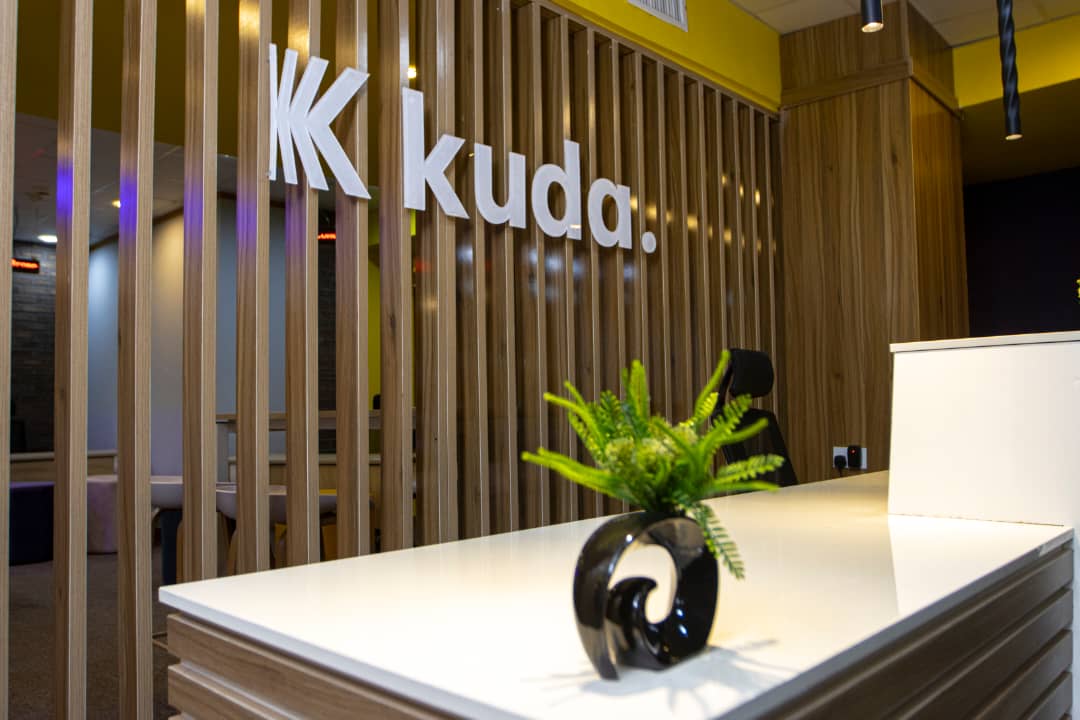 Image source: Kuda.
Kuda, the Nigerian digital bank, has reiterated plans to expand its business to Tanzania and Canada, this time in a January email sent to customers. In 2024, the digital bank secured payment licences in Tanzania and Canada, but it seems that plan was put on hold, until now.
Catch up: The push follows a strong 2025. Kuda processed more than ₦29 trillion ($20.4 billion) in transactions across over one billion individual transfers, with customers saving ₦656 billion ($461 million) and drawing over ₦125 billion ($88 million) in overdrafts. Those numbers matter because cross-border banking is less about geography and more about scale. A platform that already handles volume, liquidity, and credit risk at home is better positioned to move money across borders cheaply and reliably.
State of play: Tanzania and Canada make strategic sense. Tanzania offers a foothold in East Africa, where mobile money is deeply entrenched, and cross-border remittances within the region, which have been over $500 million since 2021, are frequent but fragmented. Canada, by contrast, is about the diaspora. It gives Kuda proximity to Africans abroad who send money home regularly and want fewer intermediaries between their income and their families.
Between the lines: What Kuda can offer abroad is not full-service banking, at least initially, but faster and cheaper international transfers built on its own infrastructure rather than third-party platforms. If executed well, this expansion shifts Kuda from being a Nigerian digital bank to a cross-border financial utility, serving users where they earn and where they spend. The harder part now is regulatory navigation and localisation. The easier part, the demand, is already there.
CRYPTO TRACKER
The World Wide Web3
Source:

|
Coin Name |
Current Value |
Day |
Month |
|---|---|---|---|
| Bitcoin | $92,684 |
– 2.44% |
+ 5.01% |
| Ether | $3,212 |
– 2.95% |
+ 7.71% |
| RollX | $0.1360 |
+ 39.39% |
+ 27.33% |
| Solana | $133.69 |
– 6.35% |
+ 5.90% |
* Data as of 06.15 AM WAT, January 19, 2026.
Events
- Africa Tech Summit Nairobi is returning for its eighth edition in February 2026, and this time, payments infrastructure is getting top billing. Fincra, a pan-African fintech company, has been announced as the headline supporter of the event, which will hold on February 11–12, 2026, at the Sarit Expo Centre, Nairobi, Kenya. The summit will bring together over 2,000 delegates across fintech, AI, climate tech, and startups to discuss how Africa builds interoperable payment rails for cross-border trade and digital commerce. Early bird tickets are selling fast; get yours now. If you don’t hurry, ticket rates increase on January 16, 2026, at 3:01 AM EAT. Get your early bird tickets.
- Day 1-1000 of Muvment by Autogirl: The ₦20 million lesson in why “vibes” don’t replace insurance
- Grok’s biggest danger isn’t what it says — it’s where it lives Why India’s plan to make AI companies pay for training data should go global
- Why Coinbase derailed the crypto industry’s political future
Written by: Emmanuel Nwosu and Opeyemi Kareem
Edited by: Emmanuel Nwosu & Ganiu Oloruntade
Want more of TechCabal?
Sign up for our insightful newsletters on the business and economy of tech in Africa.
- The Next Wave: futuristic analysis of the business of tech in Africa.
- Francophone Weekly by TechCabal: insider insights and analysis of Francophone’s tech ecosystem
P:S If you’re often missing TC Daily in your inbox, check your Promotions folder and move any edition of TC Daily from “Promotions” to your “Main” or “Primary” folder and TC Daily will always come to you.



You May Also Like

Q2 Market Insights: Bitcoin regains dominance in risk-averse environment, ETFs remain critical to market structure

US margin debt drops $32B in March, remains 39% higher year-over-year




