ENHERTU® Plus Pertuzumab Type II Variation Application Validated in the EU as First-Line Treatment of Patients with HER2 Positive Metastatic Breast Cancer
- Based on DESTINY-Breast09 phase 3 trial results that showed Daiichi Sankyo and AstraZeneca’s ENHERTU in combination with pertuzumab significantly improved progression-free survival versus current first-line standard of care in HER2 positive metastatic breast cancer
TOKYO & MUNICH–(BUSINESS WIRE)–The European Medicines Agency (EMA) has validated the Type II Variation marketing authorization application for ENHERTU® (trastuzumab deruxtecan) in combination with pertuzumab for the first-line treatment of adult patients with unresectable or metastatic HER2 positive breast cancer.
ENHERTU is a specifically engineered HER2 directed DXd antibody drug conjugate (ADC) discovered by Daiichi Sankyo (TSE: 4568) and being jointly developed and commercialized by Daiichi Sankyo and AstraZeneca (LSE/STO/Nasdaq: AZN).
The validation confirms the completion of the application and commences the scientific review process by the EMA’s Committee for Medicinal Products for Human Use (CHMP). The application is based on data from the DESTINY-Breast09 phase 3 trial presented during a special late-breaking oral session at the 2025 American Society of Clinical Oncology (#ASCO25) Annual Meeting and subsequently published in The New England Journal of Medicine. In the trial, ENHERTU in combination with pertuzumab demonstrated a statistically significant and clinically meaningful improvement in progression-free survival (PFS) compared to taxane, trastuzumab and pertuzumab (THP) as a first-line treatment for patients with HER2 positive metastatic breast cancer.
“This validation in the EU is an important step in moving us closer to offering ENHERTU in combination with pertuzumab as a potential new first-line treatment option for patients with HER2 positive metastatic breast cancer,” said Ken Takeshita, MD, Global Head, R&D, Daiichi Sankyo. “Following the recent approval in the U.S. for this indication, we look forward to working closely with the EMA to bring ENHERTU to eligible patients in the EU who may benefit from improved outcomes in a setting where the standard of care has not changed in more than a decade.”
About DESTINY-Breast09
DESTINY-Breast09 is a global, multicenter, randomized, open-label, phase 3 trial evaluating the efficacy and safety of ENHERTU (5.4 mg/kg) either alone or in combination with pertuzumab versus standard of care THP as first-line treatment in patients with HER2 positive metastatic breast cancer.
Patients were randomized 1:1:1 to receive either ENHERTU monotherapy with a pertuzumab matching placebo; ENHERTU in combination with pertuzumab; or THP. Randomization was stratified by prior treatment (de novo metastatic disease versus progression from early-stage disease), hormone receptor (HR) status and PIK3CA mutation status.
The primary endpoint of DESTINY-Breast09 is PFS as assessed by blinded independent central review in both the ENHERTU monotherapy and ENHERTU combination arms. Secondary endpoints include investigator-assessed PFS, overall survival, objective response rate, duration of response, pharmacokinetics and safety. The investigational arm assessing ENHERTU monotherapy versus THP remains blinded to patients and investigators and will continue to the final PFS analysis.
DESTINY-Breast09 enrolled 1,157 patients across multiple sites in Africa, Asia, Europe, North America and South America. For more information about the trial, visit ClinicalTrials.gov.
About HER2 Positive Metastatic Breast Cancer
Breast cancer is the second most common cancer and one of the leading causes of cancer-related deaths worldwide.1 More than two million breast cancer cases were diagnosed in 2022, with more than 665,000 deaths globally.1 In Europe, approximately 557,000 cases of breast cancer are diagnosed annually, with more than 144,000 deaths.1 While survival rates are high for those diagnosed with early breast cancer, only about 30% of patients diagnosed with or that have progressed to metastatic disease are expected to live five years following diagnosis.2
HER2 is a tyrosine kinase receptor growth-promoting protein expressed on the surface of many types of tumors including breast cancer.3 HER2 protein overexpression may occur as a result of HER2 gene amplification.3 Approximately one in five cases of breast cancer are considered HER2 positive.4
HER2 positive metastatic breast cancer is an aggressive disease driven by overexpression or amplification of HER2 that affects 15% to 20% of patients with metastatic breast cancer.4 While HER2 targeted therapies have improved outcomes, prognosis remains poor with most patients experiencing disease progression within two years of first-line treatment with THP, which has been the standard of care for more than a decade.5,6,7 Further, approximately one in three patients do not receive any treatment following first-line therapy due to disease progression or death.8,9
About ENHERTU
ENHERTU (trastuzumab deruxtecan; fam-trastuzumab deruxtecan-nxki in the U.S. only) is a HER2 directed ADC. Designed using Daiichi Sankyo’s proprietary DXd ADC Technology, ENHERTU is the lead ADC in the oncology portfolio of Daiichi Sankyo and the most advanced program in AstraZeneca’s ADC scientific platform. ENHERTU consists of a HER2 monoclonal antibody attached to a number of topoisomerase I inhibitor payloads (an exatecan derivative, DXd) via tetrapeptide-based cleavable linkers.
ENHERTU (5.4 mg/kg) in combination with pertuzumab is approved in the U.S. as a first-line treatment for adult patients with unresectable or metastatic HER2 positive (immunohistochemistry [IHC] 3+ or in-situ hybridization [ISH]+) breast cancer, as determined by an FDA-approved test, based on the results from the DESTINY-Breast09 trial.
ENHERTU (5.4 mg/kg) is approved in more than 90 countries/regions worldwide for the treatment of adult patients with unresectable or metastatic HER2 positive (IHC 3+ or ISH+) breast cancer who have received a prior anti-HER2-based regimen, either in the metastatic setting or in the neoadjuvant or adjuvant setting, and have developed disease recurrence during or within six months of completing therapy based on the results from the DESTINY-Breast03 trial.
ENHERTU (5.4 mg/kg) is approved in more than 90 countries/regions worldwide for the treatment of adult patients with unresectable or metastatic HER2 low (IHC 1+ or IHC 2+/ISH-) breast cancer who have received a prior systemic therapy in the metastatic setting or developed disease recurrence during or within six months of completing adjuvant chemotherapy based on the results from the DESTINY-Breast04 trial.
ENHERTU (5.4 mg/kg) is approved in more than 60 countries/regions worldwide for the treatment of adult patients with unresectable or metastatic hormone receptor (HR) positive, HER2 low (IHC 1+ or IHC 2+/ ISH-) or HER2 ultralow (IHC 0 with membrane staining) breast cancer, as determined by a locally or regionally approved test, that have progressed on one or more endocrine therapies in the metastatic setting based on the results from the DESTINY-Breast06 trial.
ENHERTU (5.4 mg/kg) is approved in more than 70 countries/regions worldwide for the treatment of adult patients with unresectable or metastatic NSCLC whose tumors have activating HER2 (ERBB2) mutations, as detected by a locally or regionally approved test, and who have received a prior systemic therapy based on the results from the DESTINY-Lung02 and/or DESTINY-Lung05 trials. Continued approval in China and the U.S. for this indication may be contingent upon verification and description of clinical benefit in a confirmatory trial.
ENHERTU (6.4 mg/kg) is approved in more than 80 countries/regions worldwide for the treatment of adult patients with locally advanced or metastatic HER2 positive (IHC 3+ or IHC 2+/ISH+) gastric or gastroesophageal junction (GEJ) adenocarcinoma who have received a prior trastuzumab-based regimen based on the results from the DESTINY-Gastric01, DESTINY-Gastric02, DESTINY-Gastric04 and/or DESTINY-Gastric06 trials. Continued approval in China for this indication may be contingent upon verification and description of clinical benefit in a confirmatory trial.
ENHERTU (5.4 mg/kg) is approved in more than 10 countries/regions worldwide for the treatment of adult patients with unresectable or metastatic HER2 positive (IHC 3+) solid tumors who have received prior systemic treatment and have no satisfactory alternative treatment options based on efficacy results from the DESTINY-PanTumor02, DESTINY-Lung01 and DESTINY-CRC02 trials. Continued approval for this indication may be contingent upon verification and description of clinical benefit in a confirmatory trial.
About the ENHERTU Clinical Development Program
A comprehensive global clinical development program is underway evaluating the efficacy and safety of ENHERTU as a monotherapy or in combination or sequentially with other cancer medicines across multiple HER2 targetable cancers.
About the Daiichi Sankyo and AstraZeneca Collaboration
Daiichi Sankyo and AstraZeneca entered into a global collaboration to jointly develop and commercialize ENHERTU in March 2019 and DATROWAY® in July 2020, except in Japan where Daiichi Sankyo maintains exclusive rights for each ADC. Daiichi Sankyo is responsible for the manufacturing and supply of ENHERTU and DATROWAY.
About the ADC Portfolio of Daiichi Sankyo
The Daiichi Sankyo ADC portfolio consists of eight ADCs in clinical development crafted from ADC technology discovered in-house by Daiichi Sankyo.
The DXd ADC Technology platform of Daiichi Sankyo consists of six ADCs in clinical development where each ADC is comprised of a monoclonal antibody attached to a number of topoisomerase I inhibitor payloads (an exatecan derivative, DXd) via tetrapeptide-based cleavable linkers. The DXd ADCs include ENHERTU and DATROWAY, which are being jointly developed and commercialized globally with AstraZeneca, and ifinatamab deruxtecan (I-DXd), raludotatug deruxtecan (R-DXd) and patritumab deruxtecan (HER3-DXd), which are being jointly developed and commercialized globally with Merck & Co., Inc, Rahway, NJ, USA. DS-3939 is being developed by Daiichi Sankyo.
Additional ADCs being developed by Daiichi Sankyo include DS-9606, which consists of a monoclonal antibody attached to a modified pyrrolobenzodiazepine (PBD) payload and DS3610, which consists of an antibody attached to a novel immunomodulatory payload that acts as an agonist of STING.
Ifinatamab deruxtecan, raludotatug deruxtecan, patritumab deruxtecan, DS-3939, DS-9606 and DS-3610 are investigational medicines that have not been approved for any indication in any country. Safety and efficacy have not been established.
About Daiichi Sankyo
Daiichi Sankyo is an innovative global healthcare company contributing to the sustainable development of society that discovers, develops and delivers new standards of care to enrich the quality of life around the world. With more than 120 years of experience, Daiichi Sankyo leverages its world-class science and technology to create new modalities and innovative medicines for people with cancer, cardiovascular and other diseases with high unmet medical need. For more information, please visit www.daiichisankyo.com.
|
_________________________ |
|
References |
|
1 World Health Organization. Breast Fact Sheet. Accessed January 2026. |
|
2 National Cancer Institute. SEER Cancer Stat Facts: Female Breast Cancer Subtypes. Accessed January 2026. |
|
3 Cheng X. Genes (Basel). 2024;15(7):903. |
|
4 Tarantino P, et al. Ann Oncol. 2023;34(8):645-659. |
|
5 Swain SM, et al. Lancet Oncol. 2020;21(4):519-530. |
|
6 Blumenthal G, et al. Clinical Cancer Research. 2013;19(18). |
|
7 Tripathy D, et al. The Oncologist. 2020;25(2):e214-e222. |
|
8 Hall PS, et al. Presented at SABCS Annual Meeting 2023. Poster #PO3-16-11. |
|
9 Hartkopf AD, et al. Geburtshilfe Frauenheilkd. 2024;84(5):459–469. |
Contacts
Media Contacts:
Global:
Jennifer Brennan
Daiichi Sankyo, Inc.
[email protected]
+1 908 900 3183 (mobile)
EU:
Simone Jendsch-Dowé
Daiichi Sankyo Europe GmbH
[email protected]
+49 (89) 78080 (office)
Japan:
Daiichi Sankyo Co., Ltd.
[email protected]
Investor Relations Contact:
[email protected]


You May Also Like

What a $900 Investment in New Crypto Protocols Could Become by Late 2027
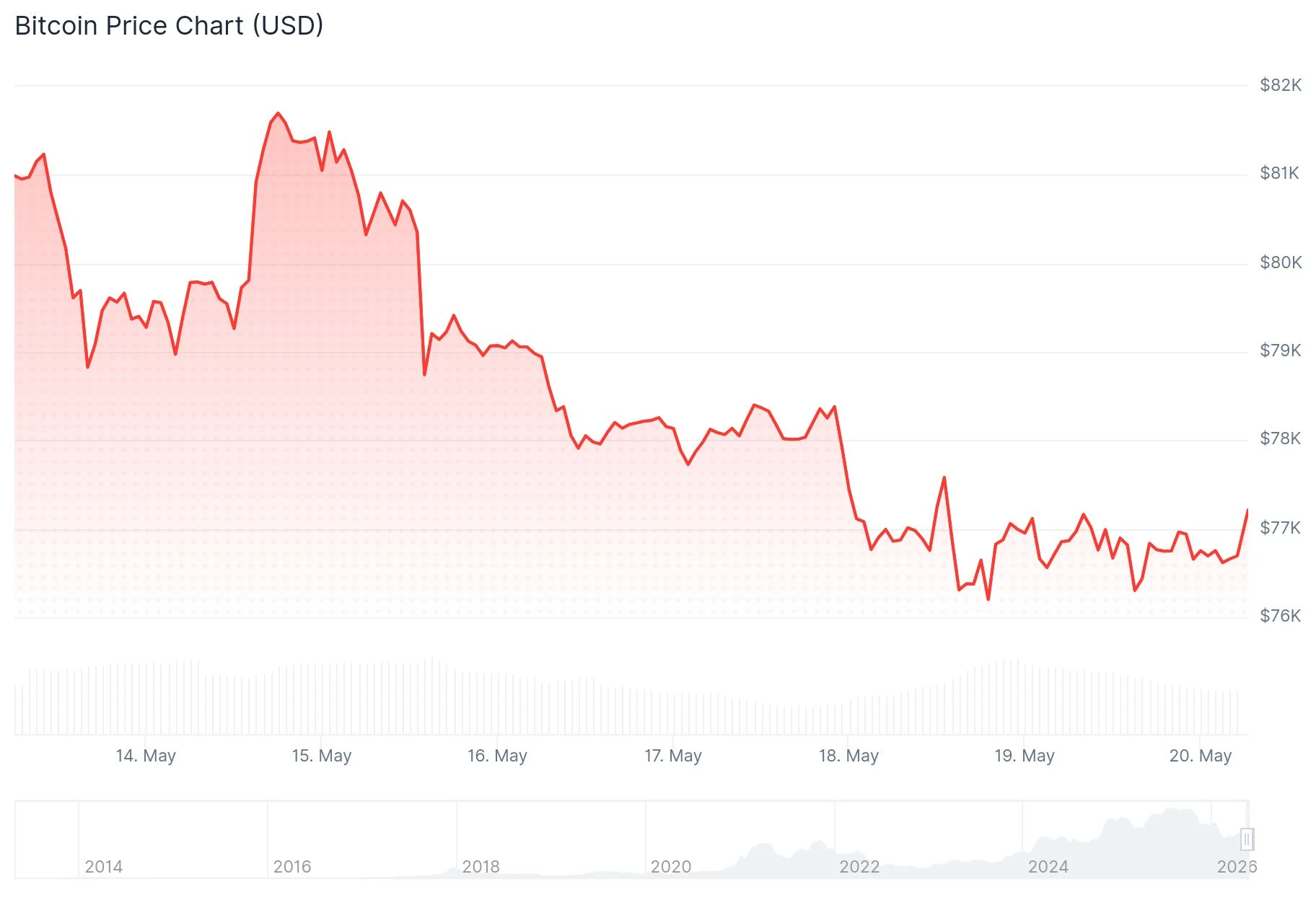
Bitcoin (BTC) Hovers Above $77K Amid Iran Diplomacy and Rising Treasury Yields