US NATO Greenland Agreement Stalls, Creating Critical Uncertainty in Arctic Strategy
BitcoinWorld
US NATO Greenland Agreement Stalls, Creating Critical Uncertainty in Arctic Strategy
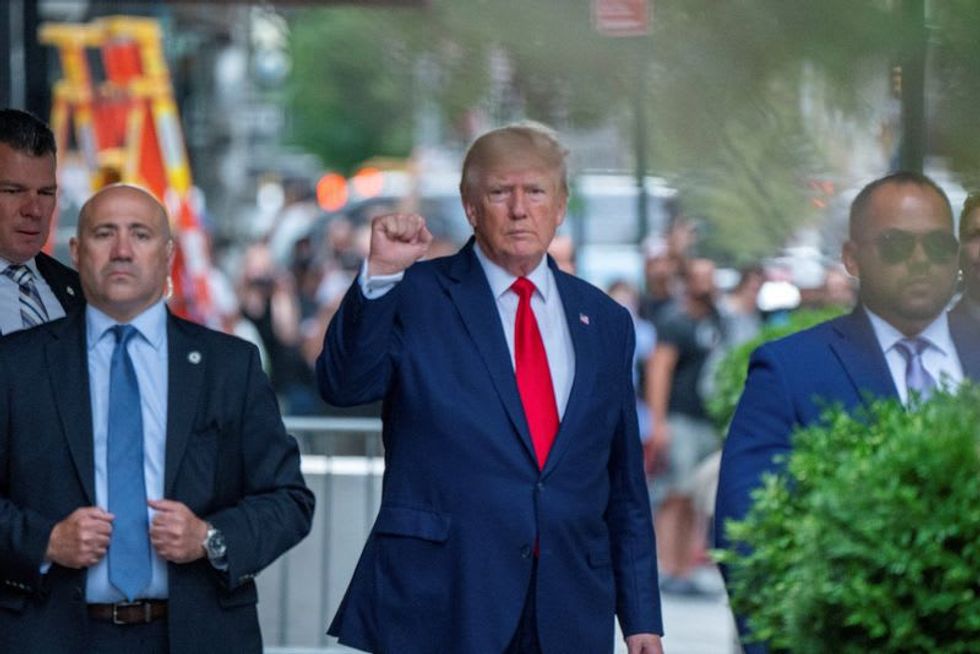
WASHINGTON, D.C. & BRUSSELS – April 2025. A critical gap in formal diplomacy has emerged, as reports confirm no written agreement yet exists between the United States and the North Atlantic Treaty Organization regarding the future of Greenland. This absence of a formal document, first reported by Walter Bloomberg, creates a significant vacuum in Arctic security planning. Consequently, key strategic measures remain in limbo, leaving other NATO allies in the dark about precise negotiation details. This development underscores the complex, high-stakes geopolitical chess game unfolding in the resource-rich and strategically vital Arctic region.
Analyzing the Stalled US NATO Greenland Agreement
The core issue revolves around the lack of a formalized pact. Previously, U.S. President Donald Trump and NATO Secretary General Mark Rutte agreed to discuss several consequential measures. However, without a signed document, these discussions lack official standing. This situation prevents a unified NATO stance. Therefore, member states cannot coordinate their policies effectively. The proposed measures under discussion are substantial and multifaceted.
- Amending the 1951 U.S.-Denmark-Greenland Defense Agreement: This Cold War-era pact grants the U.S. military rights to Thule Air Base. Modernization talks likely focus on expanded access, infrastructure investment, and roles for newer military domains like cyber and space.
- Banning Russian and Chinese Investment: This measure aims to curb foreign influence in Greenland’s vast mineral and rare earth element sectors. It directly addresses concerns about strategic dependencies and security risks from critical infrastructure investments.
- Expanding NATO’s Regional Role: Discussions may involve more persistent allied patrols, joint exercises, and a formalized NATO Arctic command structure to counter increased Russian militarization.
Ultimately, the delay formalizing these points introduces operational uncertainty. For instance, military planners require clear protocols. Similarly, investors need predictable regulatory frameworks. This stalemate affects all stakeholders.
Geopolitical Context of Arctic Security
Greenland’s significance cannot be overstated. It sits astride key maritime passages between the Atlantic and Arctic Oceans. Moreover, its ice sheet is receding due to climate change. This process opens new shipping lanes and exposes untapped resources. Consequently, the Arctic has transformed from a frozen periphery into a zone of intense strategic competition. Russia has notably militarized its northern coastline. It has reopened Soviet-era bases and deployed advanced anti-access systems. China, declaring itself a “near-Arctic state,” pursues scientific and investment footholds through its Polar Silk Road initiative. NATO, historically a Euro-Atlantic alliance, now grapples with its Arctic identity. The Greenland question tests allied cohesion. Specifically, it tests the balance between U.S. leadership and collective decision-making. Denmark, which handles Greenland’s foreign and defense policy, occupies a delicate middle ground. It must balance its NATO commitments with its responsibility to Greenland’s home-rule government. Greenland itself seeks economic development while protecting its environment and sovereignty.
Historical Precedents and Diplomatic Complexities
This is not the first time Greenland has been a geopolitical flashpoint. In 1946, the U.S. offered to buy Greenland from Denmark for $100 million. In 2019, President Trump’s expressed interest in purchasing the island caused a diplomatic rift. The current situation involves a more nuanced, multilateral approach through NATO. However, the fundamental tensions remain similar: great-power ambition, local autonomy, and alliance politics. The 1951 defense agreement between the U.S. and Denmark is the cornerstone of current arrangements. It was a product of its time, focused on bomber threats and early warning. Today’s security challenges include hypersonic missiles, underwater drones, and hybrid warfare. Updating this framework is logically necessary but politically sensitive. Any amendment requires careful negotiation between Washington, Copenhagen, and Nuuk. Integrating NATO as a whole adds another layer of complexity. Each of the 32 member states possesses a potential veto or concern. Reaching consensus on sensitive investment bans or force posture changes is inherently slow.
| Stakeholder | Primary Interest | Key Concern |
|---|---|---|
| United States | Strategic denial, force projection, resource security | Chinese/Russian footholds, maintaining military advantage |
| NATO (Collective) | Allied defense, regional stability, deterrence | Alliance unity, avoiding escalation, burden-sharing |
| Denmark | Upholding sovereignty, fulfilling NATO duties | Managing relations with US and Greenland simultaneously |
| Greenland (Home Rule) | Economic development, self-determination | External control, environmental impact, cultural preservation |
| Russia | Securing northern flank, controlling Northern Sea Route | NATO encroachment, loss of regional dominance |
| China | Access to resources, polar research, trade routes | Exclusion from investment, strategic containment |
Implications of the Agreement Delay
The immediate impact is operational ambiguity. Allied military coordination requires clear rules of engagement and basing rights. Without them, planning for contingencies becomes speculative. Furthermore, the investment ban remains unenforceable as a NATO policy. Individual nations may act unilaterally, creating a patchwork of regulations. This patchwork could be exploited by determined actors. For Greenlandic authorities, the delay creates a frustrating planning environment. Major mining or infrastructure projects require long-term certainty. Potential partners may hesitate without clear geopolitical rules. The report’s note that other NATO states “are unable to ascertain the exact details” highlights a trust issue. Secrecy between the U.S. and the NATO Secretariat can breed suspicion among smaller allies. They may fear being presented with a *fait accompli*. This dynamic could weaken the consensus-based model fundamental to NATO’s strength. From a security perspective, adversaries may perceive the delay as institutional weakness or indecision. They might accelerate their own efforts to establish facts on the ground, whether through scientific stations or covert investments.
Expert Analysis on Strategic Risk
Security analysts point to several risks. First, a regulatory vacuum allows for strategic creep. Companies with opaque state ties could secure mining licenses. Second, military modernization by rivals continues unabated. NATO’s delayed response cedes initiative. Third, internal Greenlandic politics could shift. Economic frustration might increase receptiveness to non-Western investment offers. Experts like Dr. Rebecca Pincus, a noted Arctic security scholar, often emphasize that “the Arctic is a region where governance has historically kept pace with change. Current delays challenge that model.” The timeline is also critical. The next NATO Summit will be a key milestone. Allies will expect clarity before then. The upcoming U.S. presidential election cycle adds another variable. A change in administration could reset negotiations entirely. Therefore, the window for a decisive agreement may be narrow. The absence of a written text is more than a procedural footnote. It is a symptom of the profound difficulties in aligning national interests, alliance strategy, and local aspirations in a rapidly changing world.
Conclusion
The lack of a written US NATO Greenland agreement represents a significant pause in Western Arctic strategy formulation. While high-level discussions between U.S. and NATO leadership have occurred, the failure to produce a formal document leaves critical measures—from defense pact amendments to investment bans—in an uncertain state. This delay impacts military planning, economic development, and alliance cohesion. It occurs against a backdrop of accelerating geopolitical competition in the Arctic, where rivals are not waiting. The path forward requires delicate diplomacy that respects Greenland’s autonomy, aligns NATO’s 32 members, and addresses urgent security realities. The world will be watching to see if the transatlantic alliance can formalize a coherent and effective **US NATO Greenland agreement** before strategic dynamics shift irrevocably.
FAQs
Q1: What is the main reason there is no written US-NATO agreement on Greenland yet?
The primary reason appears to be the complexity of aligning multiple stakeholders: the United States, all 32 NATO member states, Denmark (which handles Greenland’s defense), and Greenland’s own home-rule government. Reaching a consensus on sensitive issues like investment bans and military expansion takes time, and formalizing it into a binding document involves intricate legal and diplomatic review.
Q2: How does the 1951 U.S.-Denmark-Greenland defense agreement factor into this?
The 1951 agreement is the existing legal framework that allows the U.S. to operate Thule Air Base. Any new NATO-wide agreement would likely seek to amend or supplement this bilateral pact to include broader allied roles and address modern threats like cyber warfare and undersea competition, which requires renegotiation with Denmark.
Q3: Why is banning Russian and Chinese investment in Greenland a priority for the US and NATO?
It is viewed as a national security priority to prevent strategic competitors from gaining control or influence over critical infrastructure and resource extraction projects, particularly for rare earth minerals essential for technology and defense. The concern is that economic leverage could be converted into political or military leverage in a crisis.
Q4: What are the risks for NATO if this agreement remains informal?
Key risks include a lack of coordinated strategy, inconsistent enforcement of investment rules across allies, military planning difficulties, and a perception of weakness or disunity that adversaries might exploit. It also leaves Greenland in an uncertain position, potentially making alternative partnerships more appealing.
Q5: What happens next in the process to get a formal agreement?
The process will likely involve continued diplomatic negotiations at the NATO headquarters in Brussels, direct talks between the U.S., Denmark, and Greenlandic authorities, and eventual drafting of a formal text for review by all member states. A likely target for announcement would be a future NATO Summit, where leaders could endorse a finalized agreement.
This post US NATO Greenland Agreement Stalls, Creating Critical Uncertainty in Arctic Strategy first appeared on BitcoinWorld.


You May Also Like
Dogecoin Price Prediction Signals Breakout for 2026 as Whale Holdings Hit Record While Pepeto Nears $10M With Listing Days Away

Critical USDT0 Response to Drift Hack Exposes Stark Contrast in Stablecoin Security Protocols