

Must Read
In a very real sense, there’s a Dado inside all our devices todayIn a very real sense, there’s a Dado inside all our devices today
Dado Banatao: The man who quietly built modern computing
For feedback or concerns regarding this content, please contact us at [email protected]
I am writing this because Dado Banatao quietly passed away on 25 December 2025, and it felt like the right moment to pause and acknowledge the scale of what he built. Not to memorialize him in the traditional sense, but to remind ourselves how deeply his work still shapes modern computing and daily life.
Most people can name the big figures in technology: Steve Jobs, Bill Gates, Jensen Huang. Their stories are everywhere, and the products they built are part of our daily lives.
Far fewer people have heard of Diosdado “Dado” Banatao. That’s unfortunate, because without his work, modern computing as we know it would look very different.
While Dado didn’t build a famous consumer device or a global household brand, his legacy lives deep within the machines we use. He worked on the underlying systems that allow computers to function at scale. This is the part most people never see, but everyone depends on.
A problem few people were looking at
In the early days of personal computing, computers were expensive and difficult to build. Each one was a custom engineering effort, assembled from many separate parts that didn’t always work well together. That made computers fragile, costly, and hard to improve.
Dado saw this as the real bottleneck. It wasn’t that computers weren’t powerful enough. It was that they weren’t practical enough to become truly widespread.
So instead of designing a new computer, Dado focused on something less visible but more important. He redesigned how computers themselves were put together.
In the 1980s, Dado helped develop the first integrated system logic chipsets for personal computers. These chips replaced dozens of separate components and streamlined communications between the processor, memory, and peripherals.
It sounds technical, but the impact was simple. Computers became cheaper to build, easier to manufacture, and far more reliable. More companies could produce them. Prices fell. Innovation sped up.
That’s how personal computing became an industry rather than a niche.
Building infrastructure, not headlines
Many technology figures gained prominence by building products people could see, touch, and buy. Dado Banatao built infrastructure.
His work didn’t result in a single iconic device. It resulted in a standard way of building computers that thousands of manufacturers could use. That standardization is what allowed the PC industry to grow globally instead of remaining confined to a handful of companies.
Think of it the way you think about roads or power lines. You rarely notice them, but without them, nothing else works.
That’s the kind of contribution Dado made.
Why his story matters
Dado’s story matters because it shows a different kind of impact.
Dado didn’t try to control a market or build a monopoly. He removed a barrier.
And he did so as someone who started life far from Silicon Valley. The son of a poor Filipino farmer, Dado went on to help architect and democratize modern computing — not for one company or one country, but for the world.
By making computers easier to build and more accessible, he helped expand who could participate in technology. Not just large corporations and governments but students, founders, and creators everywhere.
Dado didn’t invent the computer. He helped make it usable, affordable, and widespread.
That distinction is easy to miss, but it’s everything.
A quiet legacy
Today’s world runs on software, networks, and increasingly, artificial intelligence. All of which depends on a foundation that was built decades ago.
Dado Banatao helped build that foundation.
His legacy isn’t a brand name or a product line. It’s a way of thinking about technology. It values openness, scale, and access over control and visibility.
And in a very real sense, there’s a Dado inside all our devices today.
That’s why his contribution still matters. And that’s why it deserves to be better known. – Rappler.com
Eric Manlunas is a co-founder and general partner of Wavemaker Partners, Southeast Asia’s leading venture capital firm focused on enterprise, deep tech, and sustainability startups. He co-invested with the late Diosdado “Dado” Banatao, who was also his personal mentor and advisor, and served for 15 years as a trustee of Banatao’s Philippine Development Foundation (PhilDev).


Disclaimer: The articles reposted on this site are sourced from public platforms and are provided for informational purposes only. They do not necessarily reflect the views of MEXC. All rights remain with the original authors. If you believe any content infringes on third-party rights, please contact [email protected] for removal. MEXC makes no guarantees regarding the accuracy, completeness, or timeliness of the content and is not responsible for any actions taken based on the information provided. The content does not constitute financial, legal, or other professional advice, nor should it be considered a recommendation or endorsement by MEXC.
You May Also Like

StakeStone (STO) Rockets 125%: What $981M Trading Volume Reveals
StakeStone's 125.6% surge masks concerning volatility signals. With only 22.5% of tokens circulating and a 50% correction from today's ATH already underway, we
Share
Blockchainmagazine2026/04/02 18:01

The Chemistry of UV Resistance: How Titanium Dioxide Protects Against the California Sun
Homeowners considering synthetic boundary systems frequently voice a singular, pervasive concern: “Will the material turn yellow and brittle after a few years in
Share
Techbullion2026/04/02 18:06
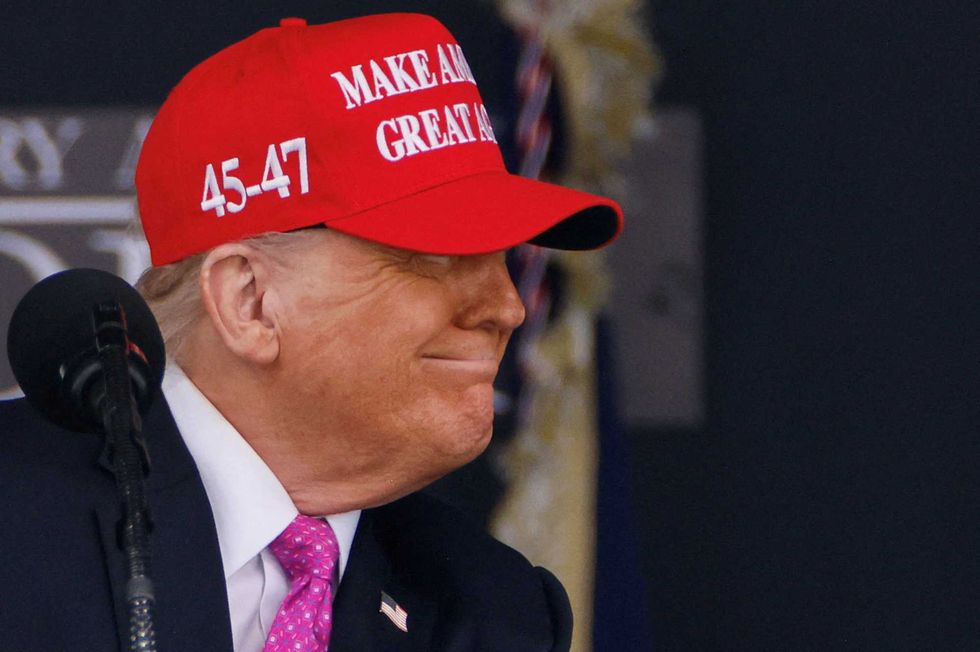
Trump-voting C-SPAN caller throws away MAGA hat: 'I apologize to all of America'
One of President Donald Trump's former supporters apologized to America for his vote and said that he had gotten rid of his MAGA gear.During Thursday's Washington
Share
Rawstory2026/05/15 03:20



