The post Funds flow into North and Southeast Asia as geopolitical risk rattles markets appeared on BitcoinEthereumNews.com. Money is leaving unstable regions andThe post Funds flow into North and Southeast Asia as geopolitical risk rattles markets appeared on BitcoinEthereumNews.com. Money is leaving unstable regions and

Funds flow into North and Southeast Asia as geopolitical risk rattles markets

For feedback or concerns regarding this content, please contact us at [email protected]

Money is leaving unstable regions and flooding into North and Southeast Asia, where investors are looking for stronger returns and fewer surprises.

Global risks haven’t gone away, but people are shifting their money to places that still look steady. That’s why fund managers are packing up and buying back into Asia.

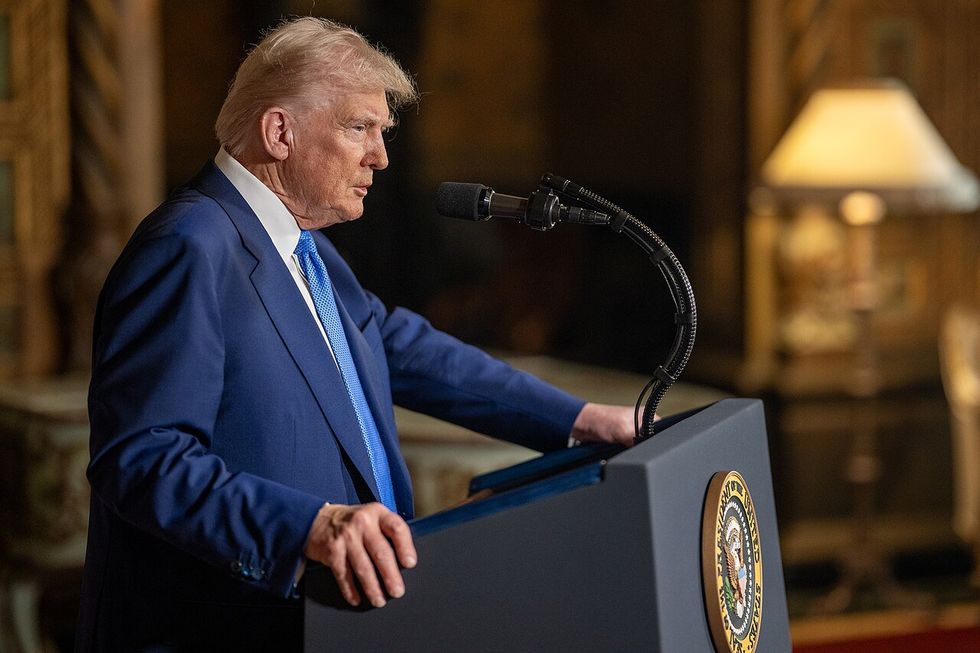
Donald Trump, the 47th President of the United States, decided to pause his tariff threats against Europe over Greenland, and that helped calm some nerves.

But even with that, there’s still tension in the Middle East and growing concern over what the U.S. is doing in Latin America.

Fresh data from Bloomberg shows $3.3 billion has already gone into North and Southeast Asia stocks this January. That’s the biggest monthly haul since September.

At the same time, global ETF flows into emerging markets hit $7.15 billion in the week ending January 16, and about 75% of that went straight into Asia-focused funds. Bonds aren’t being ignored either. In the same month, $3.7 billion has gone into debt markets in India, South Korea, Indonesia, and Thailand.

Ray from Aberdeen Investments said, “Emerging Asia is positioned to outperform broader EM this year, even amid heightened geopolitical uncertainty.” He mentioned AI spending, credit conditions, and China’s role in the region. Ray also said Aberdeen had increased their exposure to emerging Asia, especially in Taiwanese and South Korean equities, because they expect those names to benefit directly from growth in the AI sector.

Even with tensions between the U.S. and Europe pulling on the dollar, emerging-market stocks and currencies are pushing ahead. Latin America is getting a boost from rising commodity prices, but in Asia, it’s all about earnings potential. Traders are betting that tech-linked profits in the region will beat what they’re seeing elsewhere.

China’s exports, trade surplus, and yuan steady the region

Regional stocks are already up 6% in 2026, easily topping the 1.7% gain in the MSCI World Index. This is happening even while the Cboe Volatility Index, Wall Street’s panic signal, climbed to a two-month high last week.

The strength is in earnings too. Bloomberg data shows forecasted earnings per share for companies in emerging Asia to jump by 30% over the next year. That crushes the 17% expected in Latin America and edges out the 29% forecast for Eastern Europe.

Sophie from BNP Paribas Asset Management said, “Asia represents this pocket of diversification, with a good prospect for earnings.” She added that Chinese stocks don’t track global markets the way they used to before Covid.

Meanwhile, China keeps holding the whole region steady. Its local economy might be under pressure, but exports are still strong. The country booked a record $1.2 trillion trade surplus. That’s not small. It’s also why China’s yuan is keeping regional currencies stable.

Trade data shows currencies like the baht, ringgit, and Korean won are moving in step with the yuan, showing a correlation of 0.50 or higher over the last five years. That’s why people keep calling the yuan the regional anchor.

Leonard from T. Rowe Price said, “The yuan is an anchor for regional FX stability,” and he expects it to keep climbing slowly as the trade surplus grows.

If you’re reading this, you’re already ahead. Stay there with our newsletter.

Source: https://www.cryptopolitan.com/funds-flow-into-north-and-southeast-asia/

Disclaimer: The articles reposted on this site are sourced from public platforms and are provided for informational purposes only. They do not necessarily reflect the views of MEXC. All rights remain with the original authors. If you believe any content infringes on third-party rights, please contact [email protected] for removal. MEXC makes no guarantees regarding the accuracy, completeness, or timeliness of the content and is not responsible for any actions taken based on the information provided. The content does not constitute financial, legal, or other professional advice, nor should it be considered a recommendation or endorsement by MEXC.

You May Also Like

Michael Saylor Pushes Digital Capital Narrative At Bitcoin Treasuries Unconference

Michael Saylor Pushes Digital Capital Narrative At Bitcoin Treasuries Unconference

The post Michael Saylor Pushes Digital Capital Narrative At Bitcoin Treasuries Unconference appeared on BitcoinEthereumNews.com. The suitcoiners are in town.  From a low-key, circular podium in the middle of a lavish New York City event hall, Strategy executive chairman Michael Saylor took the mic and opened the Bitcoin Treasuries Unconference event. He joked awkwardly about the orange ties, dresses, caps and other merch to the (mostly male) audience of who’s-who in the bitcoin treasury company world.  Once he got onto the regular beat, it was much of the same: calm and relaxed, speaking freely and with confidence, his keynote was heavy on the metaphors and larger historical stories. Treasury companies are like Rockefeller’s Standard Oil in its early years, Michael Saylor said: We’ve just discovered crude oil and now we’re making sense of the myriad ways in which we can use it — the automobile revolution and jet fuel is still well ahead of us.  Established, trillion-dollar companies not using AI because of “security concerns” make them slow and stupid — just like companies and individuals rejecting digital assets now make them poor and weak.  “I’d like to think that we understood our business five years ago; we didn’t.”  We went from a defensive investment into bitcoin, Saylor said, to opportunistic, to strategic, and finally transformational; “only then did we realize that we were different.” Michael Saylor: You Come Into My Financial History House?! Jokes aside, Michael Saylor is very welcome to the warm waters of our financial past. He acquitted himself honorably by invoking the British Consol — though mispronouncing it, and misdating it to the 1780s; Pelham’s consolidation of debts happened in the 1750s and perpetual government debt existed well before then — and comparing it to the gold standard and the future of bitcoin. He’s right that Strategy’s STRC product in many ways imitates the consols; irredeemable, perpetual debt, issued at par, with…
Share
BitcoinEthereumNews2025/09/18 02:12
XRP Price Prediction: CLARITY Act Nears April as Pepeto Presale Offers Bigger Upside

XRP Price Prediction: CLARITY Act Nears April as Pepeto Presale Offers Bigger Upside

With countless tokens to choose from in a $2.5 trillion market, the xrp price prediction stands out. This is because XRP has the cleanest regulatory path in its
Share
Techbullion2026/03/26 07:36
One Of Frank Sinatra’s Most Famous Albums Is Back In The Spotlight

One Of Frank Sinatra’s Most Famous Albums Is Back In The Spotlight

The post One Of Frank Sinatra’s Most Famous Albums Is Back In The Spotlight appeared on BitcoinEthereumNews.com. Frank Sinatra’s The World We Knew returns to the Jazz Albums and Traditional Jazz Albums charts, showing continued demand for his timeless music. Frank Sinatra performs on his TV special Frank Sinatra: A Man and his Music Bettmann Archive These days on the Billboard charts, Frank Sinatra’s music can always be found on the jazz-specific rankings. While the art he created when he was still working was pop at the time, and later classified as traditional pop, there is no such list for the latter format in America, and so his throwback projects and cuts appear on jazz lists instead. It’s on those charts where Sinatra rebounds this week, and one of his popular projects returns not to one, but two tallies at the same time, helping him increase the total amount of real estate he owns at the moment. Frank Sinatra’s The World We Knew Returns Sinatra’s The World We Knew is a top performer again, if only on the jazz lists. That set rebounds to No. 15 on the Traditional Jazz Albums chart and comes in at No. 20 on the all-encompassing Jazz Albums ranking after not appearing on either roster just last frame. The World We Knew’s All-Time Highs The World We Knew returns close to its all-time peak on both of those rosters. Sinatra’s classic has peaked at No. 11 on the Traditional Jazz Albums chart, just missing out on becoming another top 10 for the crooner. The set climbed all the way to No. 15 on the Jazz Albums tally and has now spent just under two months on the rosters. Frank Sinatra’s Album With Classic Hits Sinatra released The World We Knew in the summer of 1967. The title track, which on the album is actually known as “The World We Knew (Over and…
Share
BitcoinEthereumNews2025/09/18 00:02