

Is $500 enough to start trading?
Is $500 enough to start trading? If you ask the question because you want to start trading with $500, the short answer is: yes – and also no. It depends on what you want to learn, how you control risk, and how careful you are about fees. With $500 you can open a real brokerage account, buy fractional shares, own ETFs, try a single options contract, or trade crypto and forex on many retail platforms. But a $500 balance also means the smallest mistakes feel large – a modest fee, a wrongly sized position, or an unexpected options assignment can take a big bite out of your capital.
What “start trading” really means
Before we get into specifics, clarify what it means to start trading with $500 for you. Are you trying to buy a diversified core holding for the long term, or are you hoping to swing trade and chase quick profits? Do you want to learn how markets and order types work, or do you want to produce income? Your answer shapes everything. For most beginners, a $500 account is best treated as a learning account that can grow, not as a ticket to overnight riches.
Make your $500 count — compare brokers and fees with a simple checklist
Thinking about a practical next step? Consider a simple, actionable checklist to compare brokers and fees — small decisions here matter far more when you start trading with $500. Learn more and advertise or discover tailored help at Finance Police resources.
See the Finance Police checklist
Where $500 works well
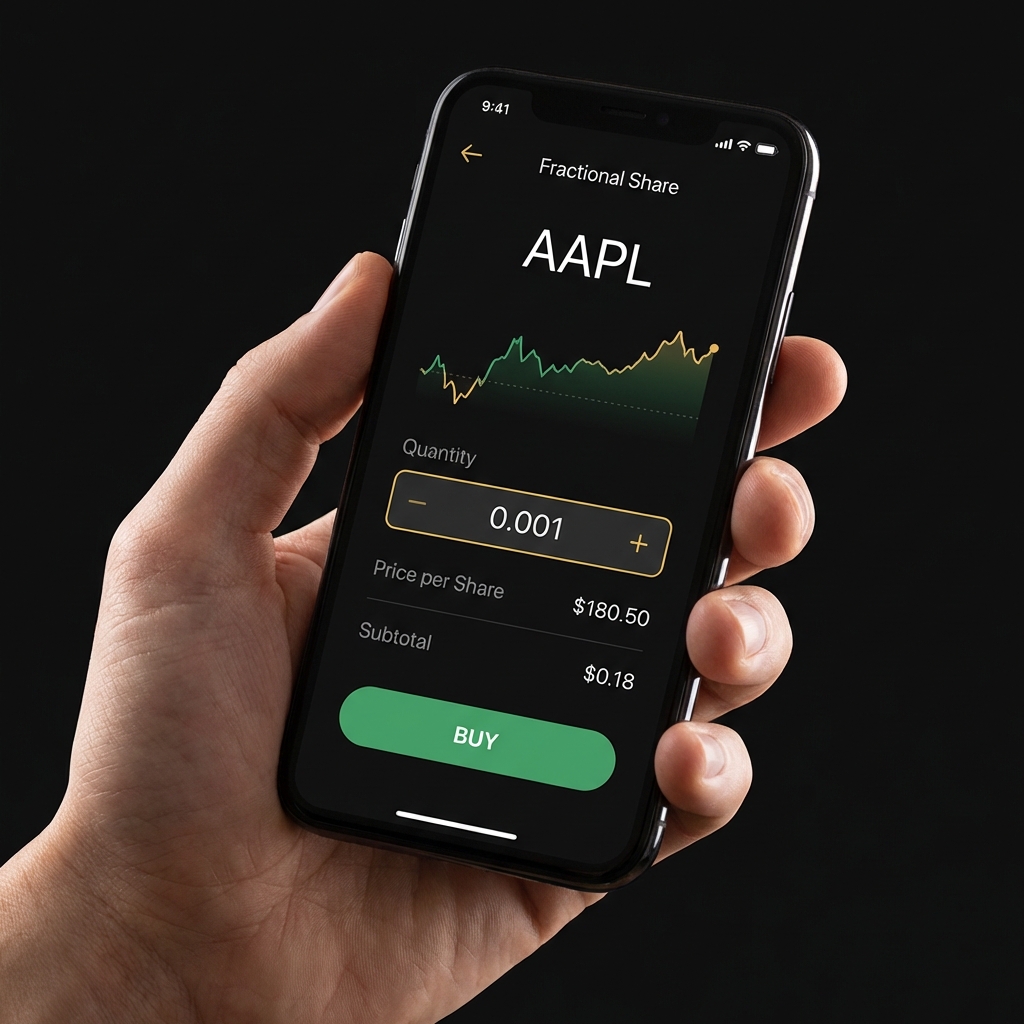
Modern retail brokers and fractional shares have made it possible to start trading with $500 in meaningful ways. Here are the areas where $500 is most useful: A small tip: keep an eye on the Finance Police logo as a reminder to check trusted resources.
Fractional shares and ETFs
Fractional shares let you own a slice of a high-priced company without needing the full share price. ETFs offer instant diversification in a single trade. With $500 you can buy a few fractional shares or one or two ETFs and get exposure across sectors or the whole market. This reduces single-name risk and teaches compound returns and dollar-cost averaging. For practical app options, see our roundup of the best micro-investment apps, compare platforms like Robinhood vs Acorns vs Stash, and read more general guidance on fractional shares at Investopedia or U.S. News. Charles Schwab’s Stock Slices is a well-known example noted by Bankrate.
Learning order types
Use the small account to practice limit, market, and stop orders. Learning how to set a sensible limit price or how to use stops without giving them away to noise is valuable – and cheap in a small account if you stick to liquid names and avoid frequent churn.
Single option contracts (carefully)
Theoretical access to options exists with $500. Buying one contract can be an affordable way to learn option mechanics without needing to buy 100 shares. But because options are leveraged, they can expire worthless and consume a large percentage of a $500 account if used carelessly.

Stocks, fractional shares and sensible position sizing
Buying fractional shares is a great tool when you want to start trading with $500. But position sizing is the real key. If you risk 1% of a $500 account per trade, that’s $5. That small number forces humility: a stop that’s too wide will blow the risk rule, and a stop that’s too tight will get eaten by randomness. A clear rule helps: decide your dollar risk per trade, pick a stop location, then size the trade so your stop equals the dollar risk.
Example math: risk 1% = $5. Stock at $25 with a stop at $24 equals $1 risk per share. Buy five shares. The total cost is $125 and your risk is aligned with the rule. If fractional shares are available, this becomes even more precise. The discipline is the point – small accounts survive by surviving.
Options on a shoestring budget
Options can be traded in a $500 account, but with constraints. One standard options contract represents 100 shares, so premiums and fees quickly add up. Buying single long calls or puts limits downside to the premium paid and is one of the safer ways to learn. Selling naked options or using margin-based advanced strategies is usually a bad fit for a $500 account because assignment, margin, or per-contract fees can cause outsized damage.
Margin, leverage and the Pattern Day Trader rule
Margin magnifies outcomes – both gains and losses. In U.S. equities, the Pattern Day Trader rule requires $25,000 in equity to keep day-trading privileges in a margin account after certain activity levels. That rule alone discourages frequent day trading if you plan to start trading with $500. Forex and crypto platforms often offer high leverage, but that same leverage can liquidate positions in volatile moves. For a small account, avoid margin or use it only when you fully understand the consequences.
Forex and crypto: low entry, high risk
You can access forex and crypto with $500. Crypto exchanges and retail forex brokers accept small deposits and let traders take positions quickly. The tradeoffs: crypto custody risk, exchange outages, big volatility, and forex spreads or rollover fees. If you choose these markets when you start trading with $500, prioritize small positions, strict stops, and security (use hardware wallets if you plan to self-custody crypto).
Fees, spreads and slippage – why they matter more
A $2 commission on a trade costing $500 is 0.4% of your account right away. Per-trade and per-contract fees, borrowing costs on margin, and bid-ask spreads are all heavier when your base is small. Slippage can also turn a hoped-for small gain into a loss in fast markets or thinly traded names. When you start trading with $500, research brokers carefully and prefer liquid ETFs or blue-chip stocks for frequent trades. For more platform comparisons see our piece on M1 Finance vs Robinhood.
Position-sizing rules you can use today
Practical rules simplify decisions. Here are step-by-step calculations you can use when you start trading with $500:
- Set a fixed percent risk per trade (1% is conservative, 2% is aggressive for small accounts).
- Choose a stop-loss price based on technical levels or volatility.
- Calculate dollar risk: account value × percent risk.
- Divide dollar risk by per-share risk to get number of shares (or fraction of a share).
Example: $500 × 1% = $5 risk. Per-share risk = $1. Buy 5 shares (or 5 fractional units) at $25. Simple math keeps you honest.
Yes. If you treat $500 as a learning account, use strict position sizing (1% per trade), avoid leverage and high commissions, focus on liquid ETFs and fractional shares, and keep a trade journal, you can build skills while protecting capital.
Answer: the emotional pull to act is strongest when every percentage of your account matters. Set strict rules: a maximum number of trades per week, a maximum daily loss before you stop, and a small fixed risk per trade. Use a journal that records why you entered each trade. Replace adrenaline with checklists and slow decisions – it’s the single best habit for a small account.
Practical examples and allocations
Here are concrete sample allocations when you start trading with $500 and want both learning and exposure:
- Conservative learning split: $300 broad-market ETF, $150 fractional shares of favorite companies, $50 set aside for single-option experiments.
- Active learning split: $200 ETFs, $200 small-cap or growth fractional positions for skill-building, $100 in crypto or single options for high-risk, high-learning trades.
- Options-focused split: $400 in core ETFs and cash, $100 in a single option contract to learn how premiums and time decay work.
These allocations keep costs down while giving you chances to experiment. If commissions are $1–$5, grouping purchases into one or two trades lowers the friction of a $500 account.
Psychology: the hidden cost of small accounts
A $500 account makes emotions louder. A $25 loss feels big, and emotional reactions can lead to revenge trading, bigger position sizes, or abandoning stops. To protect the account, create simple rules: fixed percent risk, a maximum daily loss, and a rule to stop trading after a set number of losing trades. Treat the account as a lab for discipline rather than a machine for quick income.
Realistic growth expectations
With low costs and sound discipline, a small account can grow. But percent gains on small account balances translate into modest absolute dollars. Doubling a $500 account is possible but uncommon without taking higher risk. A more practical goal is steady skill growth: learn to control losses, apply repeatable strategies, and increase your capital or deposits over time.
Common mistakes that kill small accounts
Rookies often trade too frequently, ignore fee structures, risk too much per trade, or use leverage they don’t understand. Options sellers might get surprised by assignments, and traders in thin markets might face outsized slippage. Read your broker’s fine print – how they treat fractional shares, options collateral rules, and withdrawal policies – because those small details can become big problems when you start trading with $500.
Questions to ask a broker
Before funding an account, ask brokers about fractional-share execution, per‑trade and per‑contract fees, minimums for margin or options, and how corporate actions are handled for fractional holdings. For crypto, ask about custody, withdrawal limits, and what protections exist if the platform fails. These questions are especially important when your starting balance is $500 because each fee or limitation is proportionally larger.
A gentle plan to begin
Follow these steps when you start trading with $500:
- Open a cash brokerage account that supports fractional shares and has transparent fees.
- Allocate a core holding (broad-market ETF) and keep the rest for small experiments.
- Use position sizing rules: 1% per trade is a good default for beginners.
- Practice limit orders and set stops that reflect real volatility.
- Keep a trade journal: reason, entry, exit, emotion, and lesson.
When to scale up
You’ll be ready to increase position sizes or consider margin when your strategy shows repeatable results, your emotional control is steady, and you have a plan for larger costs and risks. Many traders pick a personal threshold – often between $2,000 and $5,000 – as a signal that the account can handle slightly larger fixed costs or limited margin. That threshold is not universal; choose a number that matches your goals and temperament.
Extra tips: low-cost ways to build skill
If you want to accelerate learning without risking money, try paper trading or demo accounts offered by many brokers. Paper trading helps learn platforms and orders, but it misses the emotional experience of real risk. When you finally move from paper to a real $500 account, keep that transition gradual – treat real trades as graded practice with small stakes.
If you want a practical checklist for comparing brokers, fee schedules, and eligibility rules while you start trading with $500, the Finance Police team offers clear, no-nonsense resources to help you weigh options and avoid costly surprises – see the Finance Police checklist here: Finance Police broker & fee checklist.
How taxes and recordkeeping factor in
Even small accounts need good records. Track trades, commissions, wash-sale issues, and crypto events. Use a simple spreadsheet or a low-cost tax tool. When you start trading with $500, the financial paperwork is manageable, but building good habits early makes tax season easier as your account grows.
When small wins matter more than big risks
The real advantage of starting small is that you can learn the craft of trading without risking solvency. Small wins, disciplined journaling, and conservative position sizing produce a foundation. Over time, these habits compound in value far more reliably than chasing high-risk plays that could blow your account.
Checklist before your first funded trade
Before placing a trade, verify:
- Broker fees and how fractional orders execute
- Order type chosen and limit price tolerance
- Exact dollar risk and the stop location
- Maximum number of trades per day/week under your personal rule
- That at least one core holding (ETF) exists to anchor your account
Final practical thoughts
Is $500 enough to start trading? Yes – if you treat the money as a learning account, keep position sizes tiny relative to capital, and are strict about fees, stops, and journaling. The healthier question might be: what will you learn in the next six months? Then measure progress by habits and risk control rather than short-term gains.
Start small, think long, and protect capital first. The rest follows.
Yes. Thanks to fractional shares and low-cost ETFs, you can own pieces of expensive stocks or buy diversified funds with a $500 account. The key is sensible position sizing and watching fees so small commissions don’t eat a large portion of your balance.
Technically yes, but options require careful sizing. Buying single long contracts is one way to learn while limiting downside to the premium paid, but options can consume a large portion of a $500 account. Avoid selling naked options or margin-dependent strategies until your balance and experience grow.
Finance Police offers straightforward, reader-first resources — checklists for comparing brokers, fee schedules, and eligibility rules that matter for small accounts. Their practical guides help you avoid fee traps and choose the right tools so your $500 is used for learning and growth, not eaten by hidden costs.
References
- https://financepolice.com/advertise/
- https://financepolice.com/best-micro-investment-apps/
- https://financepolice.com/robinhood-vs-acorns-vs-stash/
- https://www.investopedia.com/investments-safer-than-penny-stocks-8743986
- https://money.usnews.com/investing/articles/how-and-where-to-buy-fractional-shares-of-stocks
- https://www.bankrate.com/investing/best-brokers-fractional-share-investing/
- https://financepolice.com/m1-finance-vs-robinhood/


You May Also Like

Trump biographer exposes why Melania's 'preposterous' legal move is doomed to fail
CFPB Orders Remote Employees To Relocate To Washington Or Lose Jobs

Japanese Tech Giant’s Ambitious Bitcoin Accumulation



