

BTC Perpetual Futures Face Intense Short Pressure as Top Exchanges Show Bearish Dominance
BitcoinWorld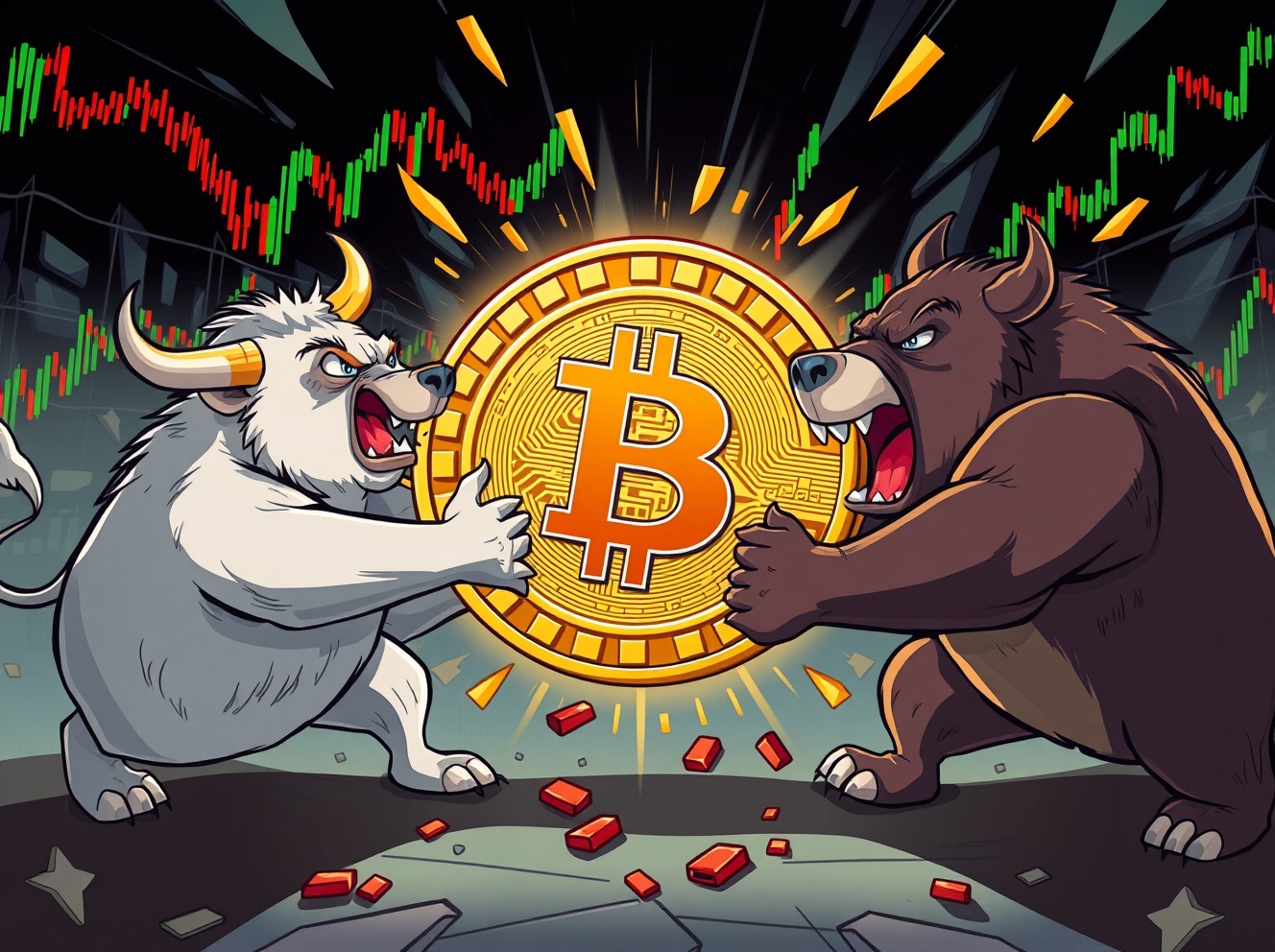
BTC Perpetual Futures Face Intense Short Pressure as Top Exchanges Show Bearish Dominance
Global cryptocurrency markets witnessed a significant shift in trader sentiment on March 21, 2025, as aggregate data from the world’s three largest futures exchanges revealed a clear majority of short positions in Bitcoin perpetual futures contracts. This development immediately captured attention across trading desks and analytical firms, signaling potential caution among institutional and retail participants despite Bitcoin’s recent price stability. The dominance of short contracts often serves as a critical barometer for market expectations, providing insights into how sophisticated traders are positioning themselves in volatile conditions. Consequently, this data point becomes essential for understanding the underlying currents in digital asset derivatives markets.
BTC Perpetual Futures Show Consistent Short Bias
Across Binance, Bybit, and OKX—platforms collectively representing the majority of global crypto derivatives open interest—short positions maintained a decisive majority in Bitcoin perpetual futures throughout the last 24-hour reporting period. The aggregate ratio across these three exchanges showed longs at 47.95% against shorts at 52.05%, creating a notable though not extreme skew. This persistent short dominance suggests a prevailing expectation of potential downward price movement or a strategic hedging approach against existing long spot holdings. Market analysts frequently monitor these ratios because they reflect real-time sentiment shifts that can precede price volatility.
Furthermore, the consistency across major platforms indicates a broad-based sentiment rather than an isolated exchange phenomenon. Each platform’s specific breakdown reveals subtle variations: Binance reported longs at 47.2% and shorts at 52.8%, Bybit showed longs at 47.85% versus shorts at 52.15%, and OKX displayed the most pronounced short bias with longs at 46.83% and shorts at 53.17%. These figures, while differing slightly, collectively paint a coherent picture of cautious market positioning. Importantly, perpetual futures contracts differ from traditional futures because they lack a fixed expiry date, making them particularly sensitive to immediate market sentiment and funding rate mechanisms.
Understanding Perpetual Futures and Market Mechanics
Perpetual futures, or perpetual swaps, represent a cornerstone product in cryptocurrency derivatives markets. Unlike traditional futures with set settlement dates, these contracts trade continuously, using a funding rate mechanism to tether their price to the underlying spot asset. The funding rate, typically exchanged every eight hours between longs and shorts, ensures contract prices converge with the spot price. When shorts dominate as observed currently, the funding rate often turns negative, meaning short position holders pay longs, creating a financial incentive that can influence positioning over time. This dynamic adds a layer of complexity to interpreting pure position ratios.
Several key factors typically drive traders toward short positions in perpetual markets. First, anticipation of a price decline represents the most straightforward motive. Second, traders might use short futures as a hedge against long spot Bitcoin holdings, a common risk management strategy. Third, arbitrage opportunities between futures and spot markets can create technical short demand. Fourth, broader macroeconomic concerns, such as interest rate expectations or regulatory developments, can influence derivative positioning. Finally, the inherent leverage available in futures markets amplifies both potential gains and losses, making position data a volatile but insightful sentiment indicator.
- Hedging Activity: Institutional holders often short futures to protect spot portfolios.
- Speculative Sentiment: Retail and professional traders bet on price declines.
- Arbitrage Strategies: Exploiting price differences between futures and spot markets.
- Funding Rate Dynamics: Negative rates can incentivize long positions over time.
- Leverage Effects: High leverage can accelerate position changes during volatility.
Historical Context and Comparative Analysis
Historical data from 2023 and 2024 provides essential context for the current short dominance. Analysis from CryptoQuant and Glassnode indicates that similar short-heavy periods have frequently preceded both minor corrections and extended consolidation phases, rather than outright market crashes. For instance, in June 2024, a short ratio exceeding 53% coincided with a 7% Bitcoin price dip over two weeks, followed by a rapid recovery. Conversely, extreme long dominance (above 65%) has more reliably signaled local market tops. The current 52.05% short level, therefore, suggests moderate bearishness rather than panic, aligning with a market that may be pricing in near-term uncertainty without abandoning longer-term bullish structural trends.
Comparing exchange-specific data reveals interesting nuances. OKX’s higher short percentage (53.17%) may reflect its particular user base, which often includes more active professional traders in the Asia-Pacific region. Binance’s figures, representing the largest liquidity pool, typically serve as the global benchmark. The relative consistency across exchanges strengthens the signal’s reliability, as it is not driven by a single platform’s idiosyncrasies. Additionally, open interest—the total number of outstanding contracts—remains near yearly highs, indicating strong market participation and confirming that position changes reflect genuine sentiment shifts rather than declining liquidity.
Implications for Bitcoin Price Action and Trader Strategy
The prevalence of short positions creates a market structure that technical analysts describe as “crowded.” When too many traders lean in one direction, even a modest price increase can trigger a short squeeze, forcing short holders to buy back contracts to cover losses, thereby accelerating upward momentum. This dynamic makes the market potentially vulnerable to rapid reversals if bullish news emerges. Monitoring funding rates becomes crucial in such environments; persistently negative rates would reward longs and could gradually encourage position flipping. Traders also watch order book depth on these exchanges for signs of large buy walls that could ignite a squeeze.
For long-term investors, short-term derivatives positioning often has limited predictive power for fundamental trends. However, it provides excellent insight into market sentiment and leverage conditions. A market with elevated short interest can absorb selling pressure more efficiently, as some selling is already “pre-positioned” in futures. Consequently, spot market sell-offs might be less severe than in a long-dominated market where liquidations cascade downward. This scenario played out in Q1 2024, when high short interest cushioned a macroeconomic-driven dip, preventing the liquidation spiral seen in previous cycles. Strategic traders therefore view current data as a risk management input, not a standalone signal.
BTC Perpetual Futures Position Breakdown (Top 3 Exchanges)| Exchange | Long Percentage | Short Percentage | Notable Context |
|---|---|---|---|
| Binance | 47.2% | 52.8% | Largest global liquidity pool |
| Bybit | 47.85% | 52.15% | Strong retail trader presence |
| OKX | 46.83% | 53.17% | Higher concentration of professional traders |
| Aggregate | 47.95% | 52.05% | Overall short dominance |
Conclusion
The data clearly shows short positions dominating BTC perpetual futures across three major exchanges, reflecting a cautious but not panicked derivatives market sentiment in late March 2025. This short bias, while notable, remains within historical ranges observed during consolidation periods. Traders should interpret this information alongside funding rates, spot market flows, and macroeconomic indicators for a complete picture. The structure suggests a market prepared for potential downside yet vulnerable to a short squeeze on positive catalysts. Ultimately, perpetual futures positioning offers a real-time window into trader psychology, and the current short dominance underscores the nuanced and hedged approach prevailing in today’s cryptocurrency landscape.
FAQs
Q1: What does it mean when short positions dominate BTC perpetual futures?
It indicates that more traders are betting on or hedging against a potential price decrease in the near term. This is measured by the ratio of open short contracts versus long contracts on derivatives exchanges.
Q2: How significant is a 52.05% short position aggregate?
While it shows a clear directional bias, this level is considered moderate. Extreme sentiment signals typically occur when ratios exceed 55-60%. The current level suggests caution, not extreme bearish conviction.
Q3: Can short dominance predict a Bitcoin price drop?
Not reliably on its own. While it reflects bearish sentiment, crowded short positions can lead to sharp rallies if a “short squeeze” occurs. It is one indicator among many, including spot volume and on-chain data.
Q4: Why might traders short perpetual futures instead of selling spot Bitcoin?
Futures allow for leverage, enabling larger position sizes with less capital. They also enable hedging; an investor holding Bitcoin can short futures to protect against price declines without selling their underlying asset.
Q5: How do funding rates interact with short-dominated markets?
When shorts outnumber longs, the funding rate usually turns negative. This means short position holders pay a periodic fee to longs, which can incentivize some traders to switch to long positions over time, creating a balancing mechanism.
This post BTC Perpetual Futures Face Intense Short Pressure as Top Exchanges Show Bearish Dominance first appeared on BitcoinWorld.


You May Also Like

XRP News: Ripple CTO Raises Concerns Over ‘No-Freeze’ Stablecoins

Trump Drops $1.5 Trillion FY2027 Pentagon Budget Request




