Which crypto is going to boom?
We aim to give everyday readers a calm, step by step framework to screen tokens and monitor them over time. This is educational content, not financial advice. Use the steps here to organize your research, verify details with primary sources, and keep position sizes aligned with your personal risk tolerance.
How to think about the best cryptocurrency to invest today
Asking which is the best cryptocurrency to invest today is common, but the answer depends on several moving parts. Start by accepting that predicting a boom is uncertain and requires combining market, on chain, tokenomics, developer, and legal signals rather than relying on a single metric.
Use primary filters first to avoid obvious traps. Market capitalization and on exchange liquidity are essential first checks because low market cap tokens often lack tradability and have higher slippage; screening by these criteria saves time before deeper research CoinGecko research.
Token design and regulatory context matter. Tokenomics such as issuance schedules and team vesting affect dilution risk, and legal classification can change a token’s outlook quickly, so include those checks early in any evaluation Messari guide and metrics.
Who this approach is for: everyday readers who want a clear, step by step way to screen and compare candidates without technical jargon. It is not investment advice. Use this as a framework to compare options and then verify details with primary sources.
What ‘boom’ usually means and the limits of prediction
Short term spikes and sustained adoption are different outcomes. A sudden price jump can be a pump that fades, while long term growth typically needs ongoing usage or protocol adoption. Define a time horizon first so you know whether you mean a quick spike or multi year adoption driven rise.
Category matters. Large cap infrastructure tokens, DeFi primitives, layer 2 scaling projects, and memecoins have different return drivers and risk profiles, so compare candidates within the same category for meaningful signals CoinGecko research.
Macro liquidity cycles and regulatory actions can reshape which token models perform well. That is why periodic rechecks and an awareness of policy developments matter alongside technical and market metrics. See our crypto coverage.
First screen: market cap and liquidity you should check
Before any deep dive, apply a market cap and liquidity screen. Market capitalization helps you avoid tiny tokens that are illiquid and more prone to large price swings when trades occur. Low market cap often means higher slippage and harder exits.
Check exchange volume and order book depth. Look for consistent daily volume and a visible order book on reputable exchanges. A thin order book or erratic volume can mean large trades move price dramatically, increasing execution risk CoinGecko research.
How to check: use market data pages that show market cap, 24 hour volume, and order book snapshots. Compare volume to market cap to spot illiquid cases. If you find very low volume relative to market cap, move on unless you have a specific reason and verified liquidity plans.
Use liquidity filters before spending time on tokenomics or on chain signals. This order reduces time wasted on projects that look interesting but cannot be traded at meaningful size without slippage Chainalysis report.
Download the screening checklist or contact FinancePolice about partnership options
Download the printable screening checklist to apply the market cap and liquidity filters described here, or sign up for update alerts if you prefer an emailed checklist.
View advertising and partnership options
On-chain activity: metrics that signal real usage
On chain metrics help distinguish genuine usage from speculation. Rising active addresses and transaction volume can indicate more users interacting with a network, which is often a healthier growth signal than short lived price moves Messari guide and metrics. See Amberdata’s guide.
For DeFi tokens, total value locked or TVL shows how much value is being used within the protocol. Increasing TVL, especially across multiple protocols, can point to genuine adoption but verify whether the assets are native or wrapped, since composability can overstate real capital at risk Cambridge benchmarking study.
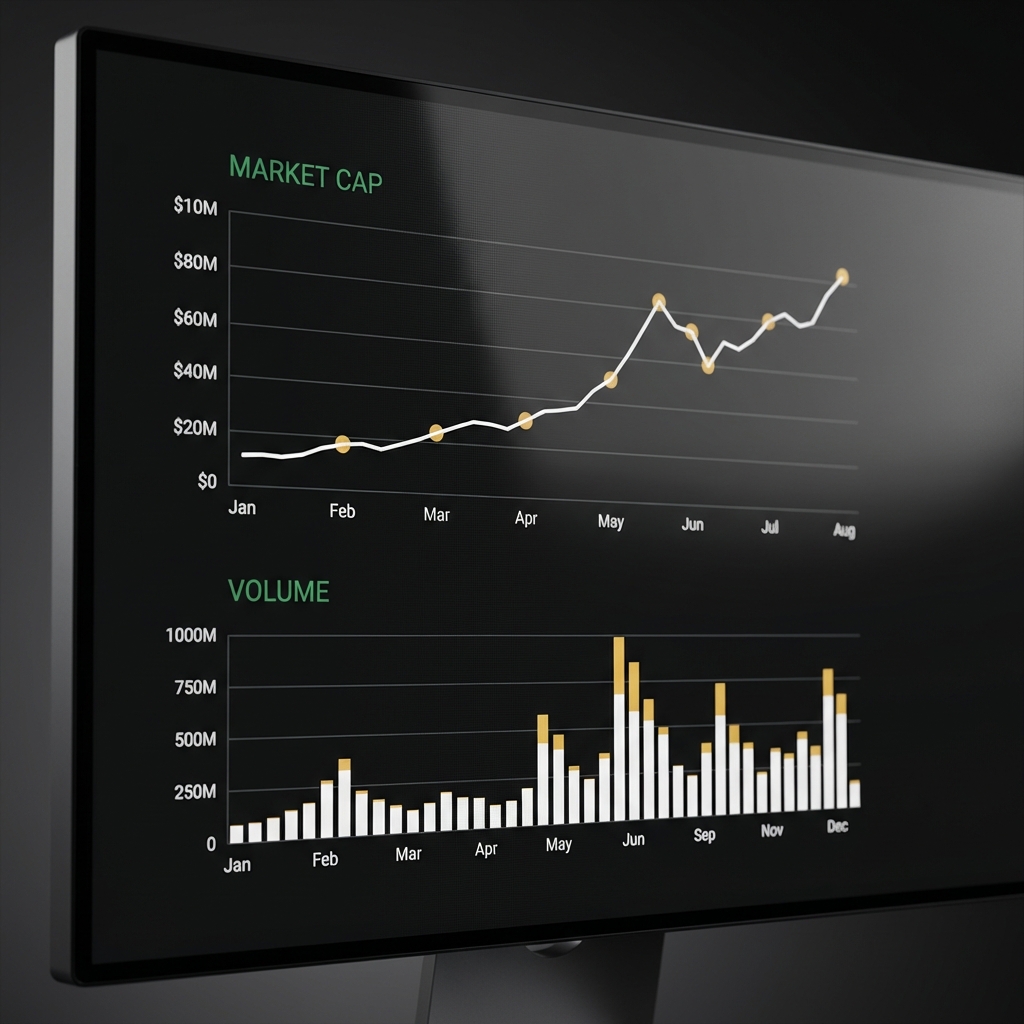
Combine on chain signals with off chain liquidity checks. A protocol with growing active addresses but no tradable liquidity still poses execution risk. Always view on chain metrics as one piece of the picture, not definitive proof of future returns. See Nansen’s indicators.
Tokenomics checklist: supply, issuance, vesting and dilution risk
Tokenomics determine the supply side of future returns. Start by comparing total supply and circulating supply. A high future issuance rate can dilute holders, while a capped or slowly issued supply reduces that specific risk Messari guide and metrics.
Examine emission schedules and inflation rate. New token issuance via protocol incentives or staking rewards can reduce near term upside if large amounts enter circulation quickly. Look for clear, published schedules and on chain evidence of distributions.
Check team and advisor allocations and vesting schedules. Large unlocked allocations or imminent unlock events are common sources of price pressure. Prefer projects with transparent vesting and publicly verifiable lockups.
Also note burn mechanisms and deflationary features. While burns can reduce supply, evaluate whether they are meaningful relative to issuance and whether they are permanent or conditional.
Developer activity and roadmap: measuring execution risk
Developer activity is a practical proxy for whether a project is being built. Check commits, the number of active contributors, and release cadence to see if work is progressing beyond marketing claims Cambridge benchmarking study.
Look for verifiable milestones rather than aspirational roadmap language. Milestones that link to releases, audits, or third party integrations are easier to check and reduce execution uncertainty Messari guide and metrics.
There is no reliable single answer; use a repeatable framework that combines market cap and liquidity screening, on chain activity, tokenomics, developer signals, and regulatory review to identify candidates and size positions accordingly.
Skeptical reading helps: marketing often highlights future possibilities, while developer repositories and release notes show what exists today.
Regulatory and legal risks that can change a token’s outlook
Regulatory classification can change a token’s tradability and market access. The SEC framework for analyzing whether a digital asset is an investment contract remains a central reference point for legal exposure in many jurisdictions, so factor this into sizing decisions SEC framework for investment contract analysis.
Enforcement actions and jurisdictional differences have caused prices to swing in the past by restricting platforms, freezing assets, or creating compliance costs. Historical enforcement examples show why legal risk matters as much as technical or market signals Chainalysis report.
Include regulatory risk in position sizing and diversification. If a token operates where regulation is unsettled, treat the legal risk as a material part of your assessment and favor conservative allocations unless you have a high risk tolerance.
How categories differ: large-cap, DeFi primitives, layer 2 and memecoins
Different categories have distinct drivers. Large cap infrastructure tokens often depend on network effects and broad adoption. DeFi primitives rely on TVL and composability. Layer 2 projects lean on developer activity and throughput gains, while memecoins are typically driven by sentiment and social dynamics CoinGecko research.
Which signals matter most varies by category. For DeFi, TVL and protocol revenue are key. For layer 2, developer activity and usability matter. For large cap tokens, liquidity and macro factors can dominate. Compare candidates within the same category to get meaningful relative signals CoinGecko research.
Compare category signals side by side
Use as a quick comparison guide
When you evaluate candidate tokens, pick category specific thresholds for the metrics that matter and be explicit about why you prefer one category over another based on your time horizon and risk tolerance.
A step-by-step framework to pick and monitor candidates
Step 1, initial screen: apply market cap and liquidity filters to remove illiquid tokens. Confirm 24 hour volume and order book presence on exchanges before moving on. This saves time and reduces execution risk CoinGecko research.
Step 2, deep dive due diligence: combine on chain metrics, tokenomics checks, developer activity, and legal review. For each item, document the source and date so you can recheck later. Use primary sources such as the token contract and published emission schedule where possible Messari guide and metrics. Also consult TokenMetrics’ guide.
Step 3, monitoring and exit triggers: set review cadence and signals that prompt action. Examples: quarterly reviews of developer commits, monthly checks on TVL and active addresses, and immediate review if a major regulatory announcement impacts the project. Convert triggers into pre defined steps rather than emotional reactions.
Keep the checklist and update it with primary sources and official disclosures. Regulatory guidance and project plans change, so refresh your assumptions and position sizes when new facts appear SEC framework for investment contract analysis.
Position sizing, diversification and practical risk controls
Size speculative crypto positions as a fraction of discretionary capital. Use small, manageable sizes for high volatility assets and increase allocation only as objective evidence of adoption appears. Align allocation with your overall financial plan and risk tolerance. See strategies to reduce risk for more on sizing and diversification.
Diversify across categories to avoid over exposure to one type of risk. For example, combining some large cap infrastructure exposure with smaller positions in high risk DeFi or layer 2 candidates reduces single point failure risk.
Practical controls include pre defined sell or review triggers, a regular rebalancing cadence, and limits on how much new capital you add after a rapid price move. Avoid emotional trading by sticking to documented rules.
Common mistakes and traps when chasing the next boom
Hype and social media momentum are common traps. Viral attention can lift a token quickly but that attention can fade and often precedes sharp reversals. Treat social signals as noisy and confirm with on chain and liquidity checks Chainalysis report.
Ignoring tokenomics and upcoming unlocks is another frequent error. Large scheduled unlocks can create supply shocks that pressure price. Always check vesting schedules and distribution plans before allocating meaningfully Messari guide and metrics.
Chasing the top short term performers without process increases risk. Use the framework described here to keep decisions evidence based rather than reactionary.
Three practical scenario walkthroughs (category-focused, hypothetical)
Scenario A, large cap infrastructure: you see rising adoption metrics and steady volume. Key checks: verify liquidity, review protocol revenue or use cases, and confirm developer activity to ensure ongoing maintenance. Red flags include sudden token unlocks or regulatory notices that affect platform access CoinGecko research.
Scenario B, DeFi primitive with rising TVL: rising TVL plus diversified deposits is encouraging, but check whether TVL is driven by native assets or short lived incentives. Confirm audits, examine composability risks, and monitor on chain activity for unusual concentration Cambridge benchmarking study.
Scenario C, speculative memecoin: these are driven by sentiment and social dynamics. If liquidity is limited or tokenomics show heavy early allocations to insiders, treat this as high risk and size accordingly. Use strict exit rules and expect high volatility.
Where to find reliable data and tools for due diligence
Primary sources first: token contracts, whitepapers, and official project disclosures should be checked before trusting summaries. The contract and published emission schedule are where tokenomics facts are anchored Messari guide and metrics.
Data providers help with market cap, liquidity, and developer activity, but verify methodology. Use market research pages for quick screens and then confirm details against the token contract and repository records CoinGecko research. Also see our bitcoin price analysis.
For developer metrics, inspect public repositories like GitHub and look for release notes, tagged versions, and contributor counts. Benchmarking studies show developer activity correlates with project durability but always read the evidence in context Cambridge benchmarking study.
Final checklist and next steps
Printable checklist: 1) Market cap and volume screen. 2) Exchange order book check. 3) On chain active addresses, transaction volume, and TVL for DeFi. 4) Tokenomics review: total and circulating supply, emission schedule, vesting. 5) Developer activity: commits and releases. 6) Regulatory and legal review. 7) Position sizing and monitoring plan. Use this sequence for every candidate and record your sources.
Review cadence: monthly for high risk holdings, quarterly for longer horizon positions, and immediate review on major regulatory or technological announcements. Update the checklist with primary sources and changes in enforcement or project disclosures SEC framework for investment contract analysis.

Next steps: start with a small screen using the market cap and liquidity rules above, then follow the deep dive sequence. Keep records of your checks so you can trace decisions and adapt them as conditions change.
Begin with a market cap and liquidity screen to avoid illiquid tokens, then check on chain activity, tokenomics, developer activity, and regulatory status. Use primary sources like the token contract and official disclosures to confirm key facts.
TVL means total value locked and measures how much capital is deployed in a DeFi protocol. Rising TVL can indicate use and adoption, but check asset composition because wrapped or composable assets can overstate real capital at risk.
Use small, manageable position sizes within discretionary capital, diversify across categories, and set pre defined review or sell triggers. Align sizing with your risk tolerance and overall financial plan.
References
- https://www.coingecko.com/en/research
- https://messari.io/
- https://financepolice.com/advertise/
- https://blog.chainalysis.com/reports/2024-crypto-crime-report/
- https://www.jbs.cam.ac.uk/faculty-research/centres/alternative-finance/publications/global-cryptoasset-benchmarking-study/
- https://financepolice.com/category/crypto/
- https://blog.amberdata.io/four-key-on-chain-metrics-for-digital-asset-valuation
- https://www.nansen.ai/post/onchain-metrics-crucial-indicators-for-assessing-blockchain-network-health
- https://www.tokenmetrics.com/blog/how-to-evaluate-new-crypto-projects?74e29fd5_page=131
- https://www.sec.gov/corpfin/framework-investment-contract-analysis-digital-assets
- https://financepolice.com/strategies-to-reduce-risk-in-cryptocurrency-investments-through-diversification-in-2025/
- https://financepolice.com/bitcoin-price-analysis-btc-reclaims-92000-as-market-awaits-fed-decision/


You May Also Like

Why Is Crypto Down Today: Pepeto Crosses $8.6 Million as XRP Price Prediction Tests $1.30 and ETH Fights for $2,000

Coinbase Receives OCC Approval for National Trust Charter