Google AI Education Faces Its Ultimate Test: How India’s Massive School System Reveals Critical Scaling Challenges
BitcoinWorld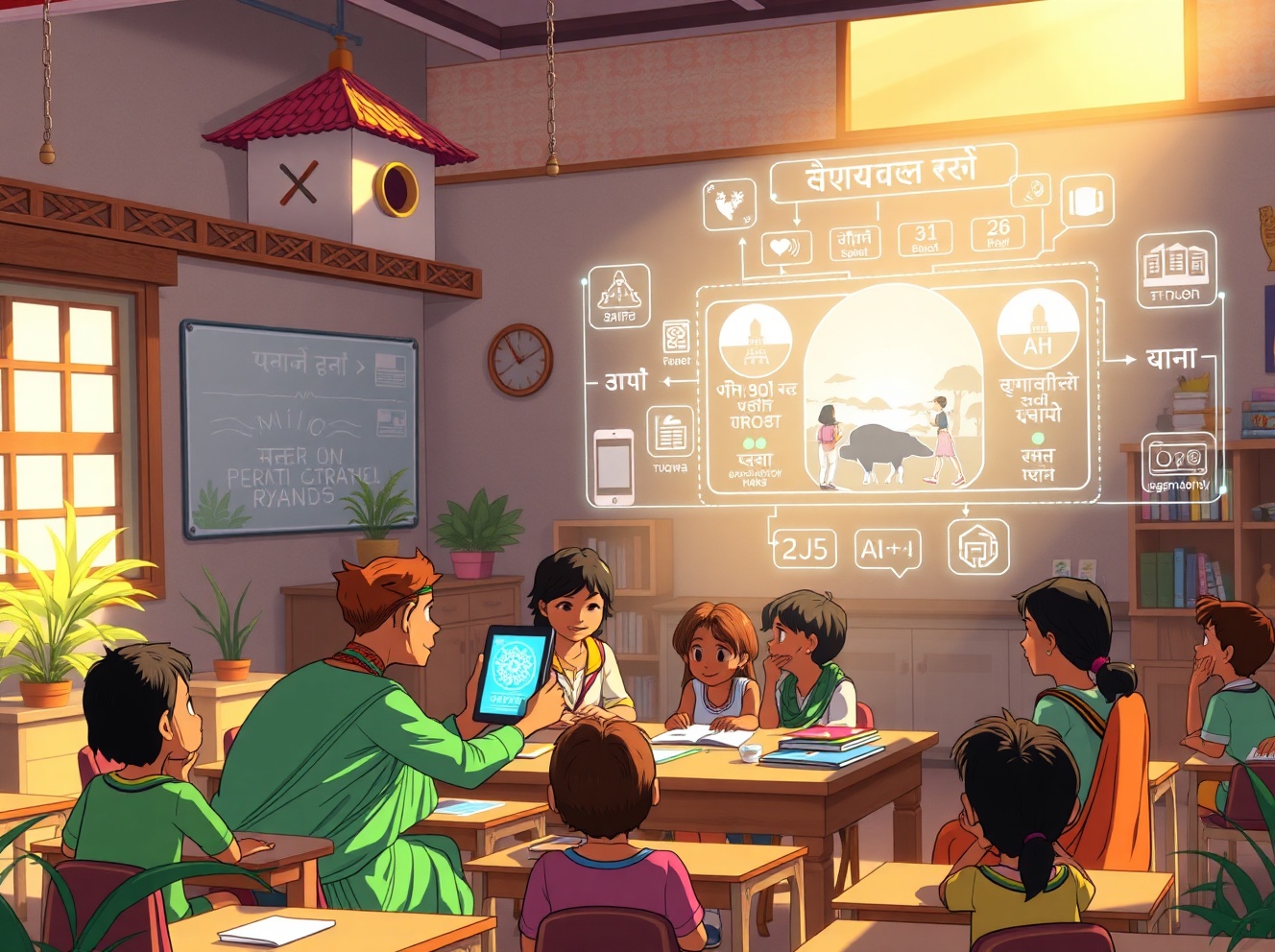
Google AI Education Faces Its Ultimate Test: How India’s Massive School System Reveals Critical Scaling Challenges
NEW DELHI, October 2025 – As artificial intelligence transforms global education systems, Google is discovering that its most valuable lessons about scalable implementation aren’t emerging from Silicon Valley laboratories but from India’s complex, decentralized classrooms. The country’s education system, serving 247 million students across 1.47 million schools, has become Google’s primary testing ground for understanding how AI tools function in real-world educational environments with uneven resources, diverse languages, and varying technological access.
Google’s Education AI Confronts India’s Scale Reality
Google’s vice president for education, Chris Phillips, revealed during the company’s AI for Learning Forum in New Delhi that India now represents the highest global usage of Gemini for educational purposes. This surprising statistic emerges from a country where educational technology faces unique challenges. According to India’s Economic Survey 2025–26, the nation’s school system operates with 10.1 million teachers supporting hundreds of millions of students across vastly different learning environments.
The sheer scale presents unprecedented challenges for technology deployment. Phillips explained that Google has abandoned its traditional “one-size-fits-all” approach after encountering India’s decentralized education structure. Unlike many Western systems, India’s curriculum decisions occur at the state level, with individual ministries playing active roles in implementation. Consequently, Google has redesigned its education AI framework to allow schools and administrators – not the company – to determine how and where tools are deployed.
Multimodal Learning Emerges as Necessity in Diverse Classrooms
India’s linguistic and educational diversity is fundamentally reshaping Google’s approach to AI-driven learning. The company reports significantly faster adoption of multimodal learning approaches in Indian classrooms compared to other regions. This trend reflects practical necessities rather than technological preferences. Many Indian classrooms lack text-heavy instructional traditions, requiring AI tools that combine video, audio, and images alongside traditional text-based content.
Google’s observations reveal several critical patterns:
- Language Diversity: India’s 22 official languages and hundreds of dialects necessitate AI systems capable of multilingual instruction
- Access Variations: Classrooms range from fully digital environments to those sharing single devices among multiple students
- Infrastructure Gaps: Inconsistent internet connectivity requires offline-capable AI solutions
- Learning Style Adaptation: Different regional educational traditions demand flexible AI approaches
The Teacher-Centric Design Philosophy
Perhaps Google’s most significant strategic shift involves designing AI tools around teachers rather than students as primary users. Phillips emphasized that maintaining the teacher-student relationship remains critical for effective learning. “We’re here to help that relationship grow and flourish, not replace it,” he stated during his New Delhi presentation. This philosophy marks a departure from earlier educational technology approaches that sometimes bypassed educators.
Google now focuses on developing AI assistants that help teachers with planning, assessment, and classroom management rather than creating direct student-facing tools. This approach acknowledges that successful technology integration requires educator buy-in and addresses concerns about AI potentially diminishing teacher roles. The company’s nationwide teacher training program, covering 40,000 Kendriya Vidyalaya educators, exemplifies this teacher-first strategy.
Access Realities Reshape Technology Deployment
India’s educational technology landscape presents unique access challenges that Google must address. Phillips described encountering classrooms where devices are shared among multiple students, connectivity remains inconsistent, and learning sometimes jumps directly from pen-and-paper methods to AI tools without intermediate digital steps. These realities force Google to reconsider fundamental assumptions about technology deployment.
The company has identified several access patterns requiring specialized solutions:
| Access Scenario | Percentage of Classrooms | Google’s Adaptation |
|---|---|---|
| One device per student | 15-20% | Full AI suite deployment |
| Shared classroom devices | 40-45% | Collaborative AI tools |
| Teacher-led device use | 25-30% | Presentation-focused AI |
| Limited/no digital access | 10-15% | Offline AI capabilities |
These varying scenarios require Google to develop flexible AI systems that function across different technological environments. The company’s Gemini platform now includes features specifically designed for shared device usage and intermittent connectivity, reflecting lessons learned from Indian classrooms.
Competition Intensifies in Educational AI Space
Google’s educational AI efforts in India occur amid intensifying competition from major technology rivals. OpenAI has established local leadership focused specifically on education, hiring former Coursera APAC managing director Raghav Gupta as its India and APAC education head. The company launched a Learning Accelerator program last year targeting Indian educational institutions.
Microsoft has simultaneously expanded partnerships with Indian institutions, government bodies, and educational technology players. The company’s collaboration with Physics Wallah, a major Indian edtech platform, supports AI-based learning and teacher training initiatives. These competitive moves highlight how education has become a primary battleground for AI companies seeking to embed their tools into public systems globally.
Google responds with several India-specific initiatives:
- AI-powered JEE Main preparation through Gemini for engineering aspirants
- Partnerships with government institutions on vocational and higher education
- Development of India’s first AI-enabled state university
- Localized content creation for regional curricula and languages
Learning Overtakes Entertainment as Primary AI Use Case
Phillips noted a significant shift in how people use generative AI technologies. While entertainment dominated AI applications last year, learning has emerged as one of the most common engagement methods, particularly among younger users. This transition makes education a more immediate and consequential arena for technology companies. As students increasingly turn to AI for studying, exam preparation, and skill-building, educational applications become critical for market positioning.
This trend appears particularly strong in India, where competitive examinations and skill development drive significant technology adoption. Google’s data indicates that Indian users engage with educational AI tools more frequently and for longer durations than users in many other markets. This engagement pattern provides valuable data about how AI can support learning objectives across different educational contexts.
Risk Awareness Shapes Responsible Implementation
India’s latest Economic Survey highlights growing concerns about potential risks from uncritical AI adoption in education. The document cites studies by MIT and Microsoft indicating that “dependence on AI for creative work and writing tasks is contributing to cognitive atrophy and a deterioration of critical thinking capabilities.” These warnings remind technology providers and educators that responsible implementation requires balancing technological capabilities with pedagogical principles.
Google addresses these concerns through several approaches:
- Designing AI as assistive tools rather than replacement systems
- Emphasizing teacher control and oversight in all applications
- Developing assessment methods that evaluate understanding rather than memorization
- Creating transparency about AI limitations and appropriate use cases
The company’s experience in India suggests that successful AI integration requires ongoing dialogue with educational stakeholders about appropriate technology use. This collaborative approach helps identify potential issues before they become systemic problems.
Conclusion
Google’s educational AI journey through India’s complex school system provides crucial insights about scalable technology implementation. The country’s massive scale, linguistic diversity, and varying access levels force technology companies to develop more flexible, adaptable solutions. Google’s shift toward teacher-centric design, multimodal learning approaches, and localized implementation strategies reflects lessons learned from Indian classrooms. As artificial intelligence continues transforming global education, the challenges and solutions emerging from India will likely influence technology deployment worldwide. Whether Google’s India playbook becomes a model for AI in education elsewhere remains uncertain, but the pressures visible in Indian classrooms will undoubtedly surface in other educational systems as AI adoption accelerates globally.
FAQs
Q1: Why has India become Google’s primary testing ground for education AI?
India’s education system serves 247 million students across 1.47 million schools with diverse languages, varying technological access, and decentralized administration. This scale and complexity provide real-world testing conditions unmatched elsewhere, forcing Google to develop flexible, adaptable AI solutions.
Q2: How is Google’s approach to education AI changing based on Indian experiences?
Google has shifted from a “one-size-fits-all” product approach to creating flexible tools that schools and administrators customize. The company now designs AI around teachers rather than students, emphasizes multimodal learning for diverse classrooms, and develops solutions for shared devices and intermittent connectivity.
Q3: What competitive pressures exist in India’s educational AI market?
OpenAI has established local education leadership and launched learning programs, while Microsoft partners with Indian institutions and edtech platforms like Physics Wallah. This competition drives innovation but also requires differentiation through localized content and understanding of India’s unique educational challenges.
Q4: What risks does AI pose to education according to India’s Economic Survey?
The survey cites studies showing that over-reliance on AI for creative and writing tasks may contribute to cognitive atrophy and deteriorating critical thinking skills. These concerns highlight the need for balanced implementation that enhances rather than replaces traditional learning approaches.
Q5: How does India’s experience with education AI inform global implementation?
India’s challenges with scale, diversity, and access preview issues other countries will face as AI enters public education systems. Lessons about localization, teacher-centric design, and flexible deployment models developed in India will influence how educational AI scales globally.
This post Google AI Education Faces Its Ultimate Test: How India’s Massive School System Reveals Critical Scaling Challenges first appeared on BitcoinWorld.


You May Also Like
Why Cardano (ADA) Price Is Lagging While Other Altcoins Move — What Traders Are Missing

Utility vs Hype: Why BlockchainFX ($BFX) License Beats Blazpay (BLAZ) And IPO Genie (IPO) For The Best Crypto Presale To Buy In 2026