SEC CFTC Crypto Regulation: Historic MOU Promises Crucial Cooperation for 2025 Markets
BitcoinWorld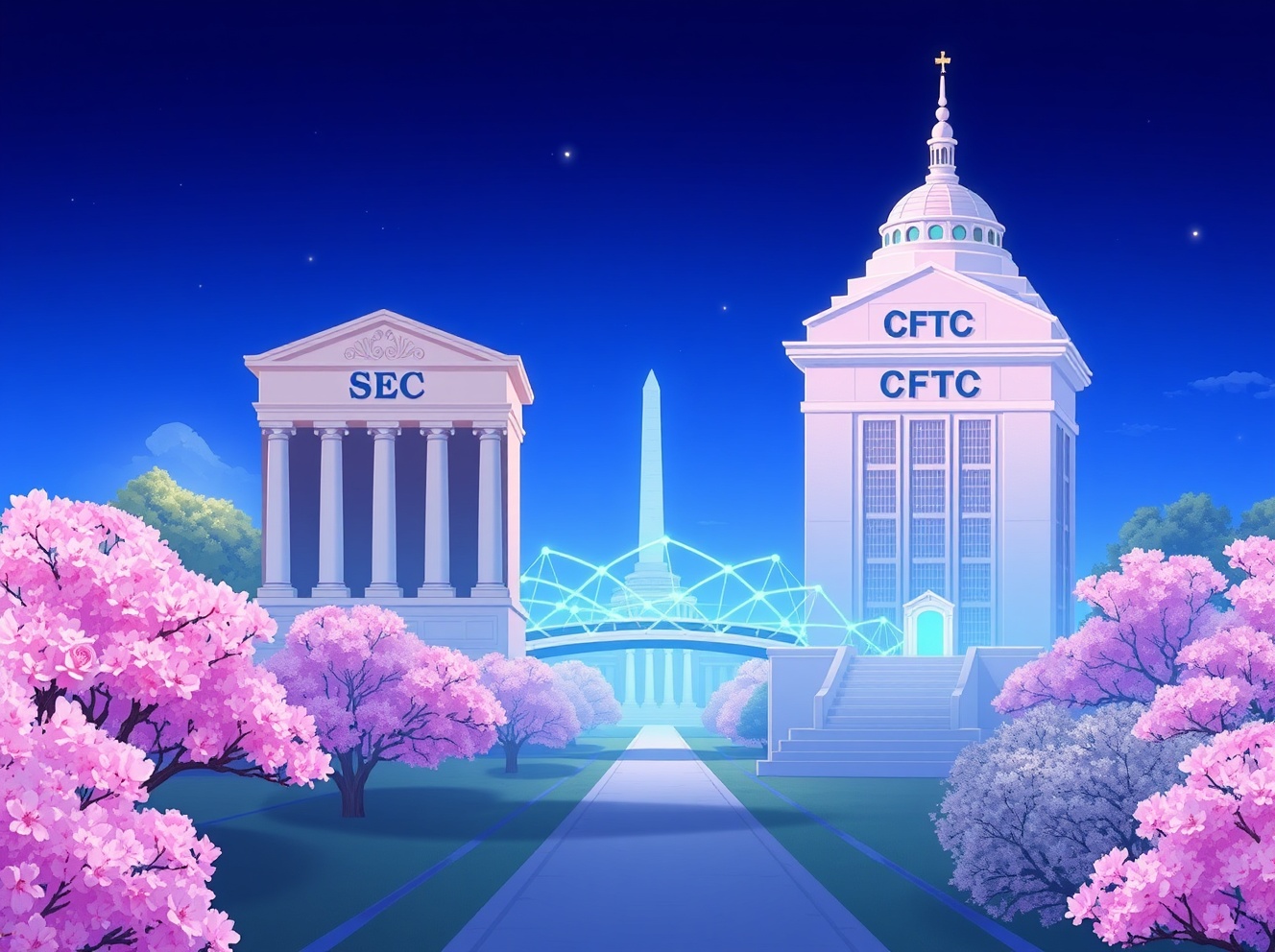
SEC CFTC Crypto Regulation: Historic MOU Promises Crucial Cooperation for 2025 Markets
WASHINGTON, D.C., January 2025 – In a pivotal move for digital asset markets, the U.S. Securities and Exchange Commission (SEC) and the Commodity Futures Trading Commission (CFTC) have announced plans to formalize their collaboration through a Memorandum of Understanding (MOU). This landmark agreement aims to resolve long-standing jurisdictional ambiguities and establish a cohesive framework for cryptocurrency regulation. Consequently, market participants eagerly await the detailed plans scheduled for revelation on January 30.
SEC CFTC Crypto Regulation Cooperation Takes Formal Shape
The joint interview with The Wall Street Journal featuring SEC Commissioner Paul Atkins and CFTC Commissioner Michael Selig signals a significant policy shift. For years, the digital asset industry has operated under a cloud of regulatory uncertainty. Specifically, the question of whether a token constitutes a security under SEC purview or a commodity under CFTC oversight has fueled legal battles and market instability. Therefore, this MOU represents a deliberate effort to bridge that divide. The agencies are actively designing regulations and dividing supervisory authority. This cooperative approach could finally provide the clarity that institutional and retail investors demand.
Historically, the regulatory landscape has been fragmented. The SEC has pursued enforcement actions against numerous crypto projects under securities laws. Meanwhile, the CFTC has classified Bitcoin and Ethereum as commodities, overseeing related futures markets. This dual-track system often left projects in a regulatory gray zone. The new MOU seeks to eliminate that confusion by defining clear jurisdictional boundaries. Market analysts view this as a necessary step for the maturation of crypto markets in the United States.
Analyzing the Impact of the Landmark Memorandum
The forthcoming joint event on January 30 is expected to outline specific market supervision plans. These details may fundamentally reshape how crypto businesses operate. Key areas likely include registration requirements, consumer protection standards, and compliance protocols for exchanges and token issuers. A clear jurisdictional map will help companies allocate legal resources efficiently and innovate with greater confidence. Moreover, it could accelerate the approval of new financial products, such as spot Bitcoin ETFs and tokenized securities.
Expert Perspectives on Regulatory Convergence
Financial law experts emphasize the MOU’s potential to enhance market integrity. “Formalized cooperation between the SEC and CFTC is long overdue,” notes Dr. Eleanor Vance, a professor of financial regulation at Georgetown University. “Their combined oversight can address market manipulation and fraud more effectively than isolated efforts. This move aligns with global trends where financial regulators are establishing unified digital asset frameworks.” Indeed, other jurisdictions, like the EU with its MiCA regulation, have already implemented comprehensive rules. The U.S. action may help maintain its competitive position in the global fintech landscape.
The timeline of regulatory discussion is also critical. Initial congressional hearings on crypto regulation began over a decade ago. However, legislative progress has been slow. In this context, inter-agency cooperation through an MOU is a pragmatic administrative solution. It allows the agencies to act without waiting for new legislation from Congress. This approach leverages their existing statutory authorities while promising more consistent enforcement.
Key Components of the Expected Regulatory Framework
The January 30 announcement will likely address several core issues. We can anticipate guidance on the following areas based on prior statements and industry needs:
- Asset Classification: Clear criteria for determining if a digital asset is a security, commodity, or something else.
- Exchange Oversight: Defined roles for monitoring trading platforms, whether they list securities tokens, commodity tokens, or both.
- Stablecoin Regulation: Potential oversight split based on the asset’s backing and use case.
- Enforcement Coordination: Procedures for joint investigations and information sharing to combat illicit activities.
| Asset/Activity Type | Likely Primary Regulator | Rationale |
|---|---|---|
| Token Issuance (ICOs/IEOs) | SEC | Involves investment contracts and capital formation. |
| Spot Trading of Commodity Tokens (e.g., Bitcoin) | CFTC (with SEC anti-fraud overlap) | Classification as commodities in past rulings. |
| Crypto Derivatives & Futures | CFTC | Falls under traditional derivatives oversight. |
| Security Token Trading Platforms | SEC | Platforms trading securities must register as exchanges or ATS. |
Conclusion
The planned SEC CFTC crypto regulation MOU marks a historic step toward regulatory clarity in the United States. By formalizing cooperation, the agencies aim to protect investors, ensure market fairness, and foster responsible innovation. The specific details revealed on January 30 will be crucial for the entire digital asset ecosystem. Ultimately, this collaborative framework could set a global standard for balancing innovation with oversight in the rapidly evolving world of cryptocurrency.
FAQs
Q1: What is an MOU between government agencies?
An MOU, or Memorandum of Understanding, is a formal agreement that outlines a framework for cooperation and coordination between two or more parties. It establishes mutual goals and procedures without creating legally binding obligations like a treaty.
Q2: Why is the SEC vs. CFTC jurisdiction question important for crypto?
The distinction is critical because securities and commodities are governed by different laws with distinct registration, disclosure, and trading rules. Misclassification can lead to severe legal penalties for projects and create uncertainty for investors and platforms.
Q3: How might this MOU affect everyday cryptocurrency investors?
Investors could benefit from greater market stability, reduced risk of disruptive enforcement actions against major platforms, and clearer disclosures from projects about their regulatory status. It may also lead to more traditional financial products entering the space.
Q4: Does this MOU replace the need for crypto legislation from Congress?
Not entirely. An MOU allows agencies to coordinate under existing laws. However, comprehensive legislation from Congress could provide even clearer mandates, new consumer protections, and rules for areas currently lacking direct authority, like spot markets for non-security tokens.
Q5: What should crypto businesses do in preparation for these changes?
Businesses should closely monitor the January 30 announcement, review their asset classifications and business models, and engage with legal counsel to ensure compliance plans align with the expected regulatory split. Proactive engagement with regulators is also advisable.
This post SEC CFTC Crypto Regulation: Historic MOU Promises Crucial Cooperation for 2025 Markets first appeared on BitcoinWorld.


You May Also Like

Gold Loses 15% From War Highs as Operation Epic Fury Safe Haven Trade Unwinds – Market Updates Bitcoin News
Trump may have signed his own death sentence with this imbecilic outburst